Category: Uncategorized

  • Cash, QR Codes and Choice: Singapore’s Uneven Hawker Shift

    Cash, QR Codes and Choice: Singapore’s Uneven Hawker Shift

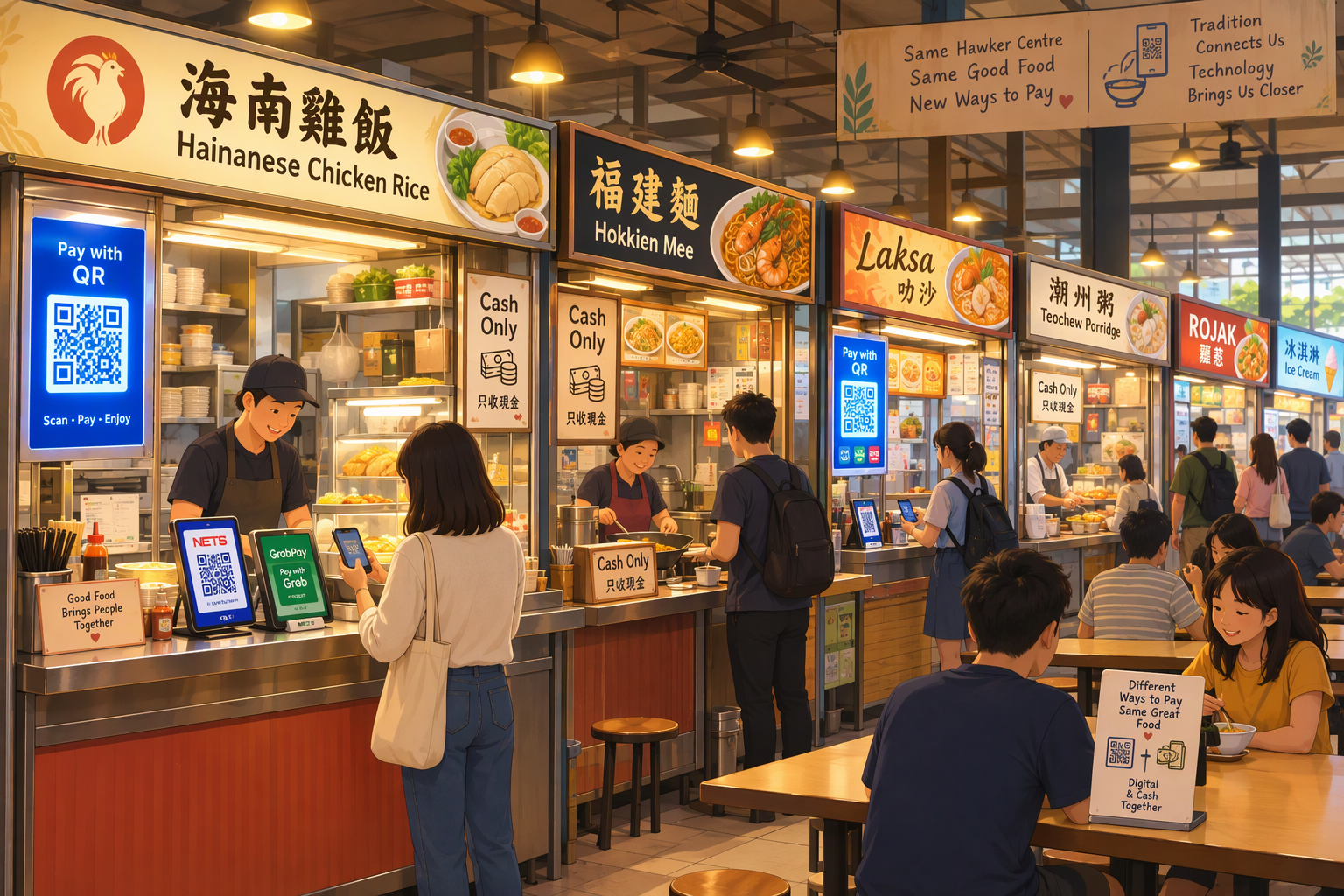
    Walk through a Singapore hawker centre and you might see two payment worlds side by side: a QR code at one stall, a “Cash Only” sign at the next. A 2024 Straits Times report captured that uneven change, showing that the move towards digital payments was still a work in progress—not a switch that every hawker had made.

    At West Coast Food Centre, noodle-stall owner Angie Sim, then 65, preferred cash. She said it suited both her and many of her customers, some of whom were older and less comfortable with technology. Sim had worked at the centre with her stall partner for more than 20 years. For her, keeping payments familiar made sense.

    The newspaper spoke with stallholders across eight hawker centres who had not adopted digital payments. Their reasons varied. Some had limited digital skills or poor eyesight. Others worried that customers might find payment devices difficult to use, or that they would have to spend time checking whether each transaction had gone through.

    At ABC Brickworks Market & Food Centre, a drinks-stall owner in his 70s said it was difficult to remember how to use digital platforms and verify payments during busy periods. If a customer did not have cash, he sometimes served them and let them pay later. At Albert Centre Market and Food Centre, drinks-stall owner Mr Tan, who was in his 60s, also found checking each e-payment troublesome.

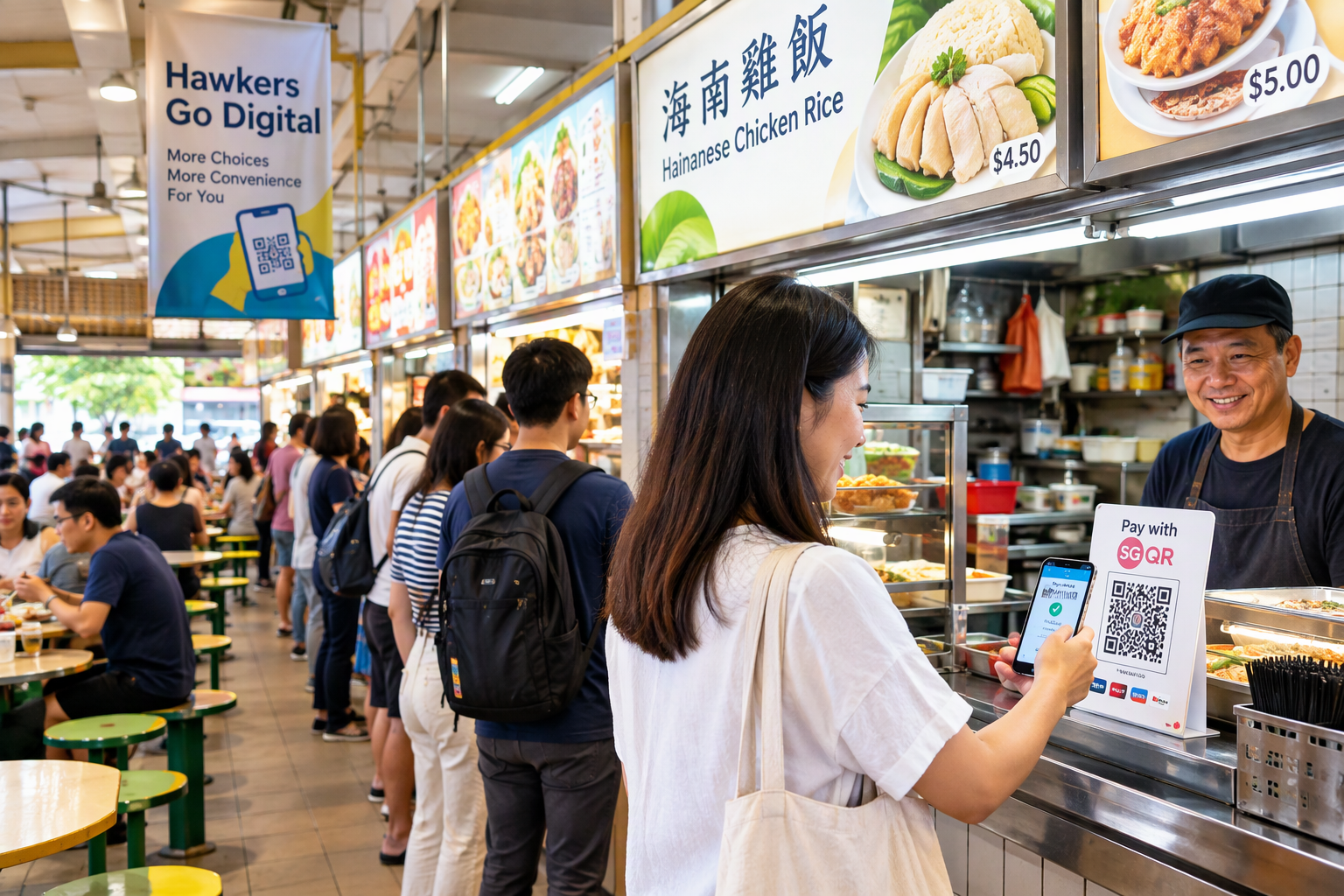
    There was a national push to make digital payments easier for hawkers. By the time of the article, more than 11,500 hawkers had adopted SGQR, a standardised QR code introduced in 2018. It was designed to let stalls accept payments from multiple mobile e-wallets using one code.

    The Hawkers Go Digital programme, launched in 2020, offered a waiver of the 0.5 per cent transaction fee on the first $20,000 of a hawker’s monthly SGQR transactions. On October 10, 2024, Enterprise Singapore and the Infocomm Media Development Authority announced that the waiver would be extended to the end of 2025. The stated aim was to bring the 18,000 stallholders in government-run food centres on board with digital payments.

    For some hawkers, going digital brought practical benefits. The article says some found cashless payments convenient and appreciated handling less cash. Some also reported increased sales, particularly from younger customers. Yet those advantages did not mean every stall had switched—or that cash had disappeared.

    The story is less about one payment method winning than about a change happening at different speeds. A QR code can offer convenience, while cash may feel simpler for a stallholder or customer. In Singapore’s hawker centres, the two were still sharing the counter, and the transition remained ongoing.

    Source: Why cash is still king for some hawkers in Singapore despite digitalisation push, The Straits Times

  • Dining Out with Pets: What Singapore’s New Rules Mean

    Dining Out with Pets: What Singapore’s New Rules Mean

    A walk by the water, a meal outdoors and a pet at your side: for some diners, that outing could soon become easier. A change announced by the Singapore Food Agency means that, from January 1, 2025, eateries with outdoor dining areas can welcome customers with pets without applying for a pet-café licence—provided the business does not serve pet food.

    For Whisk & Paddle, a waterfront café on Tebing Lane, the change could make a difference. The café sits beside the Punggol Park Connector, a route frequented by dog owners. Previously, it had turned away customers with pets because it did not hold the required licence, disappointing people who hoped to stop by with their companions.

    After the announcement, the café began sourcing chairs intended for pets and considered offering disposable water bowls. It also planned to reserve some outdoor seats for diners who do not bring pets. That arrangement could help address concerns about hygiene and allergies while allowing pet owners to dine there too.

    The SFA said existing food-safety requirements were sufficient to mitigate the low risk of disease transmission in outdoor dining areas. But the practical details still matter to businesses. Whisk & Paddle said it was unclear whether the rules would allow animals other than dogs—such as cats, birds, hamsters and rabbits—at its outdoor tables. The article does not confirm that these animals are permitted at the café.

    The change applies to outdoor dining areas at private food businesses, including sheltered areas that are not enclosed. It does not apply everywhere. Businesses that serve pet food still need a pet-café licence, while pets remain prohibited at hawker centres and their outdoor dining areas, which the SFA describes as communal spaces. Pet dogs also remain prohibited at halal-certified premises.

    That distinction is important: the announcement concerns outdoor areas at certain private eateries, not shared dining spaces such as hawker centres. For businesses like Whisk & Paddle, it offers a way to welcome pet owners without the previous licensing requirement, while leaving questions about which animals are covered for operators to clarify.

    The new rules may make some outdoor meals more accessible to people dining with pets. As cafés prepare for the change, clear guidance on its boundaries will help both businesses and customers understand where pets can join them—and where they cannot.

    Source: Pet owners and eateries welcome easing of al fresco dining rules, even as some seek more clarity, The Straits Times

  • From Coins to QR Codes: Singapore Hawkers’ Gradual Digital Shift

    From Coins to QR Codes: Singapore Hawkers’ Gradual Digital Shift

    At a hawker stall, a meal can be paid for with cash—or, increasingly, with a quick scan of a QR code. Singapore’s Hawkers Go Digital programme has been encouraging stallholders to add electronic payments, including payments through the Singapore Quick Response Code (SGQR) platform. The change is gathering pace, but the story is not that hawker centres have gone cashless. It is a gradual shift, supported by a temporary subsidy.

    Introduced in 2018 by Enterprise Singapore and the Infocomm Media Development Authority (IMDA), the programme aimed to get about 18,000 stallholders in government-run food centres to adopt digital payments. By October 2024, more than 11,500 hawkers had done so.

    For stallholders, accepting digital payments can also mean paying transaction fees. To help make the transition easier, the Government extended the programme’s subsidy until the end of 2025. At the time of the report, the subsidy covered the 0.5 per cent transaction fee on the first $20,000 of digital transactions made by each stall every month.

    The extension was intended to encourage hawkers to continue adopting digital payments and to help them adjust to paying transaction fees without a subsidy. That support mattered in a period when hawkers were also facing rising operating costs, the agencies said.

    The figures in the article offer a snapshot of how use of the system has grown. In August 2023, transactions through the programme totalled $45 million in value, across 5.4 million transactions. A year later, in August 2024, monthly transaction value had reached $60 million, while transaction volume had risen to 7.6 million.

    Those increases sit alongside the growing number of participating hawkers. They show that electronic payments through the programme were being used more often, while the subsidy gave stallholders a window to adapt to fees. The figures do not tell us what share of all hawker stalls had adopted e-payments, or whether participating stalls stopped accepting cash; the report does not say either.

    The extension had a clear end point: the end of 2025. The article describes support through that date, but does not establish what subsidy arrangements would follow. For hawkers and customers alike, the programme’s story is therefore one of a continuing transition: more stalls taking digital payments, growing use of the system, and a temporary measure intended to make the adjustment easier.

    Source: Subsidy for hawkers to adopt digital payments extended to end-2025, The Straits Times

  • A Longer Runway for Singapore’s Hawkers to Go Digital

    A Longer Runway for Singapore’s Hawkers to Go Digital

    A customer scans a QR code at a hawker stall, and a payment is made without cash changing hands. By October 2024, more than 11,500 hawkers in Singapore had adopted cashless payments through the Hawkers Go Digital programme. But for stallholders, moving to digital payments also meant getting used to transaction fees.

    To give hawkers more time to adjust, the government extended the programme’s subsidy until the end of 2025. The subsidy covered a 0.5 per cent transaction fee on each stall’s first $20,000 in monthly digital transactions. Customers paid by QR code through the Singapore Quick Response Code, or SGQR, platform.

    Enterprise Singapore and the Infocomm Media Development Authority introduced the initiative in 2018. Its goal was to help about 18,000 stallholders in government-run food centres adopt digital payments before subsidies were lifted. These centres include those operated by the National Environment Agency and the Housing Board.

    The extension followed two changes to the original timeline. The scheme had been due to end on December 31, 2023, before being extended to the end of 2024. The latest extension came after feedback from hawkers, with Enterprise Singapore and IMDA saying it would support their transition to paying transaction fees without the subsidy. The agencies also pointed to rising operating costs.

    The figures show that use of digital payments had grown. In August 2024, the monthly transaction value reached $60 million, compared with $45 million in August 2023. The number of transactions also increased, from 5.4 million to 7.6 million over the same period.

    Senior Minister of State Low Yen Ling described the programme as part of efforts to help hawkers thrive in the digital age. The extended subsidy gives participating stallholders more time to become familiar with e-payments and prepare for a non-subsidised payment structure.

    The programme’s growth does not mean that every hawker or food centre accepts cashless payments, or that cash has disappeared. Instead, the extension marks another step in supporting hawkers as they adapt to digital transactions, while giving them time to adjust to the costs involved.

    Source: Subsidy for hawkers to adopt digital payments extended to end-2025, The Straits Times

  • QR Codes at the Counter, Cash in the Till: Hawkers’ Uneven Digital Shift

    QR Codes at the Counter, Cash in the Till: Hawkers’ Uneven Digital Shift

    At a hawker stall, a quick lunch can involve a very modern choice: scan a QR code, or hand over cash. Across Singapore’s food centres, digital payments have become more visible—but, as The Straits Times reported in November 2024, cash remains the easier option for some stallholders and customers.

    The difference can be seen from one stall to the next. Some counters display QR codes for customers to scan, while others continue to take cash only. At a noodle stall in West Coast Food Centre, hawker Angie Sim and her partner preferred cash. Sim said it was easier for them and suited many of their older customers, who were less comfortable with digital payments and usually carried cash.

    The reasons are not all the same. The Straits Times spoke with stallholders at eight hawker centres who still accepted only cash. Some described limited confidence with digital payments or poor eyesight. Others found it difficult to check whether a payment had gone through, or worried that customers might struggle with their devices. For a busy stall, a payment method needs to work for both the people serving food and the people ordering it.

    That helps explain why the move to digital payments is not simply a matter of putting a QR code on the counter. A stallholder who cannot easily confirm a transaction may feel more comfortable handling notes and coins. And customers who are not used to paying by phone may prefer a familiar way to settle the bill. These are practical concerns, not proof that every hawker opposes cashless payments.

    Digital payment options had nevertheless spread widely by the time of the report. More than 11,500 hawkers had adopted SGQR, a standardised QR code launched in 2018 to support payments from multiple mobile wallets. The article also described the Hawkers Go Digital programme, under which the 0.5 per cent transaction fee was waived on a stall’s first S$20,000 in monthly transactions. At the time, the waiver had been extended to the end of 2025, as part of an effort to encourage digital payments among about 18,000 stallholders in government-run food centres.

    Together, these details show a change in progress, rather than a single moment when every stall switches over. QR payments were available at many hawker stalls, while some continued to rely on cash because of the habits and needs of the people behind and in front of the counter. For customers, it is a reminder that a QR code may be convenient—but carrying cash can still be useful when visiting a hawker centre.

    Source: Why cash is still king for some hawkers in Singapore despite digitalisation push, The Straits Times
  • Hawkers Go Digital: More Time to Make the Switch

    Hawkers Go Digital: More Time to Make the Switch

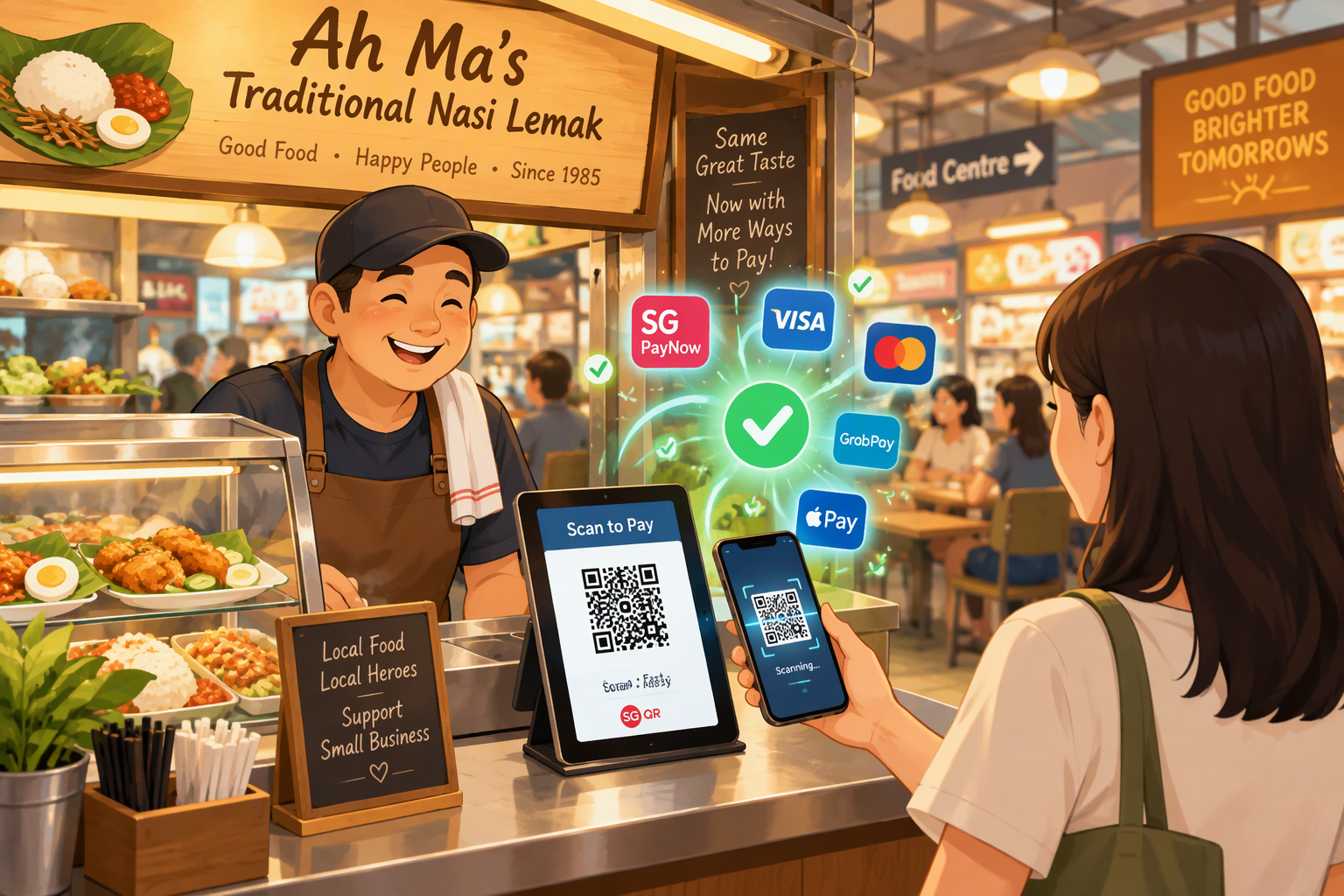
    At a hawker centre, the lunch queue moves quickly: order, pay, and find a seat. By October 2024, more than 11,500 hawkers had adopted cashless payments through Singapore’s Hawkers Go Digital programme. But the story was not that every stall had gone cashless. The programme was still working towards its target of about 18,000 stallholders in government-run food centres.

    Introduced in 2018 by Enterprise Singapore and the Infocomm Media Development Authority, Hawkers Go Digital encourages stalls to accept QR-code payments through the Singapore Quick Response Code, or SGQR, platform. Customers can use digital payment options, while hawkers have another way to receive payment alongside the choices they already offer.

    One challenge for stallholders is the transaction fee. Under the programme, a 0.5 per cent fee on digital transactions was subsidised for the first $20,000 of transactions per stall each month. That support was extended to the end of 2025, giving food-and-beverage stallholders more time to adjust to paying the fees themselves. The extension came amid rising operating costs and was intended to encourage continued adoption of e-payments.

    The subsidy’s end date had shifted before. The programme was originally due to end on December 31, 2023. In October 2023, the date was moved to the end of 2024; the further extension to the end of 2025 was reported in October 2024.

    The figures in the article suggest that programme-related digital payments were growing. In August 2024, their monthly value reached $60 million, compared with $45 million in August 2023. The number of transactions also increased, from 5.4 million to 7.6 million over the same period.

    Senior Minister of State Low Yen Ling described the scheme as part of the government’s efforts to help hawkers thrive in the digital age. The figures show a rise in payments made through the programme, while the adoption count gives a sense of how many hawkers had taken it up. They do not mean that all hawker stalls had stopped accepting cash: the article does not say how many continued to do so.

    The extension offered participating hawkers more time to get used to digital payments and the fees that could come with them. For customers, QR codes had become a more visible part of paying at participating stalls. And for the programme, the next stretch was about encouraging more hawkers to join—without suggesting that the shift was complete.

    Source: Subsidy for hawkers to adopt digital payments extended to end-2025, The Straits Times