Category: Uncategorized

  • The Strait of Hormuz: Geopolitics, Geology, and Global Oil Supply at a Crossroads

    The Strait of Hormuz, a narrow but vital waterway linking the Persian Gulf to the Gulf of Oman, stands at the heart of some of the most intense geopolitical tensions in 2026. This strategic chokepoint is critical because it oversees the maritime passage of about 20 million barrels of crude oil and oil products daily—roughly a quarter of the world’s seaborne oil trade. The unique geological setup around Iran explains much about its oil wealth and why so much of the region’s energy resources must pass through this constrained corridor.

    In recent years, Iran has leveraged its geographic position aggressively. Actions such as attacks on commercial vessels and imposing tolls on ships navigating the Strait have raised serious alarms over the freedom of navigation, leading the European Union to enact sanctions targeting those involved in these disruptions. The United States has responded with military measures, including several airstrikes aimed at Iranian military installations, further heightening tensions in an already fraught region.

    The consequences of these hostilities ripple far beyond the Strait. With uncertainty plaguing this critical maritime route, Gulf nations are racing to diversify their oil export routes. Saudi Arabia and the UAE are expanding pipeline infrastructure that bypasses the Strait, while Iraq is developing alternative routes to Turkey and Syria. These efforts aim to mitigate the risks of supply interruptions but also must navigate complex logistical and security challenges.

    The situation in the Strait of Hormuz remains dynamic and fraught with uncertainty. Continuous military engagements and diplomatic maneuvers underscore how precariously balanced global energy security and regional stability are in this strategic corridor. The outcomes here will profoundly impact not only Middle Eastern geopolitics but the wider global economy that depends heavily on these oil flows.

  • Humans in the Loop: Why a Bipartisan Push for AI Weapons Oversight Matters

    On July 17, 2026, Axios reported a bipartisan push in the U.S. House to ensure humans remain in control when lethal force is used by the military. The Human Authority over Autonomous Weapons Act was introduced by Don Beyer (D–VA), Tom Barrett (R–MI), and Sara Jacobs (D–CA), a cross‑party group signaling that concerns over AI in warfare cut across traditional political lines.

    The core aim is straightforward: codify into federal law a standard that the DoD already upholds — that humans must have the final say in the use of force when autonomous systems are involved. Supporters say turning this internal policy into law would create durable safeguards against shifts in doctrine or leadership that could otherwise dilute human oversight.

    This moment comes as autonomous systems become more prevalent in modern warfare, sparking renewed debate about what ethics and boundaries govern AI on the battlefield. The article notes controversy earlier in the year over a Pentagon AI‑assisted operation that captured Venezuelan President Nicolás Maduro, a development that intensified discussions about the risks and responsibilities of AI in lethal operations.

    A vocal restatement of the bill’s philosophy comes from Beyer himself: “no machine should ever be given the power to decide to kill a human being on its own.” The proposal is expected to be considered as part of the annual defense policy bill, a must‑pass measure where such provisions could be debated and potentially included.

    In short, the article captures a snapshot of ongoing U.S. legislative efforts to enforce human oversight over AI in military contexts, highlighting the tension between advancing autonomous capabilities and safeguarding human judgment in life-and-death decisions.

  • Navigating the U.S.-China Divide Over Taiwan: History, Perspectives, and Tensions

    Navigating the U.S.-China Divide Over Taiwan: History, Perspectives, and Tensions

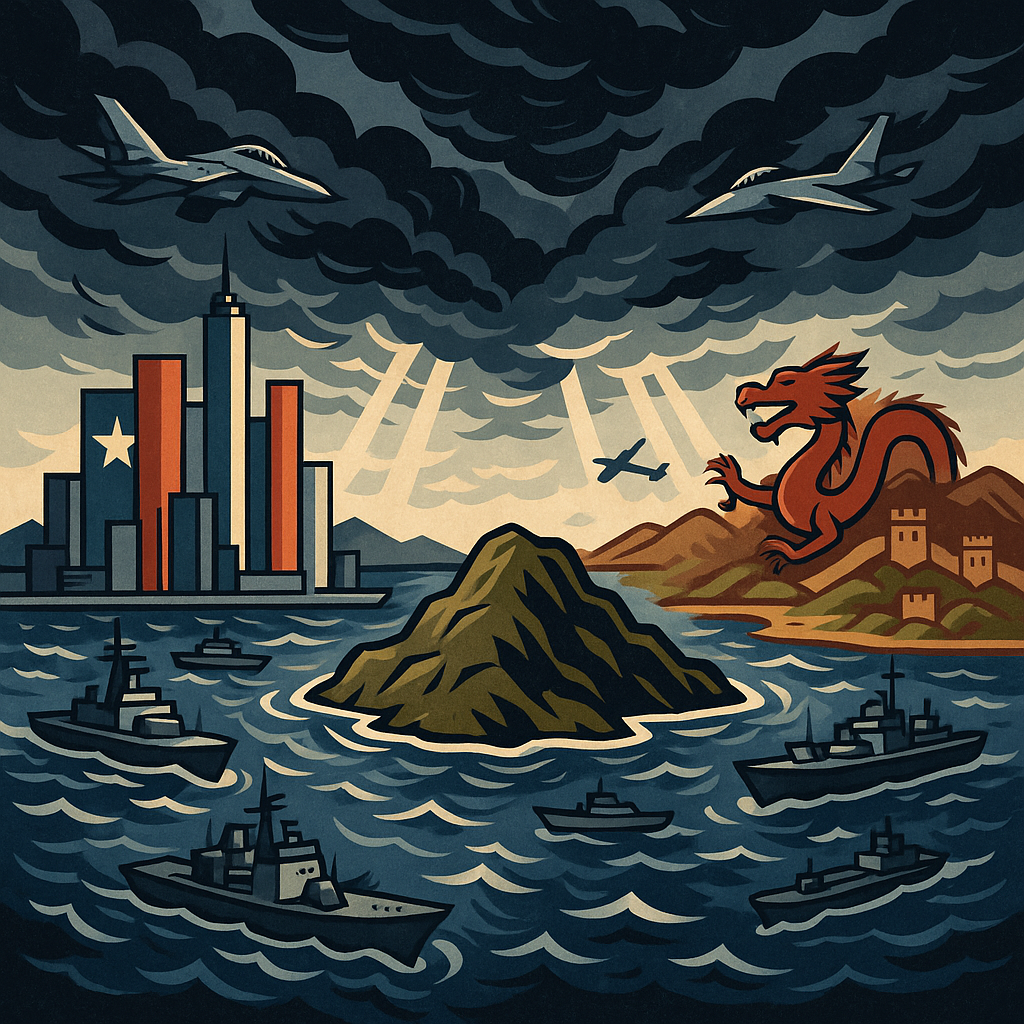
    The longstanding divide between the United States and China over Taiwan’s status is deeply rooted in history, politics, and strategy. Since 1979, when the U.S. shifted its diplomatic recognition from Taiwan’s Republic of China to mainland China’s People’s Republic of China, the relationship surrounding Taiwan has remained complex. Despite this shift, the Taiwan Relations Act allowed the U.S. to maintain unofficial ties with Taiwan, including arms sales that support its self-defense capabilities. This arrangement has fostered a delicate balance where the U.S. neither formally recognizes Taiwan as a sovereign state nor abandons its defense commitments.

    From Beijing’s perspective, Taiwan is an inseparable part of China, firmly backed by the “One China” policy. Chinese President Xi Jinping has emphatically declared Taiwan’s reunification as “unstoppable,” underscoring China’s unwavering commitment to this vision. Recently, China has increased military activities around the island, conducting large-scale drills that simulate blockades aimed at “pressing and containing separatist forces,” showcasing escalating military readiness.

    The U.S. counters with a policy of strategic ambiguity—deterring Beijing from aggressive moves while preventing Taiwan from unilaterally declaring independence. This equilibrium involves substantial arms sales, including a recent $11 billion package, which China views as provocative. These developments have heightened tensions, with the U.S. urging China to exercise restraint to avoid escalating conflict.

    Currently, the U.S. voices concern over China’s military drills simulating a blockade of Taiwan, labeling such actions unnecessary sources of tension. Both nations remain entangled in a high-stakes game of diplomacy and military posturing, each balancing national interests, regional stability, and complex historical legacies.

    The U.S.-China divide over Taiwan remains a pivotal issue shaping geopolitical dynamics in the Asia-Pacific region, reflecting broader struggles over sovereignty, influence, and peace.

  • Haunted Singapore: Wartime Echoes, Abandoned Houses and 30 Local Legends

    Haunted Singapore: Wartime Echoes, Abandoned Houses and 30 Local Legends

    On 30 October 2025, Time Out Singapore published a long-form listicle that brings together 30 of the city‑state’s most enduring ghost stories — a mix of wartime trauma, abandoned estates, former burial grounds and neighbourhood hotspots where urban legend and history collide.

    The piece doesn’t treat these places as proven supernatural sites. Instead it weaves together three strands: documented history (especially wartime events), folklore and contemporary eyewitness or urban‑legend accounts. That blend is what makes the list compelling: some entries are grounded in grim historical events (for example, Sook Ching‑era executions linked to Changi Beach and wartime use of Old Changi Hospital), while others are shaped by dereliction and imagination (Old Changi Hospital and Woodneuk House are two of the article’s most talked‑about locations).

    Time Out organises the locations into clear, recurring types so readers can see patterns in Singapore’s haunted geography. Broadly, the sites fall into four groups: (a) places tied to wartime trauma (Changi locations, parts of Sentosa); (b) abandoned and derelict properties (Old Changi Hospital, Woodneuk House, the former Brunei Hostel); (c) cemeteries and former burial grounds (Bukit Brown, Bidadari/Woodleigh, and MRTs built on old cemetery land, such as Novena and Bishan); and (d) parks, reservoirs and neighbourhood “hotspots” with grisly incidents or local legends (Bedok Reservoir, Yishun Dam, Sembawang Park and its pontianak stories).

    A few marquee entries give a sense of the range: Old Changi Hospital appears as one of the most iconic haunted places because of its wartime history and many urban‑legend associations (the article cautions that the buildings themselves are off‑limits and warns readers not to trespass). Bukit Brown is presented both as a historical Chinese cemetery and as a site of folkloric sightings. Pulau Ubin features village ruins, Puaka Hill and the German Girl Shrine; Pulau Tekong is included more as NS folklore territory, but with strict access limits. Harrowing incidents are also recalled at places such as Changi Beach and the Amber Beacon at East Coast Park, while sites like Haw Par Villa are highlighted for their macabre displays and public access to the Ten Courts of Hell exhibit.

    Each entry in the Time Out piece pairs a short “Haunted by” line with a concise historical/context paragraph and an “Accessibility” note. That structure makes the article useful for readers who want both the story and the practical reality: some sites are public and visitable (parks, Haw Par Villa, Pulau Ubin via bumboat), while others are explicitly restricted or physically dangerous (military islands, SAF training zones, abandoned properties with no‑trespass signage). The article repeatedly cautions against trespassing and stresses that its accessibility notes are not formal permission — they’re pointers, not permits.

    The list also draws on input from a local paranormal group (named in the article) that supplies practical ghost‑hunting tips. Those contributions emphasise safety, team‑based practices and respect for sensitive sites — reinforcing the piece’s recurring message: curiosity is fine, but legality, personal safety and respect for the dead and for heritage spaces matter more.

    If you want a single narrative backbone for a haunted‑Singapore post, Time Out’s compilation is a strong starting point: it gives historical context, local folklore and clear accessibility cues across 30 locations. Use it as a springboard — but if you plan to visit any restricted or fragile sites, double‑check current access rules with official authorities, and never ignore posted notices or the article’s own warnings about trespass and safety.

  • When Software Decides: An Accessible Guide to Autonomous Agents

    When Software Decides: An Accessible Guide to Autonomous Agents

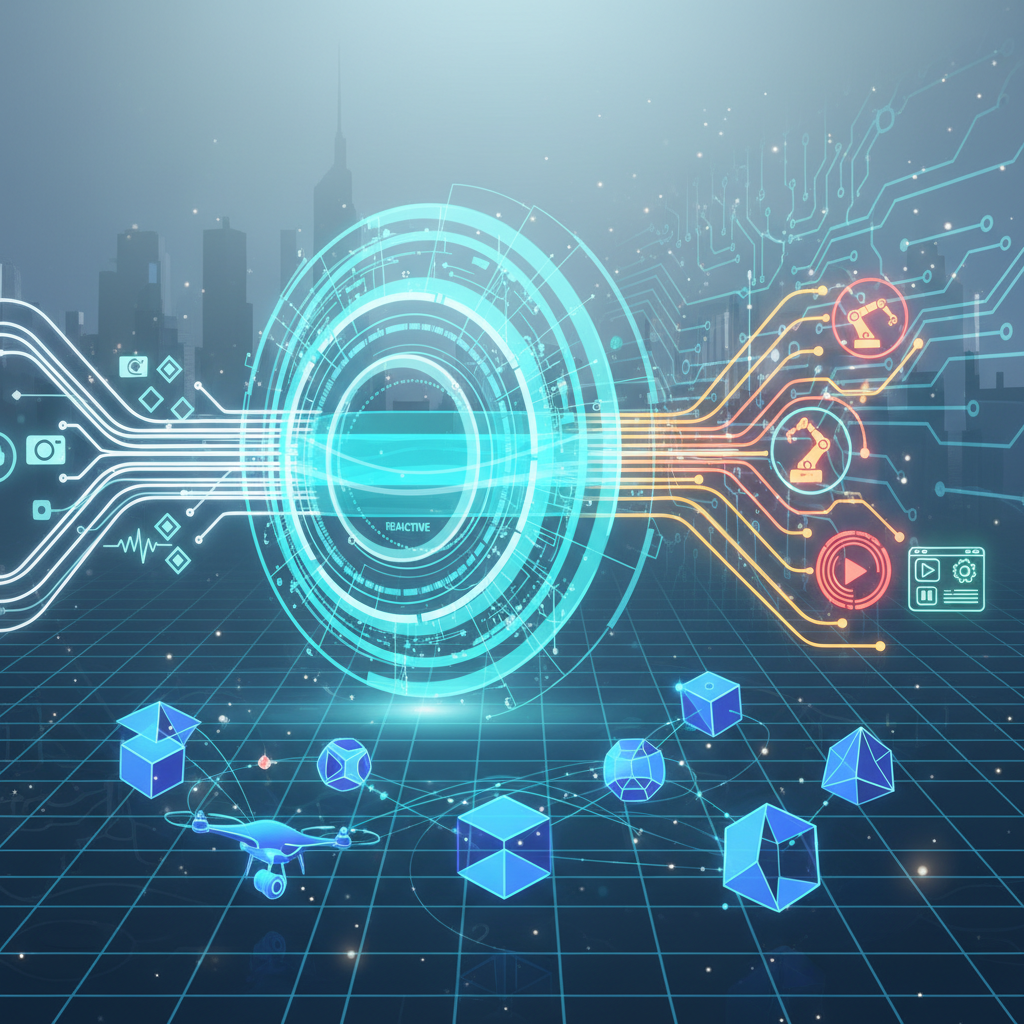
    Autonomous software agents are programs that act on behalf of a user or another program with a degree of independence. Rather than following tightly scripted, step-by-step instructions, these agents perceive their environments through sensors, reason about what they perceive, and take actions through actuators to pursue goals in dynamic settings. That simple definition captures a wide family of systems—from small task-focused bots to networks of cooperating programs—bound together by the idea of goal-directed behavior without continuous human direction.

    How agents work: the perception–decision–action loop
    At the heart of most agent designs is a loop: sense the environment, decide what to do, act to change the environment. Different architectures realize that loop in different ways, trading speed, complexity, and flexibility:
    – Reactive agents map perceptions directly to actions. They’re fast and simple, well suited to environments where quick responses matter and planning is less useful.
    – Deliberative (symbolic) agents build internal models of the world and plan using symbolic reasoning. They can handle more complex tasks and foresee consequences, but planning adds latency and computational cost.
    – Hybrid architectures combine reactive and deliberative parts to get the best of both—fast reflexes plus the ability to plan when there’s time.
    – The Belief–Desire–Intention (BDI) model frames agents in mentalistic terms: beliefs about the world, desires (goals), and intentions (committed plans) that guide action.
    – Learning agents augment this stack with machine learning—especially reinforcement learning—so behavior improves from experience rather than only from preprogrammed rules.

    Multiple minds: multi-agent systems
    When multiple agents operate together, new dynamics appear. Multi-agent systems (MAS) bring issues such as cooperation, competition, negotiation, distributed problem solving, and the potential for emergent behavior that wasn’t designed into any single agent. Research in MAS focuses on communication protocols, collective decision-making, coordination strategies, and conflict resolution so that many autonomous entities can work toward compatible or complementary outcomes.

    Where autonomous agents are used
    The article lists several application areas that illustrate the range of agent technologies:
    – Robotics and autonomous vehicles, where agents perceive the physical world and act in it.
    – Industrial control and automation.
    – Network management and routing.
    – Trading systems in finance.
    – Game AI, powering non-player characters and game dynamics.
    – Personal assistants and software agents that schedule, retrieve information, or carry out transactions.
    These areas are illustrative rather than exhaustive, showing how agentic behavior appears across both physical and virtual domains.

    What enables agents: intersecting technologies
    Autonomous agents sit at the intersection of multiple fields: artificial intelligence and planning algorithms, machine learning (including reinforcement learning), distributed systems, sensor and actuator technology for embodied agents, and reasoning methods that enable purposeful action.

    Design challenges and limitations
    Building reliable, capable agents is technically demanding. Key challenges include:
    – Coordination and communication: getting multiple agents to cooperate at scale is complex.
    – Robustness under uncertainty: dynamic, partially observable, or adversarial environments make reliable decision-making hard.
    – Scalability: maintaining performance as the number of agents or problem complexity grows.
    – Verification and testing: ensuring autonomous behaviors are correct and safe is nontrivial, especially when agents learn or adapt.

    Ethical, legal and safety considerations
    Autonomy raises important non-technical issues noted in the article. Accountability can be unclear when an agent’s decision causes harm. Privacy concerns arise when agents collect and act on personal data. Security risks exist because networked agents can be compromised or misused. The article flags these topics as areas of concern without prescribing specific policy or legal remedies.

    Context, terminology, and boundaries
    The article distinguishes autonomous software agents from simple automated scripts and from human agents: autonomy implies goal-directed decision-making rather than fixed automation. It also situates agents within the broader research traditions of intelligent agents and multi-agent systems and notes overlapping terms—“software agent,” “intelligent agent,” and “multi-agent system”—and how they relate.

    What this overview does not claim
    The article provides a neutral, conceptual picture rather than forecasts or prescriptions. It does not offer quantified predictions about economic or societal impacts, concrete governance frameworks, step-by-step implementation guides for production-grade agentic systems, or assertions about whether current agents approach general artificial intelligence. For forward-looking analysis, policy recommendations, or empirical case studies, additional up-to-date sources would be required.

    Takeaway
    Autonomous agents are a flexible, long-standing idea in AI: programs that sense, decide, and act to achieve goals with varying degrees of independence. Their architectures range from reflexive to deliberative, and they scale from single agents to complex multi-agent systems. They enable capabilities across robotics, networks, finance, and everyday software, but they also bring technical hurdles and ethical questions that make careful design, testing, and governance important as these systems are developed and deployed.

  • Erling Haaland: Viking, Villain, and the Meme Machine

    Erling Haaland: Viking, Villain, and the Meme Machine

    Know Your Meme’s June 26, 2026 collection of “30+ Erling Haaland Memes” reads like a guided tour through why one towering Norwegian footballer became the internet’s favorite joke and caricature. The article doesn’t try to crown a single funniest image or trace every origin; instead it lays out recurring visual ideas and formats that keep reappearing across X, TikTok, Reddit and beyond.

    At the center of the collection is a simple contrast: elite athleticism meets absurd online creativity. Haaland’s imposing frame, long blond hair and striking facial expressions give meme-makers a wealth of raw material. The piece groups those jokes into clear themes that explain why he’s so memeable.

    Haaland as a Viking. A large portion of the images lean into his Norwegian roots by recasting him as a mythological warrior — the “modern Viking.” Those edits play on his size and intimidating presence, turning football action shots into epic, often humorous portraits of a larger-than-life Norse figure.

    Haaland as anime or pop-culture villain. Another common approach compares him to exaggerated fictional characters — from anime antagonists to figures with absurd physiques — using over-the-top parallels that amplify his already dramatic on-field persona.

    Physical comedy and the running jokes. Many memes exploit physical traits — sprinting posture, facial tics, long blond locks — by editing Haaland into unlikely comparisons with animals, logos, and unrelated people. Two specific formats the article highlights in Know Your Meme’s archive are “Erling Haaland Scream” and “Erling Haaland Running,” both of which have become templates for new remixes.

    “Terrifying Haaland” and chase scenes. A favorite gag is to treat Haaland’s full-speed runs like horror-movie pursuits: an image of him charging down the pitch becomes an exaggerated threat in a chase scenario, often captioned to comic effect.

    Celebrity, fashion and self-aware humor. The collection also showcases edits about his clothing, luxury accessories and social-media moments. Importantly, the article suggests Haaland’s apparent willingness to be playful off the pitch helps — he doesn’t only project the seriousness expected of elite athletes, and that relaxed attitude appears to fuel the jokes.

    What the article doesn’t claim is exhaustive provenance or statistics: it’s a visual anthology rather than a forensic history. While it points to two established meme formats and shows how these images propagate across platforms, it doesn’t attempt to verify every origin, creator or engagement figure. For readers who enjoy a themed scroll through internet culture, the Know Your Meme roundup offers a neat map of how one player’s look and moments turned into ongoing creative fuel for meme-makers everywhere.

  • Singapore’s Circle Line Completes Its Loop with Three New Stations

    Singapore’s Circle Line Completes Its Loop with Three New Stations

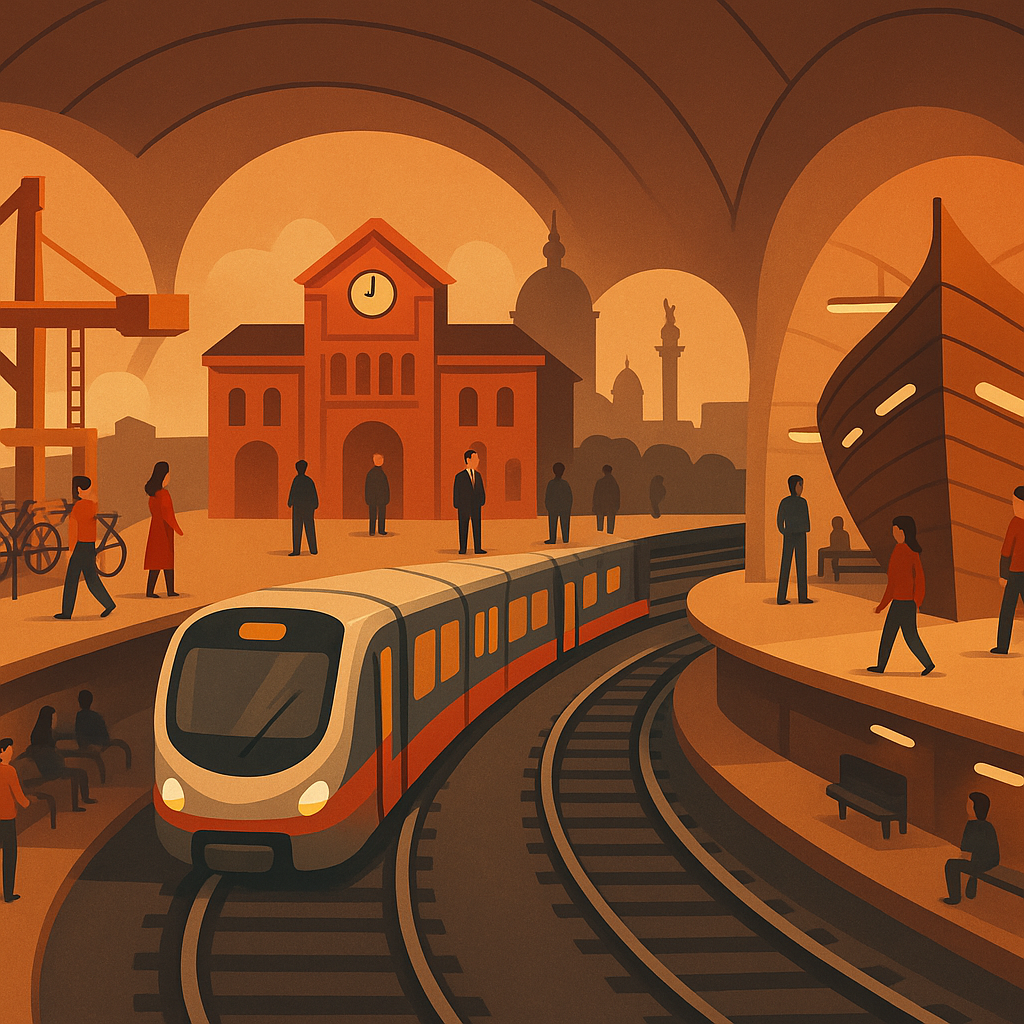
    On July 12, 2026, Singapore marked a major milestone in its public transportation journey with the opening of Stage 6 of the Circle Line (CCL), closing the loop between HarbourFront and Marina Bay stations. This final segment introduced three new stations: Keppel (CC30), Cantonment (CC31), and Prince Edward Road (CC32), seamlessly connecting the entire 39-kilometer, 33-station Circle Line.

    The completion of the Circle Line enhances connectivity across the city, promising significant benefits to over 10,000 commuters daily. With the new direct rail link, some travel times will be shortened by up to 10 minutes, bringing more convenience to those navigating Singapore’s extensive MRT network.

    Each of the new stations reflects the character and heritage of its surroundings:

    – **Keppel Station** stands out as the only Circle Line station with underground bicycle parking, offering 312 lots. Situated 20 meters underground, its design pays homage to the industrial legacy of the nearby port area, creating a unique and functional transit hub.

    – **Cantonment Station** draws from the rich history near the conserved Tanjong Pagar Railway Station. As a gateway to the Tanjong Pagar Distripark, it connects commuters to cultural landmarks including the Singapore Art Museum and other galleries, integrating heritage with modern transit.

    – **Prince Edward Road Station** is located on the outer fringes of Shenton Way within the Central Business District. Its ship hull-inspired design beautifully reflects Singapore’s maritime heritage, blending the city’s economic history with its forward-looking infrastructure.

    The Circle Line’s completion exemplifies Singapore’s dedication to expanding and modernizing its public transportation system. This milestone not only improves commuter experience but also demonstrates the city-state’s commitment to sustainable urban mobility, ensuring residents and visitors enjoy faster, more efficient travel across the island.

  • Spain’s Masterclass: A 2–0 Semi‑Final That Ended France’s Run

    Spain’s Masterclass: A 2–0 Semi‑Final That Ended France’s Run

    Spain booked their place in the 2026 World Cup final with a composed, tactical 2–0 victory over France at Dallas Stadium in Arlington, Texas on 14 July 2026. The match swung on a pivotal mid‑first‑half penalty after a challenge by France left‑back Lucas Digne on Spain teenager Lamine Yamal — a decision by referee Iván Barton that led to Mikel Oyarzabal converting from the spot and gave Spain the lead. (Source: Al Jazeera)

    That penalty proved the match’s defining moment. France, who had looked short of rhythm in the opening period and finished the first half without a shot on target, were forced to chase the game and never really recovered. The contest was compounded for Les Bleus when centre‑back William Saliba left the field with a recurring lower‑back problem and was replaced by Maxence Lacroix — an early and unwelcome disruption to France’s plans. (Source: Al Jazeera)

    Spain’s second goal, which effectively sealed the tie, arrived in the second half from defender Pedro Porro. A patient team move saw Porro play in Dani Olmo, receive the return and finish clinically to make it 2–0 and put the result beyond doubt. Spain’s defensive organisation and the creative spark of Lamine Yamal were singled out as keys to their control of the game. (Source: Al Jazeera)

    France tried to respond with attacking changes — including the introduction of Desire Doue for Bradley Barcola and later Theo Hernandez and Rayan Cherki — but could not fashion the clear openings needed to turn the tide. The article emphasises Spain’s solidity throughout the tournament (having conceded only once to that point) and frames this defeat as a significant blow for a French side that had reached the previous two World Cup finals. (Source: Al Jazeera)

    On the subject of the penalty and officiating, the reporting treats Barton’s decision as the focal turning point of the match without asserting referee malfeasance. The piece does not present a frame‑by‑frame VAR analysis or definitive proof that the call was incorrect; it simply reports the incident and its match‑changing impact. Readers should note the limits of the article’s coverage on the correctness or legality of the on‑field decision. (Source: Al Jazeera)

    With this win Spain progress to the final to face either Argentina or England, while France — whose coach Didier Deschamps will step down after the tournament — are left to contest the third‑place play‑off as his final match in charge. Ultimately, the night belonged to a Spanish side that combined tactical discipline, defensive strength and moments of youthful creativity to deliver a memorable semi‑final performance. (Source: Al Jazeera)

  • Preferred Source for an Agentic AI Research Brief

    Preferred Source for an Agentic AI Research Brief

    Yes — I can prepare a research brief on “agentic AI.” I prefer a technical/academic paper as the source because it usually contains the most precise definitions, methods, and evidence, which makes for a rigorous brief. However, I can also work from a news article (for timely developments and accessible framing) or a blog post (for opinionated or interpretive perspectives) if you prefer. Which source would you like me to use? Please paste the article or a link to it, and any particular focus (e.g., safety, capabilities, policy, or applications).

  • Singapore’s Cabinet Reshuffle Signals Renewal With a Steady Hand

    Singapore’s Cabinet Reshuffle Signals Renewal With a Steady Hand

    Singapore’s latest Cabinet reshuffle is not framed as a break with the past, but as a carefully managed handover of greater responsibility to a newer generation of leaders. Announced by Prime Minister Lawrence Wong on July 22 and taking effect on July 27, the changes are designed to keep experienced hands close to the centre of government while younger office-holders move into more demanding roles.

    The clearest symbol of that balance is K. Shanmugam’s appointment as Senior Minister. He will remain Coordinating Minister for National Security and Minister for Home Affairs, making him the first Senior Minister to lead a ministry and the first to receive the title without having previously served as prime minister or deputy prime minister. Along with Senior Minister Lee Hsien Loong, he is expected to continue advising and mentoring emerging leaders.

    At the same time, the reshuffle gives several office-holders a sharper chance to prove themselves. Jeffrey Siow, David Neo and Sim Ann will become full ministers, taking on responsibilities across transport, finance, culture, community, youth, education, foreign affairs and home affairs. Jasmin Lau will become Senior Minister of State in the Ministry of Digital Development and Information while also serving as Acting Minister for Manpower.

    Economic portfolios are also being reorganised. Tan See Leng will move from Manpower to become Minister for Trade and Industry, overseeing energy and industry. From October 1, the Ministry of Trade and Industry will be renamed the Ministry of Energy, Trade and Industry, while Deputy Prime Minister Gan Kim Yong continues to oversee trade and Singapore’s broader economic strategy.

    The line-up also brings labour chief Ng Chee Meng back into Cabinet as Minister in the Prime Minister’s Office, and opens the door for more politicians to assume or expand government responsibilities. Goh Pei Ming will become Senior Minister of State in Home Affairs and Social and Family Development, while Shawn Loh and Foo Cexiang will enter government as ministers of state.

    The reshuffle follows the unexpected resignations of Koh Poh Koon and Faishal Ibrahim, but its larger message is one of continuity through renewal. Rather than a wholesale change of government, it is an effort to keep senior experience in place while testing and preparing the leaders who will carry more of Singapore’s future responsibilities.