Category: Uncategorized

  • Lionel Messi: The End of an Era in Argentine Football

    Lionel Messi: The End of an Era in Argentine Football

    On August 31, 2026, football legend Lionel Messi announced his retirement from international football, closing a storied 21-year chapter marked by unparalleled achievements and heartfelt moments. At 39, Messi concluded his international career after Argentina’s narrow 1-0 defeat to Spain in the World Cup final, a bittersweet ending to a journey that saw him become Argentina’s all-time leading scorer with 125 goals across 207 appearances.

    Messi’s international legacy is highlighted by landmark triumphs, including leading Argentina to victory at the 2022 World Cup and capturing two Copa América titles in 2021 and 2024. Despite the pain of his retirement decision, Messi expressed a profound understanding that the time had come. The recent passing of his father, Jorge, in August 2026 further solidified his resolve to step away from international duties.

    His final appearance for Argentina took place on October 6, 2026, in a poignant friendly match against Benin at Buenos Aires’ iconic Estadio Monumental. Dubbed “The Night That No One Wants to End,” the game was a moving tribute attended by thousands of adoring fans. Messi capped off the night by scoring a goal in a commanding 3-0 victory, a fitting farewell that encapsulated his immense contribution to Argentine football.

    While Messi hangs up his boots for his national team, his club career marches on. He continues to shine at Inter Miami in Major League Soccer, recently celebrating his fourth title with the club by winning the Campeones Cup.

    As Argentina bids farewell to its most capped player and greatest goalscorer, Messi’s legacy is forever etched in football history—a testament to his extraordinary talent, unwavering dedication, and the deep bond he shared with fans worldwide.

  • Bitcoin’s Meteoric Rise in 2024: What Fueled the Surge?

    In 2024, Bitcoin demonstrated remarkable growth, starting the year at around $40,000, climbing to an all-time high of $108,000, and ultimately settling near $95,500. This surge solidified Bitcoin’s position as the top investment asset of the year, driven by several pivotal developments.

    The first major catalyst was the Bitcoin halving event in April 2024, which cut mining rewards from 6.25 to 3.125 BTC per block. This event limited the supply of new Bitcoin entering the market, enhancing scarcity and fueling price appreciation.

    Another significant driver was the approval of spot Bitcoin ETFs by the U.S. Securities and Exchange Commission in January 2024. This regulatory green light allowed retail and institutional investors to gain regulated exposure to Bitcoin, broadening the market’s accessibility.

    Institutional investment surged as a result, with BlackRock’s iShares Bitcoin Trust ETF (IBIT) leading the charge by attracting over $50 billion in inflows within 12 months. This major influx underlined growing confidence from large-scale investors.

    However, despite these positive trends, Bitcoin remains a volatile and risky asset. Potential investors should approach with caution, conducting thorough research and weighing their risk tolerance carefully.

    Overall, 2024 marked a defining year for Bitcoin, showcasing the combined power of halving-induced scarcity, official ETF approval, and massive institutional adoption in driving one of the most impressive rallies in cryptocurrency history.

  • Comparing Workflow Automation Platforms: n8n vs Make.com vs Zapier

    Comparing Workflow Automation Platforms: n8n vs Make.com vs Zapier

    Workflow automation has become essential for boosting productivity and streamlining tasks. Among the top contenders in this space are n8n, Make.com, and Zapier, each offering distinct features catering to various user needs. Here’s a detailed comparison to help you choose the right platform.

    **n8n**
    Known for its open-source nature and self-hosting capabilities, n8n appeals to users who want full control over their data and workflows without recurring execution costs. It supports complex workflows with advanced branching and allows custom code execution via JavaScript and Python nodes. Additionally, n8n integrates advanced AI features, including native LangChain nodes and support for OpenAI, Anthropic, and Ollama, enabling sophisticated AI-driven automations.

    *Pros:*
    – Open-source with free self-hosting options
    – Highly flexible and customizable workflows
    – Advanced AI integrations for enhanced automation

    *Cons:*
    – Technical expertise needed for setup and maintenance
    – Smaller app integration library (400+ integrations) compared to competitors

    **Make.com**
    Make.com stands out with its powerful visual workflow builder, allowing users to design complex, multi-branch automations without coding. Its per-operation pricing can be more cost-effective for intricate workflows. The platform also boasts robust AI integrations, including modules for OpenAI, Anthropic, Mistral, and AI agents.

    *Pros:*
    – Intuitive visual canvas for workflow creation
    – Cost-effective pricing model for complex workflows
    – Strong AI capabilities

    *Cons:*
    – No self-hosting option; cloud-only service
    – Requires time to learn and master the visual builder

    **Zapier**
    Zapier is a leader in ease of use with over 6,000 native integrations covering a broad spectrum of applications. Its user-friendly, step-based workflow builder is perfect for non-technical users needing rapid automation setups. However, its per-task pricing can become expensive at scale, and it offers less flexibility for complex customizations.

    *Pros:*
    – Extensive integration library (6,000+ apps)
    – Designed for non-technical users with an intuitive interface
    – Fast setup for simple automations

    *Cons:*
    – Higher costs for high-volume workflows due to pricing model
    – Limited customization and complex workflow support

    **Conclusion:**
    Choose n8n if you require full control and customization through self-hosting. Opt for Make.com if you prefer a visual, cost-effective solution for complex workflows with strong AI features. Zapier is ideal for users seeking quick, straightforward integrations across a vast app ecosystem with minimal technical hurdles. Each platform shines in different areas, making your choice dependent on your technical skills, workflow complexity, and budget preferences.

  • Assessing the Risk of World War III: Elevated Tensions But No Imminent Conflict

    Assessing the Risk of World War III: Elevated Tensions But No Imminent Conflict

    As of October 11, 2026, global experts remain divided on whether World War III is imminent. While there is no consensus forecasting the outbreak of a global war, analyses reveal an increased risk of large-scale conflict involving major powers compared to the relatively peaceful post-Cold War era. Various forecasting platforms estimate an annual probability of 3–5% for a direct NATO–Russia war and between 5–15% for a broader multi-power confrontation within the next several years.

    Several critical factors contribute to this heightened risk. First, multiple active flashpoints worldwide, including tensions in Ukraine, the Middle East, the Taiwan Strait, and the South China Sea, have created a volatile landscape where local conflicts could escalate unexpectedly. Second, the nuclear modernization efforts carried out by major powers like the United States, Russia, and China, combined with the erosion of longstanding arms-control agreements, add to global instability. Third, deteriorating relationships among great powers—especially between the U.S. and China, as well as the U.S. and Russia—increase the likelihood of miscalculations that could trigger wider conflict.

    Despite these worrying trends, no major intelligence community assessment currently predicts an imminent outbreak of World War III. Instead, the global security environment is best described as elevated systemic risk characterized by regional conflicts with potential cross-theater ripple effects. In this context, the threat of a large-scale global conflict remains a concern but is not considered unavoidable.

    Ongoing diplomatic efforts, the complex web of economic interdependence among nations, and nuclear deterrence mechanisms remain critical factors in preventing a global war. Though the probabilities of major conflict have increased, the international community continues to work toward stability and conflict prevention.

    In summary, while vigilance is warranted given the increased risk, there is no definitive evidence suggesting that World War III is on the immediate horizon.

  • Indonesia’s Palm Oil Industry: Balancing Economic Growth and Environmental Sustainability

    Indonesia stands as the global powerhouse in palm oil production, boasting vast plantations across its islands such as Sumatra, Kalimantan, and Sulawesi. This industry is a critical economic engine, blending large-scale corporate estates with numerous smallholder farms. Key players like Cargill, Wilmar International, ANJ Group, PT REA Kaltim Plantations, and United Plantations Berhad dominate the landscape, collectively managing hundreds of thousands of hectares and emphasizing sustainable practices backed by certifications like RSPO and ISPO.

    Cargill, for instance, operates large plantations in South Sumatra and West Kalimantan, employing thousands and maintaining RSPO-certified estates. Wilmar International, with the majority of its 234,334 hectares in Indonesia, also champions sustainability and smallholder inclusion. Similarly, ANJ Group, PT REA Kaltim, and United Plantations underscore sustainability in their operations through certification and conservation efforts.

    However, this economic triumph is shadowed by significant environmental and social challenges. The relentless expansion of palm oil plantations has been a major driver of deforestation, especially in ecologically vital areas like Borneo. From 1973 to 2015, Indonesia lost nearly 19 million hectares of primary forest, with industrial plantations responsible for a substantial portion. This deforestation jeopardizes habitats of endangered species such as orangutans, while also exacerbating air pollution due to recurrent forest fires.

    The Indonesian government has responded with moratoriums on new deforestation and initiatives to restore degraded peatlands, but enforcement difficulties and illegal clearing persist as major obstacles. Advanced technologies, including satellite monitoring and deep learning for mapping plantations, are being deployed to enhance oversight and promote sustainable practices.

    The future of Indonesia’s palm oil industry hinges on striking a delicate balance—maintaining its crucial economic role while protecting the environment and upholding social responsibility. As global demand continues, sustained commitment to sustainable cultivation and vigilant forest conservation will be essential for the industry’s long-term viability and Indonesia’s natural heritage.

  • Unraveling the Southeast Asia Haze Crisis: Causes and Challenges

    Unraveling the Southeast Asia Haze Crisis: Causes and Challenges

    The persistent haze that often blankets Southeast Asia, notably affecting Singapore, is a multi-faceted problem rooted in several interconnected factors.

    At the heart of the issue are the extensive forest and peatland fires in Indonesia, particularly in regions like Sumatra and Kalimantan. These fires, frequently set during the dry season for land clearing, can intensify under El Niño conditions which bring prolonged dry spells. The smoke from these fires travels across borders, drifting and settling over neighboring countries including Singapore.

    Meteorological dynamics further influence the haze’s reach. Winds during the Southwest Monsoon season carry smoke clouds towards Singapore, while dry weather and scant rainfall create ideal conditions for fires to ignite and spread rapidly. This regional weather interplay makes it challenging to predict and mitigate haze episodes.

    Once the haze reaches Singapore, local urban factors come into play. The city’s dense architecture, with towering buildings, can trap polluted air by slowing down air circulation. Combined with the urban heat island effect, which raises temperatures locally, this results in hotspots of worsened air quality within the cityscape.

    Compounding the problem are enforcement and land management issues. Despite Indonesia having laws to prevent fires, ineffective enforcement and illegal land-clearing methods persist, allowing the haze problem to continue unabated.

    In essence, the haze crisis is sustained by a complex blend of cross-border pollution, climatic conditions, urban environmental effects, and regulatory challenges. Resolving it demands a concerted regional approach, strengthening law enforcement, and promoting sustainable land management to safeguard the air quality and health of millions across Southeast Asia.

  • Singapore’s Economic Strength: Riding the AI Wave with Resilience in 2026

    Singapore’s recent economic journey has been nothing short of remarkable, as revealed in the latest IMF 2026 Article IV Consultation report. In 2025, the country achieved robust real GDP growth of 5.0 percent, a performance driven by its strong integration into global technology supply chains and an electronics sector thriving on the global artificial intelligence (AI) boom.

    The report spotlights manufacturing—especially electronics—as the heart of supply-side expansion. Externally oriented tradable sectors led the way, with electronics production picking up sharply thanks to buoyant global demand. On the demand side, growth was fueled by buoyant net exports, while healthy wage growth and accommodating financial conditions sustained both private consumption and investment.

    Singapore’s trade statistics underscore its deep connections to the global economy. In 2025, goods exports soared to 107.9 percent of GDP, and imports climbed to 78.7 percent, reflecting robust re-export activity in electronics. This underscores the country’s role as a hub in the global technology supply chain.

    A key element of Singapore’s stability lies in its structural and policy strengths. The city-state enjoys a strong external position, thanks to high saving rates across households and corporations, a mandatory defined-contribution pension scheme, and its role as a global financial center. Fiscal prudence—manifested in consistent fiscal surpluses—and a high GDP per capita offer further resilience, with household saving standing at 17.0 percent of GDP in 2025—twice the rate from 2000.

    Yet, the IMF draws attention to vulnerabilities. Singapore’s dependence on imported energy, particularly natural gas and oil, makes it susceptible to global oil price shocks. Recent geopolitical unrest in the Middle East has already affected energy-intensive and chemical export sectors, even as technology-related exports demonstrate resilience.

    Looking forward to 2026, Singapore’s prospects remain closely linked to the AI-driven technology cycle, but the country faces notable risks, including exposure to oil shocks, ongoing geopolitical tensions, and the possibility of a downturn in global tech demand. Still, Singapore’s prudent policies and underlying economic foundations continue to set an example of adaptability and strength in an era of uncertainty.

  • Inside the Rise of Dark Factories: The Future of Lights-Out Manufacturing

    Dark factories, also known as lights-out manufacturing facilities, represent a transformative shift in production processes. The concept revolves around factories that operate entirely without human presence, relying exclusively on automation, robotics, and artificial intelligence. The name “dark factory” comes from the fact that these facilities do not require lighting since no human workers are present on the floor.

    While the technology to achieve fully autonomous dark factories exists today, it remains an uncommon practice. Some companies have successfully implemented partial models, such as unmanned night shifts or fully automated processes within a larger production line. A notable example is FANUC, the Japanese manufacturer, which has reportedly run robot assembly lines without human intervention since 2001.

    Despite these advances, scaling an entire factory to operate 24/7 without human oversight poses several challenges. It demands highly advanced automation systems and AI capable of managing complex, variable tasks. Maintenance also becomes critical to ensure uninterrupted production, requiring robust protocols and predictive technologies to quickly address any faults.

    Economically, the decision to adopt a dark factory model depends on multiple factors including product complexity, production volumes, and the substantial initial investment in technology infrastructure. As such, while dark factories are feasible and operational in specific contexts, their broader application across diverse manufacturing sectors is still evolving.

    In conclusion, dark factories symbolize the future potential of manufacturing — a future where human roles shift from floor operations to higher-level machine supervision and system optimization. Though not yet widespread, the progress seen in this domain points toward a new era of efficient, lights-out production systems reshaping how goods are made globally.

  • Navigating Global Bond Funds as an Investment Opportunity in 2024

    Navigating Global Bond Funds as an Investment Opportunity in 2024

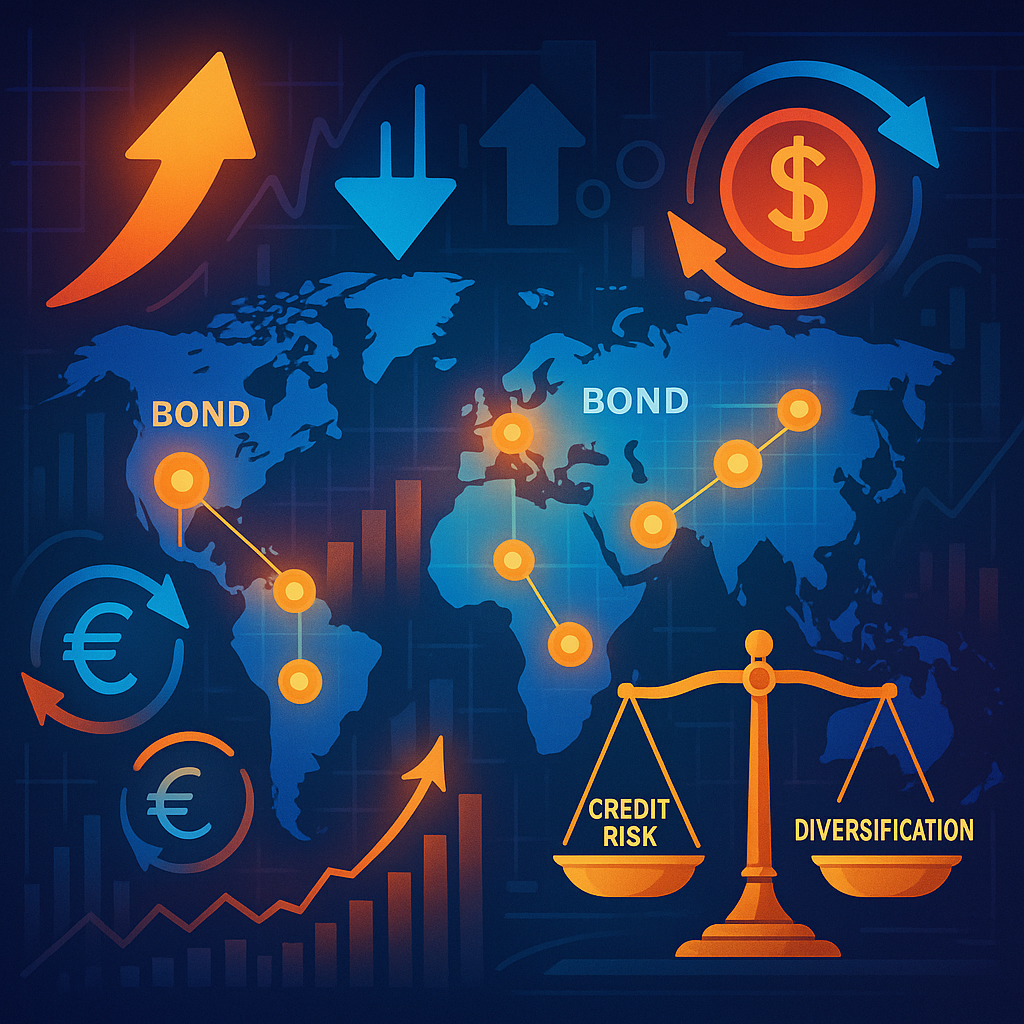
    As investors look to diversify and stabilize their portfolios in 2024, global bond funds have emerged as a topic of interest. However, entering this investment space requires a nuanced understanding of several crucial factors that influence performance and risk.

    One of the primary considerations is the current landscape of interest rates and inflation. Central banks worldwide are actively adjusting rates in response to inflationary pressures. Since rising interest rates generally lead to a drop in bond prices, understanding the trajectory of interest rates in important markets is vital for investors in global bond funds.

    Currency risk is another important aspect. Investing in bonds across different countries exposes investors to fluctuations in exchange rates, which can impact overall returns. While hedging strategies are available to manage this risk, they often come with additional costs that must be weighed carefully.

    Credit risk cannot be overlooked either. The financial stability and creditworthiness of bond issuers differ significantly across regions, necessitating thorough evaluation when selecting bonds within a fund.

    One of the standout advantages of global bond funds is the diversification benefit they can provide. By spanning multiple markets, these funds have the potential to lower portfolio volatility. Yet, this advantage is contingent on the correlation between bond markets globally and other asset classes held by the investor.

    Lastly, broader economic conditions such as global growth rates, geopolitical developments, and fiscal policies play a critical role in shaping bond market dynamics. Staying informed about these macroeconomic factors can help investors make well-grounded decisions.

    In summary, global bond funds and ETFs offer attractive diversification and return opportunities but come with inherent risks that should be carefully managed. Investors are encouraged to thoroughly assess their risk tolerance, investment timelines, and the prevailing economic environment before including these funds in their portfolios.

  • Chasing the Magical Northern Lights in Finland: Your Ultimate Guide

    Finland, especially its northern reaches, is celebrated worldwide for offering some of the most spectacular and reliable views of the Northern Lights, or aurora borealis. The aurora season here runs from late August to early April, with peak activity typically seen around the equinoxes of September–October and February–March. This makes the current time, mid-October, an ideal moment for travelers eager to witness this mesmerizing natural light show.

    The prime locations for Northern Lights viewing are in Finnish Lapland and northern Lakeland. Lapland, nestled within the Arctic Circle, enjoys long, dark winter nights perfect for sky gazing. Notable spots include Rovaniemi, Levi, and the remote wilderness of Utsjoki, each offering excellent vantage points to experience the auroras in all their glory.

    For the best chance to see the lights, it’s crucial to seek out clear, cold nights away from light pollution. Open areas such as frozen lakes or hilltops provide unobstructed views between 9:00 PM and 2:00 AM, when auroral activity is most visible.

    Beyond their stunning beauty, the Northern Lights hold special cultural significance in Finland. Known locally as “revontulet” or “fox fires,” Finnish folklore tells of a magical fox that sweeps snowflakes into the sky with its tail, creating the luminous displays.

    To enhance your visit, consider staying in unique accommodations designed for aurora viewing—glass-roofed cabins or hotels that allow guests to watch the spectacle from the warmth and comfort of their rooms. Complement your night sky adventures with exciting Arctic activities like snowmobiling, husky sledding, or visiting reindeer farms, which add a rich layer to the Lapland experience.

    With the peak season approaching, now is the perfect time to plan your trip to Finland and immerse yourself in the enchanting world of the Northern Lights. For a preview of what awaits, a captivating video of Lapland’s sky turning green offers a glimpse into the magic of Finland’s legendary auroras.