Category: Uncategorized

  • A New Hawker Stop in Punggol—and the Systems Behind It

    A New Hawker Stop in Punggol—and the Systems Behind It

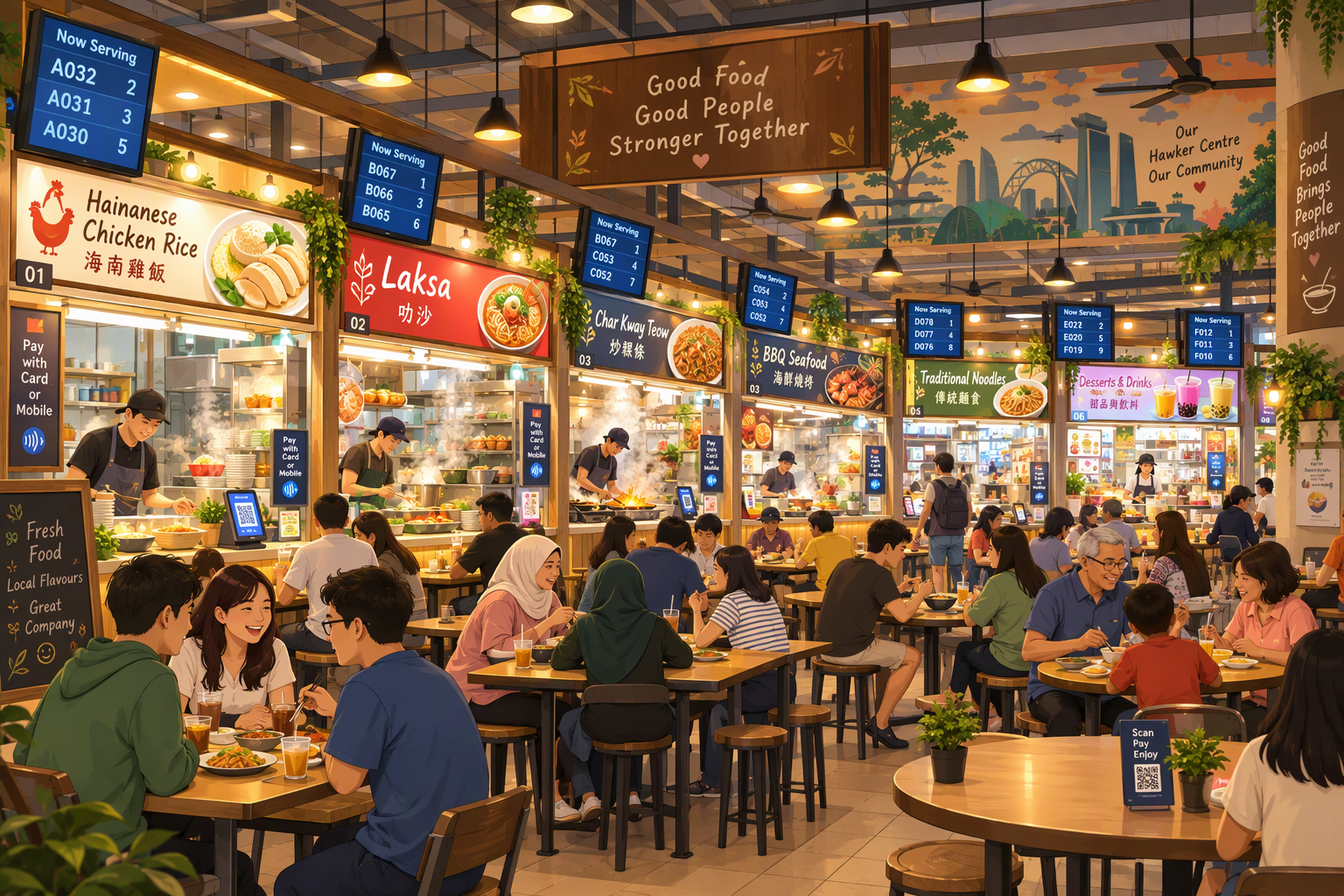
    A new hawker centre can offer more than a place to find a meal. At Punggol Coast Hawker Centre, familiar food traditions sit alongside newer hawker businesses, while technology is built into the way the centre handles payments and monitors activity.

    The centre officially opened on 25 July 2025. Near Punggol Coast MRT station, it has 40 stalls and 576 seats. CNA Lifestyle’s report introduces the range of food on offer and profiles five stalls for diners to try, including the kinds of choices suggested in its headline: handmade puffs and affordable seafood. The centre also includes Michelin-recognised eateries.

    One feature is available at every stall: cashless payment systems. That makes cashless payment part of the centre’s setup, but it does not mean the centre is cashless-only. The report does not specify whether every stall accepts every possible payment method, or how many diners choose to pay without cash. It is an example of one newly opened hawker centre offering cashless systems throughout—not evidence, by itself, of how hawker centres across Singapore are changing.

    The centre also uses an AI video analytics system to help manage queues and keep an eye on potential hazards. The system maps foot traffic, tracks queue times and can identify issues such as spills or smoke. Stallholders can access real-time information about customer flow, which may help them plan manpower and speed up service.

    That description offers a glimpse of how information could support the practical work of running a food stall. A clearer view of customer flow may help stallholders decide when they need more staff; monitoring can also help flag hazards. But the article describes the system’s functions and how the information may assist stallholders. It does not report results showing how much faster service has become, or explain the cost or financing of the technology.

    For visitors, Punggol Coast Hawker Centre brings together 40 stalls and a mix of established food offerings, newer businesses and Michelin-recognised eateries. The article’s five stall recommendations give readers a starting point for exploring that mix, while the centre’s payment and queue systems show how this particular new food destination is organised. It is a useful snapshot of one hawker centre: a place to discover food, with behind-the-scenes tools designed to support its daily operations.

    Source: Punggol Coast Hawker Centre: 5 stalls to visit for handmade puffs, affordable seafood and more, CNA Lifestyle

  • Behind the Worlds We Watch: Concept Art Awards Celebrate Creative Vision

    Behind the Worlds We Watch: Concept Art Awards Celebrate Creative Vision

    Before an animated character appears on screen or a game world opens up to explore, there is a creative question: what might this person or place look like? Concept art helps answer questions like these, developing characters and imagined settings for entertainment. At the 2026 Concept Art Association Awards, artists behind that work took centre stage.

    Held on October 24 at LightBox Expo in Pasadena, California, the awards recognised visual development across live-action media, animation, video games and tabletop games. The range matters: concept artists contribute to many kinds of entertainment, even when their work happens behind the scenes. Rachel Meinderding, a co-creator of the awards, said the event spotlights artists whose work supports major entertainment properties.

    The awards honoured creators at different points in their careers. Animation director Brad Bird received the LBX Luminary award, while illustrator and production designer Yoshitaka Amano received a Lifetime Achievement award. The ceremony also recognised illustrator Eyvind Earle, who died in 2000, posthumously.

    Other winners were recognised for specific contributions. Thomas Herpitch received an award for character design on Adventure Time: Fionna and Cake. Andreas Zafiratos won for tabletop concept illustration. The article also cited work including character concept art for Star Trek: Strange New Worlds and environment design for World of Warcraft: Midnight.

    Together, these examples show how broad the field can be. Some artists help shape characters; others develop environments or create illustrations for tabletop games. The article describes the awards as spanning a range of studios and entertainment properties, rather than concentrating on just a few. That variety offers a glimpse of the many creative teams and fictional worlds supported by visual development.

    The event also made room for artists still building their careers. Qamdhyn Hale received the Wacom Rising Star award, while Paul Wu and Syan Belemkaddem won in student categories. Their recognition sat alongside honours for established creators, linking the work of experienced artists with the next generation.

    Concept art may not always be the part of a film, series or game that audiences notice first. But it helps develop the characters and imagined settings that entertainment brings to life. By celebrating both familiar names and emerging artists, the 2026 awards drew attention to the creative work behind what audiences eventually see and play.

    Source: Concept Art Awards 2026 Honor Creators From Animation Legends To Stars Of The Future, Forbes

  • Cash, QR Codes and the Hawker Stall: Why the Shift Is Uneven

    Cash, QR Codes and the Hawker Stall: Why the Shift Is Uneven

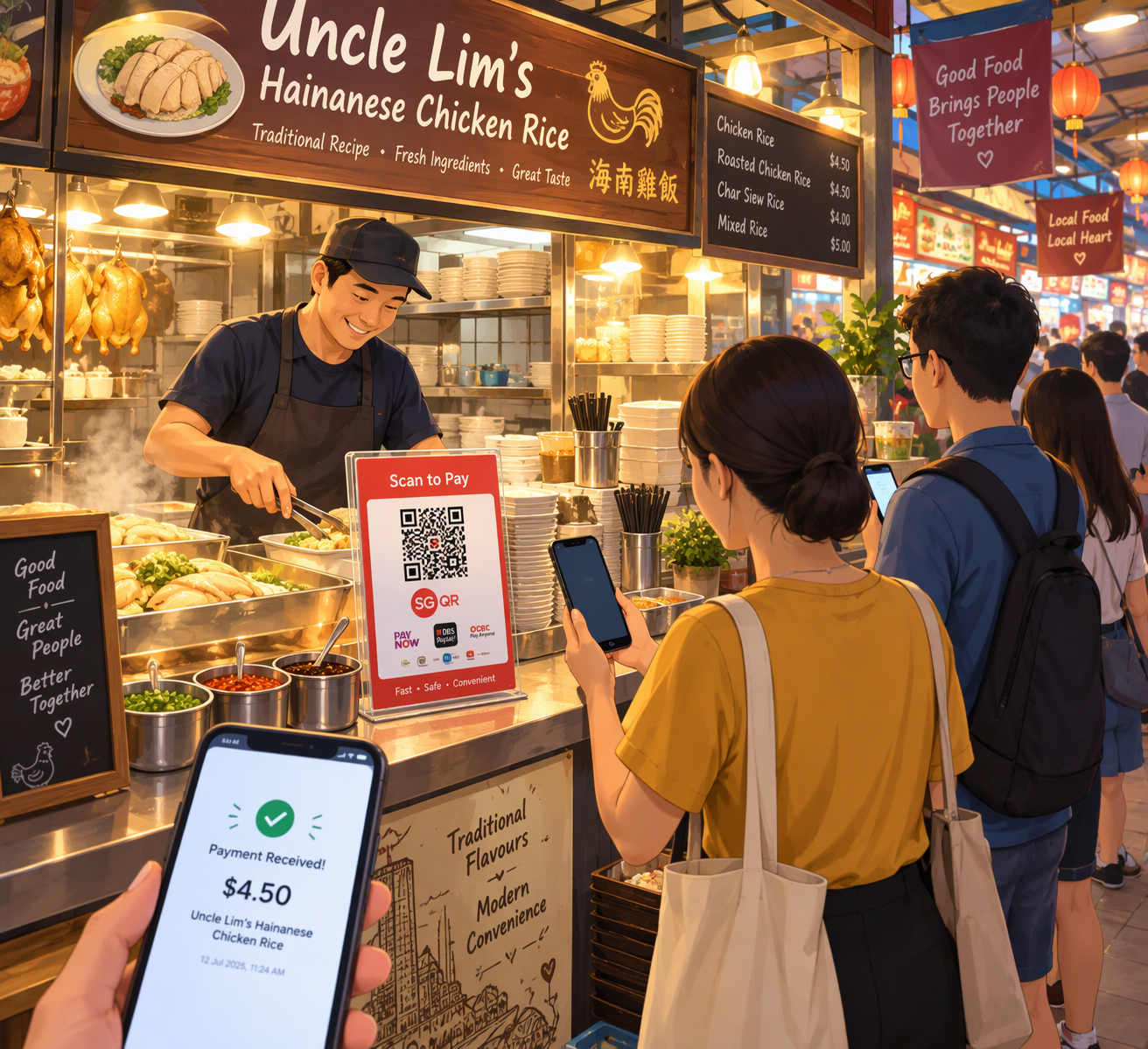
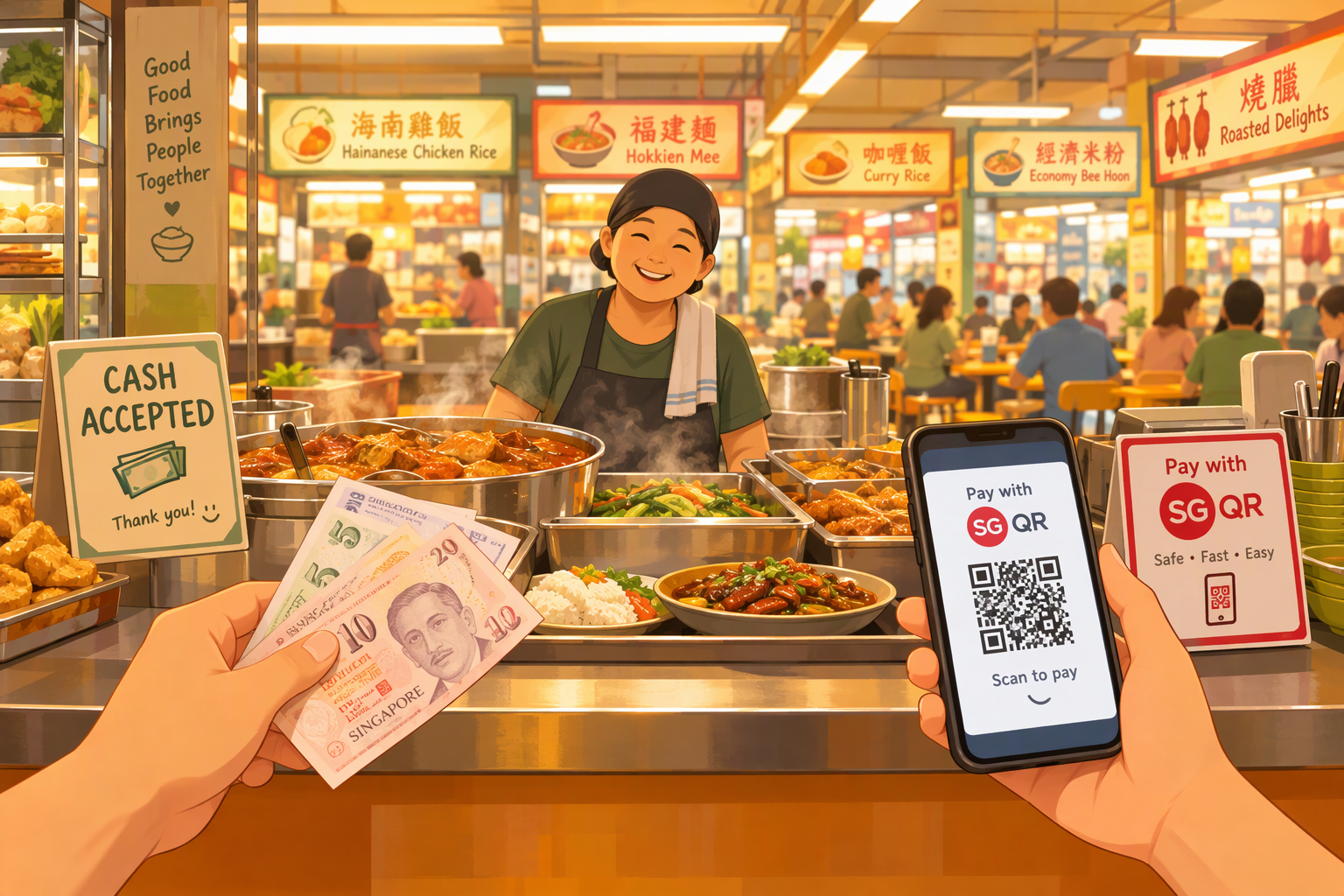
    At some hawker stalls, paying for lunch means scanning a QR code. At others, cash remains the only option. Singapore’s move towards digital payments is changing how customers pay, but the experience at the counter shows why the transition is not the same for every hawker.

    The Straits Times spoke with stallholders across eight hawker centres who had not adopted digital payments. Their reasons were practical: some found digital platforms difficult to use or remember, while others had trouble seeing screens or checking whether a transaction had gone through. There was also concern that customers might be delayed or inconvenienced as they used payment apps.

    At West Coast Food Centre, 65-year-old noodle-stall owner Angie Sim accepts cash only. She said it was easier for her and suited many of her customers, whom she described as older and less familiar with technology. For her, sticking with cash is a way to keep the everyday exchange straightforward for both sides of the counter.

    A drinks-stall owner in his 70s at ABC Brickworks Market & Food Centre described a different challenge: remembering how digital platforms work and verifying payments when business is busy. If a customer had no cash, he sometimes let the person take the drinks and return to pay later. At Albert Centre Market and Food Centre, another drinks-stall owner, in his 60s, also found checking electronic transactions troublesome. A vegetarian-stall owner at Alexandra Village Food Centre worried that a customer might say a payment had succeeded when it had not.

    Yet QR payments can make work easier for other hawkers. More than 11,500 hawkers had started using SGQR, a standardised QR code introduced in 2018 to help stalls accept payments from multiple mobile wallets. Madeline Chen, who runs a braised-pork stall at Chinatown Complex Market & Food Centre, said digital payments reduced the work of handling cash, particularly when she was busy. Some regular customers even scanned a photograph of her SGQR code before collecting their food.

    The Hawkers Go Digital programme began in 2020 to encourage adoption. Under the scheme described in the article, the government covered a 0.5 per cent transaction fee on the first $20,000 of a stall’s monthly e-payment transactions. On October 10, 2024, Enterprise Singapore and the Infocomm Media Development Authority announced that the fee subsidy would be extended until the end of 2025. The stated aim was to encourage digital payment adoption among 18,000 stallholders in government-run food centres.

    The contrast is a reminder that digitalisation is a gradual change, not evidence that cash has vanished from hawker centres. QR payments offer convenience for some stallholders, while others weigh them against questions of access, confidence and payment checks. For now, the hawker-centre counter may offer a choice between newer technology and familiar cash—and that choice reflects the different needs of the people serving and buying the food.

    Source: Why cash is still king for some hawkers in Singapore despite digitalisation push, The Straits Times

  • Foo Fighters’ Surprise Singapore Shout-Out to FairPrice Cashews

    Foo Fighters’ Surprise Singapore Shout-Out to FairPrice Cashews

    At a Foo Fighters concert during the Singapore Grand Prix, frontman Dave Grohl gave an unexpected shout-out—not to another band or a race car, but to a FairPrice snack: Fried Chicken Cashews.

    The moment came as Grohl introduced bassist Nate Mendel. Joking, “As the colonel would say, original recipe,” he compared Mendel to the snack and said he had tried some, adding that they were “pretty good.” It was a brief bit of stage banter, but it gave a familiar supermarket product an unusual place in the concert conversation.

    FairPrice later shared the moment on Instagram. The post drew comments from people saying they enjoyed the snack too. One commenter guessed that Grohl’s mention might send packs flying off the shelves. FairPrice answered that it had plenty of stock ready.

    That exchange turned a passing joke into a small online conversation: a musician’s casual remark, a supermarket’s response, and snack fans joining in. It also showed how an everyday product can attract attention when it appears in an unexpected setting. But the article does not say that the shout-out led to higher sales, or that the cashews sold out. Those outcomes remain unconfirmed.

    The article listed the snack at S$4.90 per pack and said it was still available “as of our last check.” That is a snapshot from the article, not a guarantee of its current price or availability. The report was originally published by 8Days on 8 October 2025 and later updated by CNA Lifestyle on 3 November 2025.

    So the story’s main surprise is simple: during a Foo Fighters performance at the Singapore Grand Prix, Dave Grohl brought FairPrice’s Fried Chicken Cashews into the spotlight with a quick joke and an approving comment. Whether the mention changed anything at the tills is another question—and one the article does not answer.

    Source: Rock band Foo Fighters revealed their love for FairPrice’s fried chicken cashew nuts during F1 concert, CNA Lifestyle (story originally published in 8Days)

  • Cashless, but Not Always Simple: Singapore’s Digital Payment Puzzle

    Cashless, but Not Always Simple: Singapore’s Digital Payment Puzzle

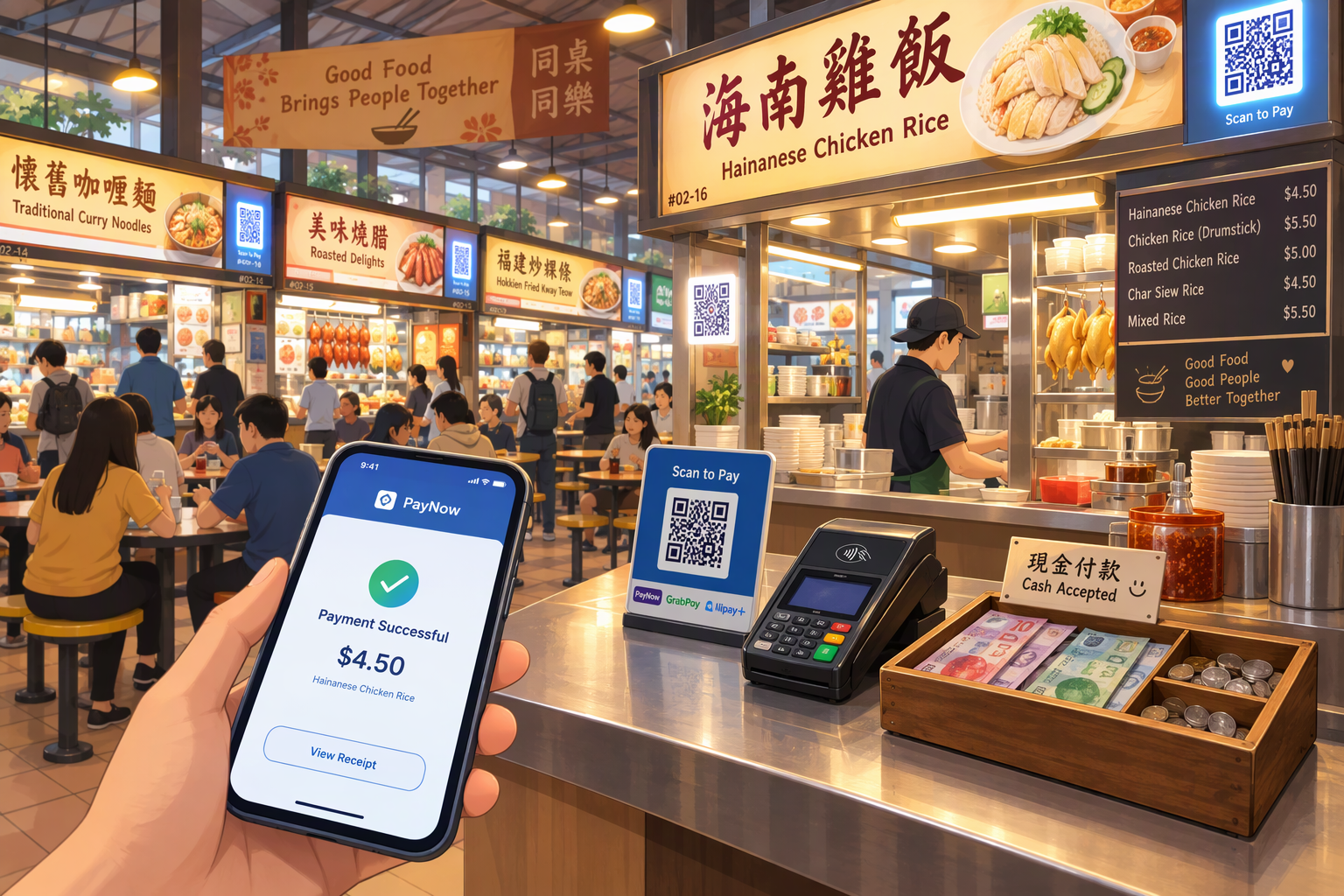
    At a hawker centre, paying by phone can look effortless—until you reach the stall and spot several QR codes. Which one should you scan? And will your payment app work with it? Digital payments may offer more ways to pay, but more choice does not always mean a simpler experience.

    That is the puzzle explored by Daniel Rabetti, an assistant professor of finance, in a commentary for NUS BizBeat. He describes how customers at Singapore’s hawker centres and neighbourhood shops can encounter different payment options that do not necessarily work together. A NETS QR code, for instance, may not work with Google Pay. With SGQR, customers may still need to choose a compatible wallet.

    The variety has developed over time. NETS launched in 1985, and PayNow followed in 2017. Private services and digital wallets—including GrabPay, Singtel Dash, Apple Pay and Google Pay—also became part of the landscape. According to Rabetti, these developments helped bring digital payments into everyday, small-value purchases, such as buying food at a hawker stall.

    But each system can come with its own app, QR arrangements, technical standards and settlement processes. So a payment method that works smoothly at one stall may not be the same one a customer can use at the next. The result, the commentary argues, is a fragmented experience: people may have many ways to pay without having one that works everywhere.

    Rabetti also points to reasons NETS remains useful. It is familiar, has a wide merchant network and offers predictable fees—practical features for hawkers and small retailers. Its card and QR payment options may also be easier to use for seniors, people with disabilities and others who find complex apps challenging.

    The article says NETS leaders have described efforts to modernise the service, including expanding QR acceptance, adding contactless features and pursuing cross-border compatibility. Those changes raise a bigger question: should Singapore move towards a more unified digital-payment system, so customers do not have to work out which app or code fits each transaction?

    There is no easy answer in the commentary. Different services have grown to meet different needs, while established options such as NETS offer familiarity and practical advantages. The challenge is to make paying digitally feel straightforward, not just to add more ways to do it. As cashless payments spread, the experience at the counter may depend on whether the systems behind each QR code can work together.

    Source: Cashless but confusing: Can Singapore fix its digital payments system?, NUS BizBeat

  • Anirudh’s XV Tour: A Singapore Finale in the Making

    Anirudh’s XV Tour: A Singapore Finale in the Making

    A tour’s final stop can feel like more than the end of a journey. In a September 24, 2026 article, Tabla announced that Anirudh Ravichander’s international XV Tour was scheduled to conclude in Singapore two days later, with a concert at the Singapore Indoor Stadium.

    Titled “ANIRUDH XV TOUR: Live in Singapore,” the show was planned to mark 15 years of Anirudh’s music career. The article listed several songs expected to feature, including “Powerhouse,” “Thalapathy Katcheri!,” “Pathikichu,” “Kanave Kanave,” “Hoyna” and “Arabic Kuthu.” These were expected selections, not a confirmed final set list.

    The Singapore date was described as the last stop after concerts in Auckland, Melbourne, Sydney, Dallas, New Jersey and Toronto. Across the tour, Anirudh had been travelling through Australia, New Zealand, the United States and Canada before the planned finale here. Doors were scheduled to open at 5:30 p.m., with the concert due to begin at 7:30 p.m. Tabla reported that limited tickets remained available through SISTIC at the time of publication.

    The event was organised and produced by Maestro Productions Global, a Singapore-based company founded in 2018 by Parthiban Murugaiyan. According to the article, the company had expanded its operations to seven countries: Singapore, the United States, Canada, Australia, Sri Lanka, the United Kingdom and New Zealand. It had also worked with a wide range of artists, including Ilaiyaraaja, A.R. Rahman, S.P. Balasubrahmanyam, K.S. Chithra, K.J. Yesudas, Yuvan Shankar Raja and Harris Jayaraj.

    There was already a Singapore connection in Anirudh and Maestro’s history. The article recalled their March 2023 concert at the same venue, which drew around 12,000 people and featured a 360-degree stage intended to bring the performer closer to the audience. For the 2026 show, Tabla described plans for a refreshed set list, recent releases, elaborate production and audience interaction.

    That background gave the announced finale two strands of meaning: a 15-year career milestone for Anirudh, and a return to the home base of the Singapore-founded promoter behind the tour. It also placed Singapore at the end of a run spanning several continents.

    The article was published before the scheduled September 26 concert, so it does not confirm whether the show went ahead as planned or what its final set list, attendance or audience response was. What it captures is the anticipation: a major tour’s planned closing night, set in Singapore and shaped by a partnership with roots here.

    Source: Anirudh to Close 15th Anniversary Tour in Singapore, Tabla

  • After the SGQR Subsidy, Hawkers Weigh Convenience Against Cost

    After the SGQR Subsidy, Hawkers Weigh Convenience Against Cost

    A familiar payment sound can make a busy hawker stall run more smoothly. But after government support for SGQR fees ended, stallholders have had to decide whether the convenience is worth paying for.

    The subsidy under the Hawkers Go Digital programme ended in June 2026. Hawkers who joined by December 31, 2025, had been eligible for support through that month. Those who continue using SGQR now pay a transaction fee of 0.5%.

    For some hawkers, even a small fee matters when margins are tight. One noodle-stall operator at Hong Lim Market and Food Centre switched to PayNow or PayLah. She told 8world that the SGQR fee would reduce profits as food and other costs rose, while her prices had not changed.

    Other stallholders see reasons to keep the QR code. One hawker said SGQR’s payment confirmation sound was helpful: when preparing food, it could be difficult to keep checking a phone for PayNow notifications. A clear confirmation can make it easier to serve customers without pausing to check a screen.

    SGQR also brings together multiple payment options. NETS told 8world that it supports 16 payment applications, including UOB TMRW, WeChat Pay and other cross-border options. That range may matter to stalls serving tourists, some of whom may prefer payment methods from overseas. The article describes well-known hawkers keeping SGQR for such customers while offering local diners PayNow or PayLah.

    The reporter found that most hawkers encountered during visits to several hawker centres continued using SGQR, while one or two had switched to personal PayNow. That is a snapshot from those visits, not a national count or representative survey, so it cannot show how many hawkers across Singapore stopped using SGQR after the subsidy ended.

    NETS also reported that hawker SGQR payment volume rose by a double-digit percentage year on year from January to July 2026. The article does not give a precise increase. Enterprise Singapore and IMDA said digital payments had become widely accepted and mature, and that the programme had achieved its goal, so the subsidy ended as planned.

    The change leaves each stall to balance its own needs: a fee against tight costs, a useful confirmation sound against checking a phone, and a broad choice of payment apps against simpler alternatives. For hawkers, there is no single answer—the right choice depends on the customers they serve and what works in the rhythm of a busy stall.

    Source: Hawkers must pay fees after Hawkers Go Digital SGQR subsidy ends; most continue using it (translated), 8world

  • Please Share the Article Brief

    Please Share the Article Brief

    I received the SVG illustration, but not the research brief for the article. Please send the article’s title, publisher, date, URL and summary so I can write an accurate blog post based only on that source.

  • A Research Topic to Get You Started

    A Research Topic to Get You Started

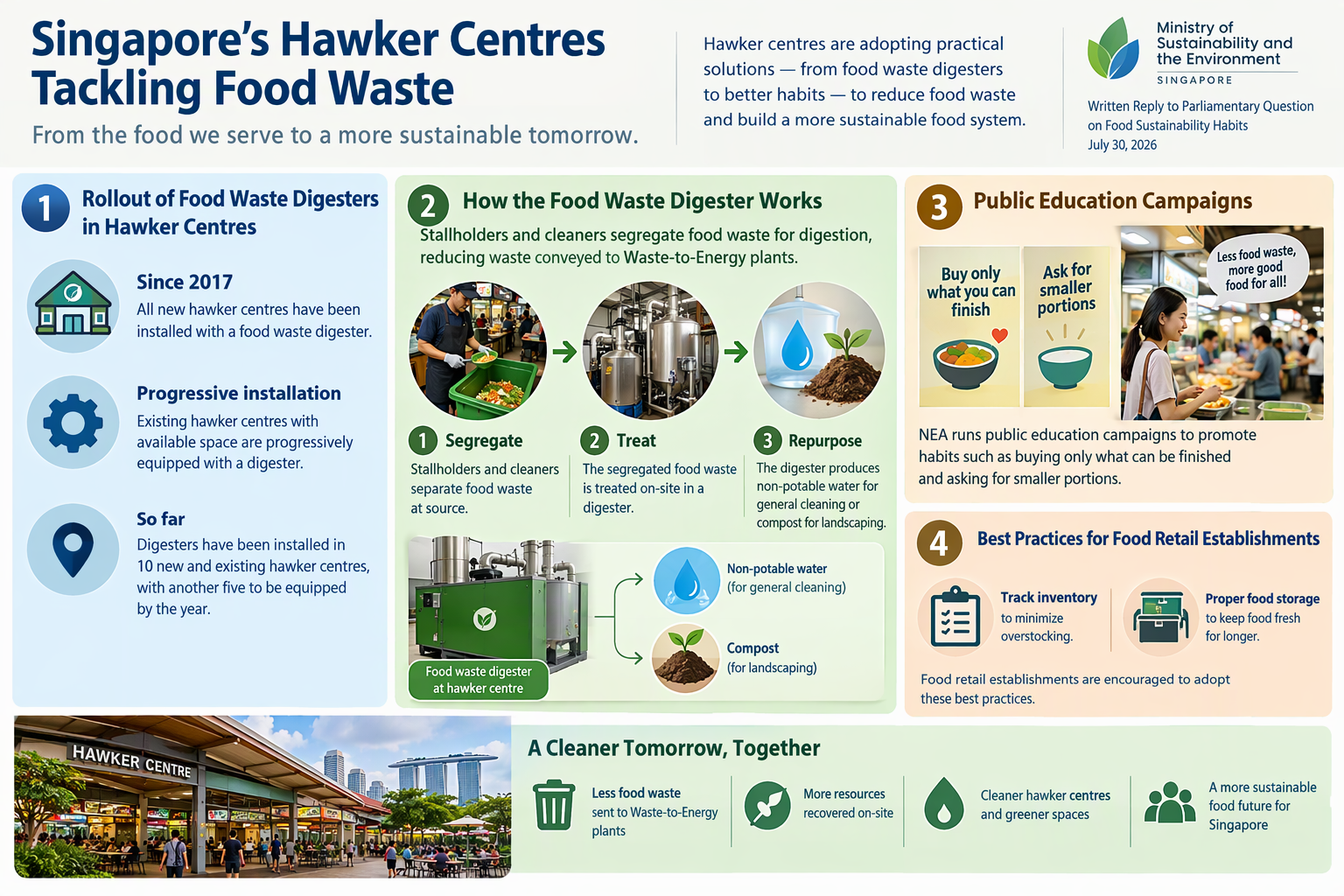
    How are Singapore’s hawker centres adapting to reduce food waste? Look for one recent article about the issue, then share its title, publisher, date, URL and summary under the requested headers.

  • A QR Code Beside the Cash Tin: Hawker Centres Test a New Way to Pay

    A QR Code Beside the Cash Tin: Hawker Centres Test a New Way to Pay

    At Tanjong Pagar Plaza Market and Food Centre, a customer could pay for a meal by scanning a QR code instead of reaching for cash. The system offered a glimpse of another way to settle a hawker-centre bill—but its arrival also raised a practical question: would diners and stallholders find it useful if cash remained their habit?

    The centre was described in the article as Singapore’s first hawker centre to introduce QR-code payments. At the time of reporting, almost every stall displayed a QR code, and NETS had recently rolled out a standardised code there. Customers could scan the code with a banking app, enter the amount and wait for confirmation when the stall’s terminal printed a receipt. That terminal also accepted NETS and NETS FlashPay.

    For the centre’s association chairman, Benson Low, the aim was to give customers more choices. He encouraged hawkers to take part so diners could choose how to pay. A QR code could offer an alternative to cash, while the terminal brought several payment methods together at the stall.

    But adding an option did not mean everyone was ready to use it. Cash remained the preferred choice among the customers interviewed. Low estimated that 95 per cent of customers at his own stall paid in cash; other stallholders interviewed reported similar figures. That number was his estimate for his stall, not a survey of hawker-centre customers across Singapore.

    The diners’ comments show why a new payment method might not suit everyone straight away. Tay Ching Ching said her phone did not support the technology and that she found cash more convenient. Another diner, identified as Mr Koh, thought the cashless options were good and easy to set up, but said he was not accustomed to using them and paid with cash.

    There was also a broader standardisation effort in the picture. The article mentions a taskforce called SGQR, which aimed to establish standardised QR specifications that could accept domestic and international payment schemes by the end of 2017. The brief does not establish whether that aim was achieved, or what the longer-term effects of the rollout were.

    The scene at Tanjong Pagar Plaza captures both sides of trying a new payment system: it can widen the choices available, but its presence alone does not make it the preferred choice. The article’s examples are specific to this centre and the people interviewed. For those hawkers and diners, the QR code opened a new route to payment—while cash still had a firm place at the counter.

    Source: Going cashless at hawker centres: Challenges and opportunities, CNA Lifestyle