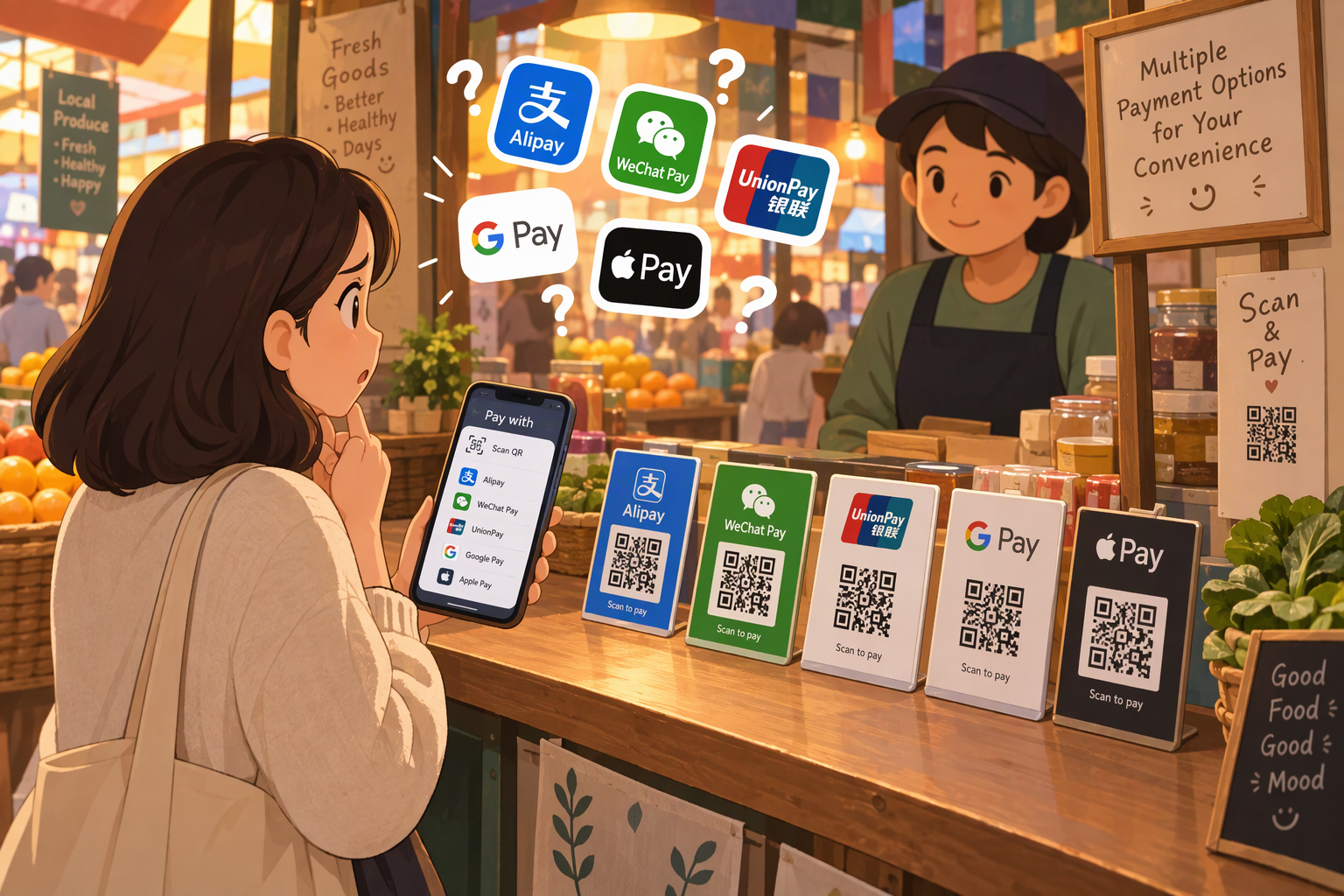
At a hawker centre, paying by phone can look effortless—until you reach the stall and spot several QR codes. Which one should you scan? And will your payment app work with it? Digital payments may offer more ways to pay, but more choice does not always mean a simpler experience.
That is the puzzle explored by Daniel Rabetti, an assistant professor of finance, in a commentary for NUS BizBeat. He describes how customers at Singapore’s hawker centres and neighbourhood shops can encounter different payment options that do not necessarily work together. A NETS QR code, for instance, may not work with Google Pay. With SGQR, customers may still need to choose a compatible wallet.
The variety has developed over time. NETS launched in 1985, and PayNow followed in 2017. Private services and digital wallets—including GrabPay, Singtel Dash, Apple Pay and Google Pay—also became part of the landscape. According to Rabetti, these developments helped bring digital payments into everyday, small-value purchases, such as buying food at a hawker stall.
But each system can come with its own app, QR arrangements, technical standards and settlement processes. So a payment method that works smoothly at one stall may not be the same one a customer can use at the next. The result, the commentary argues, is a fragmented experience: people may have many ways to pay without having one that works everywhere.
Rabetti also points to reasons NETS remains useful. It is familiar, has a wide merchant network and offers predictable fees—practical features for hawkers and small retailers. Its card and QR payment options may also be easier to use for seniors, people with disabilities and others who find complex apps challenging.
The article says NETS leaders have described efforts to modernise the service, including expanding QR acceptance, adding contactless features and pursuing cross-border compatibility. Those changes raise a bigger question: should Singapore move towards a more unified digital-payment system, so customers do not have to work out which app or code fits each transaction?
There is no easy answer in the commentary. Different services have grown to meet different needs, while established options such as NETS offer familiarity and practical advantages. The challenge is to make paying digitally feel straightforward, not just to add more ways to do it. As cashless payments spread, the experience at the counter may depend on whether the systems behind each QR code can work together.
Source: Cashless but confusing: Can Singapore fix its digital payments system?, NUS BizBeat
Leave a Reply