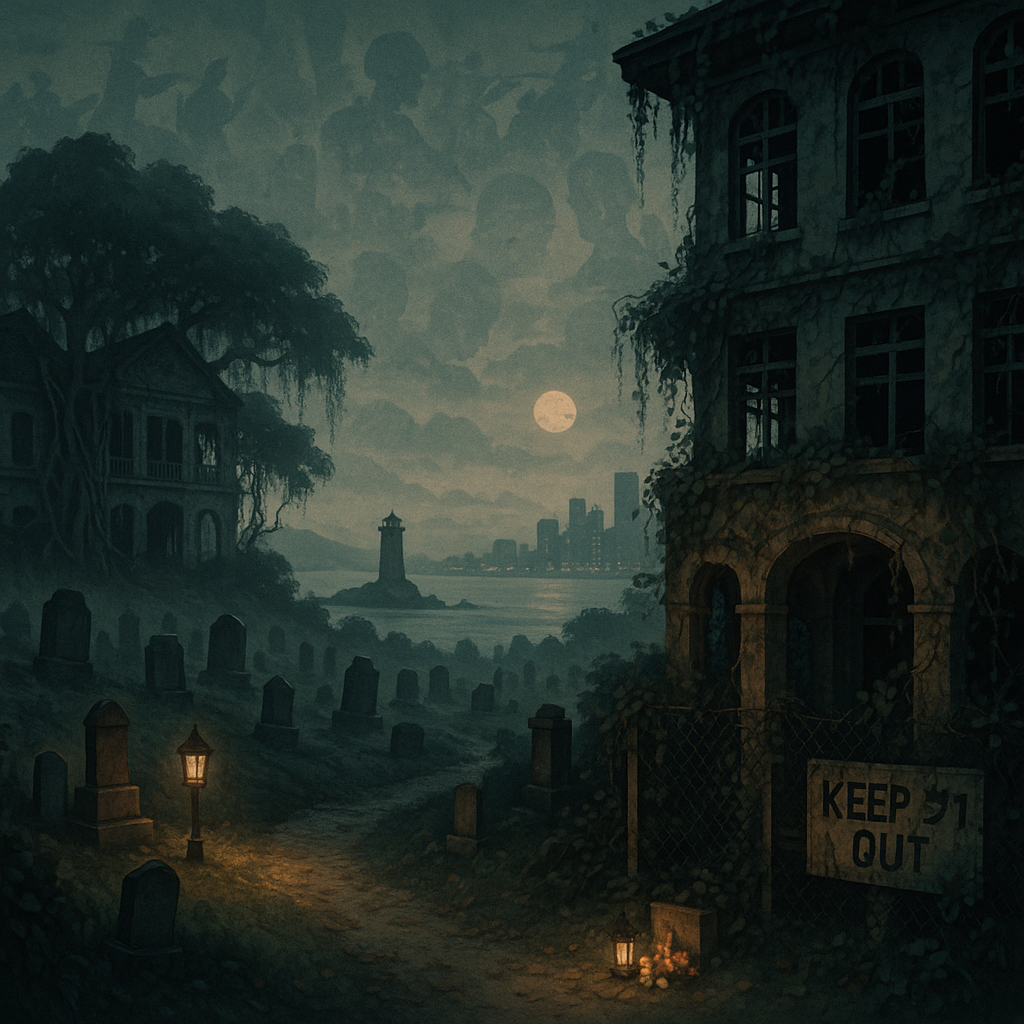
On 30 October 2025, Time Out Singapore published a long-form listicle that brings together 30 of the city‑state’s most enduring ghost stories — a mix of wartime trauma, abandoned estates, former burial grounds and neighbourhood hotspots where urban legend and history collide.
The piece doesn’t treat these places as proven supernatural sites. Instead it weaves together three strands: documented history (especially wartime events), folklore and contemporary eyewitness or urban‑legend accounts. That blend is what makes the list compelling: some entries are grounded in grim historical events (for example, Sook Ching‑era executions linked to Changi Beach and wartime use of Old Changi Hospital), while others are shaped by dereliction and imagination (Old Changi Hospital and Woodneuk House are two of the article’s most talked‑about locations).
Time Out organises the locations into clear, recurring types so readers can see patterns in Singapore’s haunted geography. Broadly, the sites fall into four groups: (a) places tied to wartime trauma (Changi locations, parts of Sentosa); (b) abandoned and derelict properties (Old Changi Hospital, Woodneuk House, the former Brunei Hostel); (c) cemeteries and former burial grounds (Bukit Brown, Bidadari/Woodleigh, and MRTs built on old cemetery land, such as Novena and Bishan); and (d) parks, reservoirs and neighbourhood “hotspots” with grisly incidents or local legends (Bedok Reservoir, Yishun Dam, Sembawang Park and its pontianak stories).
A few marquee entries give a sense of the range: Old Changi Hospital appears as one of the most iconic haunted places because of its wartime history and many urban‑legend associations (the article cautions that the buildings themselves are off‑limits and warns readers not to trespass). Bukit Brown is presented both as a historical Chinese cemetery and as a site of folkloric sightings. Pulau Ubin features village ruins, Puaka Hill and the German Girl Shrine; Pulau Tekong is included more as NS folklore territory, but with strict access limits. Harrowing incidents are also recalled at places such as Changi Beach and the Amber Beacon at East Coast Park, while sites like Haw Par Villa are highlighted for their macabre displays and public access to the Ten Courts of Hell exhibit.
Each entry in the Time Out piece pairs a short “Haunted by” line with a concise historical/context paragraph and an “Accessibility” note. That structure makes the article useful for readers who want both the story and the practical reality: some sites are public and visitable (parks, Haw Par Villa, Pulau Ubin via bumboat), while others are explicitly restricted or physically dangerous (military islands, SAF training zones, abandoned properties with no‑trespass signage). The article repeatedly cautions against trespassing and stresses that its accessibility notes are not formal permission — they’re pointers, not permits.
The list also draws on input from a local paranormal group (named in the article) that supplies practical ghost‑hunting tips. Those contributions emphasise safety, team‑based practices and respect for sensitive sites — reinforcing the piece’s recurring message: curiosity is fine, but legality, personal safety and respect for the dead and for heritage spaces matter more.
If you want a single narrative backbone for a haunted‑Singapore post, Time Out’s compilation is a strong starting point: it gives historical context, local folklore and clear accessibility cues across 30 locations. Use it as a springboard — but if you plan to visit any restricted or fragile sites, double‑check current access rules with official authorities, and never ignore posted notices or the article’s own warnings about trespass and safety.
Leave a Reply