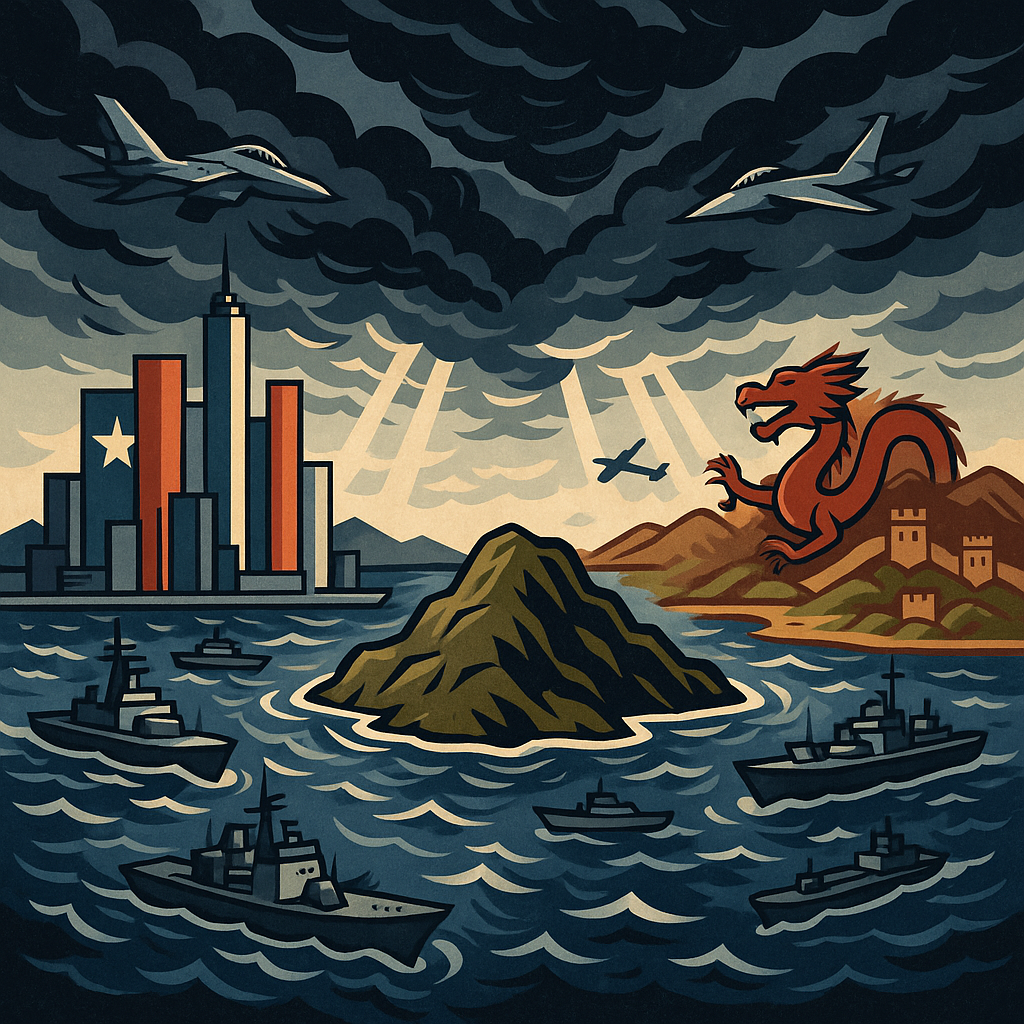
The longstanding divide between the United States and China over Taiwan’s status is deeply rooted in history, politics, and strategy. Since 1979, when the U.S. shifted its diplomatic recognition from Taiwan’s Republic of China to mainland China’s People’s Republic of China, the relationship surrounding Taiwan has remained complex. Despite this shift, the Taiwan Relations Act allowed the U.S. to maintain unofficial ties with Taiwan, including arms sales that support its self-defense capabilities. This arrangement has fostered a delicate balance where the U.S. neither formally recognizes Taiwan as a sovereign state nor abandons its defense commitments.
From Beijing’s perspective, Taiwan is an inseparable part of China, firmly backed by the “One China” policy. Chinese President Xi Jinping has emphatically declared Taiwan’s reunification as “unstoppable,” underscoring China’s unwavering commitment to this vision. Recently, China has increased military activities around the island, conducting large-scale drills that simulate blockades aimed at “pressing and containing separatist forces,” showcasing escalating military readiness.
The U.S. counters with a policy of strategic ambiguity—deterring Beijing from aggressive moves while preventing Taiwan from unilaterally declaring independence. This equilibrium involves substantial arms sales, including a recent $11 billion package, which China views as provocative. These developments have heightened tensions, with the U.S. urging China to exercise restraint to avoid escalating conflict.
Currently, the U.S. voices concern over China’s military drills simulating a blockade of Taiwan, labeling such actions unnecessary sources of tension. Both nations remain entangled in a high-stakes game of diplomacy and military posturing, each balancing national interests, regional stability, and complex historical legacies.
The U.S.-China divide over Taiwan remains a pivotal issue shaping geopolitical dynamics in the Asia-Pacific region, reflecting broader struggles over sovereignty, influence, and peace.
Leave a Reply