Author: n8n-class

  • BYD Overtakes Tesla: A New Top Seller in the Global EV Race

    BYD Overtakes Tesla: A New Top Seller in the Global EV Race

    A shifting leaderboard in the electric vehicle world just got a lot more interesting.

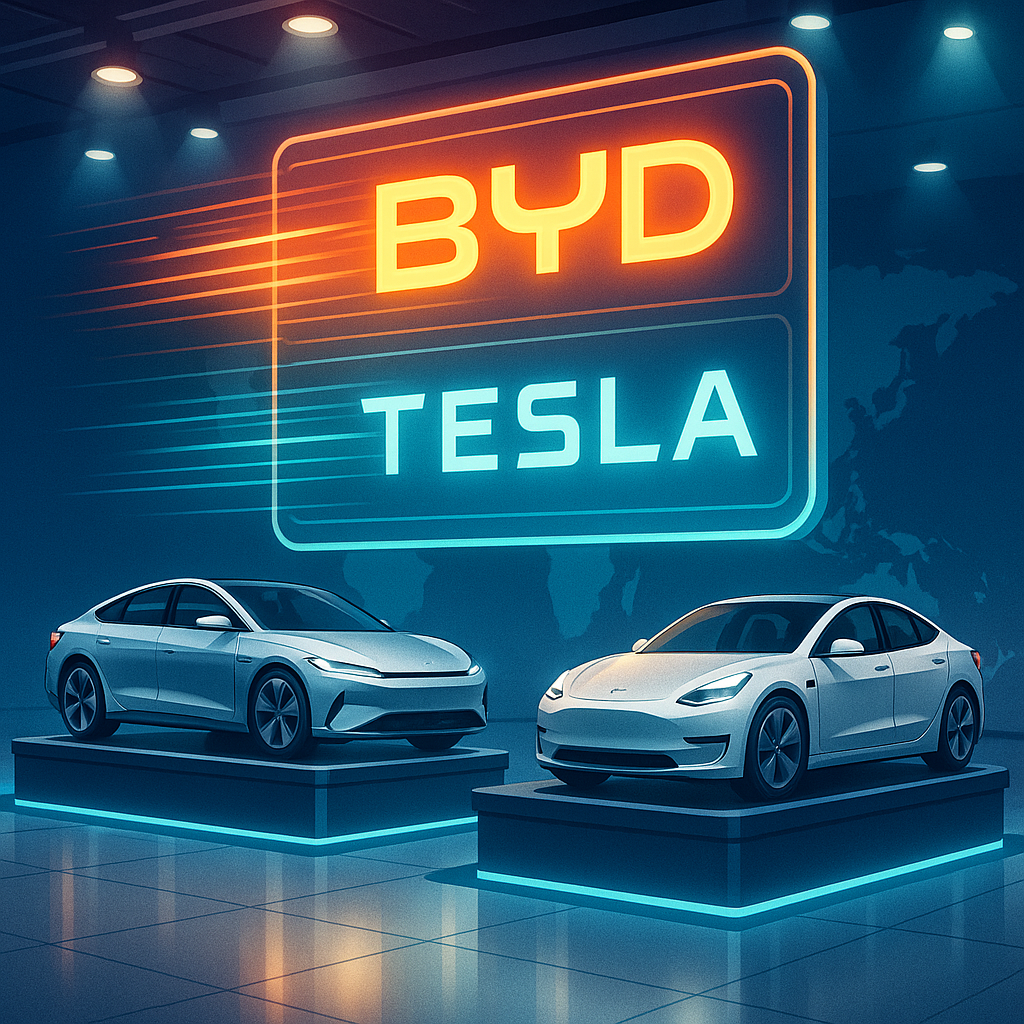
    According to a BBC Business report, China’s BYD has overtaken Elon Musk’s Tesla to become the world’s biggest seller of electric vehicles (EVs). The BBC notes that this is the first time BYD has outpaced its American rival for annual sales—a milestone that underscores how quickly the global EV market is evolving.

    The story’s headline fact is straightforward but significant: BYD is now the top EV seller, edging past Tesla over the year. For years, Tesla has been the name most closely associated with mass-market EV momentum. The BBC report frames BYD’s move ahead not as a small fluctuation, but as a clear change in who holds the number-one spot.

    What makes this moment stand out is what it signals about the wider industry. The EV market isn’t only growing—it’s becoming more competitive across borders. A Chinese manufacturer taking the lead over a US icon speaks to a broader rebalancing in the sector, where scale, production capability, and sustained demand can reshape the rankings.

    The BBC article positions BYD’s new status as a marker of just how dynamic the EV race has become: leadership is no longer assumed, and the top spot can change hands. For consumers, investors, and anyone watching the future of transportation, the takeaway is simple—this is a global contest, and the pace of change is accelerating.


  • Singapore’s Circle Line Is Finally Closing the Loop—With Three New Stations in 2026

    Singapore’s Circle Line Is Finally Closing the Loop—With Three New Stations in 2026

    Singapore’s Circle Line has long carried a slightly ironic name: it’s been a circle in spirit, but not quite in reality. That’s set to change in 2026, when three new MRT stations are slated to open and finally complete the Circle Line loop.

    According to Time Out Singapore, the gap will be closed by the addition of three new stations: Keppel (CC30), Cantonment (CC31), and Prince Edward Road. With these stops coming online, the Circle Line will become the continuous loop many commuters have been waiting for—turning an already vital rail line into an even more seamless way to move around the city.

    The practical impact is straightforward: more convenience. The article notes that the new stations will bring added ease to commuters, particularly by expanding access along the Circle Line corridor with these new points of entry and exit.

    For a rail network, finishing a loop isn’t just a symbolic milestone—it changes how people plan trips. A complete Circle Line means more route options, more flexibility, and a network that better matches the way Singapore travels every day. In 2026, the Circle Line won’t just be called a loop—it will finally operate like one.

  • A Reflecting Pool Makeover: Trump’s ‘American Flag Blue’ at the Lincoln Memorial

    A Reflecting Pool Makeover: Trump’s ‘American Flag Blue’ at the Lincoln Memorial

    A familiar stretch of the National Mall has become the setting for a very different kind of renovation story: President Donald Trump is having the Lincoln Memorial Reflecting Pool coated in a color he calls “American flag blue.”

    According to the article, Trump made an unannounced trip to the Lincoln Memorial to see the Reflecting Pool after the coating work had been added. The visit put a spotlight on a project that changes not just the pool’s condition, but also its appearance—shifting it from its longstanding look to a distinctly branded hue.

    The piece frames the effort as both practical and personal. Trump described the existing surface as old and problematic—“leaking like a sieve”—and suggested that replacing it would take years. Instead, the new coating is presented as a faster fix. He also pointed to a moment of outside perspective as a spark for action: Trump said he was inspired to tackle the project after a friend visiting from Germany complained that the water was filthy.

    The article places the reflecting pool work in a broader pattern of capital changes tied to Trump’s preferences, calling it another makeover “refashioning the nation’s capital to Trump’s liking.” In that sense, the story isn’t only about maintenance—it’s about how a landmark public space can become a canvas for a president’s aesthetic choices, in a city where symbolism is never far from the surface.

    Whether visitors experience the new “American flag blue” as an improvement, a provocation, or simply an unexpected twist on an iconic site, the renovation ensures the Reflecting Pool is once again at the center of attention—this time not for what it mirrors, but for what it declares.

  • AI in Education: Promise, Pressure, and the Push for Responsible Use

    AI in Education: Promise, Pressure, and the Push for Responsible Use

    Artificial intelligence is no longer a distant concept in classrooms—it’s an increasingly central part of how education systems think about teaching, learning, and the tools that support both. A UNESCO overview on “Artificial intelligence in education” frames the moment clearly: AI has the potential to help tackle some of education’s biggest challenges and to innovate teaching and learning practices.

    That promise is what makes the conversation feel urgent. If AI can genuinely support educators and learners—especially in systems strained by limited resources, uneven access, and persistent learning gaps—then it represents more than a new gadget. It signals a shift in how educational experiences might be designed, delivered, and improved.

    But the UNESCO framing also implicitly underscores why AI in education can’t be treated as a simple technology rollout. When a tool is positioned as a way to address major challenges, expectations rise quickly—and so does the responsibility to ensure the technology is used thoughtfully.

    At the heart of the article is a balanced proposition: AI’s power in education lies in its capacity to reshape practice, but any real progress depends on how that power is directed. The implication is straightforward: the story of AI in education isn’t just about what the technology can do; it’s about how educational communities choose to apply it, and whether those choices truly serve teaching and learning.

    UNESCO’s focus invites readers to see AI as a significant educational development—one that could bring meaningful innovation, while also demanding careful attention from the people and institutions tasked with guiding education forward.

  • EVs vs ICE in Singapore: The Cost Debate Keeps Coming Back to Road Tax

    EVs vs ICE in Singapore: The Cost Debate Keeps Coming Back to Road Tax

    The EV-versus-petrol conversation in Singapore rarely stays focused on just charging versus pumping fuel. It almost always circles back to a single line item that owners feel most acutely every year: road tax.

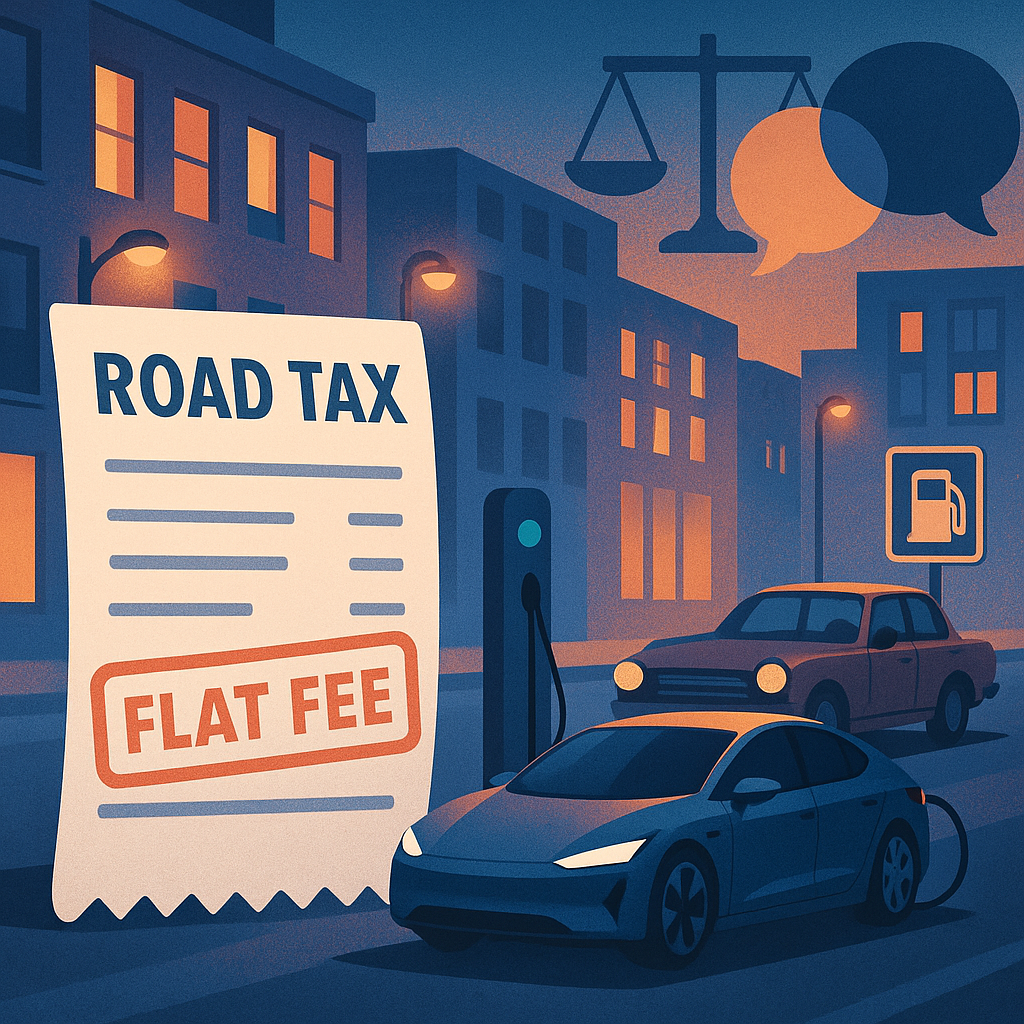
    A recent discussion comparing EV and ICE (internal combustion engine) car costs highlights how Singapore’s road tax treatment for fully electric cars includes an additional fixed charge. As noted in the discussion, full EVs are charged an Additional Flat Component of S$700 on top of annual road tax—positioned as a way to partially cover the fuel excise duties that petrol car owners pay when they buy fuel.

    That one policy detail shapes how people perceive the “true” cost of switching. On paper, EVs are often associated with savings—especially when drivers think about fewer moving parts and the difference between electricity and petrol. But the presence of a flat S$700 component can make EV road tax feel surprisingly heavy, particularly for buyers who expected road tax to be a clear advantage.

    What’s interesting about this cost debate is that it’s less about arguing whether EVs should contribute to road usage—and more about how the contribution is structured and communicated. A flat component is easy to understand and apply, but it can also feel blunt: it’s the same add-on regardless of how much an EV driver actually drives or charges.

    Ultimately, the EV vs ICE cost comparison in Singapore isn’t only about sticker prices or daily running costs. It’s also about how the tax system is evolving to reflect a future where more drivers no longer pay fuel excise at the pump—but still use the same roads.

  • The Oil Shock Still Unfolding After the Iran Conflict

    The Oil Shock Still Unfolding After the Iran Conflict

    The Brookings article paints a stark picture of an energy crisis that has not yet reached its full force. Published on April 1, 2026, it argues that Iran’s retaliatory actions have already pushed the global oil market into a major supply shortfall — one described as larger than the disruptions seen during the 1973 and 1979 oil crises.

    But the article’s deeper warning is not only about today’s missing barrels. It is about how conflict changes the way markets understand risk. Even after the immediate fighting ends, the perception of danger in oil markets may not simply snap back to normal. In Brookings’ framing, the world cannot return to the energy assumptions it held before the war.

    That is what makes this shock so consequential: it is both physical and psychological. Supply has been disrupted, but confidence has also been shaken. The article suggests that the true impact of the Iran conflict may unfold over time, as energy markets absorb a new reality in which geopolitical risk carries a heavier price.

  • Newsom Targets Trump as Gas Prices Spike: ‘No Plan, No Accountability’

    Newsom Targets Trump as Gas Prices Spike: ‘No Plan, No Accountability’

    California Gov. Gavin Newsom is placing the blame for rising gasoline prices squarely on President Donald Trump, arguing that the administration has helped trigger a surge without offering Americans a clear path to relief.

    In a statement from Sacramento, Newsom said Trump set off a “global oil and gas price spike” and criticized the White House for lacking both a plan to protect consumers and accountability for the consequences. The governor’s message focuses on the pocketbook impact—what higher fuel prices mean for everyday drivers—while framing the spike as the result of decisions made at the federal level.

    The Newsom administration’s attack is notable not just for its sharp tone, but for its central claim: that the problem isn’t simply that prices are rising, it’s that they’re rising amid what he describes as an absence of a coherent response. By emphasizing “no plan” and “no accountability,” the governor is arguing that Americans are being asked to absorb higher costs without any transparent strategy for stabilizing prices or cushioning the blow.

    As gas prices become a political flashpoint again, Newsom’s statement signals how quickly energy costs can turn into a broader fight over leadership—who caused the spike, who is responsible for managing it, and who is answerable when consumers feel it most at the pump.

  • COVID-19 Crew-Change Rules and the Hidden Shock to Container Shipping

    COVID-19 Crew-Change Rules and the Hidden Shock to Container Shipping

    The pandemic’s most visible disruptions to global trade were often measured in empty shelves and delayed deliveries. But one article highlights a less obvious choke point in the supply chain: the rules that ports imposed on vessels and crews during COVID-19—and how those restrictions translated into fewer container ship sailings and rising risk for trade flows.

    Because close to 80% of trade moves by sea, even small operational constraints can ripple outward. According to the article, many key ports introduced restrictions on vessels and crew as part of COVID-19 containment policies. Among the most consequential were prohibitions that effectively stopped crew changes. When seafarers can’t be rotated on and off ships, the maritime system doesn’t just become inconvenient—it becomes harder to operate reliably.

    To show the effect, the article points to satellite data tracking ship movements. The pattern is stark: sailings to destinations with crew-change restrictions fell by almost 20% for container ships compared with previous years. In other words, policy choices designed for public health had an unintended side effect—reducing the frequency of container services to certain ports right when supply chains were already under stress.

    The bigger lesson is that shipping isn’t only about ships and ports; it’s also about people. Container vessels depend on functioning labor routines and predictable port procedures. When those routines are disrupted, the damage can show up as fewer sailings, disrupted trade flows, and strained supply chains.

    The article argues that a more flexible approach is needed—regulations that rely on screening and discretion rather than blanket prohibitions—so freight distribution can continue and supply chains don’t take what it calls a “double hit.” In a crisis, the challenge isn’t choosing between health and trade; it’s designing rules that protect health while keeping the essential machinery of global transport moving.

  • Healthy Eating, in Plain Language: A Quick Tour of Today’s Top Guidance

    Healthy Eating, in Plain Language: A Quick Tour of Today’s Top Guidance

    A “healthy diet” can sound like a moving target—new headlines, new trends, new rules. But taken together, the guidance highlighted across major public-health and medical organizations points in a consistent direction: build meals around a wide variety of nutrient-dense foods and keep added sugars and excess sodium in check.

    ## Variety first, “nutrient-dense” always
    The World Health Organization’s healthy diet fact sheet emphasizes eating a wide variety of nutrient-dense foods. The examples it highlights—fruits, vegetables, whole grains, legumes, nuts, seeds, and lean animal-source foods—paint the picture of a plate built from whole or minimally processed staples rather than a narrow set of “superfoods.”

    ## A practical shopping-list approach
    The CDC’s healthy eating tips echo that same foundation but frame it as simple, everyday choices: prioritize vegetables, fruits, whole grains, healthy fats, and protein—along with dairy options that don’t come with added sugars. It’s less about perfection and more about routinely choosing foods that provide key nutrients.

    ## Heart health and the protein shift
    The American Heart Association’s diet and lifestyle recommendations underline that diet is central to preventing and managing cardiovascular disease. One highlighted theme: shifting protein choices toward plant sources such as beans, peas, lentils, and nuts, while also regularly consuming fish and seafood and choosing lower-fat options.

    ## More than what you eat
    Canada’s healthy eating recommendations add an important dimension: healthy eating isn’t only about the foods themselves. It also includes where, when, why, and how you eat—an invitation to pay attention to habits and context, not just nutrients.

    ## The “balanced diet” basics
    The UK’s NHS guidance on eating a balanced diet focuses on the major food groups and how to balance them, including the common public-health message to eat at least five portions of a variety of fruits and vegetables.

    ## A shared takeaway
    Across these sources, the narrative is strikingly aligned: aim for variety, lean into fruits and vegetables, choose whole grains and legumes often, and be mindful of added sugars and sodium. The details may differ by organization and audience, but the throughline is steady—healthy eating is built on consistent patterns, not quick fixes.

  • Nitric Oxide Supplements: What the Evidence Says About Blood Flow, Blood Pressure, and Performance

    Nitric Oxide Supplements: What the Evidence Says About Blood Flow, Blood Pressure, and Performance

    Nitric oxide (NO) doesn’t get the same attention as protein powders or multivitamins, but it sits at the center of a big promise in the supplement world: better blood flow. A Healthline article breaks down why people take “nitric oxide supplements,” what they actually contain, and what benefits are most strongly linked to them. [Source: Healthline – https://www.healthline.com/nutrition/nitric-oxide-supplements]

    ## What nitric oxide supplements really are
    The first thing the article clarifies is that you typically don’t swallow nitric oxide itself. Instead, “nitric oxide supplements” are products designed to increase NO levels in the body. They’re marketed largely because nitric oxide supports blood vessel relaxation and circulation—effects that are tied to cardiovascular health and exercise performance. [Source: Healthline – https://www.healthline.com/nutrition/nitric-oxide-supplements]

    ## The headline benefit: increased blood flow
    Healthline emphasizes that nitric oxide is associated with improved blood flow. That’s the core reason these supplements are used—and it’s the mechanism behind most claimed downstream effects. When circulation improves, it can influence how hard the heart has to work and how efficiently oxygen and nutrients are delivered throughout the body. [Source: Healthline – https://www.healthline.com/nutrition/nitric-oxide-supplements]

    ## Blood pressure: a major reason people are interested
    One of the most practical, measurable outcomes discussed in the article is blood pressure. Healthline notes that supplements aimed at increasing nitric oxide may help reduce blood pressure, which is why they’re often framed as a potential support tool for people focused on heart health. [Source: Healthline – https://www.healthline.com/nutrition/nitric-oxide-supplements]

    ## Exercise performance: why these products show up in gyms
    The article also points to exercise-related interest: because nitric oxide can increase blood flow, it “may be beneficial for… improving exercise” performance. That’s a key reason NO-boosting products are common in the sports nutrition aisle, often positioned for training support. [Source: Healthline – https://www.healthline.com/nutrition/nitric-oxide-supplements]

    ## Managing certain health conditions: potential, but context matters
    Beyond blood pressure and workouts, Healthline says nitric oxide supplements “may be beneficial for managing certain health conditions.” The article’s framing is cautious—highlighting possible benefits while keeping the focus on what’s supported and how these supplements function in the body. [Source: Healthline – https://www.healthline.com/nutrition/nitric-oxide-supplements]

    ## The takeaway
    If you’re curious about nitric oxide supplements, the Healthline piece boils the discussion down to a simple thread: increase nitric oxide → improve blood flow → potentially support blood pressure and exercise goals. The appeal is straightforward, but the key is to evaluate any product through the lens the article uses—what it is (a NO booster), what it’s meant to do (support circulation), and what outcomes are most consistently connected to that mechanism (blood flow and blood pressure, with exercise benefits also commonly cited). [Source: Healthline – https://www.healthline.com/nutrition/nitric-oxide-supplements]