Author: n8n-class

  • Inside a Toyota Hybrid: The Key Pieces That Make It Work

    Inside a Toyota Hybrid: The Key Pieces That Make It Work

    Toyota’s hybrid story is rooted in a promise the company says it’s been delivering on for decades: comfort and refinement paired with low running costs and improved fuel economy, dating back to 1997.

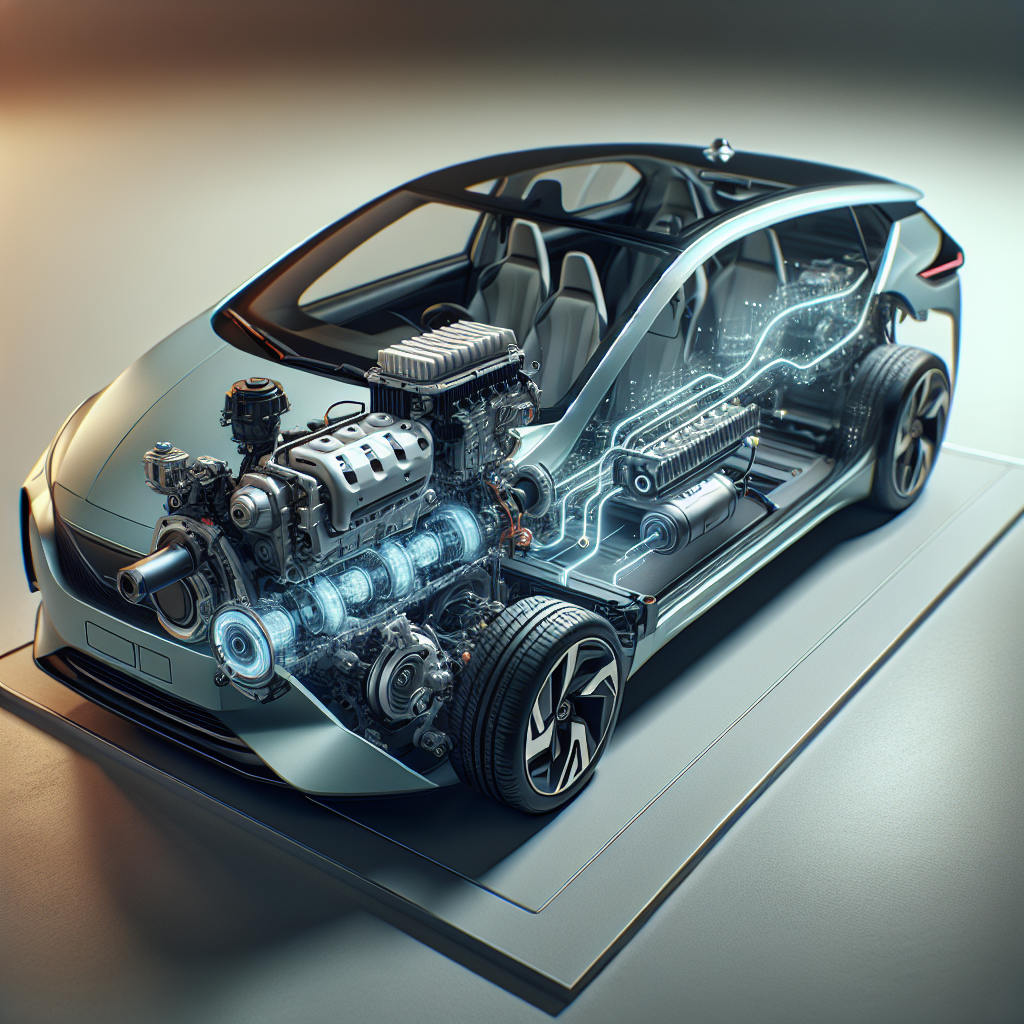
    In Toyota UK Magazine’s explainer on how Toyota hybrid systems work, the focus is on the “hybrid drive system” and the major building blocks that make the whole thing possible. The article describes six primary components at the heart of the setup: a petrol engine, an electric motor, an electric generator, a power control unit, and a power-split device (the article lists these as the core pieces of the system).

    What’s compelling about Toyota’s framing is how it emphasizes integration rather than a simple add-on electric assist. The hybrid system is presented as a coordinated drivetrain where mechanical and electrical elements are managed together—so the vehicle can deliver the driving experience Toyota highlights (comfort and refinement) while also targeting better fuel economy and lower day-to-day costs.

    The takeaway from the article is straightforward: Toyota’s hybrid approach isn’t just about having both an engine and a motor in the same car—it’s about the way these key components are designed to work together as a system, an idea Toyota says has guided its hybrid vehicles since the late 1990s.

  • Hybrid Talk Online: Honda vs. Toyota, e:HEV Explained

    Hybrid Talk Online: Honda vs. Toyota, e:HEV Explained

    The latest round of hybrid debate online is familiar: Honda versus Toyota, and which brand’s approach feels more “right” for everyday driving.

    One Reddit thread in r/Toyota frames the conversation in broad, opinionated strokes. Commenters point back to Toyota’s early leadership in hybrids—specifically the original Prius—and argue that Toyota’s hybrid system is “superior” to Honda’s. The post reflects how strongly brand reputation still shapes buyer perceptions, even when the discussion is casual and anecdotal.

    Honda, for its part, has its own formal explanation of what it calls an “original Honda hybrid system.” On Honda Global’s technology page for e:HEV, the company positions its two-motor hybrid system as part of a wider effort to adopt electrification technologies in order to reduce CO2 emissions. In other words, Honda’s pitch isn’t just that it offers a hybrid—it’s that its hybrid architecture is a deliberate engineering response to emissions reduction goals.

    Put together, the two sources show the split between how hybrids are discussed and how they’re designed to be understood. In fan forums, history and perceived reliability often dominate: who had the tech first, whose system is “better,” and what owners say after living with the cars. In manufacturer materials, the framing is more strategic and technical, emphasizing system design and the role hybrids play in a broader electrification path.

    If there’s a takeaway from this single snapshot of the hybrid conversation, it’s that “Honda vs. Toyota” is rarely just about fuel economy numbers. It’s about legacy, trust, and the story each brand tells—both in official technical explainers like Honda’s e:HEV page and in the real-world, community-driven debates that keep the rivalry alive.

  • Toyota RAV4 Hybrid vs Honda CR-V e:HEV: A Crown, a Challenger, and a “Royal Rumble”

    Toyota RAV4 Hybrid vs Honda CR-V e:HEV: A Crown, a Challenger, and a “Royal Rumble”

    In Australia’s hybrid SUV conversation, one name has been sitting confidently on the throne: the Toyota RAV4. But a new contender is being framed as a direct threat to that dominance—the Honda CR-V e:HEV.

    A CarExpert comparison published December 2, 2023 sets the scene like a title fight. The article calls the RAV4 “hybrid SUV king in Australia,” then positions the CR-V e:HEV as the model “coming for its crown,” promising readers a head-to-head “royal rumble.”

    That’s the key narrative: not just two popular SUVs, but an explicit clash for leadership in a segment where hybrid powertrains and everyday usability are central to buyers’ decisions. The comparison format signals a practical, consumer-focused matchup—exactly the kind of reading you’d expect when a long-time favorite faces a fresh challenge.

    If you’ve been watching the hybrid SUV market, this framing matters. It suggests the CR-V e:HEV isn’t being treated as a side-note entry, but as a serious rival aimed squarely at the RAV4’s established position. Whether you’re a loyalist to the current king or curious about the challenger’s claim, the article’s message is clear: Australia’s hybrid SUV pecking order is being tested in a direct, model-versus-model showdown.

  • Honda vs Toyota Hybrids: A Snapshot of the Online Debate

    Honda vs Toyota Hybrids: A Snapshot of the Online Debate

    The conversation around Honda versus Toyota hybrids often sounds less like a spec-sheet comparison and more like a clash of philosophies. In a Reddit thread titled “Honda Vs. Toyota Hybrid,” posters weigh in with strong opinions about which brand has the better hybrid setup—and why.

    One recurring argument in the discussion is that Toyota’s hybrid system is viewed by some commenters as “superior” overall. In that framing, Toyota comes across as the benchmark: proven, established, and dependable in the eyes of those participants.

    Honda’s approach, however, isn’t dismissed so much as described differently. The thread points to Honda’s newer hybrid design—described as a two-motor system introduced in 2017—and characterizes it as “more complex.” That complexity is presented as a key distinction between the two brands’ engineering choices, and it becomes a central point in how participants judge the systems.

    What stands out most is how quickly the debate moves from brand names to system design. Even in a short snippet, the emphasis isn’t simply “which car is better,” but “which hybrid architecture do you trust more.” For some contributors, Toyota’s reputation for hybrid execution carries the day; for others, Honda’s newer two-motor design is a meaningful differentiator—whether seen as an advantage or a complication.

    In the end, the thread serves as a reminder that hybrid comparisons aren’t only about fuel economy numbers. For many drivers and enthusiasts, the deciding factor can be something harder to quantify: perceived simplicity versus complexity, maturity versus newer design, and the confidence that comes with whichever system feels more “proven.”

  • Toyota RAV4 Hybrid vs Honda CR-V e:HEV: A Crown on the Line

    Toyota RAV4 Hybrid vs Honda CR-V e:HEV: A Crown on the Line

    The Toyota RAV4 has worn its status as Australia’s hybrid SUV “king” like a well-earned crown. But according to a comparison by CarExpert, there’s a clear challenger stepping into the ring: the Honda CR-V e:HEV.

    The matchup is framed as more than a typical spec-sheet face-off. CarExpert sets it up as a direct contest for leadership in the hybrid SUV space—a “royal rumble” between an established favorite and a newcomer that’s arriving with ambitions.

    At the center of the story is the RAV4’s long-running dominance and the pressure that comes with it. Being the benchmark means every new rival is judged by one question: can it genuinely threaten the top spot? In this comparison, the Honda CR-V e:HEV is positioned as doing exactly that—aiming not just to compete, but to challenge the RAV4’s claim to the throne.

    Rather than treating hybrid badges as interchangeable, the article underscores how important this rivalry is for shoppers who want the efficiency of electrification without moving to a full battery-electric vehicle. When two major brands put their hybrid SUVs head-to-head, the stakes aren’t just bragging rights—they shape what “best in class” means in one of the country’s most hotly contested segments.

    CarExpert’s premise is simple and compelling: Australia’s hybrid SUV leader is being tested, and buyers are about to see a serious contest between Toyota’s reigning RAV4 Hybrid and Honda’s CR-V e:HEV—one defending its crown, the other coming to take it.

  • A Closer Look at Singapore’s Housing Choices: Public Flats, Private Condos, and the Questions People Keep Asking

    A Closer Look at Singapore’s Housing Choices: Public Flats, Private Condos, and the Questions People Keep Asking

    Singapore’s housing conversation often swings between two poles: the public flat and the private condominium. The article on Pathfinders about the Housing Development Board (HDB) lays out why that divide exists—and how policy design has helped make public housing a dominant, stabilising force in the country.

    According to the article, HDB is Singapore’s main public housing provider and supplies homes to around 80% of residents. The model is built around accessibility: HDB housing is offered below market prices, with pathways that help households finance home purchases. The piece notes that residents can use pension funds to finance their mortgage, and that grants are available for lower-income groups.

    But affordability isn’t only about the price tag. The article emphasises how rules shape behaviour in the resale market and aim to reduce speculative activity. To prevent speculation, it says households are only allowed to occupy one apartment at a time, and HDB units can only be sold on a secondary market. These kinds of constraints, while sometimes debated, are presented as mechanisms meant to keep public housing aligned with its purpose—homes first, assets second.

    Beyond financing and resale limits, the article also points to a broader social goal: neighbourhood outcomes. It states that HDB ensures diversity of both housing and people across neighbourhoods to prevent exclusion. In other words, the housing system is not only a pipeline for units, but a policy tool to influence how communities form and who gets to live where.

    Read together, these details help explain why discussions about “HDB versus condo” can feel so charged. Private condos may represent aspiration and choice, but the article’s focus is on how Singapore’s public housing framework has been engineered—through pricing, financing support, and anti-speculation rules—to deliver mass homeownership while also managing social and market pressures.

    If nothing else, the article is a reminder that Singapore’s housing outcomes are not accidental. They are the result of deliberate design choices about affordability, eligibility, resale, and neighbourhood composition—choices that continue to shape the everyday decisions behind where, and how, people live.

  • Toyota RAV4 Hybrid vs Honda CR-V e:HEV: A Crown, a Challenger, and a “Royal Rumble”

    Toyota RAV4 Hybrid vs Honda CR-V e:HEV: A Crown, a Challenger, and a “Royal Rumble”

    Australia has a reigning hybrid SUV champion, and the fight for the throne is getting loud.

    In a head-to-head comparison of the 2024 Toyota RAV4 Hybrid and the Honda CR-V e:HEV, the framing is clear: Toyota’s RAV4 has been the hybrid SUV king in Australia, and Honda’s CR-V e:HEV is arriving with ambitions of taking that crown. The matchup is billed as a “royal rumble” — not just a routine spec-sheet exercise, but a real contest between two big-name hybrids.

    The comparison sets up the personalities of these rivals in simple terms. The RAV4 wears the crown largely because of its efficiency, positioning it as the benchmark hybrid SUV to beat. The CR-V e:HEV, meanwhile, may not match the Toyota on outright efficiency, but it brings a hybrid system described as every bit as refined — and pairs that with a more spacious package.

    That’s what makes this duel interesting: it isn’t a one-sided story where one vehicle wins on every front. Instead, it’s a trade-off between the established leader’s efficiency and the challenger’s refinement and space.

    If the RAV4’s dominance has come from being the sensible hybrid choice Australians already trust, the CR-V e:HEV’s strategy, as presented here, is to meet the Toyota on smoothness and sophistication while offering buyers more room to live with day to day.

    However the verdict lands for individual drivers, the takeaway is that the hybrid SUV pecking order isn’t standing still. The king has company — and the challenger is coming prepared.

  • QuickBooks Online vs. Xero: What the Comparison Links Are Really Signaling

    QuickBooks Online vs. Xero: What the Comparison Links Are Really Signaling

    The search results paint a familiar picture: QuickBooks Online (QBO) and Xero continue to dominate the conversation when small businesses and bookkeepers compare cloud accounting platforms.

    Several entries point to a steady theme around features and usability. A Reddit thread in r/Bookkeeping highlights that some users feel Xero can lack certain “advanced features” compared with QBO—an example of how day-to-day practitioners often frame the debate in terms of depth and edge-case functionality.

    On the other side of the ledger, multiple comparison pages emphasize how customer sentiment and value can tilt toward Xero. HubSpot’s comparison notes that Xero “consistently gets stronger average reviews than QBO,” suggesting that satisfaction scores and overall experience are a meaningful part of why Xero remains so competitive.

    Pricing and plan structure also show up as a recurring storyline. A post titled “QuickBooks Price vs Xero” from Financial Solution Advisors focuses on how Xero’s plans can be “more budget-friendly” and highlights that Xero offers “unlimited users on all pricing plans”—a detail that often becomes decisive for teams that need broad access without per-user costs.

    Meanwhile, comparisons from vendors and ecosystems reflect a different motivation: persuasion. Xero’s own “QuickBooks alternative” page explicitly positions its plans and pricing against QBO, while Intuit’s “Xero vs QuickBooks: 2026 Comparison” invites readers to compare pricing and features while underscoring professional preference for QuickBooks. Even without digging into the full articles, the titles and snippets make it clear these pages are designed to help (or nudge) prospective customers toward a platform.

    Taken together, the results show why the QBO vs Xero question doesn’t go away. The conversation is constantly refreshed across community forums, independent blog comparisons, and official product pages—circling the same core decision points: feature depth, overall user satisfaction, and pricing structure.

  • Inflammation, Not Just Cholesterol: A Different Lens on Chronic Disease Risk

    Inflammation, Not Just Cholesterol: A Different Lens on Chronic Disease Risk

    For decades, the story of chronic disease—especially cardiovascular disease (CVD)—has often been told as a simple numbers game: keep dietary cholesterol down, keep serum cholesterol down, and you’ll stay safer for longer.

    A review article in *Nutrients* argues that this narrative is incomplete. Instead, it points to **systemic inflammation** as a central driver of chronic disease development, suggesting that cholesterol alone shouldn’t be treated as the main villain in the longevity conversation. [Source: “Inflammation, not Cholesterol, Is a Cause of Chronic Disease” (Nutrients, 2018) https://pmc.ncbi.nlm.nih.gov/articles/PMC5986484/]

    ## How cholesterol became the headline
    The review notes that since the Seven Countries Study, both dietary cholesterol and serum cholesterol have been “somewhat demonised” in relation to chronic disease risk. At the same time, the authors highlight that patterns associated with longevity—such as the **Mediterranean diet** and observations from people living in the so-called **blue zones**—suggest that the route to long-term health is not simply about lowering cholesterol. [Source: https://pmc.ncbi.nlm.nih.gov/articles/PMC5986484/]

    ## The review’s core claim: inflammation sits closer to the root
    The article’s key argument is that **inflammation induced by multiple factors** leads to the onset of CVD “rather than serum cholesterol.” In other words, cholesterol levels may matter, but the inflammatory environment in the body is framed as the more fundamental trigger in the disease process. [Source: https://pmc.ncbi.nlm.nih.gov/articles/PMC5986484/]

    One specific inflammatory factor emphasized is **platelet-activating factor (PAF)**, which the review describes as part of the inflammatory machinery that contributes to cardiovascular disease development. [Source: https://pmc.ncbi.nlm.nih.gov/articles/PMC5986484/]

    ## What this perspective changes in practice
    If inflammation is the primary driver, the “target” for prevention shifts. The review concludes that reducing CVD incidence means **controlling the activities of PAF and other inflammatory mediators**—and it frames **diet, exercise, and healthy lifestyle choices** as key tools to do that. [Source: https://pmc.ncbi.nlm.nih.gov/articles/PMC5986484/]

    That’s a notable reframing: rather than focusing only on cholesterol reduction, the review encourages a broader strategy aimed at lowering systemic inflammation through everyday behaviors.

    ## The takeaway
    The article doesn’t present chronic disease prevention as a single-metric mission. Instead, it argues for a bigger picture—one where **inflammation control** is central to preventing cardiovascular disease and supporting longevity.

    If you’ve ever wondered why people can do “everything right” for cholesterol and still face risk, this review offers a different lens: look upstream, at the inflammatory signals that may be shaping the entire process. [Source: https://pmc.ncbi.nlm.nih.gov/articles/PMC5986484/]

  • AI’s Next 20 Years: What the Public Fears, What Experts Expect

    AI’s Next 20 Years: What the Public Fears, What Experts Expect

    A new Pew Research Center report takes stock of a question that’s quickly moved from sci‑fi to everyday conversation: over the next 20 years, will artificial intelligence mostly help society—or mostly hurt it?

    The article draws a clear contrast between how the U.S. public and AI experts see what’s coming. On some of the broadest expectations, experts are more upbeat than everyday Americans. Pew reports that a larger share of experts than the public believe AI will have a positive impact over the next two decades (62% vs. 33%).

    But optimism doesn’t erase anxiety—especially around work. The report highlights “Job loss” as a key area of concern, including quotes from AI experts addressing the possibility that AI could displace workers. Even when people can imagine AI improving parts of life, the prospect of jobs changing—or disappearing—hangs over the conversation.

    Another striking takeaway: neither group seems convinced that more powerful technology automatically translates into better lives. According to the article, few U.S. adults or experts think AI will make humans happier—just 6% say it will.

    Taken together, Pew’s findings paint a future that isn’t simply “utopia” or “doom.” Instead, the report suggests a more complicated reality: experts are more likely to anticipate net benefits from AI, while the public is more cautious—and both groups are notably skeptical that AI will boost human happiness. Whatever the next 20 years bring, the article makes one point hard to ignore: the debate isn’t only about what AI can do, but what it will mean for people’s work and well‑being.