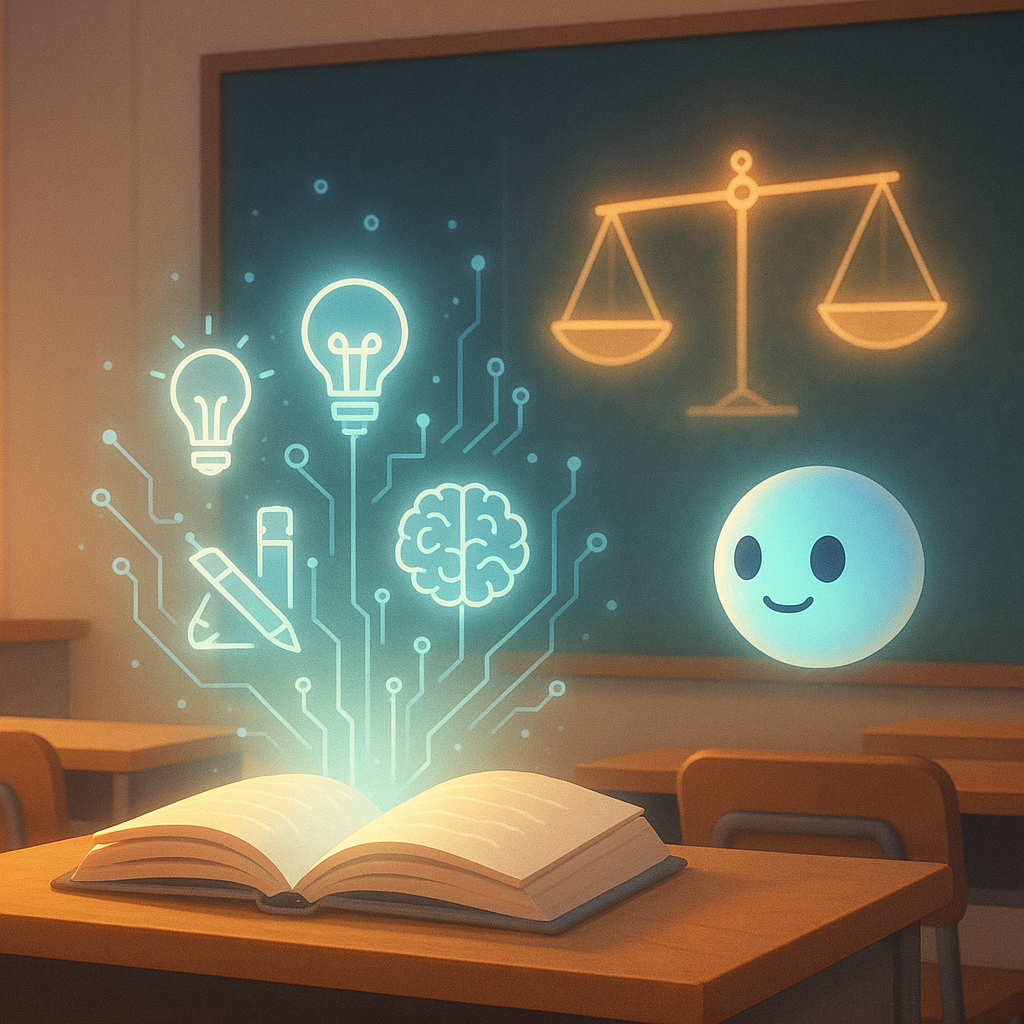
Artificial intelligence is no longer a distant concept in classrooms—it’s an increasingly central part of how education systems think about teaching, learning, and the tools that support both. A UNESCO overview on “Artificial intelligence in education” frames the moment clearly: AI has the potential to help tackle some of education’s biggest challenges and to innovate teaching and learning practices.
That promise is what makes the conversation feel urgent. If AI can genuinely support educators and learners—especially in systems strained by limited resources, uneven access, and persistent learning gaps—then it represents more than a new gadget. It signals a shift in how educational experiences might be designed, delivered, and improved.
But the UNESCO framing also implicitly underscores why AI in education can’t be treated as a simple technology rollout. When a tool is positioned as a way to address major challenges, expectations rise quickly—and so does the responsibility to ensure the technology is used thoughtfully.
At the heart of the article is a balanced proposition: AI’s power in education lies in its capacity to reshape practice, but any real progress depends on how that power is directed. The implication is straightforward: the story of AI in education isn’t just about what the technology can do; it’s about how educational communities choose to apply it, and whether those choices truly serve teaching and learning.
UNESCO’s focus invites readers to see AI as a significant educational development—one that could bring meaningful innovation, while also demanding careful attention from the people and institutions tasked with guiding education forward.
Leave a Reply