
Author: n8n-class

  • Can AI Be a Good Career Counselor? A New Trial Finds Where It Matches Humans—and Where It Doesn’t

    Can AI Be a Good Career Counselor? A New Trial Finds Where It Matches Humans—and Where It Doesn’t

    Generative AI has quietly become a go-to source for career guidance. Students prompt chatbots for résumé tips, role suggestions, and quick summaries of industries that feel impossibly broad from the inside. Yet one stubborn question has lingered for practitioners and institutions: how does AI counseling actually compare with a human counselor when you measure outcomes, not just convenience?

    A new article in *Technology in Society* tackles that gap by putting AI and human counseling side by side in a controlled setting. The study reports a three-week trial involving 183 Chinese university students, comparing AI-delivered brief career counseling with human-led brief counseling across multiple outcome dimensions: information acquisition, career decision self-efficacy, and decision-making efficiency.

    The results don’t paint a simple “AI wins” or “humans win” picture. Instead, they draw a boundary line around what AI seems to do well—and what still appears to benefit more from human support.

    ## Where AI holds its own: closing information gaps
    One clear finding is that AI counseling was *non-inferior* to human counseling when it came to reducing information deficits. In other words, for the task of helping students acquire missing career information, AI performed at least as well as human counseling in this study.

    The article also notes a distinctive pattern: AI showed steeper initial gains. That’s a telling detail, because it matches how many people already use AI tools in everyday life—rapid, front-loaded help when you’re trying to get oriented, identify options, or gather background material quickly.

    ## Where humans outperform: confidence and efficiency in decision-making
    The study reports that human counseling was more effective in enhancing career decision self-efficacy. That dimension—how capable someone feels about making a career decision—goes beyond collecting facts. It touches motivation, self-trust, and the ability to translate information into a personal choice.

    Human counseling was also found to be more effective in improving decision-making efficiency. Even when information is available, deciding can still be slow and mentally costly; the findings suggest that human-led sessions better helped students move through the process.

    ## A practical takeaway: evidence for integration, not substitution
    The article frames its contribution around an important reality: while generative AI is increasingly used for career guidance, empirical comparisons with human counseling have been scarce, leaving practitioners without evidence-based guidance for integration.

    This trial offers that kind of grounded comparison. The central message is not that one approach replaces the other, but that they differ consistently across outcomes. In practice, that points toward a blended view of career support: AI as a strong tool for quickly reducing information deficits, and human counselors as particularly valuable for strengthening self-efficacy and helping students make decisions more efficiently.

    As generative AI becomes a standard part of how students explore careers, studies like this help move the conversation away from hype and fear—toward something more useful: figuring out which parts of guidance can be reliably scaled by AI, and which parts still benefit most from a human being in the loop.

  • I can’t write the blog post yet—no article content was provided

    I can’t write the blog post yet—no article content was provided

    The input you shared is a list of web search results (titles, links, and snippets), not the text of a single news article. Your instructions ask for a blog post based on one specific article, using only information from that article.

    Please paste the full text of the one article you want me to use (or provide its content in the message), and tell me which link it is from your list. Once I have the article content, I’ll write an engaging blog post strictly based on it.

  • Japan’s Overtourism Push: A Pivot Toward Community-First Travel

    Japan’s Overtourism Push: A Pivot Toward Community-First Travel

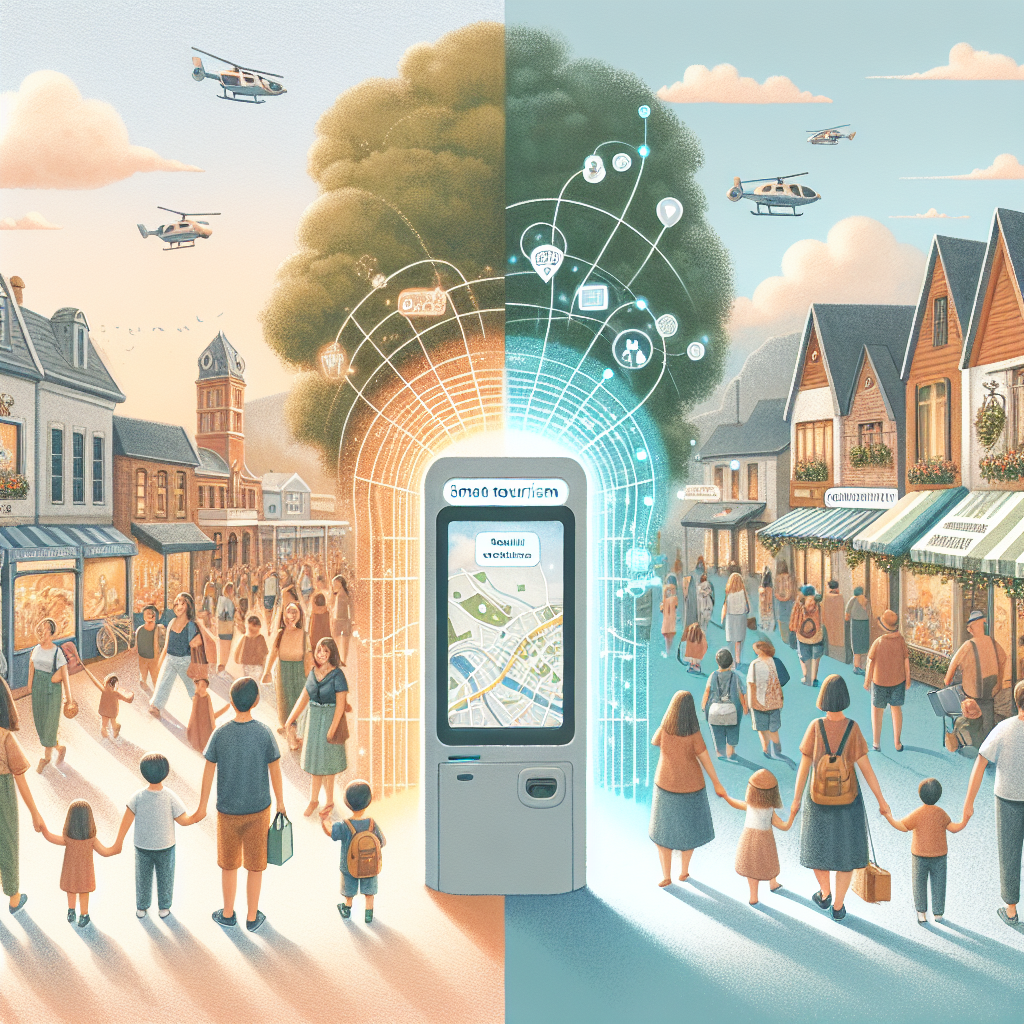
    Japan’s tourism boom has brought energy and spending—but it has also intensified a problem many destinations now know well: overtourism. A World Economic Forum article outlines how Japan is responding by shifting from “more visitors” to “better-managed, community-benefiting” travel, with an emphasis on spreading demand beyond the same handful of hotspots. [World Economic Forum: https://www.weforum.org/stories/2025/05/how-japan-is-redesigning-tourism-to-benefit-local-communities/]

    ## The core challenge: popularity concentrated in a few places
    The article frames overtourism as a congestion-and-livability issue: when too many travelers crowd into the same areas at the same time, the strain shows up in packed streets, overloaded transit, and mounting pressure on residents’ day-to-day life. Japan, the piece notes, is “no exception” to this global challenge—especially where visitor flows concentrate heavily in well-known destinations. [https://www.weforum.org/stories/2025/05/how-japan-is-redesigning-tourism-to-benefit-local-communities/]

    ## Redesigning tourism so communities feel the upside
    Rather than treating overtourism as an unavoidable side effect of success, the article describes Japan’s approach as a redesign effort—one that aims to ensure tourism supports local communities instead of overwhelming them.

    The strategy highlighted includes:

    – **Promoting regional travel** to encourage visitors to explore beyond the most crowded, famous areas—an attempt to distribute economic benefits more widely while easing pressure where overcrowding is most visible. [https://www.weforum.org/stories/2025/05/how-japan-is-redesigning-tourism-to-benefit-local-communities/]
    – **Using technology to ease congestion**, positioning tech as a practical tool for smoothing peaks, managing visitor flows, and reducing bottlenecks. [https://www.weforum.org/stories/2025/05/how-japan-is-redesigning-tourism-to-benefit-local-communities/]
    – **Funding local projects** that support “sustainable, community-driven tourism,” suggesting that solutions work best when local priorities shape what tourism looks like on the ground. [https://www.weforum.org/stories/2025/05/how-japan-is-redesigning-tourism-to-benefit-local-communities/]

    ## A shift in what “success” looks like
    One of the most compelling ideas in the piece is that the goal isn’t simply to keep tourism growing—it’s to make it function better. The implied metric of success becomes less about raw arrivals and more about whether:

    – congestion is reduced,
    – residents experience fewer disruptions,
    – and tourism revenue supports places and projects that communities actually value.

    In other words, Japan’s response—at least as presented here—tries to turn overtourism from a blunt problem into a management challenge with policy levers: where visitors go, when they go, and how destinations are supported. [https://www.weforum.org/stories/2025/05/how-japan-is-redesigning-tourism-to-benefit-local-communities/]

    ## The takeaway
    The World Economic Forum article paints Japan’s overtourism response as a move toward balance: encouraging travel that still feels exciting for visitors, while prioritizing local life and local benefit. If overtourism is the cost of being loved by the world, the redesign described here is an attempt to make that love sustainable—for residents, for infrastructure, and for the places travelers come to experience in the first place. [https://www.weforum.org/stories/2025/05/how-japan-is-redesigning-tourism-to-benefit-local-communities/]

  • A Comment Thread’s Take on Chinese vs. Japanese Anime—and Why the Conversation Keeps Returning

    A Comment Thread’s Take on Chinese vs. Japanese Anime—and Why the Conversation Keeps Returning

    A Reddit discussion titled “Difference between Chinese and Japanese anime” captures a familiar online debate: what, exactly, separates Japanese anime from Chinese animation, often called “donghua”? Rather than treating the question as a simple checklist of traits, the thread circles one point repeatedly—how the work looks and how it’s made.

    One of the clearest themes raised in the discussion is production quality. In the comments, users frame this as the most noticeable difference when comparing the two, especially from a viewer’s perspective. The idea isn’t presented as an absolute rule for every show, but as a broad impression people report after watching titles from both industries.

    The thread also touches on the reality that the line between “Japanese” and “Chinese” production can be less clear than it seems. Commenters point out that plenty of Japanese works are outsourced to China. That single detail complicates the debate: if parts of the animation pipeline are shared across borders, then the final product can’t be explained only by nationality. Instead, the conversation naturally shifts toward the practical side of production—who is doing the work, where it’s done, and what resources or standards shape the outcome.

    What makes the discussion interesting is how quickly it moves from a cultural comparison to a behind-the-scenes one. The title asks about differences between “Chinese and Japanese anime,” but the comments highlighted in the snippet emphasize the mechanics of making animation: outsourcing and perceived quality. In other words, viewers are comparing not just storytelling traditions or aesthetics, but the results of different production ecosystems.

    In the end, this Reddit thread doesn’t declare a final winner or a definitive rule. Instead, it shows why the topic persists: people notice differences on screen, then immediately run into the complexity of modern animation workflows—where a “Japanese” series may involve significant work done in China, and where generalizations can break down the moment you look at how the industry actually operates.

  • Please provide the article text (or choose one link)

    Please provide the article text (or choose one link)

    I only have your search results list, not the article content itself. To write a blog post using *only* a single article (no added facts), please paste the full text of the one article you want me to use (or at least the key paragraphs), or tell me which link to use and provide the article’s content here (paywalls often block access). Once you share that, I’ll return a JSON blog post with a title and content based strictly on that article.

  • You Shared Search Results—But Not an Article Yet

    You Shared Search Results—But Not an Article Yet

    I can write the blog post, but I’ll need the content of a single news/article page first.

    Right now, what you provided is a list of search results (titles, links, snippets), not the article text itself. Please paste the article’s full text (or the relevant sections), or tell me which one link to use and provide its content here. Once I have the article content, I’ll produce a blog post based only on that source.

  • QuickBooks Online vs. Xero: A Familiar Fork in the Road for Bookkeepers

    QuickBooks Online vs. Xero: A Familiar Fork in the Road for Bookkeepers

    Choosing accounting software often feels less like picking a tool and more like committing to a workflow. A recent Reddit thread in r/Bookkeeping captures that moment: a user says they’ve reached the point where they “need accounting software” and are deciding between QuickBooks Online (QBO) and Xero.

    That simple question—QBO or Xero?—is one that reliably draws out strong opinions, because both platforms are widely used and both shape how day-to-day bookkeeping gets done. In the discussion, the framing is practical: it’s not about abstract feature lists, but about which system fits real bookkeeping needs and habits.

    The thread positions the choice as a head-to-head comparison between two popular options, reflecting how common it is for small businesses and bookkeeping professionals to narrow their shortlist to these same two names. The appeal of posting on a bookkeeping forum is clear: people who work in the tools every day can weigh in on what it’s like to live with the software—how it supports routine tasks, where it shines, and where it frustrates.

    What stands out most is the sense of timing and transition. The poster isn’t browsing casually; they’re at a decision point, ready to adopt a system. That’s often when advice becomes most valuable—before data is entered, processes are built, and changing platforms becomes harder.

    In the end, the thread underscores a reality many bookkeepers know well: deciding between QBO and Xero is a common rite of passage, and getting perspectives from others who’ve faced the same decision can help turn an overwhelming comparison into a clearer next step.

  • Why the Marvel vs. DC Debate Misses the Point

    Why the Marvel vs. DC Debate Misses the Point

    Superheroes have never been more mainstream, and with that popularity comes a familiar online sport: picking a side in the Marvel vs. DC debate. In an article from The Comenian, Andrew Minnich argues that this rivalry has become less about enjoying stories and more about forcing two vast creative universes into a simplified showdown.

    A big part of the problem, the piece suggests, is how easily the conversation turns into broad stereotypes. One of the most common examples is the idea that DC is “inherently darker” while Marvel is lighter or funnier. But the article pushes back on that assumption, noting that even in the comics, DC isn’t automatically darker than Marvel—especially once you look beyond Batman. The DC universe includes characters and teams like Superman, Wonder Woman, and the Justice League, and painting the entire brand with one brush ignores the range of tones DC has long contained.

    The article’s larger point is that the Marvel vs. DC framing often reduces nuance. When fans treat the companies like opposites—one defined by darkness, the other by something else—they flatten what makes superhero storytelling work: different creators, different eras, different characters, and different goals all coexisting under the same publishing umbrellas.

    Rather than fueling a constant scoreboard mentality, the argument here is for stepping back and noticing what gets lost when everything becomes a rivalry. If the debate has become “more and more prevalent,” as the article says, it may be worth asking whether it’s actually helping anyone appreciate the stories—or just encouraging people to argue past the complexity of both worlds.

    In the end, the article reads like a call to stop treating Marvel and DC as monoliths. The universes are bigger than the talking points, and the characters—whether it’s Batman or Superman, Wonder Woman or the Justice League—deserve to be read and discussed on their own terms, not as ammunition for an endless brand battle.

  • Need the Article Text to Write the Blog Post

    Need the Article Text to Write the Blog Post

    I can write the blog post, but the message you sent contains only search results (titles/snippets/links), not the content of a single news article.

    Please paste the full text of one article (or provide its main body/key paragraphs) from one link in your results, and tell me which one to use. Once I have that article’s content, I’ll produce the blog post strictly based on it.

  • I Need the Article Text (Not Just Search Results) to Write the Blog Post

    I Need the Article Text (Not Just Search Results) to Write the Blog Post

    The information you shared is a list of web search results (titles/snippets/links), not the actual content of a single news article. Since I must base the blog post only on one provided article, please paste the full text of the specific article you want me to use (or paste the relevant sections), and tell me which link it is from.

    Once you provide that article content, I’ll write an engaging blog post with a title and narrative based strictly on it.