Author: n8n-class

  • OpenClaw vs n8n: Understanding the Differences and Use Cases in 2026

    OpenClaw vs n8n: Understanding the Differences and Use Cases in 2026

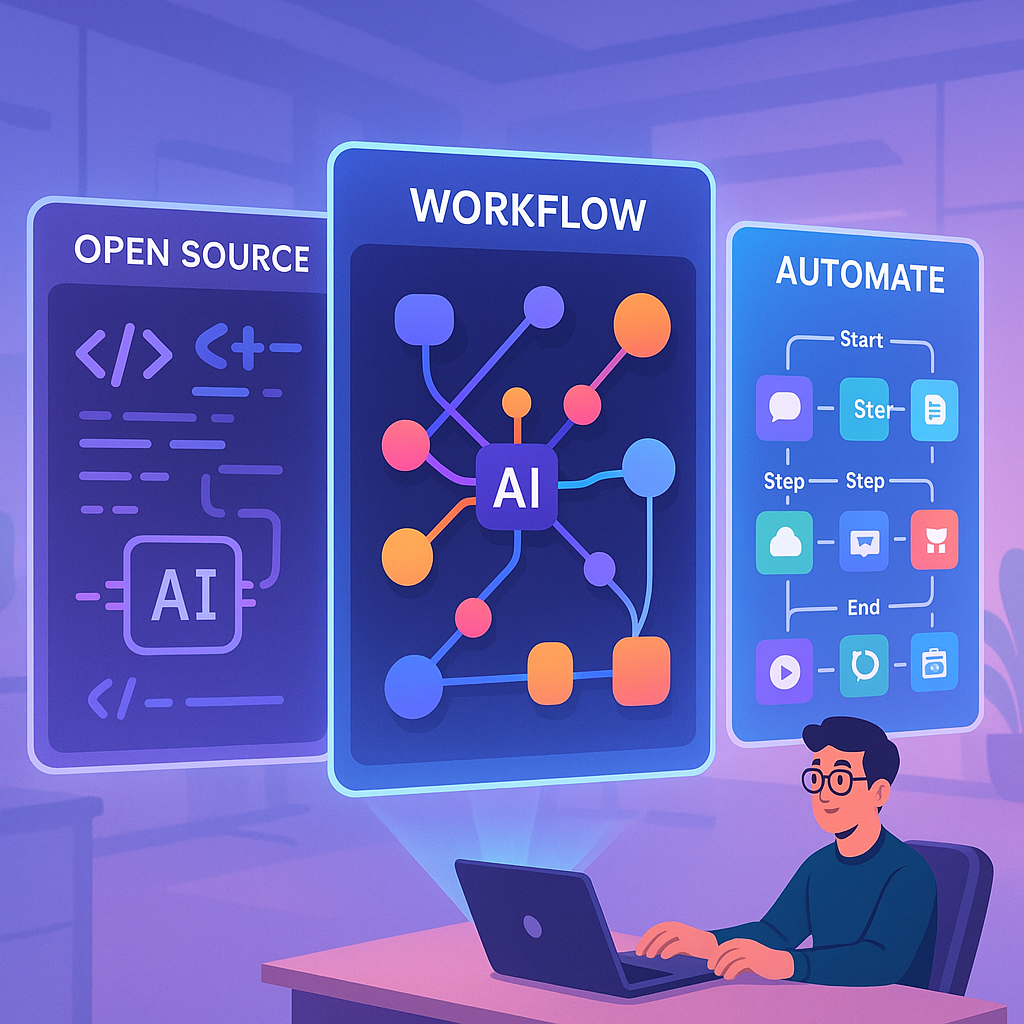
    In the evolving landscape of AI automation and workflow integration, two prominent tools—OpenClaw and n8n—are often compared, but they serve distinct purposes and excel in different aspects.

    OpenClaw is known as a more general-purpose and open-ended AI agent platform. It autonomously decides its own steps end-to-end and can recover from errors and adapt to unexpected situations independently. This makes OpenClaw highly suitable for complex, judgment-requiring tasks where flexibility and autonomous decision-making are essential.

    On the other hand, n8n is fundamentally an integration and workflow automation layer. It requires users to build the workflow graph, with AI handling reasoning within those defined steps. n8n triggers on events, handles data routing, and offers granular control over agents and workflows, making it a preferred choice for users who need detailed supervision and customization of automation processes.

    A unique community contribution has been the creation of “n8n-claw,” which is essentially a recreation of OpenClaw within the n8n environment, combining the benefits of both platforms. This community project leverages n8n with Supabase and includes workflows like MCP Builder and Workflow Builder, making installation and deployment simpler for users looking to harness OpenClaw’s capabilities in n8n.

    Cost models also differ: n8n’s pricing scales with execution volume, while OpenClaw’s cost is primarily tied to LLM (Large Language Model) API usage. This distinction influences the choice depending on the complexity and volume of tasks.

    In advanced use cases, hybrid setups exist where OpenClaw handles tasks requiring judgment, while n8n executes workflows triggered by events and manages data routing — often connecting through webhooks or HTTP API calls.

    Further innovations include MCP servers built on n8n to enable platforms like Claude, Cursor, and OpenClaw to self-heal and debug workflows autonomously, blending the robustness of expert systems with the flexibility of visual automation.

    In summary, OpenClaw suits scenarios demanding autonomous AI agent adaptability, while n8n excels in precise, user-defined automation and integration tasks. Many developers and organizations consider leveraging both in tandem to maximize automation power in 2026 and beyond.

  • AI-Generated Movies Move From Demos to Distribution

    AI-Generated Movies Move From Demos to Distribution

    A new phase of “AI-generated film” is arriving—not as a speculative concept or a one-off internet curiosity, but as something companies are positioning for commercial streaming.

    One recent report describes a premiere tied to TCL’s push into AI-made movies. The article notes that TCL previously announced the creation of the “TCL Film Machine,” a studio intended to produce AI-generated films designed to run on TCL televisions. The framing is explicitly commercial: these are not just experiments, but content meant to live inside a broader platform strategy.

    That platform logic is spelled out in the article’s own language, which highlights “premium original content,” “precise ad-targeting capability,” and an “AI-powered” viewing experience as part of TCL’s content service growth ambitions. In other words, the films are presented not only as entertainment, but also as a vehicle for an integrated content-and-advertising ecosystem.

    At the same time, the wider conversation around “fully AI-generated” movies remains messy—something reflected in the surrounding online chatter. A widely shared Reddit discussion points to a film titled “Where The Robots Grow,” described there as the first “fully AI generated” movie ever made—while also acknowledging that only about “25% of it is AI.” That contradiction captures the moment: people are eager to claim milestones, but even the language around what counts as “AI-generated” is still unsettled.

    Taken together, these snapshots show an industry at a hinge point. AI filmmaking isn’t just about what’s possible in the toolchain; it’s increasingly about where the content ends up, how it’s packaged, and what business model sits underneath it. Whether viewers embrace these movies for their novelty, reject them on principle, or simply absorb them as another category on a streaming menu, the direction is clear: AI-generated film is being positioned to move from the margins toward mainstream distribution.

  • Andrej Karpathy’s Anthropic Move Signals a New Chapter for Claude Pre-Training

    Andrej Karpathy’s Anthropic Move Signals a New Chapter for Claude Pre-Training

    Andrej Karpathy has joined Anthropic, stepping into work on Claude’s pre-training research, according to a report from The New Stack.

    For people who follow modern AI, Karpathy’s name is hard to miss. The article frames him as an OpenAI co-founder and a Tesla AI veteran, and positions his move as a notable shift of high-profile research talent into Anthropic’s orbit.

    What makes this particular hire stand out is the focus area: pre-training. The New Stack’s coverage emphasizes “Claude pre-training” as the center of gravity here—less about surface-level product tweaks and more about the upstream work that shapes what models can learn, generalize, and become in the first place. In other words, this isn’t merely a headline about a famous engineer switching companies; it’s about where one of the field’s most recognizable builders is choosing to spend his attention.

    The article also highlights Karpathy’s broader reputation in the developer zeitgeist, including his association with the term “vibe coding.” That cultural footprint matters, because it underscores how unusual it is to see someone with both deep technical credentials and broad community influence take on a role tied to foundational model-building rather than public-facing evangelism.

    Put together, the narrative is straightforward but consequential: Anthropic is reinforcing its Claude pre-training efforts by bringing in Karpathy, and the move is being read as a meaningful signal in the ongoing competition for the people shaping frontier model research.

  • Apple TV+ Expands the ‘For All Mankind’ Universe With ‘Star City’

    Apple TV+ Expands the ‘For All Mankind’ Universe With ‘Star City’

    Apple TV+ is pushing further into the alternate-history space-race world of “For All Mankind” with a new drama: “Star City.”

    According to Apple TV’s press announcement, the series is positioned as a highly anticipated expansion of the “For All Mankind” universe, and Apple has already begun rolling out early promotional material—described as a “first look”—to set the tone for what’s next.

    The headline promise is straightforward but enticing: more space-race drama, built from the same creative foundation that made “For All Mankind” stand out. Apple’s release ties “Star City” directly to the award-winning team behind the original—Ben Nedivi, Matt Wolpert, and Ronald D. Moore—signaling that the new project aims to carry forward the spirit and ambition of the flagship series rather than simply borrowing its name.

    For fans who’ve invested in “For All Mankind,” the key takeaway is that Apple isn’t treating that world as a one-off story. With “Star City,” the platform is formally turning it into a broader setting—one that can support additional stories and perspectives while staying rooted in the same space-race-driven tension that defines the franchise.

  • 2026 and the Many Meanings of “Agents”: A Year of Recruiting Surges, AI Colleagues, and Creative Co-Pilots

    2026 and the Many Meanings of “Agents”: A Year of Recruiting Surges, AI Colleagues, and Creative Co-Pilots

    If there’s a single word that keeps popping up across headlines this year, it’s “agents.” But in 2026, that word is doing a lot of work—describing everyone from real estate professionals being recruited more aggressively, to software workloads running inside Kubernetes, to new “agentic AI” systems framed as colleagues that act on our behalf.

    Here’s what the recent mix of articles suggests: “agents” aren’t one trend. They’re a sign of multiple industries reorganizing around talent, automation, and new ways of getting work done.

    ## Real estate: recruiting heats up again
    A Florida Realtors report notes that agent recruiting activity accelerated in the first quarter of 2026, with brokerages competing more aggressively for talent after a slower 2025. The shift signals a more competitive stance among brokerages—one where attracting agents is once again a front-burner priority.

    Alongside the recruiting storyline, the 2026 Agent Rise Summit (April 12–14 in Fort Myers, Florida) is positioned as three focused days for real estate agents to learn a “proven roadmap” aimed at getting “off the real estate roller coaster” and building a more stable business.

    ## Higher education: the “agentic AI university” emerges
    In a UPCEA piece, agentic AI is described as no longer merely an interactive tool people talk to, but a colleague that can act for them. The article frames this as part of a highly active and competitive environment for AI’s expansion—suggesting that universities and continuing education leaders are now grappling with what it means when AI moves from answering prompts to carrying out tasks.

    ## Business and identity: “identic AI” enters the conversation
    A Harvard Business Review podcast episode features a discussion with tech expert Don Tapscott about the potential—and pitfalls—of “identic AI,” positioned in the context of the rise of agents. The focus on both promise and risk underscores that as agent-like systems become more capable, questions of identity, trust, and governance become harder to ignore.

    ## Enterprise forecasting: agentic AI at scale
    An IDC FutureScape 2026 item highlights a forecast that by 2030, 45% of organizations will orchestrate AI agents at scale, embedding them across business functions. Whether or not that timeline holds, the direction is clear: the “agent” concept is moving from experimentation toward broad operational planning.

    ## Infrastructure: AI agents as first-class workloads
    A Tigera outlook argues that by 2026 Kubernetes environments will increasingly host agent-based workloads, with “AI agents become first-class workloads” as a central prediction. The implication is that “agents” aren’t only an application-layer phenomenon—they’re reshaping how platform teams think about what runs in their clusters and how it should be governed.

    ## Creativity: the age of creative agents—and the creative director
    Adobe’s blog points to “the age of creative agents” and links that moment to the rise of the creative director, explicitly tying the trend to Adobe Firefly AI Assistant. The framing suggests a shift in creative work: as agent-like tools take on more execution, human roles tilt toward direction, taste, and decision-making.

    ## Marketing: agents, shrinking moats, and trust
    A Spark Novus “Marketing AI Pulse Brief” for March 2026 connects multiple agent-adjacent themes—agent infrastructure (including Nvidia), adoption gaps in marketing, and the “rise of trust.” The title alone captures a tension echoed across sectors: as agentic capabilities spread, competitive advantages may erode faster (“shrinking moats”), making trust and execution more decisive.

    ## Public sector: agents as people, and the risks they face
    Not all “agent” stories are about AI. Two DHS press releases focus on U.S. Immigration and Customs Enforcement (ICE):
    – One announces a “historic 120% manpower increase,” attributing it to a recruitment campaign that brought in more than 12,000 officers and agents in less than a year.
    – Another describes new DHS statistics citing a more than 1,300% increase in assaults against ICE officers, a 3,200% increase in vehicular attacks, and an 8,000% increase in death threats.

    Together, these releases highlight a starkly different “agent” reality: human staffing growth alongside escalating safety concerns.

    ## One word, many shifts
    Across these articles, “agents” points to a broader 2026 pattern: organizations are either competing harder for human agents (in real estate and government) or racing to deploy software agents (in universities, enterprises, and creative tools). In both cases, the stakes revolve around capability and coordination—how to attract, train, govern, and trust the agents (human or AI) that increasingly define how work gets done.

  • Caltrain Turns the Commute Into a K‑Pop Countdown for BTS at Stanford

    Caltrain Turns the Commute Into a K‑Pop Countdown for BTS at Stanford

    For Bay Area fans heading to BTS concerts at Stanford Stadium, the trip is about to feel a lot more like part of the event.

    According to a Caltrain announcement dated May 12, 2026, the rail service will run trains for all three BTS shows at Stanford Stadium—scheduled for Saturday, May 16; Sunday, May 17; and Tuesday, May 19. And for the final concert date, Caltrain says it’s also “getting festive,” rolling out K‑pop-themed trains on Tuesday, May 19.

    It’s a small detail with a big ripple effect: when a transit agency doesn’t just provide transportation but leans into the moment, it helps set the tone for the entire night. Instead of a standard pre-show shuffle—traffic, parking, and long walks—Caltrain is positioning the ride itself as a warm-up, a shared space where excitement builds station by station.

    The announcement frames the experience in fan-friendly terms, suggesting that concertgoers can “start” their night early and carry that euphoric energy onto the train before the stadium lights come up. In a region where getting to major events can be half the battle, the message is clear: service will be there for all three dates, and at least one night will come with extra flair.

    For BTS fans planning their Stanford Stadium shows, Caltrain’s approach reads like a practical perk—and a cultural nod. It’s transit doing what it does best: moving crowds efficiently. But on May 19, it’s also offering something less expected—an atmosphere that matches the occasion.

  • BYD Overtakes Tesla: A New Top Seller in the Global EV Race

    BYD Overtakes Tesla: A New Top Seller in the Global EV Race

    A shifting leaderboard in the electric vehicle world just got a lot more interesting.

    According to a BBC Business report, China’s BYD has overtaken Elon Musk’s Tesla to become the world’s biggest seller of electric vehicles (EVs). The BBC notes that this is the first time BYD has outpaced its American rival for annual sales—a milestone that underscores how quickly the global EV market is evolving.

    The story’s headline fact is straightforward but significant: BYD is now the top EV seller, edging past Tesla over the year. For years, Tesla has been the name most closely associated with mass-market EV momentum. The BBC report frames BYD’s move ahead not as a small fluctuation, but as a clear change in who holds the number-one spot.

    What makes this moment stand out is what it signals about the wider industry. The EV market isn’t only growing—it’s becoming more competitive across borders. A Chinese manufacturer taking the lead over a US icon speaks to a broader rebalancing in the sector, where scale, production capability, and sustained demand can reshape the rankings.

    The BBC article positions BYD’s new status as a marker of just how dynamic the EV race has become: leadership is no longer assumed, and the top spot can change hands. For consumers, investors, and anyone watching the future of transportation, the takeaway is simple—this is a global contest, and the pace of change is accelerating.

  • Singapore’s Circle Line Is Finally Closing the Loop—With Three New Stations in 2026

    Singapore’s Circle Line Is Finally Closing the Loop—With Three New Stations in 2026

    Singapore’s Circle Line has long carried a slightly ironic name: it’s been a circle in spirit, but not quite in reality. That’s set to change in 2026, when three new MRT stations are slated to open and finally complete the Circle Line loop.

    According to Time Out Singapore, the gap will be closed by the addition of three new stations: Keppel (CC30), Cantonment (CC31), and Prince Edward Road. With these stops coming online, the Circle Line will become the continuous loop many commuters have been waiting for—turning an already vital rail line into an even more seamless way to move around the city.

    The practical impact is straightforward: more convenience. The article notes that the new stations will bring added ease to commuters, particularly by expanding access along the Circle Line corridor with these new points of entry and exit.

    For a rail network, finishing a loop isn’t just a symbolic milestone—it changes how people plan trips. A complete Circle Line means more route options, more flexibility, and a network that better matches the way Singapore travels every day. In 2026, the Circle Line won’t just be called a loop—it will finally operate like one.

  • A Reflecting Pool Makeover: Trump’s ‘American Flag Blue’ at the Lincoln Memorial

    A Reflecting Pool Makeover: Trump’s ‘American Flag Blue’ at the Lincoln Memorial

    A familiar stretch of the National Mall has become the setting for a very different kind of renovation story: President Donald Trump is having the Lincoln Memorial Reflecting Pool coated in a color he calls “American flag blue.”

    According to the article, Trump made an unannounced trip to the Lincoln Memorial to see the Reflecting Pool after the coating work had been added. The visit put a spotlight on a project that changes not just the pool’s condition, but also its appearance—shifting it from its longstanding look to a distinctly branded hue.

    The piece frames the effort as both practical and personal. Trump described the existing surface as old and problematic—“leaking like a sieve”—and suggested that replacing it would take years. Instead, the new coating is presented as a faster fix. He also pointed to a moment of outside perspective as a spark for action: Trump said he was inspired to tackle the project after a friend visiting from Germany complained that the water was filthy.

    The article places the reflecting pool work in a broader pattern of capital changes tied to Trump’s preferences, calling it another makeover “refashioning the nation’s capital to Trump’s liking.” In that sense, the story isn’t only about maintenance—it’s about how a landmark public space can become a canvas for a president’s aesthetic choices, in a city where symbolism is never far from the surface.

    Whether visitors experience the new “American flag blue” as an improvement, a provocation, or simply an unexpected twist on an iconic site, the renovation ensures the Reflecting Pool is once again at the center of attention—this time not for what it mirrors, but for what it declares.

  • AI in Education: Promise, Pressure, and the Push for Responsible Use

    AI in Education: Promise, Pressure, and the Push for Responsible Use

    Artificial intelligence is no longer a distant concept in classrooms—it’s an increasingly central part of how education systems think about teaching, learning, and the tools that support both. A UNESCO overview on “Artificial intelligence in education” frames the moment clearly: AI has the potential to help tackle some of education’s biggest challenges and to innovate teaching and learning practices.

    That promise is what makes the conversation feel urgent. If AI can genuinely support educators and learners—especially in systems strained by limited resources, uneven access, and persistent learning gaps—then it represents more than a new gadget. It signals a shift in how educational experiences might be designed, delivered, and improved.

    But the UNESCO framing also implicitly underscores why AI in education can’t be treated as a simple technology rollout. When a tool is positioned as a way to address major challenges, expectations rise quickly—and so does the responsibility to ensure the technology is used thoughtfully.

    At the heart of the article is a balanced proposition: AI’s power in education lies in its capacity to reshape practice, but any real progress depends on how that power is directed. The implication is straightforward: the story of AI in education isn’t just about what the technology can do; it’s about how educational communities choose to apply it, and whether those choices truly serve teaching and learning.

    UNESCO’s focus invites readers to see AI as a significant educational development—one that could bring meaningful innovation, while also demanding careful attention from the people and institutions tasked with guiding education forward.