Blog

  • When Neighbours Compete for Power: Indonesia Cuts Pipeline Gas Exports to Singapore by ~9%

    When Neighbours Compete for Power: Indonesia Cuts Pipeline Gas Exports to Singapore by ~9%

    What happened (the short version)
    On October 24, 2026, Indonesia’s upstream oil and gas regulator SKK Migas said it had reduced pipeline natural gas exports to Singapore by a total of 31 million standard cubic feet per day (mmscfd). The cut was split between two origins: 15 mmscfd from Natuna and 16 mmscfd from Sumatra — a reduction Reuters and MarketScreener describe as roughly 9% of Indonesia’s piped gas exports to Singapore.

    Why the cut was made
    SKK Migas said the gas that had been destined for Singapore was being redirected to Indonesia’s domestic power sector “in order to safeguard the reliability of domestic gas supplies for electricity generation.” The regulator also said it would monitor the situation daily as the redirection continues.

    Singapore’s response and scale of the impact
    Singapore’s Energy Market Authority (EMA) translated the pipeline reduction into roughly 17 billion British thermal units per day (bbtud) over an 18‑day period, and stressed that this amount is “less than 2% of our total daily gas demand of more than 1,000 bbtud.” EMA noted that Singapore has contingency arrangements — including the ability to import additional LNG — and said importers would engage suppliers and pursue contractual remedies if necessary.

    Operational and commercial context
    The cut affects pipeline flows (the article stresses most of Indonesia’s supply to Singapore is piped), while Singapore also relies on LNG shipments. Reuters reports that Singapore’s state gas buyer (GasCo) is operationally ready to bring in more LNG if required. The article also notes that importers may seek contractual recourse where appropriate.

    The broader backdrop
    The announcement came against a politically charged backdrop: Indonesian officials had recently signalled a willingness to prioritise domestic energy needs and to review exports. Reuters links the export reallocation to those broader policy statements (without presenting the cut as explicit retaliatory action). The report also highlights recent domestic electricity reliability problems in the region — for example, a 16‑hour blackout in Batam and other parts of the Riau Islands — as part of the justification for redirecting gas to domestic power generation.

    What the article does not establish (important caveats)
    – The report does not prove the cut was a deliberate political retaliation against Singapore; it records Indonesian officials’ stated reasons and contemporaneous rhetoric but stops short of concluding intent.
    – The story does not provide technical routing details or the precise mechanism by which volumes are being reallocated beyond naming Natuna and Sumatra as origins.
    – There is no fixed end date announced by SKK Migas; EMA’s comment referenced an 18‑day equivalent for the volume and SKK Migas said it would monitor daily.
    – The piece does not document measurable impacts on Singapore’s electricity generation, retail prices, or long‑term contract outcomes — only that EMA expects the effects to be manageable and that importers can seek remedies.
    – There is no independent technical verification of the figures; the article reports statements from SKK Migas, EMA and other officials.

    What to watch next
    From the article’s information, key questions to monitor are: how long the reallocation lasts (SKK Migas is monitoring daily but has not set a firm end date); whether affected importers pursue contractual claims; whether this is a one‑off, short‑term measure linked to immediate domestic reliability issues or the start of a more structural shift in export policy; and how this influences negotiations for contracts that come up for renewal in the years ahead.

    Bottom line
    The October 24, 2026 decision to cut about 31 mmscfd of piped gas to Singapore — roughly 9% of Indonesia’s pipeline exports to the city‑state — was presented by Jakarta as a short‑term move to shore up domestic electricity supply. Singapore’s authorities characterised the volume as small relative to national demand and stressed contingency options such as increased LNG imports and contractual remedies. The article leaves unanswered how long the diversion will last and whether it signals larger changes in Indonesia’s export stance.

    Source: Reuters report republished at MarketScreener, October 24, 2026.

  • From HydroConquest to Submariner: The Collector’s Journey — Longines vs Rolex

    From HydroConquest to Submariner: The Collector’s Journey — Longines vs Rolex

    Collectors — and many first‑time luxury watch buyers — often treat Longines and Rolex as two stops on the same journey: Longines as an accessible, heritage‑rich entry point to Swiss watchmaking, and Rolex as the aspirational summit where prestige, finishing and resale live. That framing is the throughline of Bob’s Watches’ comparison: these brands aren’t direct equals, but they are natural companions in a buyer’s progression. The sensible question is therefore not “which brand is better?” but “which one matches your goals?”

    A shared past, different places today
    Both Longines (founded 1832 in Saint‑Imier) and Rolex (founded 1905 by Hans Wilsdorf) claim deep 20th‑century ties to aviation, diving and sports timing. Mid‑century, their market positions were closer; today, the gap is defined by product strategy and brand control. Longines leans into long heritage and value, while Rolex emphasizes proprietary materials, in‑house manufacture and cultural status.

    Build, movements and materials — a quick contrast
    – Longines: Modern Longines uses “exclusive” Longines calibers (many built on ETA platforms), widespread use of silicon balance springs, common 72‑hour power reserves and COSC certification on select models (the Spirit line is an example). Materials and finishing are strong for the price — good value, not boutique innovation.
    – Rolex: Every modern Rolex movement is produced fully in‑house and held to Rolex’s Superlative Chronometer standard (tighter than COSC). Rolex develops proprietary materials (noted example: their stainless steel alloy often cited in collector discussions), in‑house technologies such as Cerachrom ceramic bezels, and a global service network and five‑year warranty — features usually used to justify the brand’s premium.

    Three head‑to‑head showdowns
    Bob’s Watches uses three model matchups to illustrate how the brands compare in practice. Each matchup names a practical “winner” depending on what you value.

    1) Dive watch: Rolex Submariner vs Longines HydroConquest
    – Submariner (example given): 41mm case, 300m water resistance, Rolex Cal. 3235 (~70‑hour reserve as cited), retail example ~$10,250 with secondary market often above $14,000.
    – HydroConquest (new generation noted): available in 39mm/42mm, 300m water resistance, Longines Cal. L888.5, 72‑hour reserve, silicon balance spring, retail roughly $2,200–$2,400.
    Verdict: HydroConquest is the clear “value per dollar” winner — you get a capable 300m dive watch with contemporary movement tech for a fraction of the price. The Submariner wins on prestige, finishing and long‑term resale/collectibility.

    2) Sport/explorer style: Rolex Explorer vs Longines Conquest
    – Explorer (example context): positioned as a high‑finishing, in‑house instrument with a retail figure cited near the upper‑end of mainstream luxury offerings.
    – Conquest: an accessible, versatile sports watch often comfortably under $2,000.
    Verdict: Conquest wins for everyday versatility on a budget; Explorer takes the crown for finishing and potential long‑term investment.

    3) Travel/GMT: Rolex GMT‑Master II vs Longines Spirit Zulu Time
    – GMT‑Master II: framed as the gold standard travel watch — highly collectible with strong secondary prices.
    – Spirit Zulu Time: a full‑featured flyer’s GMT with COSC‑certified movement, 72‑hour reserve, bidirectional ceramic bezel and a jump‑hour GMT function; retail starting around $3,450 on bracelet.
    Verdict: Spirit Zulu Time is a compelling functional alternative at about one‑third the Rolex price; GMT‑Master II remains the prestige and collectibility winner.

    Value retention and collectibility
    The article stresses Rolex’s unusual ability to hold or increase value on the secondary market, especially for steel sports models — a product of brand control, constrained availability and cultural desirability. Longines, while respected and occasionally collectible (particularly vintage pieces), generally does not follow the same trajectory for modern steel sports watches. In short: Longines gives more immediate “watch for the money”; Rolex offers better odds for long‑term resale strength.

    A short decision box: What to prioritize
    – If you want immediate value, variety and wearing enjoyment without a high entry price: Longines. You’ll get heritage, modern movement features (silicon springs, long reserves) and excellent value per dollar.
    – If you prioritize prestige, top‑tier finishing, in‑house manufacture and the best chance of strong resale/collectibility: Rolex.
    Both brands offer five‑year warranties (as noted in the article), so after‑sale support is strong across the board.

    What the comparison does not settle
    Bob’s Watches makes useful, model‑level comparisons and gives price examples, but it does not supply exhaustive or real‑time pricing across markets, audited production numbers, independent timing tests comparing movements head‑to‑head, or detailed life‑cycle service‑cost figures. The article’s price figures are presented as illustrative examples rather than definitive, up‑to‑the‑minute quotes.

    Final thought
    Longines and Rolex answer different questions. If your aim is the most watch for your money, Longines is a logical and satisfying choice; if your aim is the emblematic luxury sport watch and the social and market advantages that come with it, Rolex is the destination. Use the three head‑to‑head matchups above as decision anchors and double‑check current retail and secondary prices before making any time‑sensitive purchase — the Bob’s Watches article itself does not list a publication date, so verify the latest model specifications and market values before you buy.

  • When Laughter Looks Back: Vintage Clown Photos from the Nat Geo Archive

    When Laughter Looks Back: Vintage Clown Photos from the Nat Geo Archive

    One photograph in the National Geographic archive can pry open a thousand questions: a ring of painted faces caught in midday sun, a stilt-walker paused beneath the Big Top’s striped awning, the careful geometry of a clown’s make-up frozen in glass‑plate detail. That bracing mix of spectacle and stillness is the through‑line of National Geographic’s photo essay “Photos of creepy clowns from the Nat Geo archive” (published October 19, 2018, originally 2017) — a gallery that shows how images of clowns, across time and place, can read as both comic and oddly unsettling.

    The piece reminds us that clowning is hardly a modern invention. The article situates clowns as a near‑universal performance figure — present in ancient Greek pantomime, performing before Egyptian rulers, appearing in imperial Chinese courts and in Shakespearean drama — and uses archival photographs to trace the visual evolution of that role. Seeing early 20th‑century performers in black‑and‑white, their painted features exaggerated for stage and camera, makes clear how long the basic vocabulary of costume and gesture has endured.

    National Geographic’s selection leans on early photographic technology — glass plates and vintage prints — and on photographers who documented circus life in the United States in the 1930s and surrounding decades. Several images are credited to Richard Hewitt Stewart, and others to Orren R. Louden; the gallery collects scenes of circus clowns in action and at rest, stilt performers poised outside a Big Top entrance, equestriennes in delicate costume contrasted with a ‘grotesque clown,’ and parades where pageant and oddity walk side‑by‑side. Small caption notes in the original piece point to specific performance practices — pantomime sketches, burlesque boxing gags, and the offstage camaraderie among performers — which help turn each photograph into a short story.

    That tension between the funny and the unnerving is the essay’s central theme. Many of these archival shots were taken to celebrate spectacle and craft, yet the photographic style — high contrast, formal poses, the era’s makeup designs — can give the faces a haunting, uncanny quality to contemporary viewers. The gallery itself gestures toward how later cultural moments reshaped public perception: the article calls out Stephen King’s It as a pop‑culture milestone that amplified the “creepy clown” trope and points readers to related National Geographic coverage about why clowns unsettle some people.

    Even within the archive’s own historical record there are competing voices. The essay includes a contemporaneous defense of clowning from a 1931 National Geographic piece: “There is not half so much tragedy behind the funny make‑ups of clowns as people like to believe.” That line is a reminder that performers and early chroniclers often viewed clowning as a noble craft — a perspective that sits uneasily beside how some later audiences interpret the same imagery.

    Reading the gallery as a whole encourages a photo‑driven narrative: begin with a striking image, describe costume and gesture, trace the historical roots the article mentions, and then juxtapose those sympathetic notes with the modern cultural reinterpretations the piece touches on. Specific images the article highlights — circus clowns in 1930s U.S. photographs, stilt performers outside the Big Top, a dainty equestrienne seen next to a more grotesque clown — work especially well as anchors for short, descriptive paragraphs or image captions.

    A practical caveat the article itself makes explicit: while the gallery displays many archive photographs and credits their photographers, it does not provide licensing or reuse information. Anyone planning to republish the pictures should contact National Geographic or the image owners and verify reproduction rights before using the images.

    Ultimately, the essay shows how archival photography can transform familiar performance types into something stranger when seen from across decades. Makeup, costume, camera technology and shifting cultural narratives combine to make some of these faces feel eerie today — not because the performers intended fright, but because history, context, and the particular grain of old photographs invite us to read more into a look than it originally carried. The National Geographic gallery offers a quietly provocative reminder: photographs preserve more than appearances; they preserve the changing ways we see those appearances.

  • Char Kway Teow: Penang’s Smoky Street‑Food Treasure

    Char Kway Teow: Penang’s Smoky Street‑Food Treasure

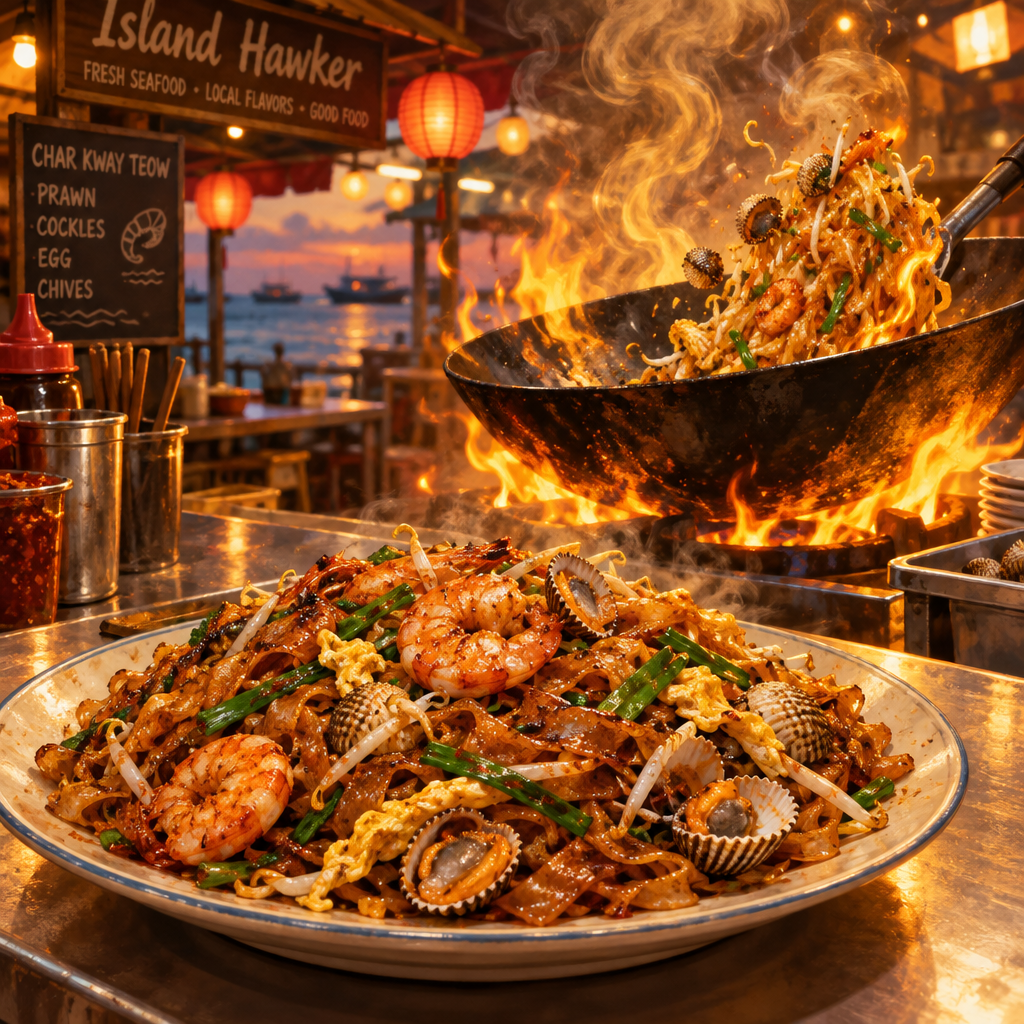
    At first bite, Penang’s char kway teow announces itself: smoky, savoury, and intensely immediate. According to VisitPenang (updated 3 May 2026), this stir‑fried flat‑rice noodle dish—whose name comes from Hokkien (char = stir‑fried; kway teow = flat rice noodles)—is the island’s signature hawker plate. Its character comes from high heat, a well‑seasoned iron wok and ingredients chosen for flavour and economy: flat rice noodles, prawns, blood cockles, egg, bean sprouts, Chinese chives and a judicious mix of light and dark soy sauces.

    The dish began life in George Town as working‑class food in the early 20th century. Chinese immigrant communities—particularly Teochew and Hokkien families—sold char kway teow from pushcarts and shoulder poles to feed dock workers, farmers and rickshaw pullers. Cheap, quick and calorie‑dense, it was built from what was locally available and affordable: kway teow (cheaper than egg noodles), abundant cockles, a scramble of egg and, traditionally, pork lard for cooking.

    Those technical choices matter. VisitPenang stresses pork lard rendered from crackling as the classic cooking fat—many traditionalists consider it essential to the dish’s flavour—while modern stalls may offer vegetable oil as an alternative. Fresh blood cockles are added late in the cook so they stay barely warm inside; overcooking makes them rubbery. Some Penang plates also mix thin yellow egg noodles with the flat rice sheets; others keep to kway teow alone. Optional touches include lap cheong (Chinese sausage) at some stalls.

    But the defining magic is wok hei (鑊氣): the smoky, slightly charred note produced by very hot, vigorous tossing in a seasoned iron wok. VisitPenang points out that wok hei is fleeting—best savoured immediately at the stall—because it dissipates quickly (within roughly 90–120 seconds). That is why many aficionados urge you to eat your plate at the hawker counter rather than take it away.

    Char kway teow’s story is also a social one. From its modest origins it rose—especially from the mid to late 20th century—into a celebrated culinary icon. Coverage by food writers and tourists pushed prices up, which in turn allowed top vendors to invest in better ingredients and techniques. Some stalls became famous, and many are now run by multi‑generation families who preserve traditional methods. At the same time, debates about “the best” char kway teow reflect broader concerns over preserving local techniques and whether younger generations will continue hawker livelihoods.

    If you want to taste it in Penang, VisitPenang highlights a handful of well‑discussed spots: Siam Road Char Kway Teow (noted for small‑batch, one‑wok cooking and long queues), New Lane Hawker Centre (Jalan Macalister), Lorong Selamat and Sisters Char Kway Teow near Armenian Street. Practical tips from the same source: eat at the stall to catch wok hei; pair the plate with a local drink such as teh tarik or kopi; read queues with care (no queue isn’t an automatic fail); expect many vendors to finish lunch service by about 2–3pm, and consider evenings for the best char kway teow. The guide also notes halal variants—made with vegetable oil or chicken sausage—exist locally but are regarded as a distinct version.

    The VisitPenang article does not claim a single inventor, exact year of invention, step‑by‑step recipe proportions or hard economic data on price changes—its account gives a broad early‑20th‑century timeframe and emphasizes cultural context over archival minutiae. Taken together, the piece paints char kway teow as more than a plate: it is Penang’s taste memory, a technique‑driven craft and a living symbol of the island’s hawker heritage.

  • When the Smoke Won’t Stop: Inside Indonesia’s 2026 Fires and the Changes Experts Say Are Needed

    When the Smoke Won’t Stop: Inside Indonesia’s 2026 Fires and the Changes Experts Say Are Needed

    Channel NewsAsia’s explainer (published 4 Sept 2026, updated 9 Sept 2026) paints a stark picture: fires that have burned for weeks across Indonesia — concentrated in Kalimantan (Indonesian Borneo) and Sumatra, and increasingly in parts of Papua such as Merauke — produced transboundary haze that reached neighbouring Malaysia, Brunei and as far as the Philippines.

    Scale and human impact
    By the end of July 2026, roughly 202,000 hectares had burned in Indonesia between January and July; almost half of that — about 94,539 hectares — burned in July alone. As of 2 September 2026, the fires had released an amount of greenhouse-gas equivalents equal to roughly 10% of the emissions from the devastating 2015 fires (those 2015 fires burned about 2.6 million hectares and released nearly 1.75 billion tonnes CO2e). The immediate human toll was already clear: tens of thousands reported respiratory illnesses, some schools in Sarawak were temporarily closed, 1.4 million students across six Indonesian provinces were shifted to online learning, and flights were disrupted in places including Pontianak. Local air-quality indices in parts of West and Central Kalimantan fell into “unhealthy” to “hazardous” categories; Serian in Sarawak is cited as an example of hazardous conditions.

    Where the fires are growing and why
    Kalimantan and Sumatra remain the primary hotspots, but the 2026 season has seen new and growing activity in South Papua (Merauke), an area where land-clearing tied to proposed food-estate and energy projects is suspected to be a factor. The story, the article stresses, is not just weather. A strong El Niño delivered hotter, drier conditions that intensified risk during Indonesia’s dry season (peaking August–September), but El Niño alone does not fully explain the scale and recurrence of the fires.

    Peatlands, people and the mechanics of long-burning blazes
    A critical technical point in the CNA piece: drained and degraded peatlands are especially dangerous. Once drained, peat ignites more readily and can burn underground for long periods, producing disproportionately large quantities of fine particulate matter and carbon compared with surface vegetation fires. Alongside the climate backdrop, human land-management — deliberate burning to clear land for agriculture and plantations, plus peatland drainage — are presented as the proximate drivers that turn a dry season into a regional haze crisis.

    Responsibility, hotspots and the limits of the record
    An Indonesian NGO, WALHI, recorded 6,902 hotspots between 25–31 August 2026, with 5,201 of those in Kalimantan. Its satellite analysis reported that nearly half of those hotspots overlapped operational areas of corporate forestry and oil-palm plantation concessions, suggesting substantial spatial overlap between fires and concession areas. CNA reports this as an NGO analysis rather than a final legal finding: the article does not present definitive court rulings or final judicial determinations that assign criminal liability to specific companies or actors.

    Government action, regional cooperation and the stakes for September
    Indonesia’s government response has included revoking business permits for companies suspected of ordering burning, applying administrative sanctions, and naming some companies as suspects — authorities say they investigated 42 concession-holding companies, imposed administrative sanctions on six, and named two as suspects. Indonesia also carried out joint cloud-seeding with Malaysia and planned deployment of disaster-management officers (BNPB) to guard vulnerable areas. The Forestry Minister warned that September would be a decisive month, hinging on when rains arrived.

    Beyond firefighting: what experts say must change
    Experts quoted in the article argue that repeated haze crises reflect structural problems: weak forest and land governance, poor spatial planning, inadequate licensing oversight, damaged water management and peatland drainage, and fraught relationships between communities and land managers. To reduce future risk they call for a shift away from reactive firefighting and prosecutorial responses toward prevention — stronger enforcement of land-use rules, peatland restoration and hydrological management, improved spatial planning, and policies that address the economic drivers of deliberate burning.

    What this explainer does not—and cannot—prove
    CNA’s piece is clear about limits. It does not provide a final, independently verified accounting of total 2026 emissions for the whole season (the 10% comparison to 2015 is a snapshot as of early September). It does not present exhaustive, time-series air-quality data across all affected countries, nor does it offer court judgments assigning guilt. Economic costs and long-term public-health outcomes beyond immediate spikes in respiratory illness are also not quantified.

    Why this matters regionally
    The 2026 fires are a reminder that transboundary haze remains a regional security, health and economic issue — one that returns when dry years combine with degraded landscapes and permissive land management. The CNA explainer makes a clear case: weather can make conditions worse, but lasting change will require fixing the governance, hydrology and incentives that let peat and forests burn. If September’s rains are late, the article warns, the situation could get markedly worse — and the same structural reforms will be needed to stop these seasons from repeating.

  • From Border to Bouquet: RHS Tips for Growing Cut Flowers

    From Border to Bouquet: RHS Tips for Growing Cut Flowers

    If you’d rather pick stems from your own garden than buy them from a florist, the Royal Horticultural Society’s practical guide to growing cut flowers is a great starting point. The central idea is simple: plan so you can harvest reliably — either by adapting existing borders to supply regular stems or by creating a dedicated cutting garden designed for succession, ease of access and strong, straight stems.

    What the guide covers
    – Scope: hands-on, home-gardening advice for growing flowers to cut for bouquets and arrangements. It covers site choice, soil and feeding, garden and bed layout, supports, propagation and seasonal plant selection.
    – Plant groups: bulbs, annuals, biennials, perennials, shrubs, trees and climbers are all useful for cutting. The RHS lists and categorises many suitable species and cultivars to help planning (each entry is labelled by type: A = annual, Bu = bulb/corm, Bi = biennial, P = perennial, C = climber, S = shrub, etc.).

    Design and practical layout
    – Adapt existing borders: use larger drifts or groups of annuals and add bulbs and perennials where possible. Combine flowering stems with shrubs and ornamental grasses for foliage, shape and structure.
    – Cutting garden layout: if you have the space, set aside a dedicated area and plant in rows. Rows make sowing, weeding, staking and harvesting easier; leave access paths between rows and avoid overcrowding to prevent tangling and stem damage.
    – Supports and site selection: taller cut flowers typically need robust staking and are less happy on exposed, windy sites. A predominantly sunny aspect is recommended although a few cut-flower plants tolerate shade.

    Soil, water and feeding
    – Improve soil structure and moisture-holding capacity by adding organic matter annually — the guide suggests about one to two bucketfuls per square metre.
    – Mulch (around 5–7.5 cm) to suppress weeds and conserve moisture.
    – Watering during dry spells is important for achieving good stem length. Regular, moderate feeding encourages abundant flowering; the RHS gives an example of using a general fertiliser (for example Growmore) at an appropriate application rate.

    Propagation and plant care
    – Annuals: direct-sow outdoors or raise half‑hardy annuals under cover to get an earlier crop.
    – Perennials: sow seed or divide established clumps in spring or early autumn; some can be increased from basal or root cuttings.
    – Shrubs and climbers: increase by softwood, semi-ripe or hardwood cuttings, or by layering.
    – Bulbs/corms: plant a sequence of early, mid and late cultivars to extend the picking season and consider forcing some bulbs for mid-winter indoor flowers. Note the guide warns that some bulbs may not perform well in subsequent years and may need replanting.

    Seasonal planning — examples from the guide
    – Spring: tulips, daffodils, magnolias, hyacinths.
    – Late spring / early summer: delphiniums, peonies, foxgloves, nigella.
    – Summer: sunflowers, cosmos, zinnias, alstroemeria, roses.
    – Late summer / autumn: chrysanthemums, asters, crocosmia, dahlias.
    Include foliage plants such as eucalyptus, ruscus and pittosporum (and ornamental grasses) to add texture and year‑round interest to bouquets.

    Maximising harvests and extending the season
    – Plant a succession of varieties and stagger sowings to keep stems coming over a long season.
    – Use bulbs of different flowering times and plan for staged plantings.
    – Keep simple records of what performs well and where you sourced seed or plants — this makes each season easier to plan.
    – If you value ornamental displays, avoid over‑harvesting from showy beds; either dedicate areas for cutting or plant bulbs/rows specifically intended for harvest.

    What the guide does not provide
    – The RHS page does not show a precise publication or last-updated date (it is authored “By The RHS Advice Team” and carries a © 2026 footer). It is written in a UK horticultural context and does not give region‑specific planting calendars or tailored advice for non‑temperate climates (for example tropical zones). It also does not provide detailed post‑harvest vase-care recipes, commercial-scale economics or cultivar-specific yield data — it is focused on home gardeners.

    Further reading and tools
    – The guide suggests additional resources (for example Sarah Raven’s The Cutting Garden) and links to other RHS content and the RHS Grow app for more information and planning tools.

    If you’re setting up to grow cut flowers, the RHS guide is a compact, practical blueprint: choose the right site, improve soil and water reliably, plant for succession and use rows and supports to make harvesting straightforward. Combine flowers with foliage for better arrangements, keep notes, and plan bulbs and annuals so your vases are never empty.

  • Milestones for 7‑Year‑Olds: What to Expect in Their Second Grade Year

    Milestones for 7‑Year‑Olds: What to Expect in Their Second Grade Year

    Lead: HealthLink BC’s “Milestones for 7‑Year‑Olds” gives a concise, clinically reviewed checklist of typical physical, cognitive, social/emotional, language, and motor skills for most 7‑year‑old children (current as of March 1, 2023).

    Intro
    Seven is firmly a school‑age year — not toddlerhood. HealthLink BC frames the age‑7 milestones as part of a predictable but individually variable sequence of development across five domains: physical growth, thinking/reasoning (cognitive), emotional & social, language, and sensory & motor. Children may be advanced in one area and still catching up in another; the page stresses that each child follows their own pace.

    Physical growth
    • Height and weight: Typical growth for a 7‑year‑old is about 6 cm (2.5 in) taller and about 3 kg (7 lb) heavier over a year.
    • Teeth: Children commonly lose about four baby (primary) teeth per year as permanent teeth replace them.

    Cognitive (thinking & reasoning)
    • Sense of time: Most 7‑year‑olds develop a solid sense of time — they understand seconds, minutes, hours, days, weeks, months, seasons and, for some, years.
    • Learning style: Children begin to show a preferred learning style (for example, hands‑on versus quieter practice).
    • Problem solving and math: They can use concrete objects to solve simple math problems (counting beads, for example) and typically reason about one factor at a time.

    Emotional & social development
    • Empathy: Many children become more aware of other people’s feelings.
    • New anxieties: Some earlier fears fade, but new anxieties — especially about the unknown (such as a new school) — can be pronounced. Concern about adults’ approval and peer opinion is common.
    • Friendships and play: Friendships often form with same‑gender peers. Children may play in larger groups sometimes but still need and enjoy solitary time.

    Language development
    • Speech: In comfortable settings children tend to talk a lot and generally pronounce words correctly (for example, most no longer substitute “fr” for “thr” in words such as “through”).
    • Reading and spelling: Reading skills are improving, though some children still find vowel sounds difficult to decode and basic spelling errors are common.

    Sensory & motor development
    • Gross motor: Coordination for larger movements improves — activities like swimming and climbing become smoother.
    • Fine motor: By age 7 many children can use safety scissors easily, draw a person with about 12 parts, and use a pencil to write their name.

    Practical takeaways
    HealthLink BC emphasizes individual variation. These milestones describe what is typical for many 7‑year‑olds, not a strict checklist every child must meet. If a child is far off typical expectations, showing a sudden loss of skills, or if parents or teachers are concerned, the page points to following up with school or a health professional for assessment and guidance.

    What this page does NOT cover
    The HealthLink BC page does not treat a 7‑year‑old as a toddler; it discusses school‑age development. It also does not address topics such as photographing or sharing images of children, legal or ethical issues around images of minors, or detailed parenting programs or step‑by‑step interventions — it offers descriptive milestones rather than prescriptive curricula.

    Closing
    For the official checklist, authorship and medical review details, and the full, clinically reviewed text (current as of March 1, 2023), see the HealthLink BC page “Milestones for 7‑Year‑Olds.” (Healthwise Staff; medical review credited to physicians in pediatrics/family medicine/developmental pediatrics.)

  • A Paean to Bak Chor Mee — Singapore’s Minced-Pork Noodle Comfort

    A Paean to Bak Chor Mee — Singapore’s Minced-Pork Noodle Comfort

    There’s a particular kind of homesickness that comes with missing a single bowl. In her column, Chua Mui Hoong writes from Perth — three months after leaving Singapore — and turns that longing into an affectionate, detailed ode to bak chor mee, the minced-pork noodle dish that many Singaporeans hold dear.

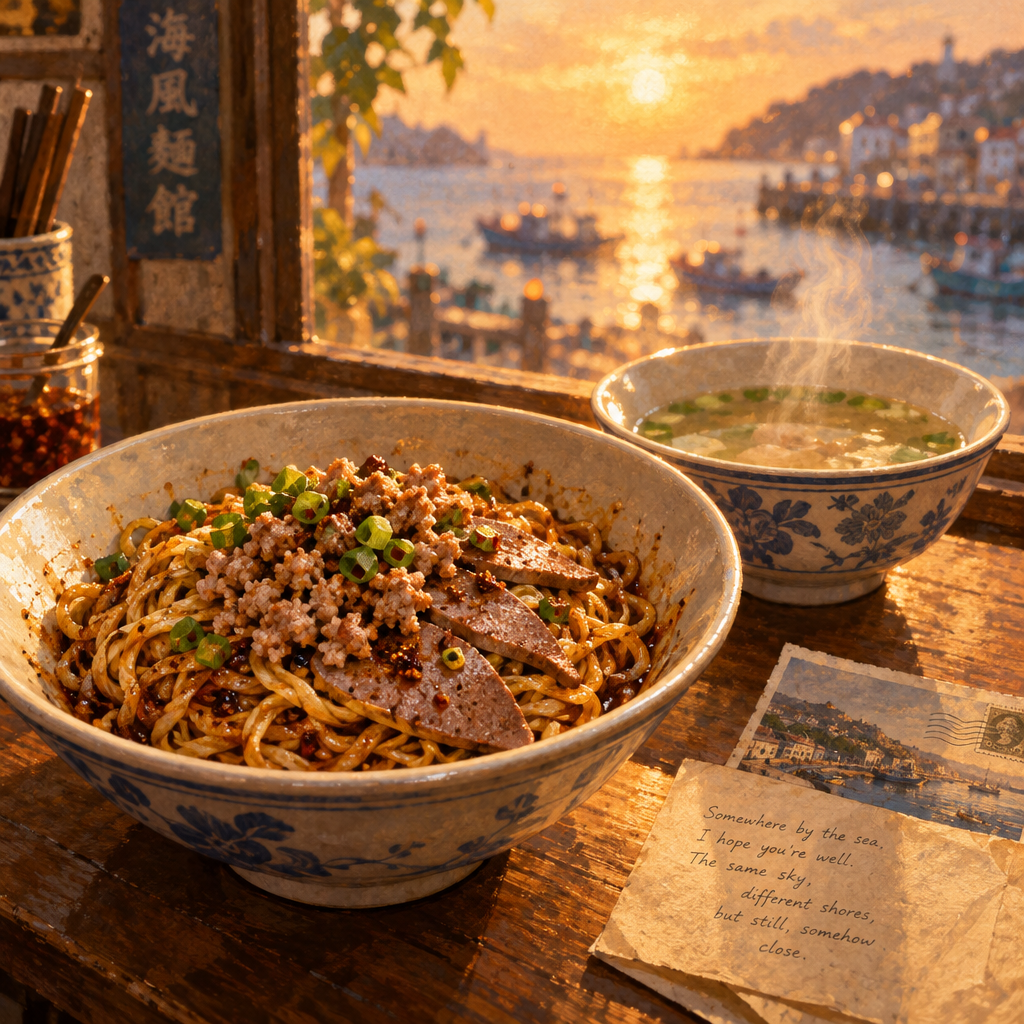
    At first glance bak chor mee can look simple: strands of al dente noodles dressed in a lively sauce, a heap of minced pork, and thin slivers of pork liver. But the piece insists that the dish’s apparent simplicity hides real craft. The dry version is traditionally tossed in a sauce built on chilli, black (or fermented) vinegar and pork lard, while a clear, flavourful soup is served on the side. It is the combination — the tossed noodles together with the companion soup — that, the author argues, defines the dish.

    Sensory detail is where the column shines. Texture matters: the noodles should be pleasantly al dente. Taste is all about balance: heat from chilli, tang from vinegar, and the rounded richness of pork lard. A well-made bowl hits those notes while keeping the minced pork and liver tender and the soup bright enough to refresh the palate between bites.

    Chua places bak chor mee alongside national favourites such as chicken rice and chilli crab, suggesting it is very nearly a national dish in its own right. Yet she also cautions that getting it right is “notoriously hard”: the flavours, the noodle texture and the soup must be carefully balanced, which takes skill and experience.

    The column’s strongest thread is its nostalgia. Writing from abroad lends the piece a people-and-place quality: bak chor mee becomes more than food — it’s a cultural touchstone, a small ritual of comfort that can trigger memory and belonging for Singaporeans overseas.

    The article is a celebration rather than a history or how-to. It doesn’t offer a recipe, an origin story, or a list of where to eat; instead, it asks readers to appreciate the quiet complexity and local character of a humble hawker bowl. Read as a personal love letter, the piece captures why bak chor mee tastes like home to so many.

  • Disneyland Resort with Little Ones: A Practical Parent’s Guide from the Official Tips

    Disneyland Resort with Little Ones: A Practical Parent’s Guide from the Official Tips

    Planning a trip to the Disneyland Resort with babies, toddlers or preschoolers can feel overwhelming — but the resort’s official tips make one thing clear: Disney designs many services and experiences with families in mind. This guide pulls together the key points from Disneyland Resort’s press tips so you can plan a calmer, more magical day with young children.

    Before you go
    – Park reservation + ticket: To enter a park you need both a theme-park reservation and a valid ticket for the same park on the same date. Reservations are limited and subject to availability, so lock those in early.
    – Use the official app: The Disneyland app is central to planning on the go — it shows attraction wait times, park hours, entertainment schedules, menus, character locations, mobile ordering and maps (including Baby Care Center locations and other family facilities).

    Guest services that make days easier
    – Baby Care Centers and First Aid: Each park has staffed Baby Care Centers stocked for families — nursing rooms, changing rooms, small toilets, feeding areas and bottle warmers. Disneyland Park’s Baby Care Center and First Aid are at the end of Main Street, U.S.A.; Disney California Adventure’s Baby Care Center is in San Fransokyo Square across from The Bakery Tour, and First Aid is next to the Chamber of Commerce on Buena Vista Street.
    – Companion and family restrooms: Disneyland Park has nine companion restrooms and Disney California Adventure has five — their locations are shown in the app.
    – Lockers and strollers: There are four locker rental sites (two in the main entrance plaza, one on Main Street, U.S.A., one on Buena Vista Street). Single- and double-stroller rentals are available; stroller rental is located outside the parks to the east of the Disneyland Park main entrance.

    Toddler- and preschool-friendly attractions
    The resort highlights many attractions with little or no height requirements that tend to delight very young children:
    – Disneyland Park examples: Mickey & Minnie’s Runaway Railway; Dumbo the Flying Elephant; “it’s a small world”; Mickey’s Toontown (reimagined with play areas and green space).
    – Disney California Adventure examples: Redwood Creek Challenge Trail; Turtle Talk with Crush; Inside Out Emotional Whirlwind; The Little Mermaid – Ariel’s Undersea Adventure.
    – Rider Switch: If one grown-up wants to ride an attraction that a child can’t or doesn’t want to ride, ask a cast member about Rider Switch at the entrance — it lets one adult ride while the other waits with the child, then switch with minimal additional wait time.

    Characters and kid-sized entertainment
    – Live shows and storytelling (for example, Storytelling at the Royal Theatre or character play patrols) are called out as great first live-theatre moments for little ones.
    – The app’s Characters tab helps you find meet-and-greets. Examples from the article include Fantasy Faire princess interactions, Mater and Lightning McQueen in Radiator Springs, Mickey’s House and Minnie’s House in Toontown, and hero encounters in Avengers Campus.
    – Character dining: Four character-dining locations are listed (advance reservations recommended): Goofy’s Kitchen (Disneyland Hotel); Mickey’s Tales of Adventure Breakfast Buffet (Storytellers Café at Disney’s Grand Californian Hotel & Spa); Disney Princess Breakfast Adventures (Grand Californian); and Minnie & Friends – Breakfast in the Park (Plaza Inn, Disneyland Park).

    Food, allergies and healthy choices
    – Look for the Disney Check symbol on kids’ menus to find healthier options, and the article mentions “power pack” children’s meals (snack-style combinations such as yogurt, fruit and crackers).
    – Allergy-friendly options: Table-service restaurants and many quick-service locations offer allergy-friendly menus and cast members trained to assist with special diets. The article notes Disney takes steps to reduce cross-contact but cannot guarantee items are completely free of allergens — speak with a special-diets cast member on arrival.
    – Plant-based choices are identified with a leaf icon; fresh fruit is also widely available (the article lists seven fruit-cart locations in Disneyland Park and three in Disney California Adventure).

    Memory-making extras
    – Photo locations and PhotoPass photographers are positioned at many iconic spots and character greetings. According to the press text, guests can purchase Disney Genie+ in the app to obtain unlimited Disney PhotoPass digital photo downloads for the day.
    – Bibbidi Bobbidi Boutique: A salon experience for children ages 3–12 with packages for hair, makeup, costumes and photography; reservations are strongly recommended via Disneyland.com.
    – Merchandise: Consider milestone souvenirs — first Mickey ears, embroidered hats or plush toys — to capture those early memories.

    Important operational notes and limits of the press tips
    – Availability and change: Attractions, entertainment, services and offerings may be modified, limited or unavailable and are subject to change or cancellation without notice.
    – What the article doesn’t include: It does not provide prices, real-time showtimes, current attraction height thresholds, or post–January 14, 2025 operational updates — for live schedules, costs and exact requirements the app and Disneyland.com are the sources the article directs families to consult.

    Bottom line
    Disneyland Resort’s official family tips emphasize convenience, choice and safety for very young guests: staffed Baby Care Centers, companion restrooms, stroller and locker options, a strong app for on-the-go planning, plenty of gentle attractions and character experiences, and dining choices that include healthier and allergy-aware options. Use the app and make reservations (park entries and character meals) ahead of time, and remember the press page’s reminder that availability can change — then focus on the small, magical moments that make a child’s first Disney visit special.

  • King, Queen — and the Underdog: What a 2007 Comparative Study Told Us About Durian, Mangosteen and Snake Fruit

    King, Queen — and the Underdog: What a 2007 Comparative Study Told Us About Durian, Mangosteen and Snake Fruit

    Tropical fruits often carry myth and mystery as much as flavour. A 2007 comparative study in the Journal of Agricultural and Food Chemistry set out to replace some of that folklore with hard measurements by testing three Southeast Asian fruits — durian (Durio zibethinus), mangosteen (Garcinia mangostana) and snake fruit (Salacca edulis) — using laboratory antioxidant assays and a short-term feeding experiment in rats.

    What the researchers measured
    The team ran a suite of chemical analyses: dietary fiber, minerals and trace metals; total polyphenols (reported as mg gallic acid equivalents per 100 g fresh weight); flavonoid content (in catechin equivalents); phenolic profiling by HPLC with diode-array detection; and antioxidant activity using two common in vitro assays (DPPH and ABTS, reported as µM trolox equivalents per 100 g fresh weight). They also carried out a small in vivo experiment: male Wistar rats were fed either a basal diet, a cholesterol-supplemented diet, or cholesterol diets that were supplemented with 5% (by diet) of one of the three fruits, and plasma lipids and antioxidant status were monitored.

    Key laboratory (in vitro) findings
    – Dietary fiber, mineral and trace metal levels were broadly comparable across all three fruits.
    – Antioxidant-related compounds and activity differed between the fruits, with strong correlations between measured bioactive compound levels and antioxidant activity (reported R2 ≈ 0.99).
    – Durian showed the highest antioxidant activity in these assays. Reported values were: DPPH ≈ 228.2 ± 13.4 µM TE/100 g FW and ABTS ≈ 2016.3 ± 81.1 µM TE/100 g FW. By comparison, snake fruit measured about 110.4 (DPPH) and 1507.5 (ABTS), while mangosteen measured about 79.1 (DPPH) and 1268.6 (ABTS) µM TE/100 g FW.
    – HPLC/DAD profiling identified quercetin in durian at roughly 1214.23 ± 116.7 µg per 100 g fresh weight; this quercetin level was reported to be about three times the amount of caffeic acid and roughly double the amounts of p‑coumaric and cinnamic acids in durian.

    What happened in the rats (in vivo)
    When the researchers fed rats a cholesterol-enriched diet, adding 5% of one of the fruits to that diet attenuated the cholesterol-induced rise in plasma lipids and limited the decrease in plasma antioxidant activity compared with the cholesterol-only group. The protective effect was most pronounced with durian, with snake fruit and mangosteen showing smaller but detectable benefits in this short-term animal model.

    Authors’ interpretation and the cautious headline
    The paper’s overall conclusion was that all three fruits have comparably high nutritional value, and that durian showed the strongest in vitro antioxidant activity and the clearest protective signal in the short-term rat feeding study. The authors suggest that including these tropical fruits — especially durian — could be useful in diets aimed at disease prevention, while noting that the evidence here comes from laboratory assays and an animal model.

    Important limits you should not overstate
    This study does not establish clinical benefits in humans. The in vivo data are from a short-term rat experiment, so human physiology, effective doses, long-term effects and safety were not examined. The antioxidant assays (DPPH, ABTS) are laboratory measures and do not automatically translate into the same effects in people. The paper also did not compare different cultivars, ripeness stages or growing regions in detail; phytochemical content can vary for those reasons, but that variability was not addressed by this single experiment.

    Angles for a balanced blog piece
    A strong blog can use the cultural “king (durian) vs queen (mangosteen)” motif while staying faithful to the paper’s findings: durian scored highest on the lab antioxidant tests and contained measurable quercetin, and the 5% durian-supplemented diet gave the clearest protective signal in rats fed extra cholesterol. Equally important is to emphasise the study type and limits — promising findings, not proof of human benefit. As tasteful context (not from this paper): writers may choose to pair these facts with sensory descriptions, culinary uses or discussions of cultivar variation, but those are background topics the study itself did not investigate.

    Bottom line
    In controlled lab assays and a short-term rat feeding trial, durian emerged as the fruit with the strongest antioxidant signals and the most pronounced protective effect against diet-induced changes in plasma biomarkers. Mangosteen and snake fruit also showed antioxidant compounds and modest protective effects. These are useful pieces of evidence for researchers and writers, but they are not clinical proof for humans — only a single 2007 study combining laboratory chemistry and an animal model.