Blog

  • Cash, QR Codes and the Hawker Stall: Why the Shift Takes Time

    Cash, QR Codes and the Hawker Stall: Why the Shift Takes Time

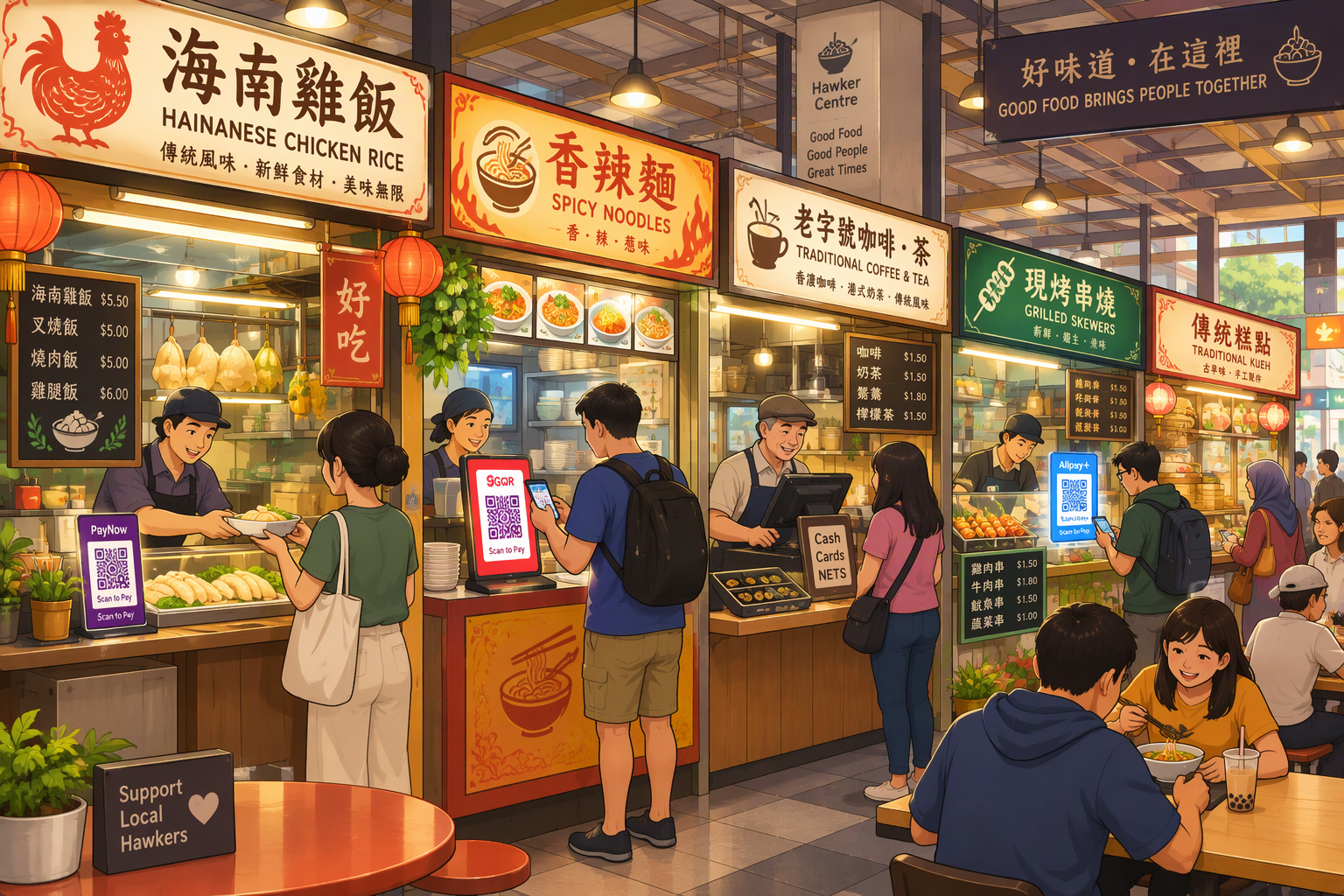
    At West Coast Food Centre, QR codes were easy to spot. But at noodle stall owner Angie Sim’s counter, another message stood out: “Cash Only.” Her choice offers a glimpse of a quieter side of Singapore’s move towards digital payments—one where convenience can mean different things to different people.

    Sim, 65, told The Straits Times that cash was easier and more convenient for her. Many of her customers were older, she said, and less comfortable with technology. They were also used to carrying cash. Sim had worked at the centre with her stall partner for more than 20 years, so her preference reflected both her own routine and the habits of people who came to her stall.

    She was not alone. The newspaper spoke to stallholders across eight hawker centres who continued to resist digital payments. Their reasons were practical: some had limited digital literacy or poor eyesight; others worried that customers would be kept waiting while they tried to use a payment device.

    At ABC Brickworks Market & Food Centre, a drinks-stall owner in his 70s said he found digital platforms difficult to remember and payments hard to verify, especially when business was busy. Sometimes, he served customers who had no cash and let them pay later. At Albert Centre Market and Food Centre, drinks-stall owner Mr Tan said checking whether an electronic payment had gone through was troublesome.

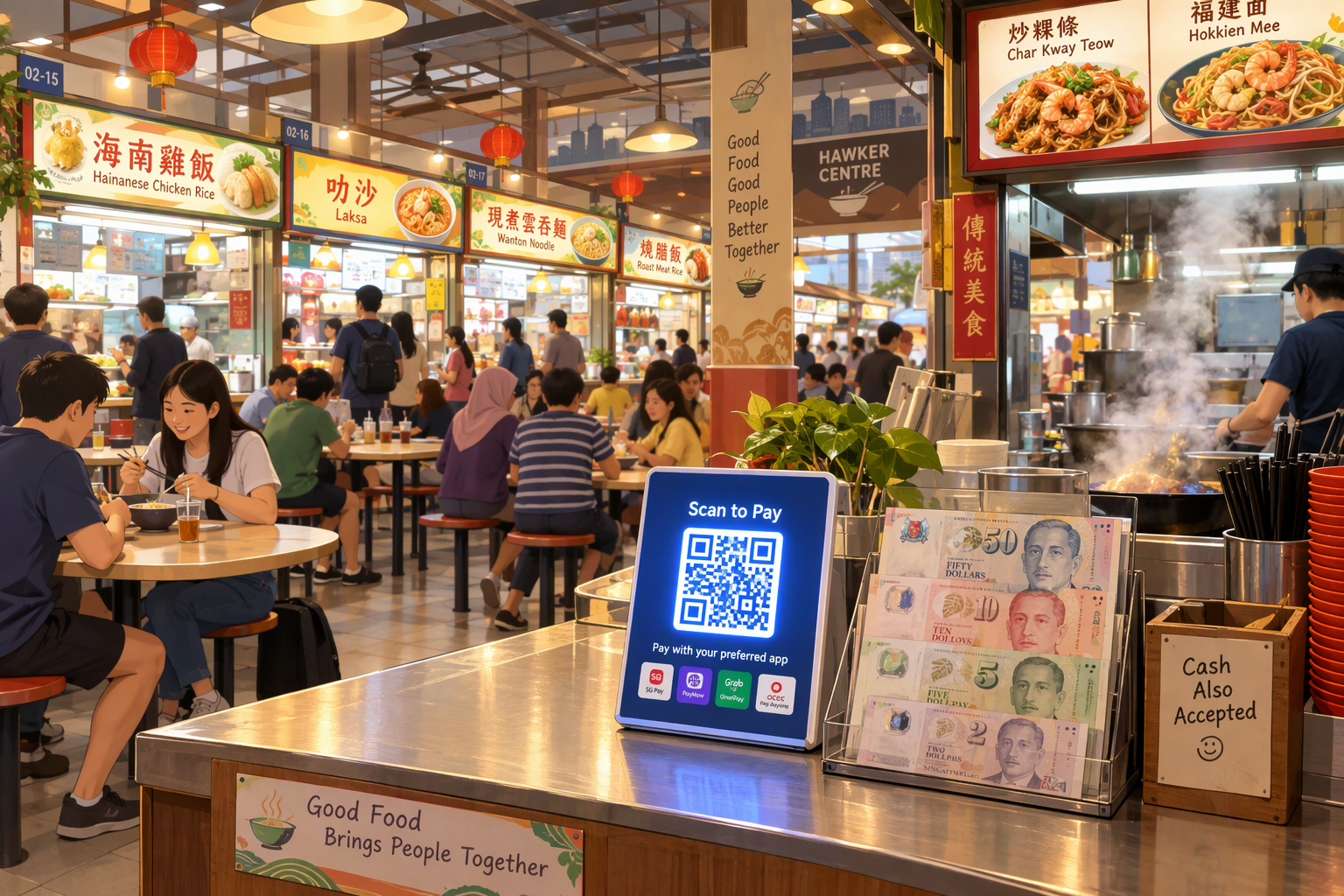
    These experiences sit alongside a much wider push to make digital payments available. More than 11,500 hawkers had adopted SGQR, a standardised QR code launched in 2018 to simplify payments from multiple mobile e-wallets. In 2020, the Hawkers Go Digital programme began helping stallholders take up digital payments. Under the arrangement described in the article, hawkers did not pay a 0.5 per cent transaction fee on the first $20,000 of monthly transactions. On October 10, 2024, Enterprise Singapore and the Infocomm Media Development Authority announced that this fee waiver would be extended to the end of 2025.

    The programme aimed to bring digital payments to roughly 18,000 stallholders in government-run food centres. Yet the accounts in the article show why a change in payment habits may take time. A QR code can offer another way to pay, but stallholders still have to manage the transaction, confirm it has succeeded and serve customers without slowing things down. For some hawkers and their customers, cash remains familiar and straightforward.

    Singapore’s hawker centres are therefore not captured by a simple story of cash disappearing. Digital payments have spread, but the transition is gradual—and the reasons some people stick with cash include comfort, accessibility and the practical demands of a busy stall.

    Source: Why cash is still king for some hawkers in Singapore despite digitalisation push, The Straits Times
  • After the Subsidy: Why Many Hawkers Still Choose SGQR

    After the Subsidy: Why Many Hawkers Still Choose SGQR

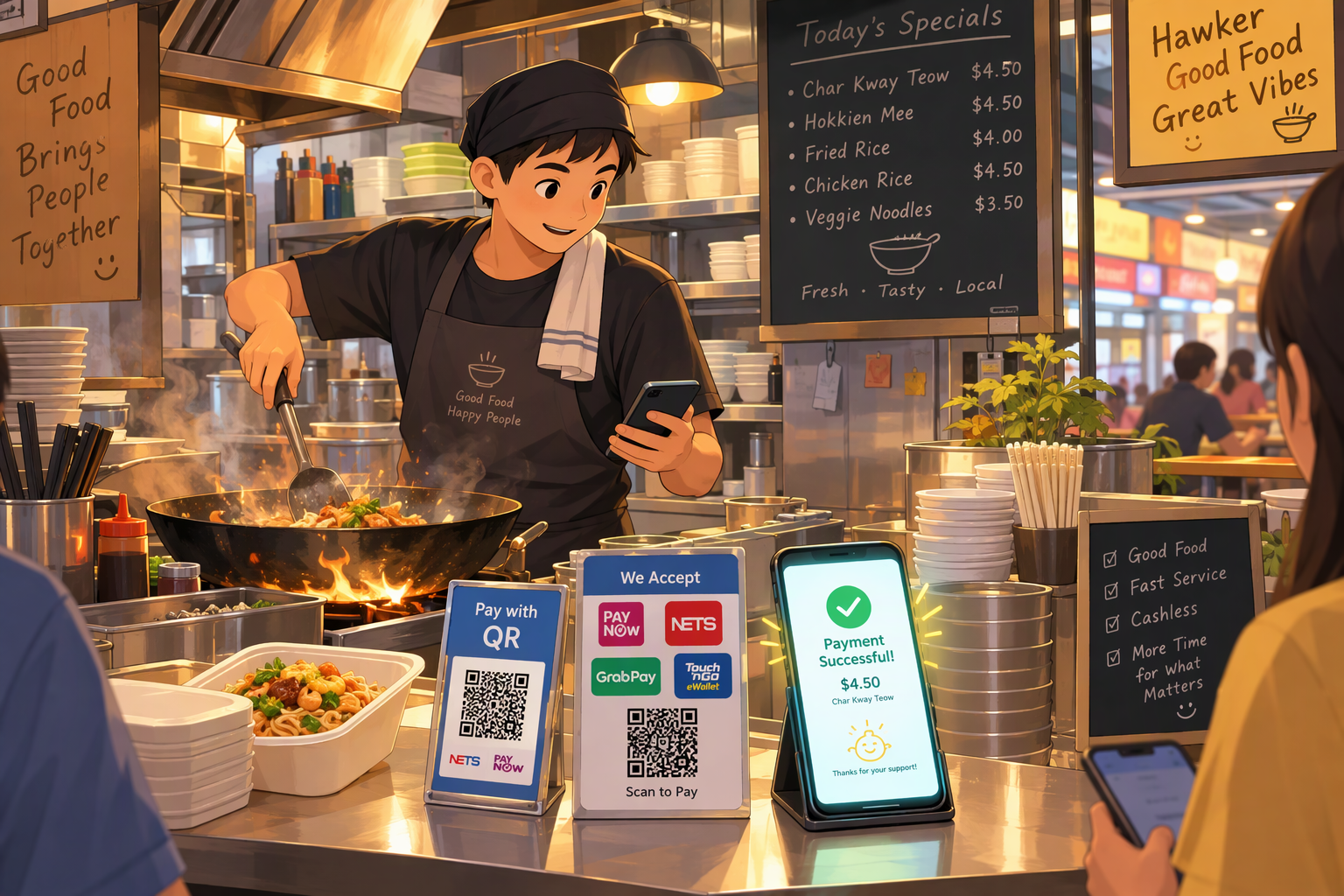
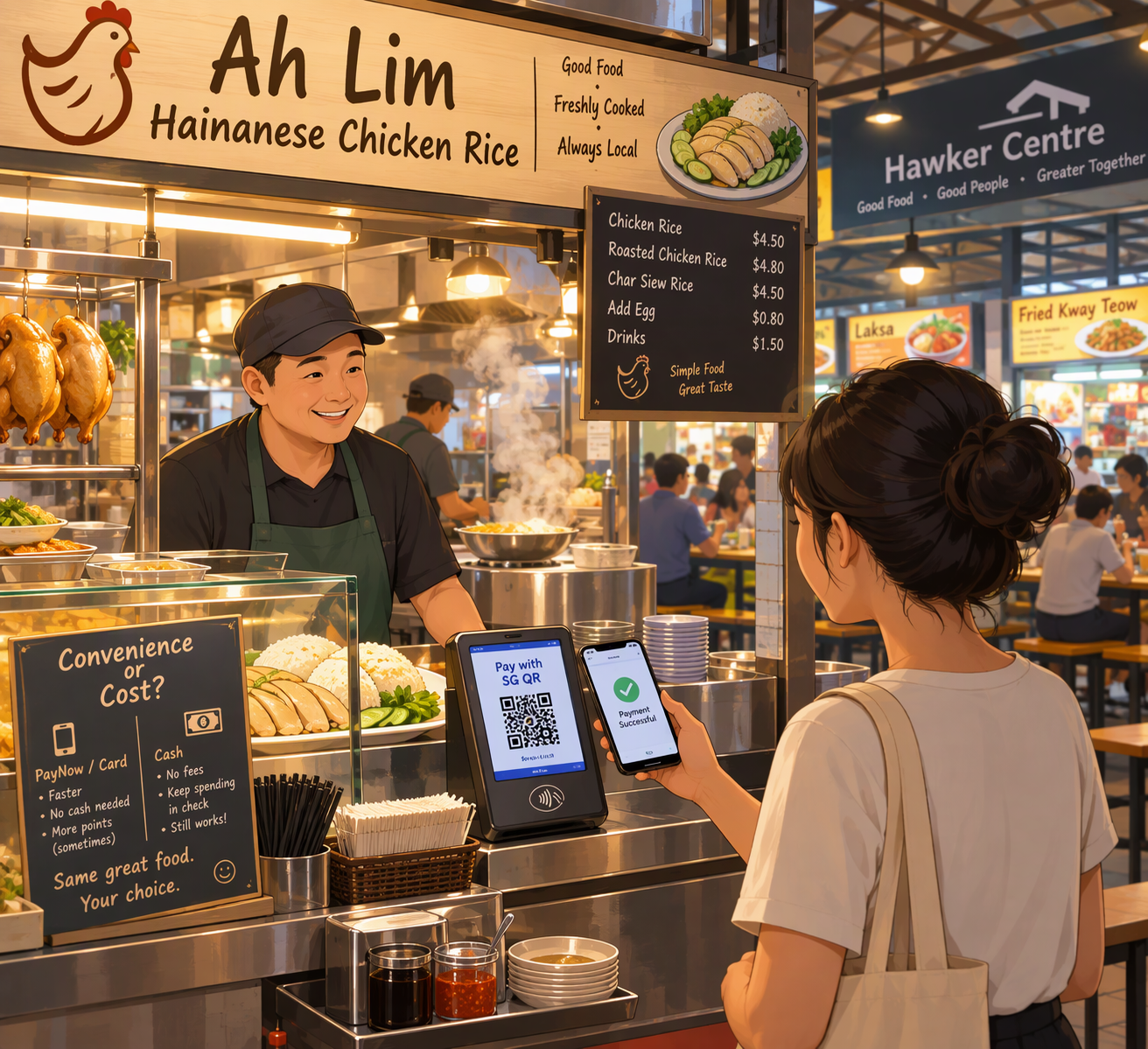
    At a busy hawker stall, taking a payment can happen in the middle of chopping, stirring or handing over a plate. A quick sound confirming that money has arrived can make a real difference. That is one reason some Singapore hawkers are continuing to use SGQR—even after a government subsidy for the service ended in June 2026.

    Under the Hawkers Go Digital programme, participating stalls were exempt from a 0.5% fee on their first S$20,000 of SGQR transactions each month. Now, hawkers who keep using SGQR have to pay the fee themselves. For stallholders working with tight margins, that change has prompted some to reconsider how they accept digital payments.

    Chen Siyuan, who has run a noodle stall at Hong Lim Market and Food Centre for five years, had used SGQR for about two years. She switched to personal PayNow or PayLah QR codes, saying those options do not carry the same fee. With her selling prices unchanged, she felt that paying the SGQR charge would cut into her margins.

    Other hawkers interviewed by 8world came to a different decision. They were willing to pay because they value SGQR’s convenience and audible payment confirmation. When a hawker is busy preparing food, it may not be practical to keep checking a phone. A sound can offer reassurance that a payment has gone through without interrupting the work.

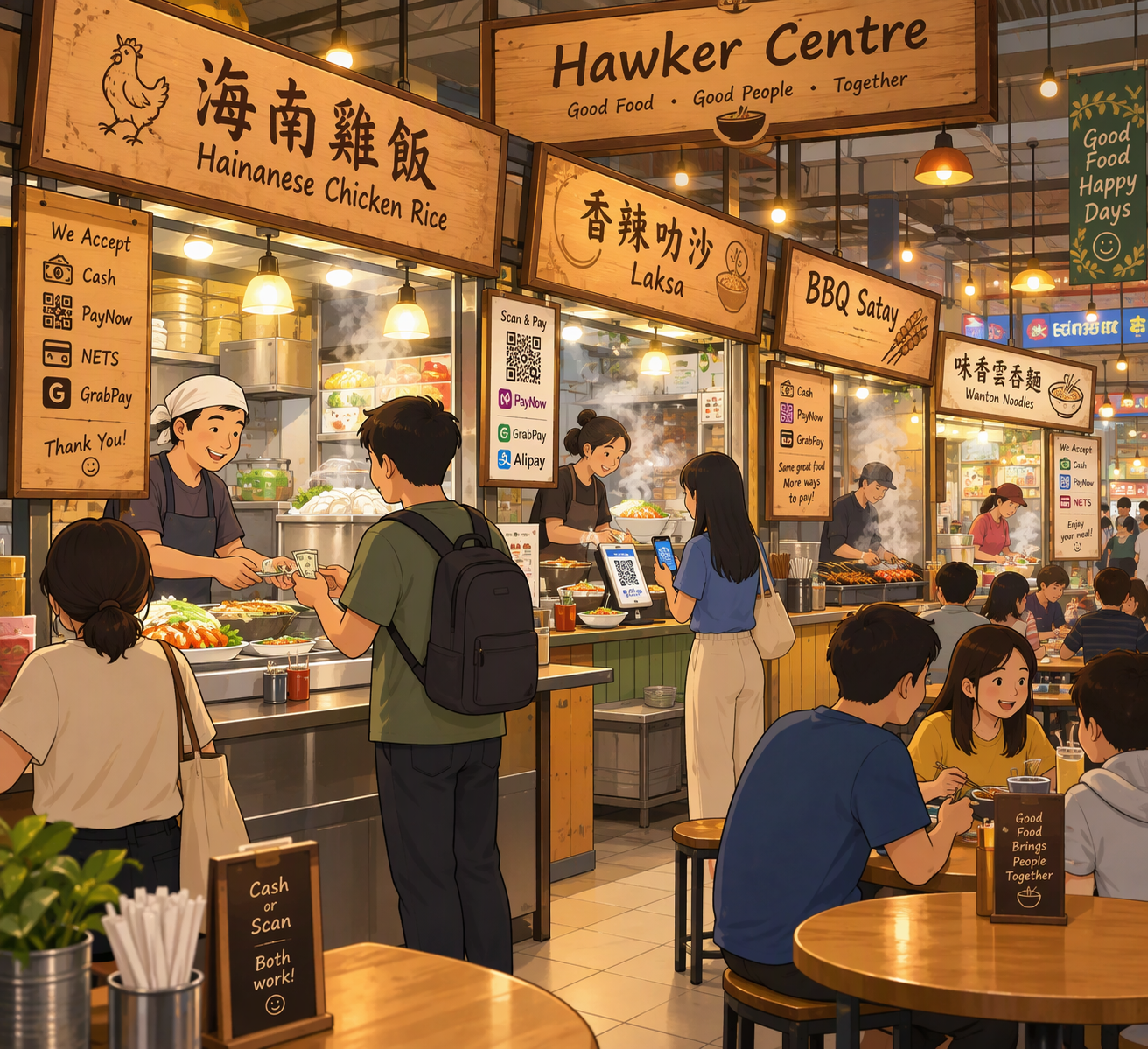
    The reporter’s visits to several hawker centres found that most stalls were still using SGQR. Only one or two had switched to personal PayNow after learning that the subsidy had ended. At some well-known centres, stallholders planned to keep SGQR available for tourists using cross-border payment services, while also displaying personal PayNow or PayLah codes for local customers. That lets customers use different payment options at the same stall.

    NETS, the provider of the SGQR service, told 8world that the number of hawkers still using it had remained broadly stable. It also reported double-digit year-on-year growth in hawker SGQR payment volume from January to July 2026. SGQR supports 16 payment applications, including UOB TMRW and WeChat Pay, as well as other cross-border options.

    The Hawkers’ Division chairman of the Federation of Merchants’ Associations, Singapore, said he had received no feedback from hawkers about the subsidy ending and believed most would continue using SGQR. Enterprise Singapore and IMDA said digital payments had become widely accepted and mature, and that the programme had achieved its objective.

    The end of the subsidy has not led every hawker to make the same choice. Some have moved to personal QR codes to avoid the fee; others consider SGQR’s convenience worth paying for. For customers, the result is a mix of options—so it is still useful to check what a stall accepts.

    Source: Hawkers Go Digital SGQR subsidy ends; most continue using it (translated from Chinese), 8world

  • After the SGQR Subsidy, Hawkers Weigh Convenience Against Cost

    After the SGQR Subsidy, Hawkers Weigh Convenience Against Cost

    A quick tap or scan can make paying for lunch easy. But for hawkers, digital payments also come with a practical question: what does it cost to accept them? Since the government subsidy for SGQR ended on June 30, 2026, hawkers using the service pay a 0.5% transaction fee.

    The subsidy had covered that fee on the first $20,000 of a stall’s monthly e-payment transactions. Hawkers who joined the programme by December 31, 2025, could receive the support until it ended. After that, stallholders had to decide whether SGQR’s convenience was worth the charge—or whether another payment method suited them better.

    Some have switched. Chen Si-yuan, who has run a noodle stall at Hong Lim Complex Food Centre for five years, had used SGQR for about two years. After the subsidy ended, she began using personal PayNow or PayLah codes instead. She said those options do not bring the same fee for her, and that a transaction charge would cut into her margins when she had not raised prices.

    Other hawkers interviewed were prepared to absorb the 0.5% fee. For one, SGQR’s audio alert confirming a payment is especially handy during a busy service. When food is being prepared, checking a phone for a PayNow notification may not be practical; a spoken alert can help the stallholder know a payment has come through.

    The article’s visits to several hawker centres found that most stalls observed were still using SGQR, while only one or two had changed to personal PayNow after learning the subsidy had ended. Some stalls displayed SGQR for tourists who use cross-border payment options, while also offering personal PayNow or PayLah for local customers. The choices show that payment methods need not be identical from one stall—or one customer—to another.

    NETS, the provider of SGQR, told 8world that the number of hawkers continuing to use the service and their transaction activity had stayed broadly around previous levels. It also reported double-digit year-on-year growth in hawker-centre SGQR payment volume from January to July 2026. SGQR supports 16 payment applications, including UOB TMRW and WeChat Pay, as well as cross-border payment options.

    The chairman of the Hawkers’ Department of the Federation of Merchants’ Associations, Singapore, said the association had not received feedback from hawkers about the subsidy ending. He believed most would continue using SGQR because they found it convenient and secure.

    There is no single response to the subsidy’s end: some hawkers prefer SGQR despite the fee, while others choose personal payment codes. The reporting offers a snapshot from selected centres and NETS’ figures, not a count of every stall’s decision. It also does not suggest that all stalls accept digital payments or that hawker centres have become cashless. For now, the story is one of practical choices—balancing cost, customer needs and what works behind the counter.

    Source: 摊主乐学数码计划SGQR补贴结束 小贩须付手续费 多数继续使用, 8world

  • A Tap, a Faster Queue? Apple’s New Payment Option for Hawkers

    A Tap, a Faster Queue? Apple’s New Payment Option for Hawkers

    At a busy hawker stall, every moment matters. While a customer searches for an app or scans a QR code, the queue may pause—and the hawker is juggling orders, payments and food preparation. Could paying with a quick tap make the process smoother?

    That is the question explored in a NUS BizBeat article about Apple’s Tap to Pay on iPhone, which launched in Singapore in December 2025. With a partner-enabled app, a stallholder can enter the amount on a compatible iPhone. The customer can then tap a contactless credit or debit card, or use a mobile wallet such as Apple Pay.

    The appeal is simplicity. A QR-code payment can ask customers to unlock their phones, open an app, scan a code, enter an amount and confirm the payment. A tap could take fewer steps, which may be useful in high-volume businesses such as hawker stalls. If the payment process is quicker, queues might move more smoothly—but the article does not establish that Tap to Pay has actually shortened them.

    For stallholders, the option also avoids buying or renting a separate payment terminal, and there is no fixed terminal setup. That could matter in a fast-moving work area. Repeatedly handling a terminal during a busy period may add friction when hawkers are preparing food, so accepting payment on a device they already use could fit more easily into their workflow.

    But a new payment option is not automatically a simpler one. Hawkers may already manage QR codes, PayNow, NETS, e-wallets and card terminals. Each method can bring its own apps, settlement schedules and reporting formats. Adding Tap to Pay could mean one more system to keep track of, rather than removing the underlying complexity of handling several ways to get paid.

    There is also a device requirement: Tap to Pay needs an iPhone XS or later. So it will not be available to every stallholder with just any phone.

    The article’s central idea is that a tap may offer a convenient way to take payment, but the bigger challenge is managing multiple payment systems. Whether it becomes a game changer for hawkers will depend not only on how quickly a customer can tap, but also on whether the added option fits into the stallholder’s daily routine. The article does not say how widely hawkers are adopting it, and it does not suggest that cash has disappeared from hawker centres.

    Source: Could Apple’s Tap to Pay be a game changer for hawkers?, NUS BizBeat

  • From Game Worlds to AI Experiments: How Generative Tools Are Entering Video Games

    From Game Worlds to AI Experiments: How Generative Tools Are Entering Video Games

    Imagine a game character answering a player in words that were created on the spot. That idea is no longer only a thought experiment: generative AI is being tried in several parts of video-game making, from early design work to features players can encounter. But the examples reported so far are a mix of production tools, proposals and experiments—not proof that AI has transformed games across the board.

    TechRepublic reports that the 2025 State of the Game Industry report, released in March by Informa Festivals, found that one-third of developers use generative AI to streamline development. Possible uses include prototyping, exploring early concepts, and creating elements such as landscapes and sound effects. These are ways to help teams test ideas or develop material; the article does not measure whether they save time or money, or how they affect the finished game.

    Some of the most striking examples remain demonstrations or proposed ideas. In March, a leaked Sony demonstration showed Aloy, from the Horizon franchise, responding to prompts with AI-generated dialogue in real time. That was not described as a released game feature. In May, Google Cloud proposed “living games” that could change in response to individual players’ experiences, while TechRepublic reports that Capcom was using Google’s Vertex AI and Gemini to iterate on item and environment art.

    There has also been a player-facing experiment. In May, a character with real-time AI-generated dialogue appeared in Fortnite. The article identifies Google’s Gemini 2.0 Flash and ElevenLabs’ Flash v2.5 as the models powering that feature. It offers a glimpse of how a conversation in a game might become less fixed—but one example does not tell us how widely such features will be used or how players will respond.

    AI can also work out of sight. Matías Rodriguez, CTO of Globant’s games and education AI studios, told TechRepublic that developers are interested in internal uses such as level-design prototyping, quality-assurance automation and content localization. These tasks may not be visible to players, yet they could shape how teams build and prepare games. The article, however, does not quantify their effects on development or jobs.

    An earlier demonstration shows why the distinction between a game and an experiment matters. In 2023, Replica Studios worked on a demonstration for The Matrix Awakens, an Unreal Engine environment that TechRepublic clarifies was not itself a game. Replica, which the article says has since shut down, partnered with OpenAI on a tool that let developers set how characters could respond to natural-language input. Characters were prompted to speak as if they existed in The Matrix; their dialogue did not show that they were self-aware.

    Together, these examples point to a field exploring many possibilities, while leaving big questions open. Could generative AI change creative jobs or human creativity? The article raises those concerns but does not offer measured answers. For now, the clearest picture is of developers testing tools and ideas—and of a conversation about where, and whether, they belong in games.

    Source: Generative AI Use in Video Games Sparks ‘Heated Debates’, TechRepublic

  • A Rental Bridge, Not a New Destination? Singapore Explores Build-to-Rent

    A Rental Bridge, Not a New Destination? Singapore Explores Build-to-Rent

    For some young couples, the path to a home of their own includes a stretch of rented living. In Singapore, the Government is exploring whether build-to-rent housing could offer more people a flexible place to stay for longer—but it is still an idea under consideration, not a confirmed scheme.

    The question is how to provide more rental choices while keeping home ownership at the heart of housing policy. A Ministry of National Development spokesman said owning a home remains a key tenet of that policy, while recognising demand for longer-stay rentals. Some younger Singaporeans want to live independently or rent before buying; people who come here to work or study may also need a place to stay.

    National Development Minister Chee Hong Tat said in August that authorities were looking at build-to-rent, co-living and long-stay serviced apartments as possible ways to meet demand for flexible accommodation. The options are not all the same, and the article does not describe a final plan for build-to-rent.

    Henry Tay, a 36-year-old freelance photographer, and Sarah Tong, a 32-year-old civil servant, show why some people choose to rent while waiting for a home. After marrying in May 2024, they wanted a place of their own while waiting for their Tanah Merah Build-To-Order flat, which was about three years from completion. They rented first in Bright Hill, then in Ang Mo Kio, choosing personal space and a shorter journey to work.

    Their monthly rent ranged from $2,200 to $2,500—about a quarter of their combined take-home pay. The cost put pressure on their finances: they estimated that three years of rent could add up to about $100,000, before furniture, moving and utilities, and on top of the cost of their $570,000 BTO flat. They cut back on travel and eating out. Still, they said renting was cheaper than buying a resale flat in some locations, where prices could reach $1 million.

    That trade-off matters to people discussing build-to-rent. Sociologist Tan Ern Ser described it as a possible interim route to private space and independent living, but noted that affordability would be crucial: staying with parents costs less. ERA Singapore chief executive Eugene Lim said the option would need to offer younger Singaporeans a clear advantage over conventional rentals. He suggested rents discounted against median condominium rents and said a public-private partnership could be considered. Those are suggestions, not announced Government plans.

    The article also points to interest in lower-cost alternatives. More than 600 people aged 21 to 35 expressed interest in just over 100 units in a separate subsidised co-living initiative under the SG Youth Plan. Their rents were about 30 per cent below market rates. This is evidence of interest in more affordable rentals, but it is not a build-to-rent project.

    For now, many details remain unanswered: the article does not say where or when build-to-rent homes might appear, who would qualify, or how many homes there might be. The broader challenge is to widen housing choices without making renting a replacement for ownership. As sociologist Chua Beng Huat observed, renting tends to be temporary, with tenants likely to try to buy an HDB flat when their finances allow.

    Source: Bridge to home ownership: Why Singapore is exploring build-to-rent, The Straits Times

  • AI Agents Step Into Customer Service

    AI Agents Step Into Customer Service

    A customer-service request can involve more than answering a question. It may need to be sent to the right team, followed up across different channels or matched with a useful product suggestion. Salesforce’s latest report explores how AI agents are being used to take on some of this work—and what service organizations say they are seeing in return.

    The company’s State of Service: AI Agents Edition surveyed 3,075 customer service professionals worldwide. According to the article, 66% of customer service organizations now use agentic AI, up from 39% in 2025. Salesforce describes these systems as autonomous AI that can take actions and support complex workflows. The article also reports that 85% of service organizations use at least one form of AI.

    These agents may interact with customers, or help service teams behind the scenes. Customer-facing tasks listed in the report include proactive outreach, personalized product recommendations and resolving cases across multiple channels. Internal tasks can include routing a case to the appropriate service representative. In other words, AI agents may be part of both the conversation customers see and the process that helps a service team handle it.

    The report says 77% of service teams using AI agents deploy them in both customer-facing and internal operations. That points to a broad role for the technology within those teams: not simply answering customers, but also helping coordinate the work around their requests. The article does not provide specific company examples, so it offers a survey-wide picture rather than a close look at individual deployments.

    Salesforce also reports that 70% of organizations with AI service agents observed measurable value within 60 days of deployment. Among the measures reported, customer satisfaction was the most improved KPI, ahead of service-representative productivity, average handle time, customer retention and first-response time. The findings suggest that surveyed organizations see AI agents as relevant to customer-service outcomes as well as operational tasks.

    There are important limits to what these figures tell us. The article does not give the survey’s full methodology or a breakdown of respondents and organizations, nor does it explain in detail how reported improvements were measured. It also does not establish that AI agents caused the customer-satisfaction gains or provide independent verification. The results are therefore a snapshot of what surveyed organizations reported—not proof that every service team will see the same results.

    As AI agents become more common in customer service, the key question is not only what tasks they can take on, but how organizations assess their effects. Salesforce’s survey offers one view of that changing landscape, while leaving room for further evidence about how these systems perform in different settings.

    Source: New Research: AI Service Agents Improve Customer Satisfaction, Salesforce

  • QR Codes at the Counter, Cash in the Till: Hawkers’ Uneven Digital Shift

    QR Codes at the Counter, Cash in the Till: Hawkers’ Uneven Digital Shift

    At one hawker stall, a customer might scan a QR code. At the next, payment may still be cash only. Singapore’s hawker centres are adopting digital payments, but the change has not looked the same for every stallholder—and cash remains part of the picture.

    The Straits Times spoke to stall owners across eight hawker centres who had not taken up digital payments. Their reasons were practical and personal: some had limited experience with digital tools, some had poor eyesight, and some worried about slowing down service while learning to use a device or checking whether a payment had gone through.

    At West Coast Food Centre, noodle-stall owner Angie Sim, 65, said cash was easier for her and suited many of her mostly older customers, whom she said were less familiar with technology and usually carried cash. She had worked at the centre with her stall partner for more than 20 years. For her, sticking with cash was a familiar way to serve the people who came to her stall.

    Other hawkers described different hurdles. A drinks-stall owner in his 70s at ABC Brickworks Market & Food Centre said he struggled to remember how to navigate digital platforms. During busy periods, he also found it difficult to verify payments. If a customer had no cash, he said, he would serve them and let them return to pay later. At Albert Centre Market and Food Centre, a drinks-stall owner in his 60s described e-payment as troublesome because he had to check whether each transaction had succeeded.

    These examples show why introducing a new payment method can involve more than displaying a QR code. A stallholder has to feel comfortable using the system, and the process has to work amid the demands of serving customers. The article does not suggest that every hawker or customer faces the same challenges; it offers a glimpse of different experiences across the centres visited.

    Digital payments were nevertheless spreading. More than 11,500 hawkers had started accepting payments through SGQR, a standardised QR-code platform launched in 2018 to simplify payments from multiple mobile wallets. The Hawkers Go Digital programme began in 2020, with a stated goal of getting 18,000 stallholders in government-run food centres to adopt digital payments.

    As reported in November 2024, eligible hawkers using SGQR did not pay the 0.5 per cent transaction fee on their first $20,000 of monthly transactions. Enterprise Singapore and the Infocomm Media Development Authority had announced that the fee waiver would be extended to the end of 2025.

    The picture is not of cash vanishing overnight. QR payments are common at some stalls, while others continue to favour cash because it feels more familiar, suits their customers or is easier to manage during service. Singapore’s hawker payment shift, the article suggests, is a gradual one—with different stalls finding their own pace.

    Source: Why cash is still king for some hawkers in Singapore despite digitalisation push, The Straits Times
  • Cash, QR Codes and the Hawker Stall: Why the Shift Is Gradual

    Cash, QR Codes and the Hawker Stall: Why the Shift Is Gradual

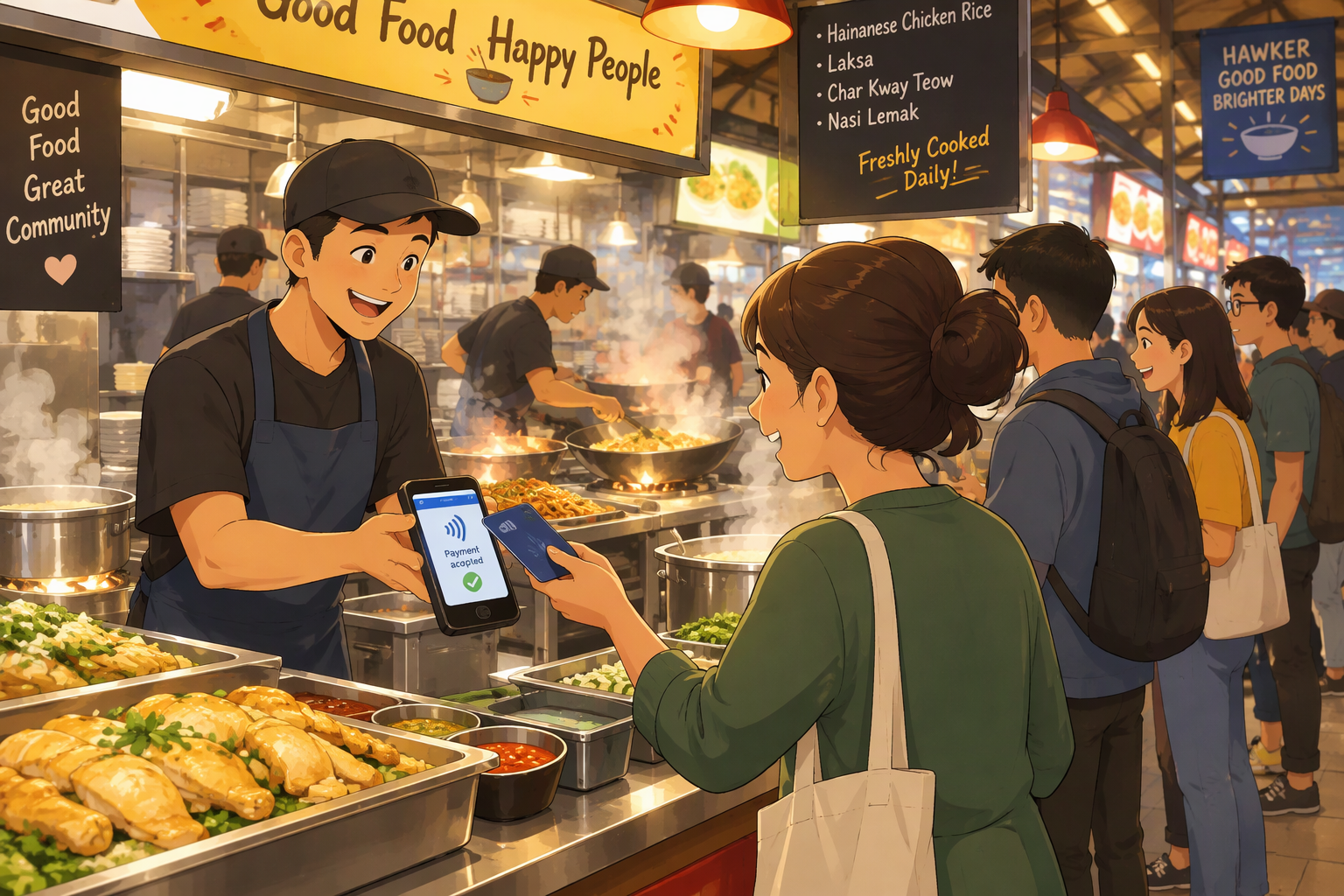
    At Singapore’s hawker centres, a meal may be just a QR scan away. Yet beside the digital payment codes, some stalls still display a familiar message: “Cash Only”. The contrast captures a change that is visible across many food centres, but has not reached every hawker in the same way.

    At West Coast Food Centre, noodle-stall owner Angie Sim, 65, prefers cash. She told The Straits Times that it is easier for her and works well for her mostly older customers, many of whom are less familiar with technology and usually carry cash. Sim and her stall partner have worked at the food centre for more than 20 years.

    Her choice is not simply a rejection of new technology. Hawkers interviewed across eight centres described practical concerns that can make digital payments difficult: limited confidence with technology, poor eyesight, and worries that handling a device might inconvenience customers. For someone serving a queue, an extra step at the counter can matter.

    At ABC Brickworks Market & Food Centre, a drinks-stall owner in his 70s said he found it difficult to remember how to use digital platforms and to check whether a payment had gone through, especially when business was busy. He said customers who had no cash could take their drinks and pay another time. At Albert Centre Market and Food Centre, drinks-stall owner Mr Tan, who was in his 60s, also found e-payment troublesome because he still needed to verify each transaction.

    These stories sit alongside a broader effort to make cashless payments easier. Singapore introduced SGQR in 2018 as a standardised QR code that can work across multiple mobile wallets. The article reported that more than 11,500 hawkers had started using it. Instead of displaying separate codes for different payment services, a stall can use one standardised code to support electronic payments.

    There was also financial support for participating hawkers. Under the Hawkers Go Digital programme, the 0.5 per cent transaction fee was waived on each stall’s first $20,000 in monthly transactions. In November 2024, Enterprise Singapore and the Infocomm Media Development Authority had announced that the waiver would continue until the end of 2025. The programme was part of an effort to encourage digital payments among roughly 18,000 stallholders in government-run food centres.

    Still, a QR code on one stall does not mean every stall—or every customer—has gone cashless. The article does not suggest that cash is disappearing. Instead, it shows a gradual transition: digital options are increasingly visible, while some hawkers continue to rely on cash because it feels simpler or better suits the people they serve. For now, at the hawker counter, both a scan and a banknote may have their place.

    Source: Why cash is still king for some hawkers in Singapore despite digitalisation push, The Straits Times

  • Taobao’s $19 Million 11.11 Push: What Singapore Shoppers Can Expect

    Taobao’s $19 Million 11.11 Push: What Singapore Shoppers Can Expect

    What does it take to make a major online sale stand out? For Taobao’s 11.11 Singles’ Day campaign in Singapore, the answer includes vouchers, delivery options and advertisements across the city. The company says it is investing 100 million yuan—reported as S$19 million—in promotions as it seeks to expand its presence here.

    The campaign began on October 20 and is scheduled to run until November 13, with November 11 as its main sale date. Taobao’s Singapore country head said the promotional budget covers free-shipping vouchers, shopping vouchers and physical advertising on public transport. The company also said it has placed advertisements on about 200 screens in the Central Business District and residential areas. Its advertising spend for this campaign is double what it spent for the 2025 11.11 season.

    The promotion is accompanied by changes to how shoppers can buy and receive goods. Taobao has expanded the range of products eligible for free shipping. For eligible parcels, shoppers can choose an air-delivery upgrade for as little as S$1. The company says eligible purchases sent by air could arrive in as little as five days. Taobao also began accepting PayNow in October 2026, giving Singapore shoppers another payment option.

    The article points to clothing and furniture as notable parts of Taobao’s business here. The company’s Singapore country head said 70 per cent of Singaporean online shoppers buy clothing from Taobao, and that furniture is its fastest-growing category among Singapore home buyers. Those details help explain why the company is pairing a high-profile sale with changes to shipping and payment: the campaign is not only about drawing attention to one shopping day, but also about encouraging people to use its services.

    Still, a large promotional budget is not the same thing as a measured boost to Singapore’s economy. The article does not say how much of the S$19 million will go to Singapore-based businesses or workers, how much additional spending the sale will generate, or whether purchases will mainly benefit local or overseas sellers. It also does not establish the campaign’s net effect on Singapore’s GDP, jobs or economy.

    For shoppers, the clearest takeaways are the campaign dates, vouchers, expanded free-shipping eligibility, low-cost air-delivery upgrades and PayNow option. For the wider economy, the impact remains an open question: the company’s investment shows the scale of its push, but not what the final balance of benefits and costs will be.

    Source: Taobao invests $19 million in Singapore promotions for 11.11 sale launching Oct 20, The Straits Times