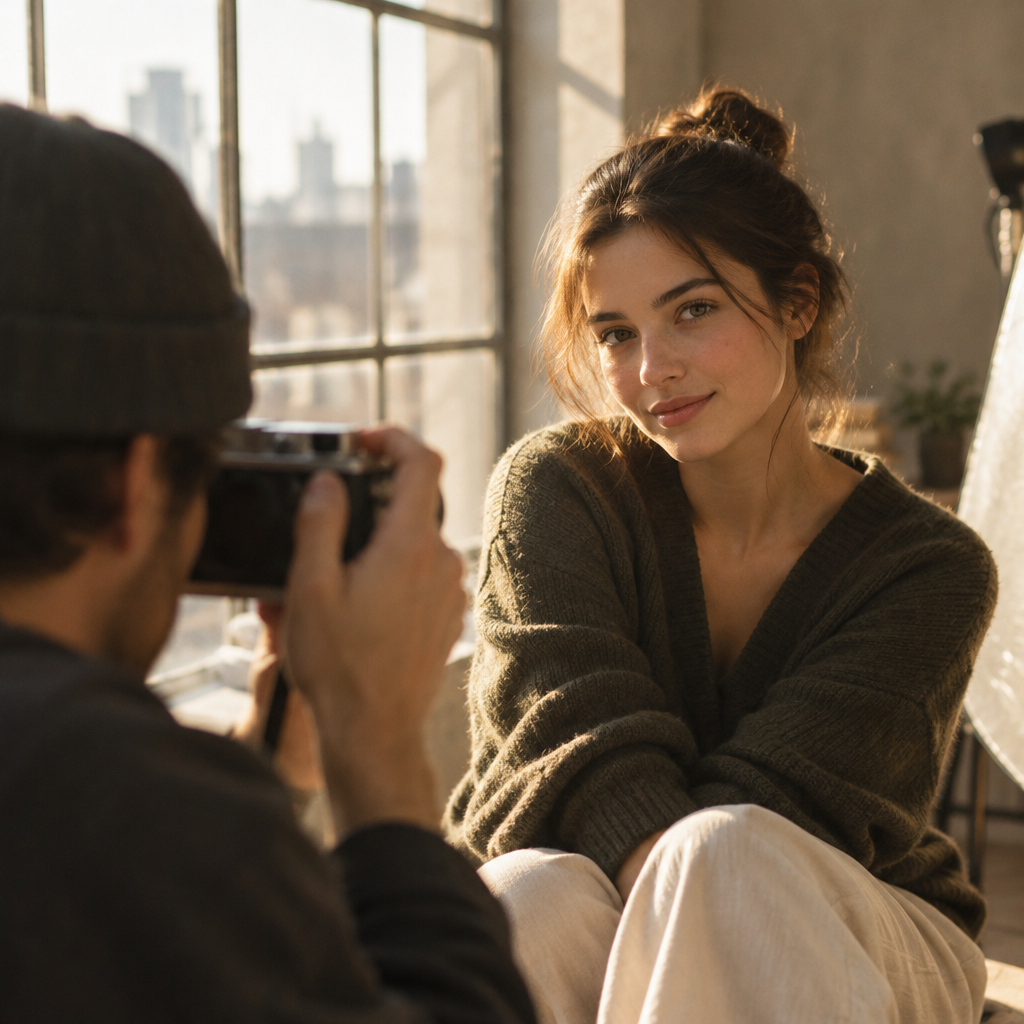
In a short, thoughtful profile on the Leica Camera Blog (May 2, 2012), fashion and beauty photographer Andy Lee lays out a simple but powerful creative code: chase the sensual qualities of light, make your kit unobtrusive, and use control only where it serves the mood.
Lee’s working setup at the time is strikingly modest. His primary body is the Leica M9 and his go-to optic is the 50mm — specifically the Leica 50mm f/1.4 Summilux ASPH, which he calls his “absolute favorite lens.” He also keeps 28mm, 35mm and 75mm Summicron M‑lenses in the bag, but repeatedly returns to the 50mm perspective for its intimacy. The M9’s small size, light weight and ability to operate in very dim light, he says, make it comfortable and unobtrusive for both studio and location work — qualities that help him engage closely with models and preserve natural expression.
At the heart of the interview is Lee’s lighting philosophy. His stance is clear and memorable: “Nothing beats natural sunlight!” He explains that real sunlight has a unique look that’s difficult to reproduce artificially. At the same time Lee is pragmatic — he frequently uses strobe lighting when the shoot calls for control, dramatic shaping, or when conditions demand it. Importantly, he cautions against over‑lighting: even when using strobes he deliberately keeps the number of lights low because he dislikes images that look overly “lit.” The goal, he says, is to keep lighting consistent with the mood of the shot and avoid an over‑produced appearance.
Practical takeaways you can borrow from Lee’s practice:
– Prioritize natural sunlight when you want an honest, hard‑to‑replicate look for portraits and beauty images. It’s about mood and rapport as much as technical light quality.
– Use strobes for control — to shape light, freeze motion, or create drama — but limit the number of lights and let the lighting support the emotion rather than announce itself.
– A compact camera and a classic 50mm lens encourage an intimate shooting style: work close, build rapport, and exploit wide apertures for atmosphere or stop down (Lee even praises results at around f/4) when you want cleaner depth‑of‑field control.
What the piece does not provide: the interview does not include flash power settings, sync speeds, step‑by‑step lighting diagrams, or technical exposure recipes. It also doesn’t compare the Summilux to the Summicron in detail, nor does it present side‑by‑side image comparisons or sensor‑level analyses. Finally, as a profile from 2012, it reflects Lee’s preferences and gear choices at that time and does not address later camera bodies or contemporary flash technology.
For photographers and students of portrait lighting, Lee’s message is refreshingly human: respect the singular quality of real sunlight, treat strobes as a disciplined tool rather than a crutch, and let a small, high‑quality kit keep you close to your subject. Those choices — lens, camera footprint, and a restrained approach to lighting — add up to images that feel intimate, natural and timeless.
Leave a Reply