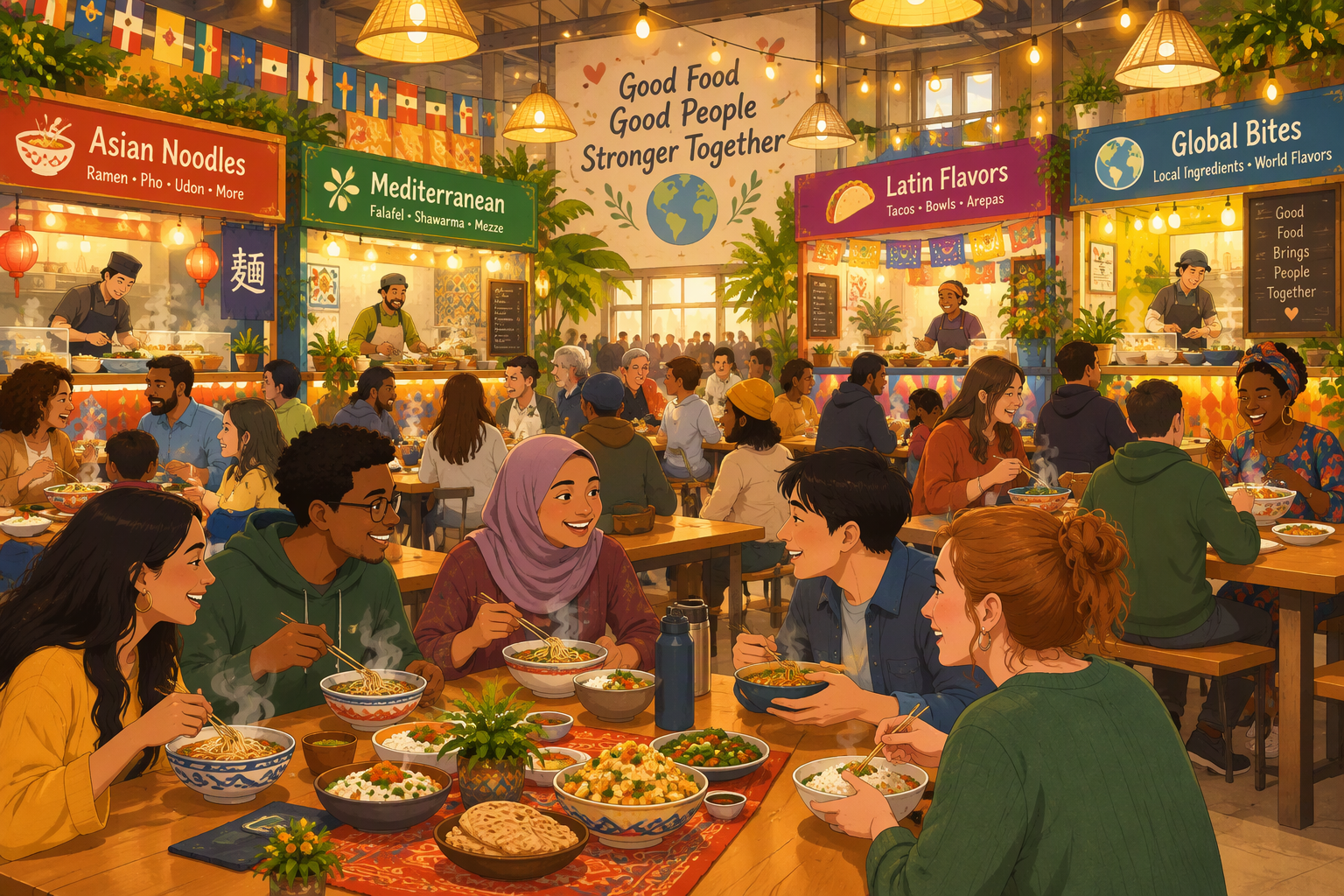
A hawker centre can be many things at once: a place to find an affordable meal, a familiar meeting point, and a shared space where Singaporeans from different backgrounds sit down to eat. That everyday mix is at the heart of Singapore’s hawker culture.
SG101 describes hawker centres as “community dining rooms”. People gather there throughout the day, whether they are meeting friends, sharing a meal with family or simply eating alongside others. The surroundings can bring back memories of busy tables and conversations. In this way, a hawker centre is not just somewhere to buy food; it can also be part of how people experience community and national identity.
The culture’s importance has also been recognised beyond Singapore. In December 2020, Singapore’s hawker culture was inscribed on UNESCO’s Representative List of the Intangible Cultural Heritage of Humanity. That recognition highlights a living tradition rooted in the everyday: people preparing and enjoying food, and gathering in shared spaces.
The food itself reflects different influences. SG101 gives rojak as one example, describing it as a dish that combines Indian, Malay and Chinese influences. Roti prata offers another glimpse of how a familiar food can be adapted locally, with additions such as cheese and mushroom. These examples show how hawker fare can bring different culinary influences together, while continuing to change.
Affordability is another reason hawker centres matter. The article notes that hawker fare is affordable and that eating out in Singapore can cost less than cooking at home. It also points to international recognition: Hong Kong Soya Sauce Chicken Rice in Chinatown and Hill Street Tai Hwa Pork Noodles are named as hawker eateries that have won Michelin stars. The article does not give the dates of those awards, but their inclusion reflects the range of recognition hawker food has received.
A 2018 National Environment Agency poll, as reported in a 2019 NEA media release, found that 83 per cent of Singaporeans visited a hawker centre at least once a week. That figure offers a snapshot from that poll, rather than current visitor data. Still, it helps illustrate how closely hawker centres were woven into many people’s routines at the time.
Keeping the tradition going is not automatic. SG101 notes that as experienced hawkers retire, the trade and its food traditions risk becoming endangered. Younger Singaporeans are taking up hawker apprenticeships, but the article gives no figures on how many. Their involvement points to one way the knowledge behind hawker food may be passed on.
Hawker culture brings together food, memory and shared space. Its future depends on the people who continue the craft—and on communities that keep gathering around the tables.
Source: Hawker Culture in Singapore, SG101
Leave a Reply