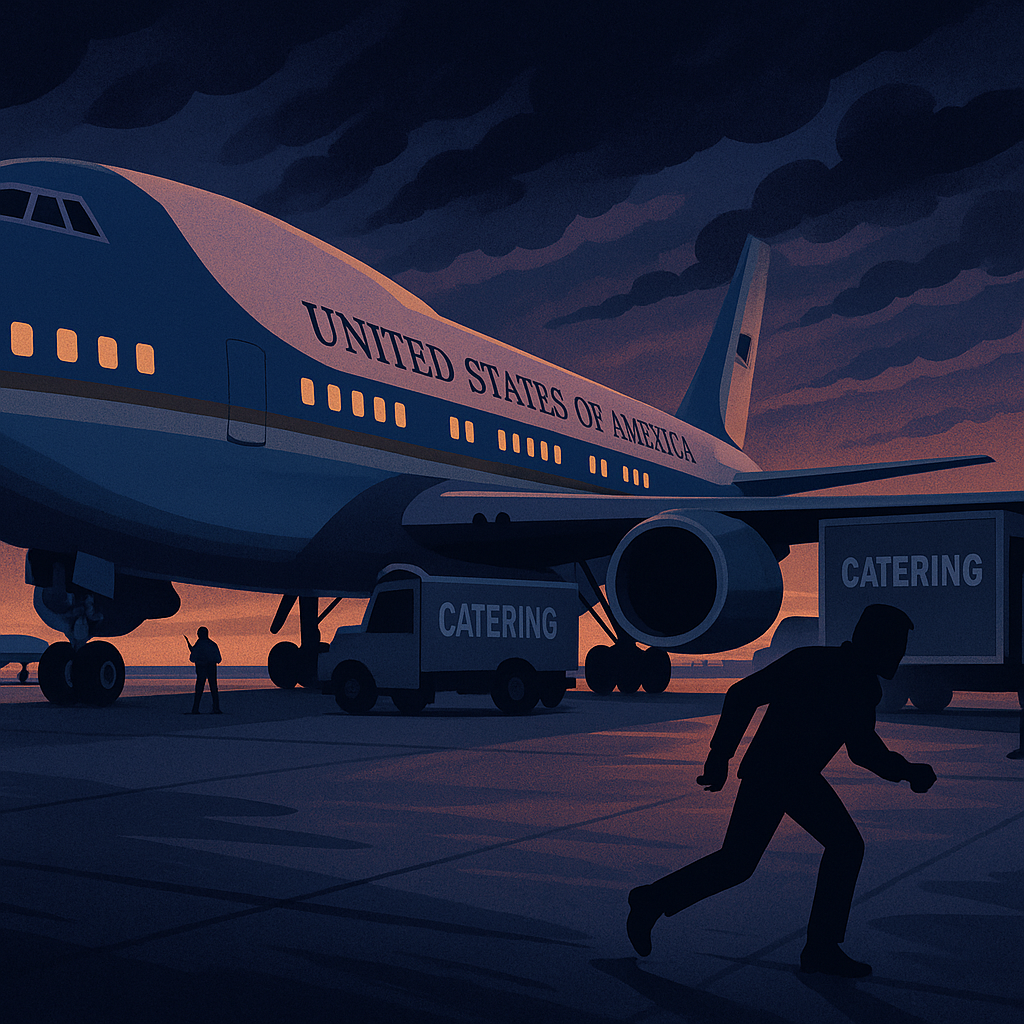
In a dramatic and covert operation following a NATO summit in Ankara, Turkey, former President Donald Trump was secretly evacuated from his flight due to a credible assassination threat from Iran. This extraordinary event unfolded in July 2026, when intelligence agencies warned of a targeted attack not only on Trump but also on Air Force One itself.
To protect the former president, a carefully orchestrated decoy maneuver was executed. Trump publicly boarded Air Force One, maintaining the appearance of normalcy, but then slipped away using an airport catering truck on the plane’s opposite side. He was swiftly transported to a smaller military jet, the Air Force C-32A, which departed separately for Britain. Meanwhile, Air Force One continued its journey unaware that Trump was no longer on board.
The operation also involved a diversion strategy with top Cabinet officials such as Secretary of State Marco Rubio and Treasury Secretary Scott Bessent remaining on the luxury jet gifted by Qatar, which served as a decoy to confuse any potential attackers.
This clandestine evacuation caused confusion among White House staff and the press, who observed unusual security measures, like closed window shades and tightened protocols, without understanding the underlying threat. Trump later addressed the situation with a mix of gravity and humor, acknowledging the danger and joking that any harm to him would also affect those around him.
This incident highlights the immense complexities and challenges of ensuring presidential security in the face of credible threats. It also reveals the lengths to which security services must go to protect national leaders, sometimes involving highly secretive and intricate operations to save lives and maintain operational integrity.
The daring evacuation has sparked widespread discussion about the vulnerabilities and protective measures surrounding Air Force One and presidential transport, putting a spotlight on the balancing act of secrecy, safety, and public transparency in such high-stakes scenarios.
Leave a Reply