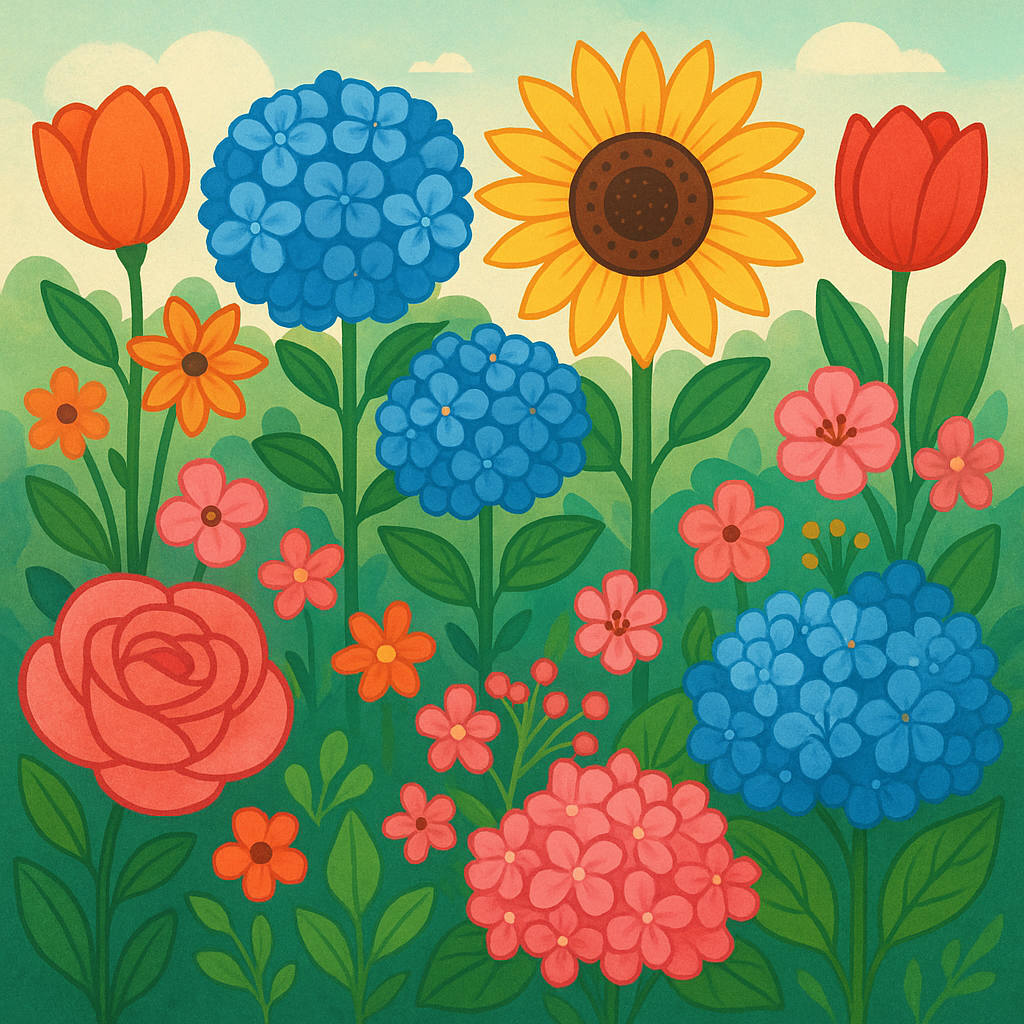
Flowers, the reproductive structures of flowering plants, showcase an astonishing variety of shapes, sizes, colors, and functions. These botanical wonders play an essential role in plant reproduction by enabling the production of seeds that ensure the continuation of plant species. Understanding flowers involves looking into their classification and the myriad types that grace our world.
**Classification of Flowers**
Flowers can be classified based on four main criteria:
– **Symmetry:** Some flowers are regular, exhibiting radial symmetry where petals and other parts are evenly arranged around a central point. Others are irregular, showing bilateral symmetry where only one line of symmetry exists.
– **Completeness:** A complete flower possesses all four essential parts: sepals (which protect the flower bud), petals (often colorful and attractive), stamens (male reproductive organs producing pollen), and pistils (female reproductive parts). Flowers lacking one or more of these parts are considered incomplete.
– **Sexuality:** Flowers are termed perfect if they contain both male and female reproductive organs within the same bloom. Imperfect flowers have either male or female parts, but not both.
– **Inflorescence Type:** Flowers can appear singly or grouped. When grouped, these clusters are called inflorescences, which vary from simple arrangements like spikes to complex structures such as panicles.
**Diversity of Flower Types**
The floral world is vast and vibrant. Roses are celebrated for their charming beauty and sweet fragrance, making them popular across cultures. Sunflowers stand out with their large, bright yellow blooms that follow the sun’s path, symbolizing warmth and vitality. Hydrangeas captivate with their voluminous and colorful flower heads, while tulips bring elegance with their bright hues and refined shapes. Each flower type not only enhances the ecosystem by supporting pollinators but also enriches human culture through symbolism, decoration, and horticulture.
For those interested in a visual journey through various flower types, the video titled “20 Types of Flowers You Need to Know, Flower Names and Color Beauty” offers a splendid introduction to some of the most popular and distinctive blooms.
Flowers, in all their forms, continue to inspire wonder and appreciation, reminding us of nature’s incredible creativity and the vital role these plants play in life on Earth.
Leave a Reply