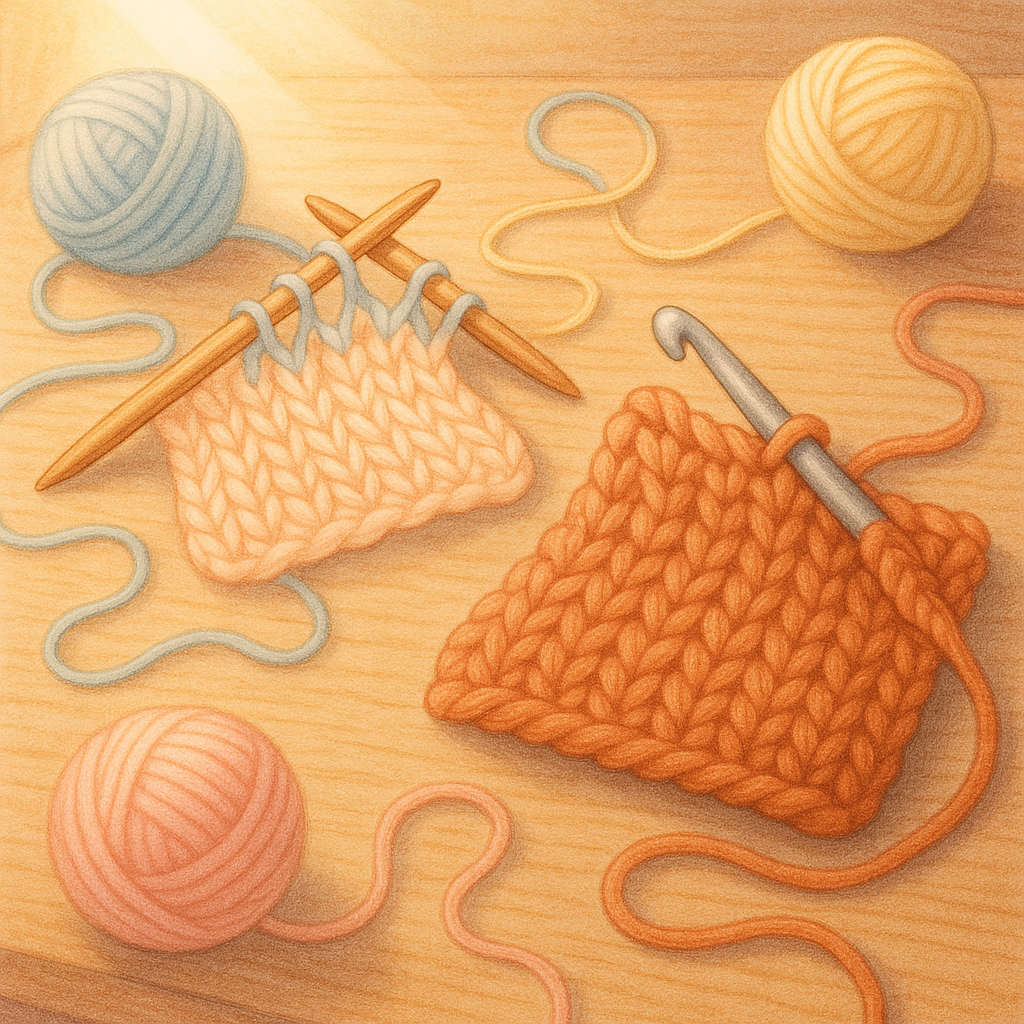
Knitting and crochet are two beloved yarn crafts that, while similar in their use of yarn, differ significantly in technique, tools, and the types of projects best suited for each.
Knitting is crafted using two needles to form interlocking loops, producing a fabric known for its flexibility and stretch. This elasticity makes knitting ideal for wearable items such as sweaters and socks. However, knitting requires careful attention because dropping a stitch can unravel an entire column, causing noticeable damage.
On the flip side, crochet uses a single hook to pull loops through other loops, creating a thicker, more textured fabric. Crochet fabrics tend to hold their shape better, making this method perfect for projects like blankets and shawls. A key advantage of crochet is its resilience; missing a stitch won’t compromise the structural integrity of the piece, though it may affect the look.
Other notable differences include:
– Tools: Knitting requires two needles, whereas crochet only needs one hook.
– Stitch Formation: Knitting holds multiple stitches on needles, working in rows, while crochet completes each stitch fully before moving to the next.
– Fabric Traits: Knitted fabrics are stretchier; crocheted fabrics are denser and less elastic.
– Learning Curve: Beginners often find crochet easier since it involves managing just one loop at a time.
– Yarn Consumption: Crochet projects generally use around 25-30% more yarn compared to knitting for similar items.
Choosing between knitting and crochet ultimately depends on your project goals and personal preference. Whether you favor the stretch and finesse of knitting or the texture and sturdiness of crochet, both crafts offer fulfilling creative experiences.
For those interested in a visual guide, the video “Knitting vs Crochet: What’s the Difference and Which One’s for You?” provides helpful insights and comparisons to get you started.
Leave a Reply