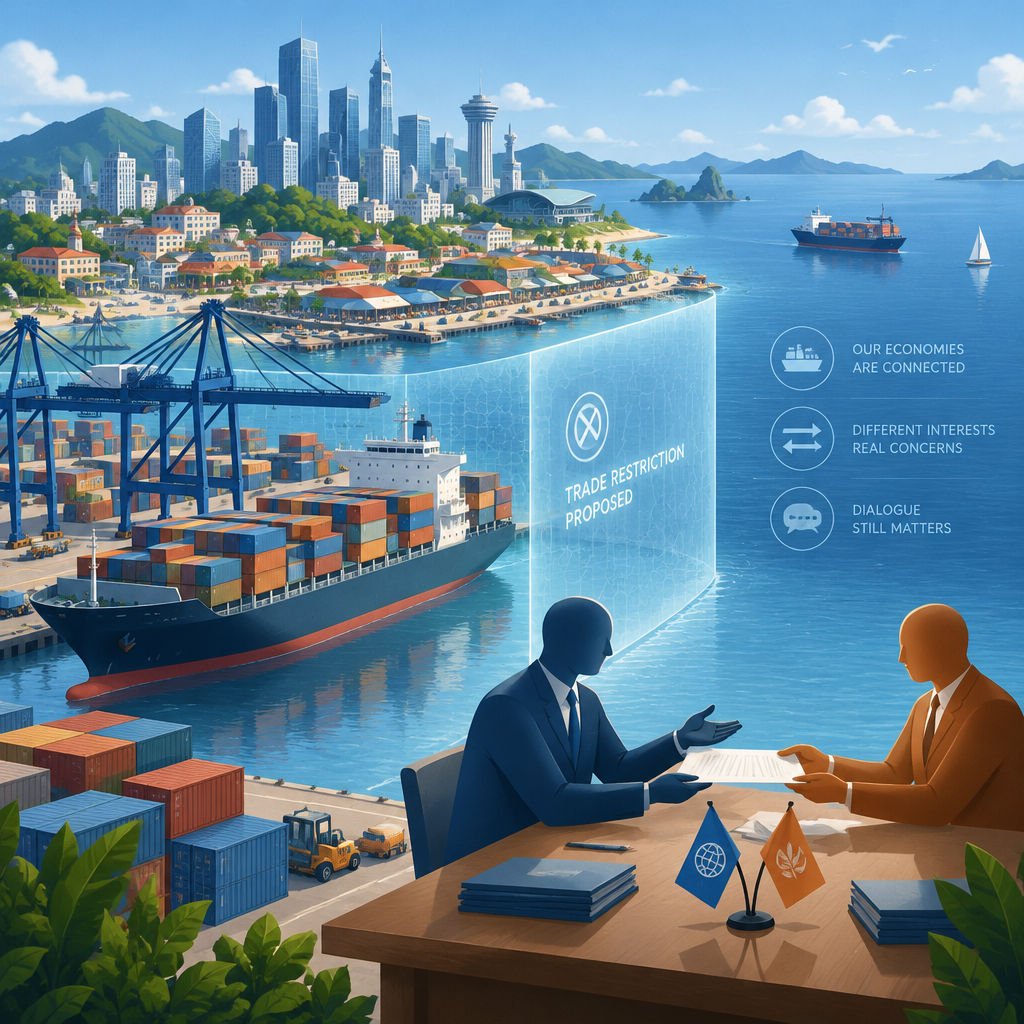
Singapore has voiced strong disappointment over a proposed US tariff of up to 20% on its exports, saying the investigation behind the measure fails to account for how the city-state’s economy works.
The proposal was announced by the US Trade Representative on November 25, 2026, following an investigation into alleged structural excess capacity and manufacturing practices. It remains a proposal, not an implemented tariff. The rate could be adjusted to 10% if Singapore and the United States reach a trade agreement or another arrangement addressing the investigation’s findings.
Singapore’s Ministry of Energy, Trade and Industry (METI) challenged the US rationale, arguing that the country’s trade surplus reflects its open, market-oriented economy and its role as a trading hub—not policies designed to shield domestic markets or subsidise manufacturing exports. The ministry also pointed to the US-Singapore Free Trade Agreement: Singapore levies no tariffs on US exports, while the United States committed to levying no tariffs on Singaporean imports.
The response pairs public criticism with continued engagement. METI said Singapore would submit further comments during the public consultation, keep working with the US Trade Representative, urge a reconsideration of the findings and explore ways to reduce the proposed tariff.
The dispute follows earlier US measures affecting Singaporean exports: a 10% baseline duty that took effect in April 2025 and a 12.5% tariff on some exports in July 2026. What happens next remains uncertain; the article does not establish whether the consultation will change the proposal or whether the new tariff will take effect.
Leave a Reply