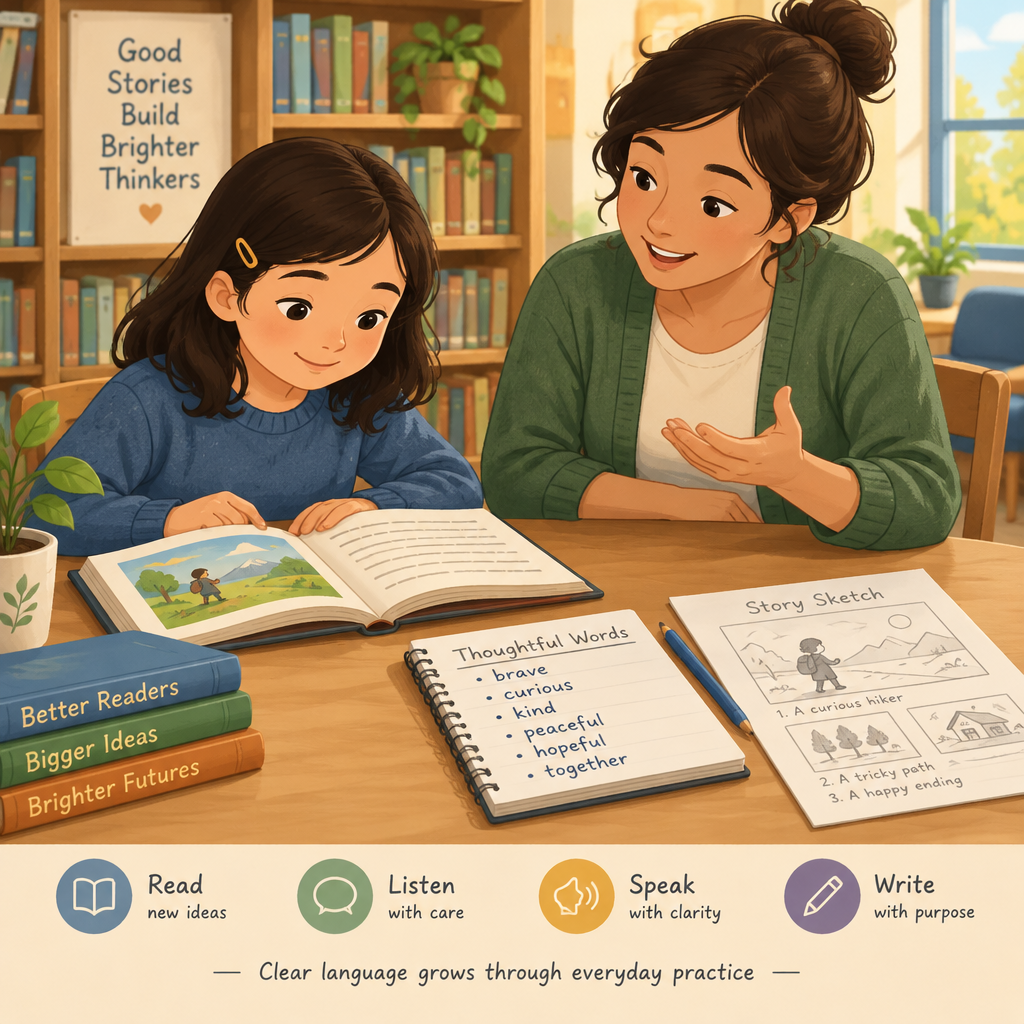
Strong PSLE English starts with more than memorising impressive words. In advice shared by NIE lecturer Dr Geraldine Kwek and creative-writing tutor Pauline Loh, vocabulary is presented as the ability to understand and use words effectively across listening, reading, speaking and writing.
That means choosing words that fit the meaning and situation—and using familiar words and collocations accurately. Overly fancy or exaggerated language can make an answer less clear, so students are better served by precise expression than by a string of advanced terms.
For oral communication, the aim is to speak naturally and confidently. Students can organise their ideas, answer the question directly, and pay attention to appropriate vocabulary, clear pronunciation and fluency.
In composition, a coherent, well-structured story matters more than an elaborate plot that obscures what is happening. Clear expression and relevant ideas help a story hold together. To make characters feel real, young writers can show their emotional reactions rather than simply list events. The article suggests learning a few useful phrases for actions and expressions linked to common emotions, rather than trying to memorise long lists.
These skills grow through everyday habits. Regular reading for pleasure—across different genres—helps children encounter language in context. Family visits to the library can support that routine, while adults can model appropriate English in ordinary conversation. When a child makes a mistake, gentle correction is more helpful than constant interruption.
The central lesson is simple: effective English is not about making every sentence sound grand. It is about understanding words, choosing them thoughtfully and expressing ideas clearly—one conversation, story and book at a time.
Leave a Reply