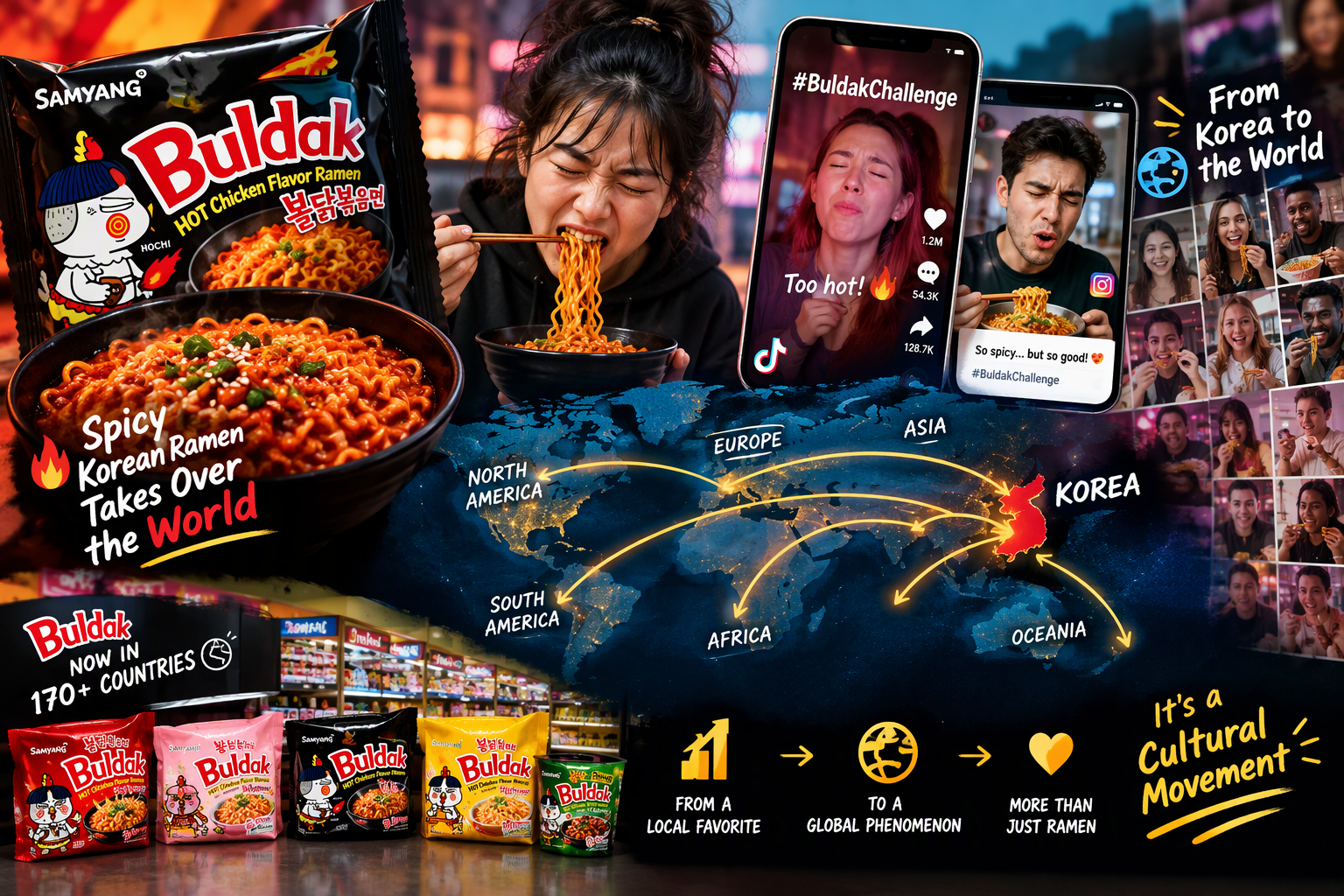
A bowl of noodles can be more than dinner. For Buldak Ramen, the fiery heat became a spectacle: one that people filmed, shared and challenged one another to try. What began as a product some early tasters found too spicy to eat grew into one of South Korea’s major global food brands.
The idea took shape in 2010, when Kim Jung-soo—now vice chair of Samyang Roundsquare—visited Seoul’s Myeongdong district with her daughter. A queue outside a spicy chicken restaurant caught her attention. Samyang Foods set out to capture that kind of intense flavour in instant noodles. Developing the recipe took repeated trials involving 1,200 chickens and two tons of sauce. The company launched Buldak Ramen in 2012.
Its heat soon became part of its identity. The article puts Buldak at about 4,404 Scoville heat units. At first, some people treated it as a novelty. Then, from 2014, the noodles began appearing regularly in YouTube eating challenges. The appeal was easy to understand: the heat invited people to compete, while their dramatic reactions made the videos fun to watch and share.
Short-form video later gave the brand another lift. YouTube and TikTok could carry clips across borders, helping Buldak gain viral exposure without heavy advertising spending, the article says. The growing popularity of K-pop also helped bring international attention to Korean food, including Buldak. Samyang added its own promotional push with the #buldakchallenge, timed eating contests and dance challenges.
The scale of the brand’s success is striking. By the first half of 2025, cumulative sales had reached 8 billion units, with about 80 percent sold overseas. Samyang Foods also posted record sales in 2025. The article said the company was expected to exceed 3 trillion won in sales in 2026—but that was a forecast, not a confirmed result.
Kim Jung-soo described the ambition as making Buldak a “bible for spiciness.” The phrase captures a bold goal, but the story also points to a broader lesson: a distinctive product experience can give people something to react to and share. Buldak’s journey shows how user-made videos, far-reaching platforms and cultural interest can help a food brand find an audience around the world. The article does not identify a single video that started the challenge or measure exactly how much social media or K-pop contributed to sales, so the rise is best seen as a combination of forces rather than the work of one viral moment.
Source: Buldak Ramen has faith in becoming the ‘bible of spice’ amid global success, Korea JoongAng Daily
Leave a Reply