What it is
The Mayo Clinic Diet is framed as a lifestyle-first weight‑loss program developed by Mayo Clinic experts that stresses sustainable habit change over short‑term restriction or obsessive calorie counting. Its goal is to help people lose weight safely, improve health (lowering risk of diabetes, heart disease, high blood pressure and sleep apnea) and—critically—maintain the loss for life.
Two phases: what to expect
1) “Lose It!” (first 2 weeks)
– A jump‑start designed to introduce and reinforce new habits and to produce an early, safe weight loss. The article gives a realistic early target: up to about 6–10 lb (2.7–4.5 kg) during these two weeks.
– Focus: adopt five healthy habits, break five unhealthy habits, and add bonus tracking habits.
2) “Live It!” (ongoing/lifelong)
– An education and maintenance phase that teaches portion estimation, meal planning, time‑saving strategies and how to reset habits when you slip.
– Expected steady progress: roughly 1–2 lb (0.5–1 kg) per week until you reach your goal, then continued habits to help maintain weight long term.
The habit list (the 5 + 5 + 5)
Five healthy habits to start:
– Eat a healthy breakfast.
– Make vegetables and fruit the main part of meals and eat them first.
– Choose whole grains.
– Pick healthy fats (olive oil, avocado, nuts) and prefer grilling/broiling/baking over frying.
– Move: aim for at least 30 minutes of physical activity each day.
Five unhealthy habits to break:
– Don’t eat in front of screens (TV/computer/phone).
– Reduce sweets (sugary drinks, desserts).
– Stop snacking on calorie‑dense processed snacks; if you must snack, choose vegetables or fruit.
– Limit high‑fat animal foods (recommend about 3 oz of lean meat/poultry/fish daily and shift toward more plant proteins).
– Cut down on eating out or make lighter choices when you dine away from home.
Five bonus (tracking & reinforcement) habits:
– Keep a food record.
– Keep an activity record.
– Gradually increase movement toward 60 minutes/day when feasible.
– Favor “real” minimally processed foods.
– Set a small, achievable daily goal and build on it.
How food and portions are handled
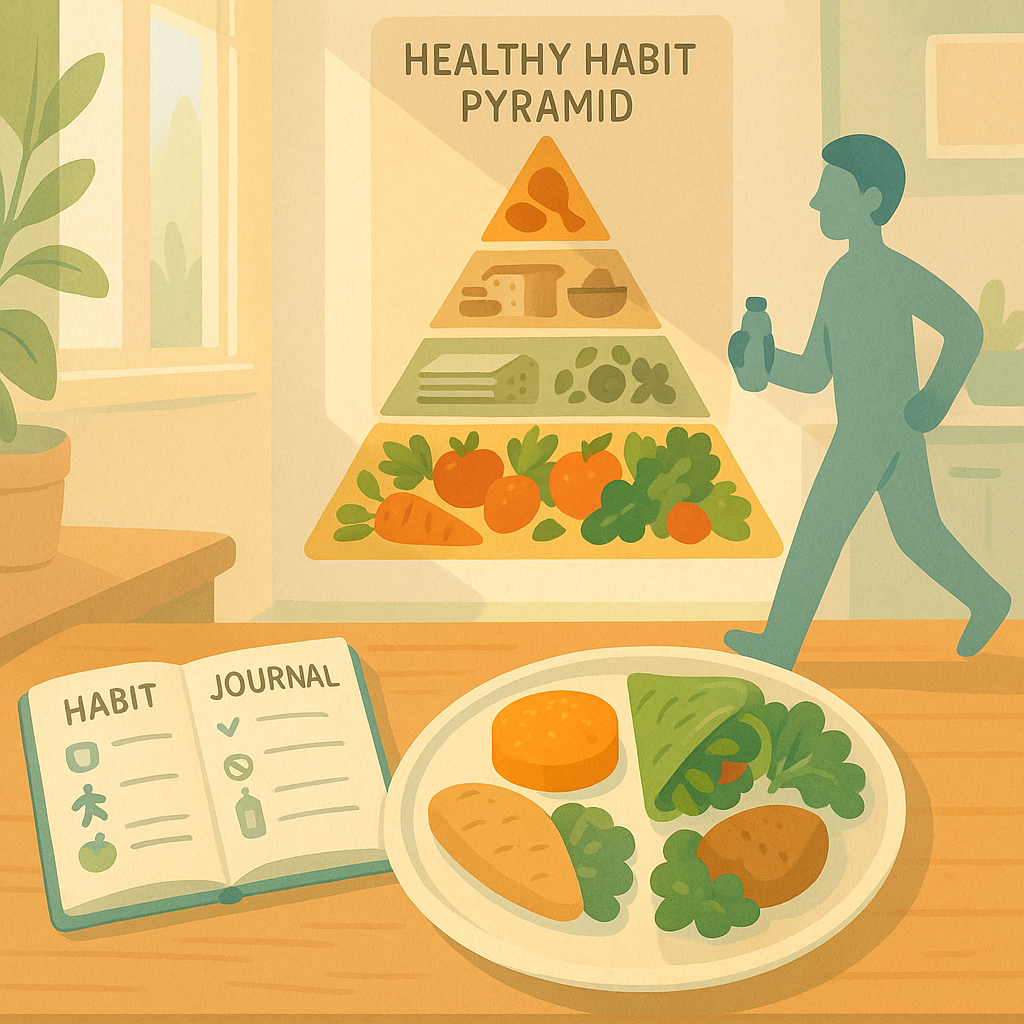
– The program uses the Mayo Clinic Healthy Weight Pyramid to prioritise foods (base = vegetables/fruits; top = foods to eat less often).
– The approach teaches portion estimation rather than strict calorie counting and provides education on energy and nutrient needs.
– The site offers multiple eating styles at different calorie levels and sample daily menus so people can choose a plan that fits them.
Example 1,200‑calorie day (sample menu shown in the article)
– Breakfast: fruit/oat/yogurt/milk smoothie.
– Lunch: vegetable and roast‑beef wrap.
– Dinner: broiled salmon with cabbage and tomato salad.
– Snack: a small piece of fruit.
Safety notes and limitations
– The diet is presented as generally safe for most adults. A common short‑term effect can be increased gas or other digestive changes when fibre is increased; the article recommends increasing fibre gradually and drinking enough fluids.
– People with diabetes or other medical conditions should work with their healthcare professional to adapt the plan (medication changes are not detailed in the article). The Mayo Clinic piece recommends consulting a clinician before starting a new diet or exercise program.
– What the article does NOT claim: it does not present head‑to‑head randomized trial evidence proving superiority over other named diets, nor does it provide long‑term follow‑up statistics in this article. Calorie goals and individualized plans vary by sex, weight and needs; the article points readers to program tools for tailored guidance.
Bottom line
If you want a practical, habit‑focused route to losing weight and keeping it off, the Mayo Clinic Diet frames the work as two manageable phases: a two‑week habit jump‑start with measurable early results, then a lifelong education and maintenance plan that emphasises portion sense, whole foods and daily movement. For tools, sample meal plans and calorie‑level options, the article points to the Mayo Clinic Diet program site (diet.mayoclinic.org). As always, check with your healthcare provider—especially if you have diabetes or other medical concerns—before beginning a new diet or exercise plan.
Source: Mayo Clinic. “The Mayo Clinic Diet: A weight‑loss program for life.” June 4, 2026.
Leave a Reply