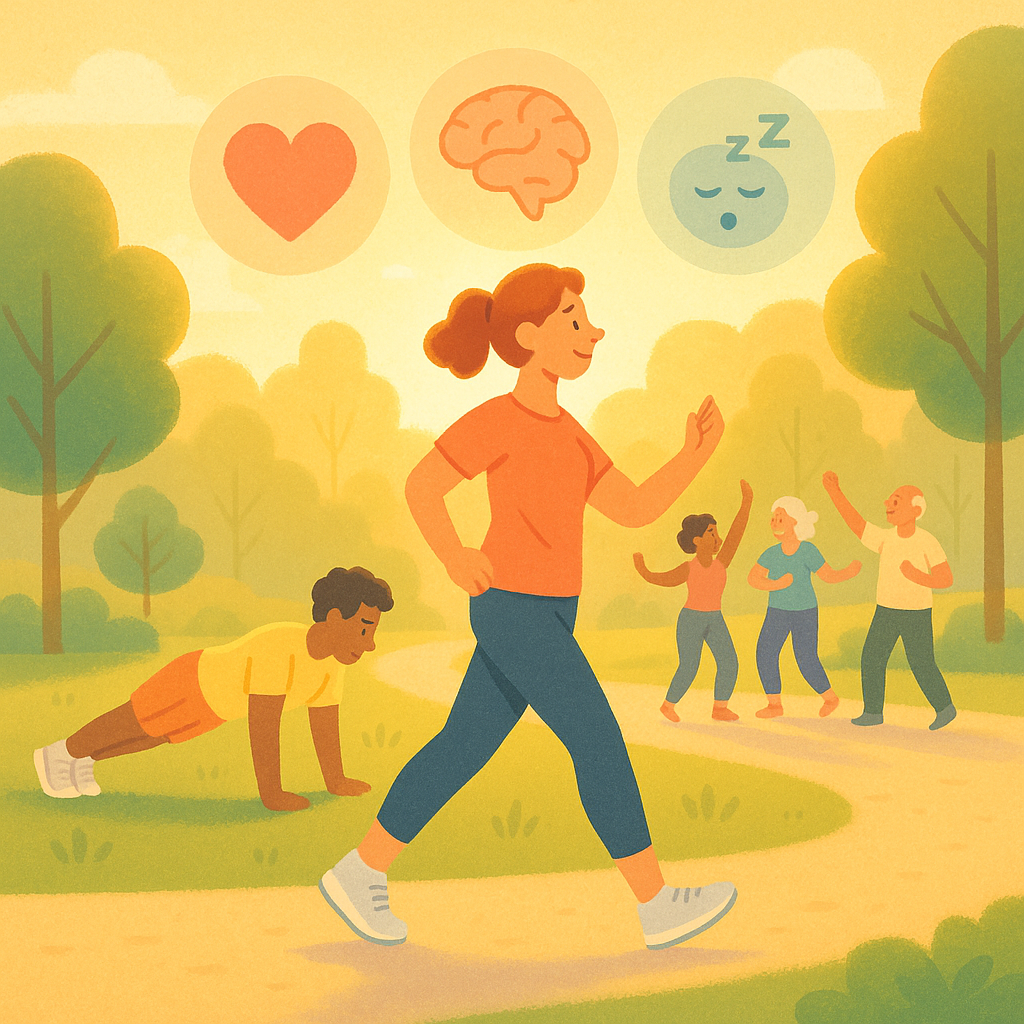
Intro
Regular physical activity benefits nearly everyone — regardless of age, sex or fitness level — and, as the Mayo Clinic puts it, any amount of activity is better than none. This short guide walks through seven core benefits of regular exercise described in the Mayo Clinic article and ends with practical, easy-to-follow guidance on how much and what kinds of activity deliver the most health gains.
1) Exercise controls weight
Physical activity burns calories, and more intense activities burn more. Regular exercise helps prevent excess weight gain and supports maintaining weight loss. Consistency matters: building movement into daily life — taking the stairs, doing household chores, breaking up sitting time — all adds up and contributes to weight control.
2) Exercise combats health conditions and diseases
Exercise improves key heart-health markers (raising HDL — the “good” cholesterol — and lowering triglycerides) and helps prevent or manage many conditions. The Mayo Clinic highlights that regular activity can help reduce the risk of stroke, metabolic syndrome, high blood pressure, type 2 diabetes, depression and anxiety, several types of cancer, arthritis and falls. The article also notes that exercise can improve cognitive function and is associated with a lower risk of death from all causes.
3) Exercise improves mood
Physical activity stimulates brain chemicals that make you feel happier, more relaxed and less anxious. Over time, regular exercise can also boost confidence and self‑esteem through improvements in fitness and appearance, helping break negative mental-health cycles.
4) Exercise boosts energy
Moving regularly improves muscle strength and endurance and makes the cardiovascular system more efficient. That means oxygen and nutrients reach your tissues better, which translates into more energy for daily chores, work and play.
5) Exercise promotes better sleep
Being active can help you fall asleep faster, increase deep sleep and improve sleep quality overall. The Mayo Clinic does note a caveat: for some people exercising very close to bedtime can be stimulating and make it harder to fall asleep.
6) Exercise can improve sexual function
Regular activity often increases energy, enhances body image and can improve sexual arousal. The article reports associations between physical activity and lower rates of erectile dysfunction in men, and potential enhancement of sexual arousal for women.
7) Exercise can be fun and social
Beyond physical health, activity offers recreation, stress relief and social connection — whether through classes, teams or outdoor group activities. Enjoyment and social support make it more likely people will stick with a routine, which amplifies the health benefits.
Practical guidance: how much and what kind
– Aerobic activity: Aim for at least 150 minutes per week of moderate-intensity aerobic activity (for example, brisk walking, biking, swimming, mowing the lawn) or at least 75 minutes per week of vigorous-intensity activity (for example, running, swimming laps, heavy yardwork, aerobic dancing), or an equivalent mix. For greater benefit, aim for about 300 minutes per week of moderate activity. Spread activity across multiple days.
– Strength training: Do resistance exercises for all major muscle groups at least two times per week. The Mayo Clinic notes that even one set per exercise can be sufficient for health and fitness benefits; choose a resistance that tires the muscles after roughly 12–15 repetitions. Examples include weight machines, free weights, body‑weight exercises, resistance bands, heavy bags, rock climbing or water resistance.
– Tips: Short bouts of activity accumulated during the day add up. More activity may be needed for weight loss or weight-maintenance goals. If you have chronic health conditions or concerns, consult a health professional before beginning a new exercise program.
Takeaway and quick starter ideas
The best exercise is the one you enjoy and will keep doing. Start small, build consistency, and combine aerobic movement with simple strength sessions. Try brisk daily walks, short body-weight strength circuits (push-ups, squats, lunges), a dance class or an outdoor group activity to get both the physical and social benefits. For a deeper read, the Mayo Clinic article that this post summarizes provides additional examples and references.
(Information in this post is drawn from the Mayo Clinic article “Exercise: 7 benefits of regular physical activity,” published August 26, 2023.)
Leave a Reply