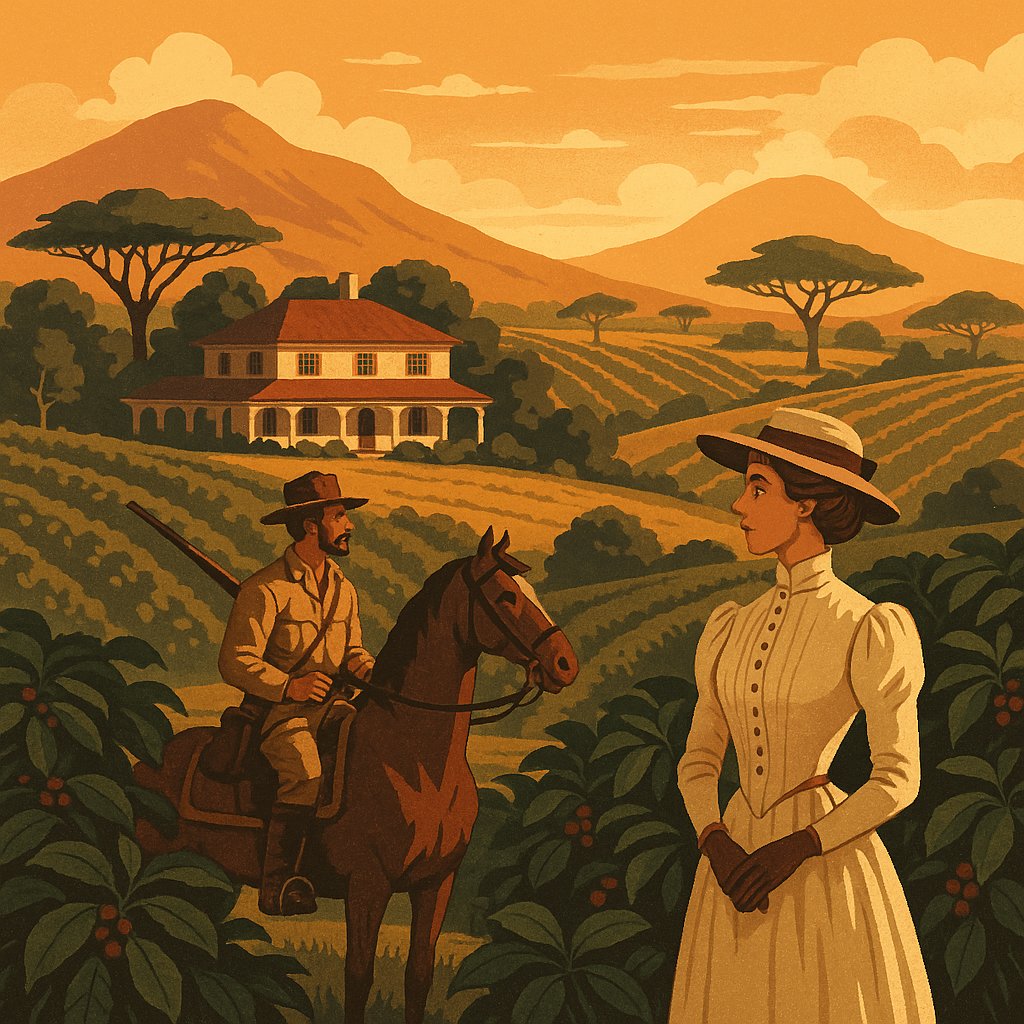
“Out of Africa,” the 1985 American epic romantic drama directed by Sydney Pollack, stands as a cinematic masterpiece that delves into the poignant life story of Karen Blixen, a Danish aristocrat portrayed by Meryl Streep. Based loosely on Blixen’s 1937 autobiographical memoir written under the pen name Isak Dinesen, the film traverses her 17 years managing a coffee plantation in colonial Kenya, then British East Africa.
The narrative unfolds around Karen’s relocation to Africa to join her husband, Bror Blixen (Klaus Maria Brandauer), who invested in the coffee plantation. Their turbulent marriage, marked by Bror’s infidelity, contrasts with Karen’s profound and transformative relationship with Denys Finch Hatton (Robert Redford), a charismatic and free-spirited big-game hunter. Against the sweeping backdrop of lush African landscapes and the waning days of British colonial rule, the film explores deep themes of love, loss, and personal growth.
Critically acclaimed, “Out of Africa” garnered seven Academy Awards, including Best Picture, Best Director for Sydney Pollack, and Best Adapted Screenplay, confirming its place in cinematic history. The film’s $227.5 million worldwide gross attests to its broad appeal and enduring legacy.
While the film takes certain liberties with the source material, it beautifully captures the essence of Blixen’s memoir — a lyrical reflection on her life, the coffee plantation, and the people who shaped her journey. The memoir itself offers an intimate snapshot of colonial African life during its last days under British rule.
Ultimately, “Out of Africa” remains a poignant exploration of human complexity and the intricate weave of relationships set against an unforgettable African backdrop. It invites viewers to reflect on the enduring power of love and memory in the face of change and loss.
Leave a Reply