Blog

  • AI in University Assignments: A Tool, Not a Substitute for Thinking

    AI in University Assignments: A Tool, Not a Substitute for Thinking

    Imagine asking an AI tool to produce a paragraph for an assignment. The words may arrive quickly, but at Singapore’s universities, speed alone is not the point. Students have been allowed to use AI tools in assignments since 2023—but they must follow rules on academic honesty and plagiarism, and still show that they understand their subject.

    That balance is at the heart of the guidance described by The Straits Times. University lecturers and administrators said that bringing AI into education can help teaching and learning, while reflecting changes in technology. But they also emphasised that students need to think independently. An assignment is meant to show more than a polished answer: it should demonstrate the student’s own understanding and analysis.

    The Singapore Institute of Technology (SIT) offers one example of how this approach can work. Its guidance says generative AI should not be a student’s primary source of information. Instead, students may use AI as a tool—including in assignments that ask them to critically evaluate an AI-generated response. Generative AI refers to tools that create content, such as text, images or videos, in response to prompts. The article names ChatGPT and Sora as examples.

    Associate Professor Karin Avnit, deputy director of the SIT Teaching and Learning Academy, said AI has potential to enhance teaching and learning and may change industry practices. At the same time, different disciplines have different teaching, learning and assessment needs. That is one reason a single set of rigid rules may not fit every situation.

    There is also a clear limit: according to the article, students will not receive marks if they use AI to generate written work without providing the required analysis and meeting the other requirements of the assignment. In other words, using a tool does not remove the need to do the thinking the task asks for.

    The article says the National University of Singapore, Nanyang Technological University, Singapore Management University, Singapore University of Social Sciences and Singapore University of Technology and Design take a similar position: students must follow the relevant rules and restrictions. The details may depend on the assignment, so students need to pay attention to what their course requires.

    AI can therefore have a place in university learning, but it is not a shortcut around learning. Used within the rules, it may become part of how students engage with an assignment. The essential work remains theirs: understanding the subject, examining information critically and showing their own reasoning.

    Source: Students at S’pore universities allowed to use AI tools for assignments but must stick to rules, The Straits Times

  • Research Brief Needed

    Research Brief Needed

    I don’t have a research brief or article details to turn into a blog post. Please share the brief, along with the article title, publisher and URL.

  • Hawker Stalls Take Another Step into Digital Payments

    Hawker Stalls Take Another Step into Digital Payments

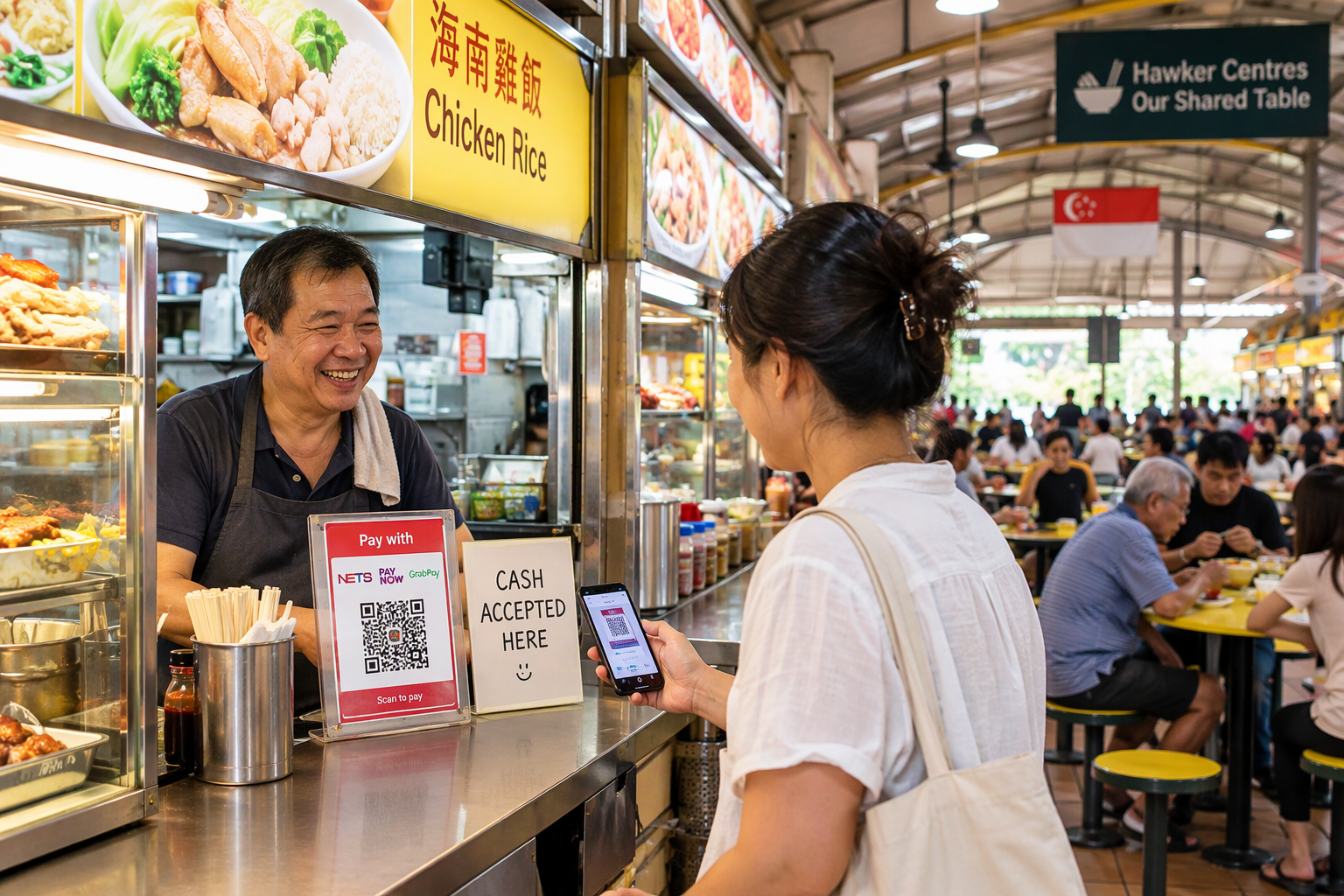
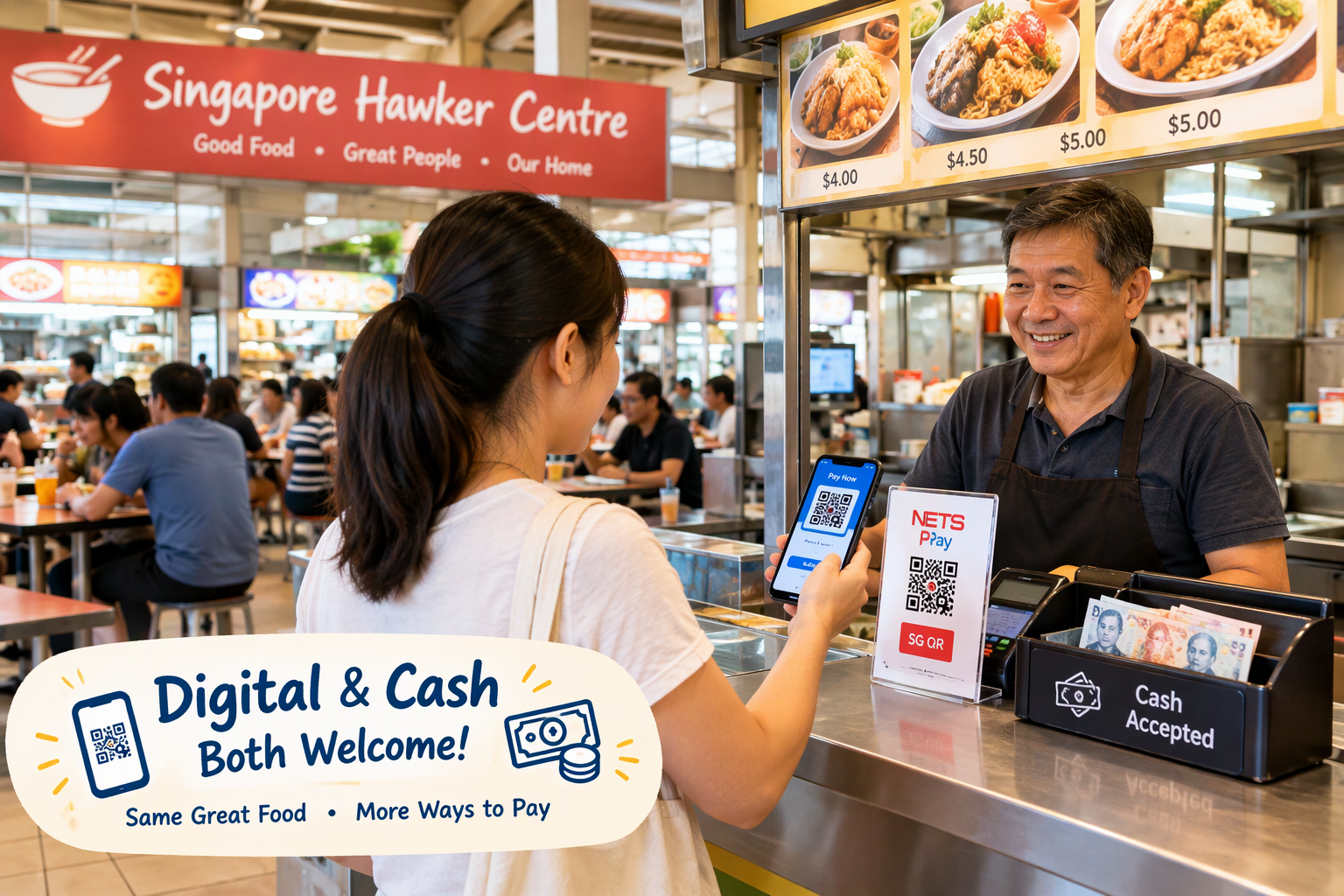
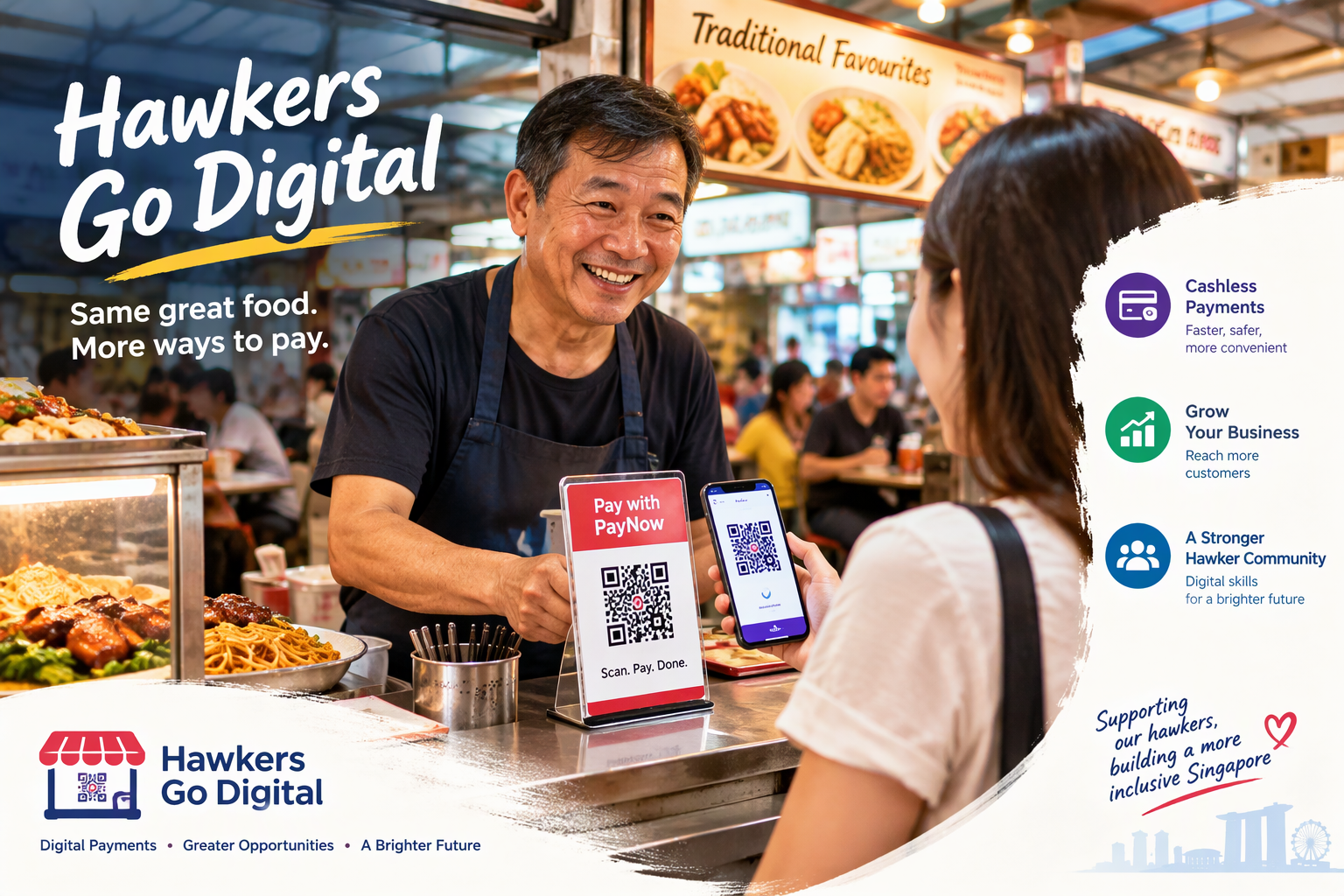
    At a hawker centre, a meal might be paid for with a few notes, a card, or a scan of a QR code. For stallholders using digital payments, that scan can make a sale quicker—but transaction fees and the costs of running a stall matter too. In October 2024, Singapore’s Hawkers Go Digital programme received another extension to help operators make the adjustment.

    By then, more than 11,500 hawkers had adopted cashless payments through the programme. It encouraged food-stall operators to accept digital payments using QR codes on the Singapore Quick Response Code, or SGQR, platform. The subsidy was extended through the end of 2025, giving participating stallholders more time to use the system while getting used to transaction fees.

    Under the subsidy described in the article, a stall’s 0.5 per cent transaction fee was waived on the first $20,000 of digital transactions each month. Enterprise Singapore and the Infocomm Media Development Authority (IMDA) said the extension followed feedback from hawkers. It was also intended to encourage continued adoption as stallholders faced rising operating costs.

    The programme has had a longer journey. SGQR was introduced by Enterprise Singapore and IMDA in 2018. Hawkers Go Digital aimed to encourage about 18,000 stallholders in government-run food centres to adopt digital payments before subsidies were lifted. These included centres operated by the National Environment Agency and the Housing Board.

    The subsidy’s finish line shifted more than once. It had initially been scheduled to end on December 31, 2023. In October 2023, the end date moved to the end of 2024; a year later, it was extended again, through the end of 2025. The changes reflected an effort to give stallholders more time to adapt.

    The figures in the article show that digital payments were growing among participating hawkers. In August 2024, monthly transaction value reached $60 million, compared with $45 million in August 2023. Transaction volume also rose over that period, from 5.4 million to 7.6 million. Senior Minister of State Low Yen Ling described the scheme as part of efforts to help hawkers thrive in the digital age.

    Still, adopting digital payments does not mean every stall is cashless. The article does not say that all hawker stalls or centres accept them, or that cash is no longer accepted. It also does not say which payment apps are available at every stall. What it does show is a gradual shift: more participating hawkers were using QR payments, and the subsidy was extended to support that transition. The reported extension ran through December 31, 2025; the article does not establish what happened after that date.

    Source: Subsidy for hawkers to adopt digital payments extended to end-2025, The Straits Times

  • If AI Takes the First Step, Where Will Tomorrow’s Leaders Begin?

    If AI Takes the First Step, Where Will Tomorrow’s Leaders Begin?

    A first job is more than a list of tasks. It can be where someone learns how a workplace works, practises communicating with colleagues and begins building the judgement needed for greater responsibility. As artificial intelligence becomes more common at work, the World Economic Forum’s article raises a question that goes beyond which tasks technology can perform: what might happen if companies sharply reduce entry-level roles?

    The article reports that 37% of young workers worldwide are in occupations with medium-to-high exposure to AI-driven task change. In some regions, it says, the figure reaches three in four young workers, though the available article text does not name those regions. It also reports that 28% of entry-level workers believe half or fewer of their current skills will remain relevant in three years.

    Those numbers describe exposure to changing tasks and workers’ expectations. They are not a count of jobs already lost to AI. The distinction matters: the article is exploring possible risks and changes, not claiming that technology has already eliminated a particular number of early-career positions.

    One of the risks highlighted is that entry-level work can serve as a training ground. Angie Kamath, dean of New York University’s School of Professional Studies, warns that cutting these roles too aggressively could weaken the pipeline of people who may later become managers and leaders. It could also reduce institutional memory—the knowledge and experience that build up within an organisation—and limit opportunities to learn on the job.

    Kamath points to skills including critical thinking, communication, leadership and ethical decision-making. These are not developed only by studying ideas in the abstract; her argument is that people build them through practice and experience. If early-career opportunities shrink, organisations could face not just a shortage of available talent, but a gap in how future leaders gain the experience to take on responsibility. The article also raises questions about fairness and access to career opportunities.

    That leaves employers with a balancing act. AI may change how work is done, but decisions about which tasks to automate and which roles to keep could also shape how new workers enter a profession and grow within it. The article does not say that every entry-level job must stay unchanged. Instead, it draws attention to the pathways behind those jobs: if routine tasks change, how will newcomers still get meaningful chances to practise, learn and contribute?

    For students thinking about their future careers, the discussion is a reminder that a job’s value may include more than its immediate output. For organisations, the challenge is to consider productivity alongside the development of people who could become their next generation of skilled colleagues and leaders. As AI becomes more embedded in workplaces, the way companies redesign early-career work may help determine not only what gets done, but how future talent gets its start.

    Source: AI and entry-level jobs: What’s the greatest risk in replacing early-career roles with technology?, World Economic Forum

  • Cash, QR Codes and the Hawker Trade-Off

    Cash, QR Codes and the Hawker Trade-Off

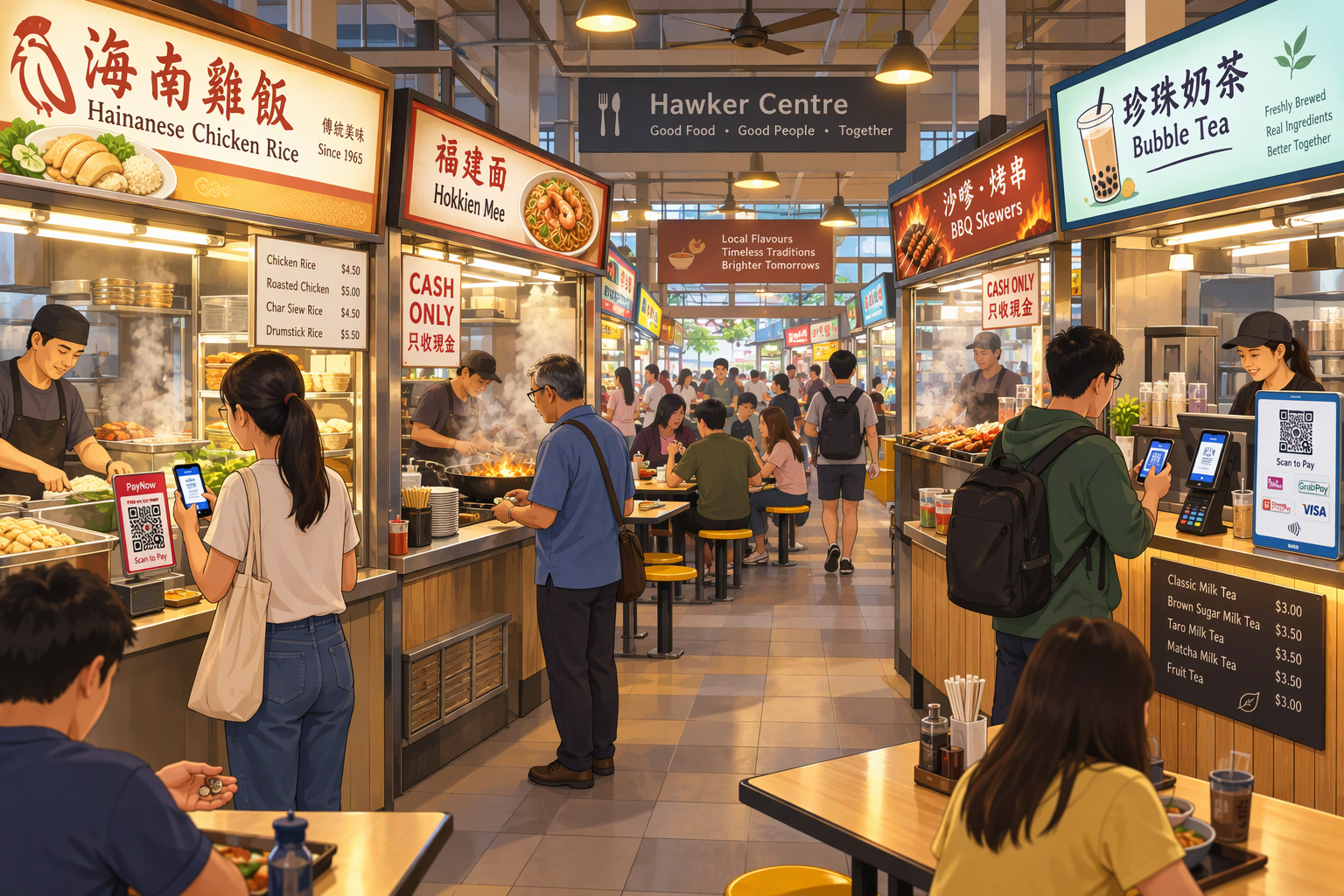
    At West Coast Food Centre, a small “Cash Only” sign tells customers how to pay before they even reach Angie Sim’s noodle stall. Nearby, QR codes mark a different kind of change: digital payments are becoming more visible across Singapore’s hawker centres. Yet, as a November 2024 report by The Straits Times shows, the transition is not the same as every stall going cashless.

    Sim, 65, has worked at the centre with her stall partner for more than 20 years. She says cash is easier and more convenient for her, and suits many of her older customers, who may be less comfortable with technology and often carry cash. For her stall, sticking with notes and coins is a practical choice—not a statement that digital payments have no place.

    The newspaper spoke to stallholders across eight hawker centres who continued to resist digital payments. Their reasons were varied but familiar: some had limited digital literacy or poor eyesight; others found payment platforms difficult to navigate. Some worried that handling a device or checking a transaction would slow service or inconvenience customers, especially when the stall was busy.

    One drinks-stall owner in his 70s at ABC Brickworks Market & Food Centre said he struggled to remember how to use digital platforms and verify payments during busy periods. Still, he said he would serve customers who had no cash and let them return to pay later. At Albert Centre Market and Food Centre, a drinks-stall owner in his 60s described e-payment as troublesome because he needed to check whether each transaction had gone through.

    At the same time, digital payment options have spread. The article reported that more than 11,500 hawkers had adopted SGQR, a standardised QR code launched in 2018 to make payments from multiple mobile wallets easier. In 2020, the Hawkers Go Digital programme began encouraging digital payments among roughly 18,000 stallholders in government-run food centres. Participating hawkers did not have to pay the 0.5 per cent transaction fee on the first $20,000 of monthly transactions.

    On October 10, 2024, Enterprise Singapore and the Infocomm Media Development Authority announced that this fee waiver would be extended to the end of 2025. The support helps make digital payments more accessible to participating hawkers, but it does not mean every stall has adopted them.

    That distinction matters. QR codes may be increasingly common, and the programme has encouraged more hawkers to accept digital payments, but cash remains part of the picture. The article does not say that cash will be discontinued, that going cashless is compulsory, or that all stalls have switched. Instead, it captures a change still in progress—one shaped not only by technology and policy, but also by what stallholders and their customers find workable in everyday life.

    Source: Why cash is still king for some hawkers in Singapore despite digitalisation push, The Straits Times

  • Why Cash Still Matters at Singapore’s Hawker Stalls

    Why Cash Still Matters at Singapore’s Hawker Stalls

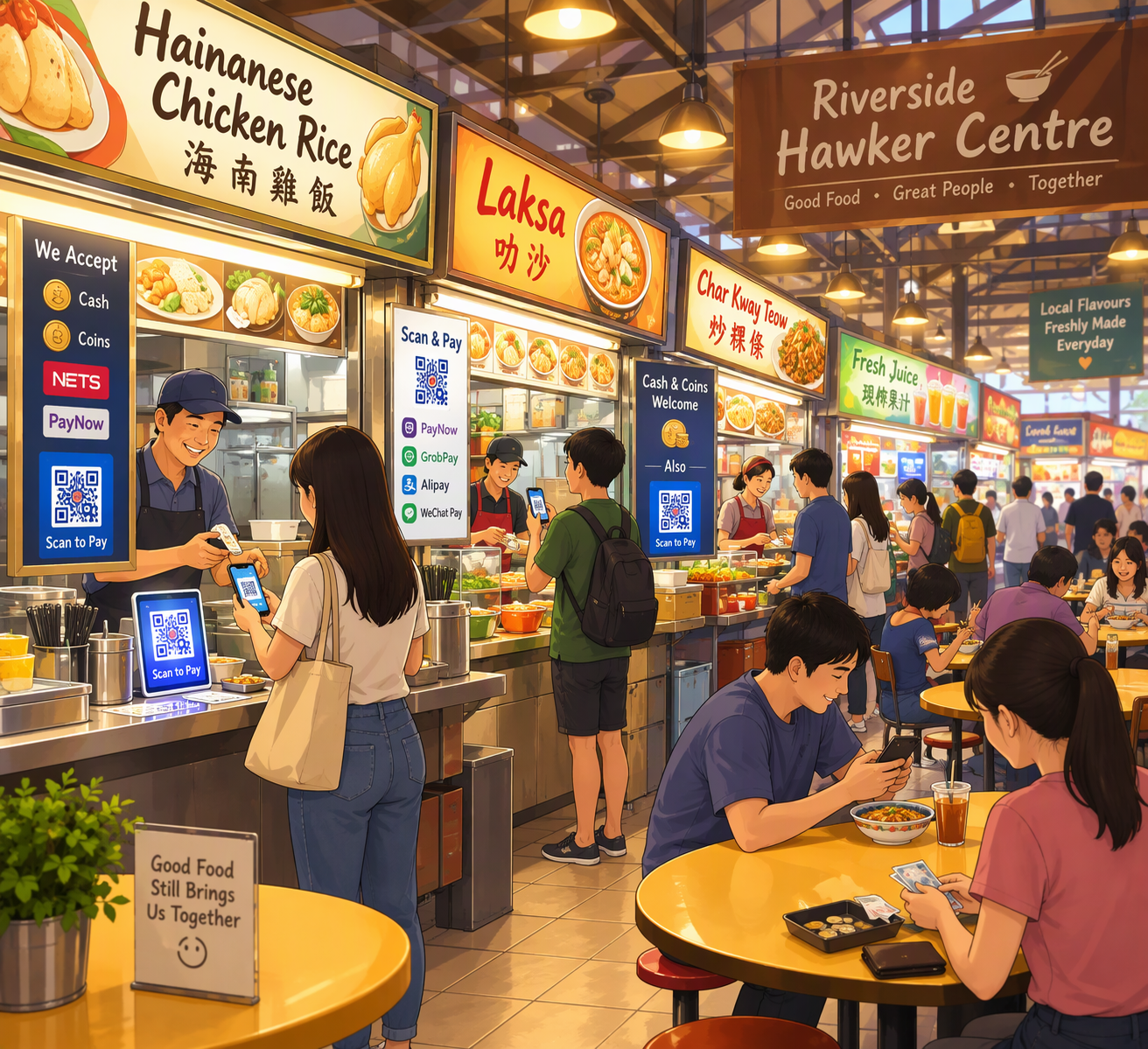
    At a hawker centre, the choice of how to pay can be as simple as a tap or scan—or a few notes and coins passed across the counter. QR codes are becoming a familiar sight in Singapore, but not every stall has made the same change. For some hawkers, cash remains the option that feels easiest to manage.

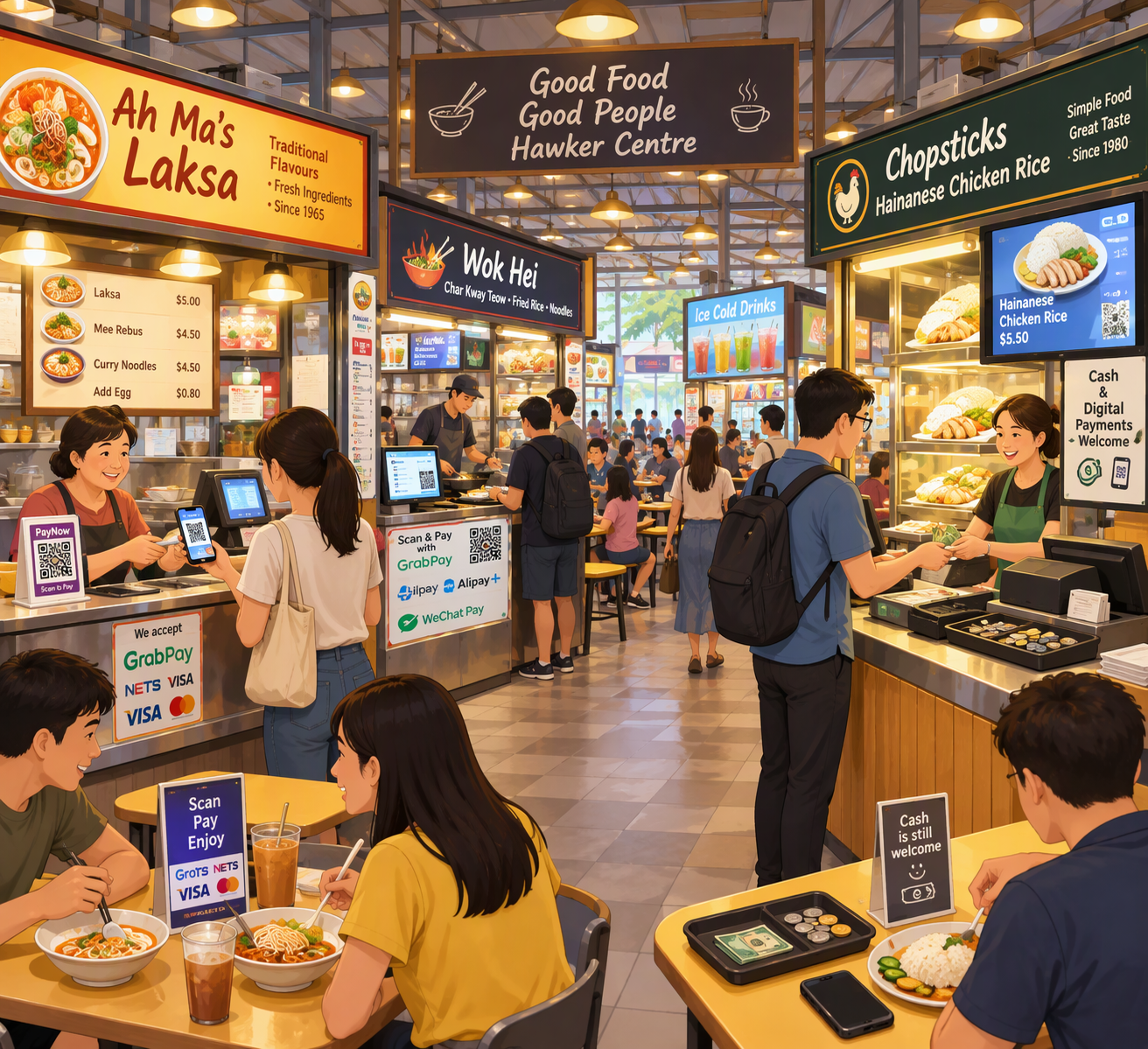
    The Straits Times reported that more than 11,500 hawkers had started using SGQR, a standardised QR code introduced in 2018. It allows customers to make payments through different mobile e-wallets using one code. At stalls displaying SGQR, a quick scan can make paying convenient. Yet a digital option does not mean cash has disappeared from the hawker-centre experience.

    At West Coast Food Centre, 65-year-old noodle-stall owner Angie Sim said she found cash easier and more convenient. She also felt it suited many of her older customers, some of whom were less comfortable with technology. Her view reflects a practical concern: a payment method has to work for both the person serving and the person buying.

    Hawkers interviewed across eight food centres described other challenges. Some had limited confidence with digital tools or poor eyesight. Others worried that unfamiliar devices might slow things down or inconvenience customers. A drinks-stall owner in his 70s at ABC Brickworks Market & Food Centre said digital platforms were difficult to remember. During busy periods, he also found it hard to check whether a payment had gone through. At Albert Centre Market and Food Centre, another drinks-stall owner described verifying e-payments as troublesome.

    These examples show that adopting a QR code can involve more than displaying it at the stall. Hawkers need to feel confident using the system, especially when customers are waiting and orders are coming in. For someone who is used to cash, keeping track of a digital transaction may seem like an extra task rather than a shortcut.

    The Government has also tried to encourage the shift. The Hawkers Go Digital programme began in 2020. For hawkers who joined and used SGQR, it waived the 0.5 per cent transaction fee on the first $20,000 of monthly transactions. On October 10, 2024, Enterprise Singapore and the Infocomm Media Development Authority announced that the waiver would continue until the end of 2025. The stated aim was to encourage digital-payment adoption among the 18,000 stallholders in government-run food centres.

    The picture is one of gradual change, not a single switch from cash to cashless. QR payments are increasingly visible, while some hawkers continue to prefer cash for reasons that differ from stall to stall. Their experiences remind us that digitalisation is not only about introducing a new way to pay; it is also about whether people can use it comfortably in the middle of a busy day. At the hawker centre, the most useful payment option may still depend on the hawker, the customer and the moment.

    Source: Why cash is still king for some hawkers in Singapore despite digitalisation push, The Straits Times

  • From QR Codes to S$60 Million: Hawkers’ Gradual Move to Digital Payments

    From QR Codes to S$60 Million: Hawkers’ Gradual Move to Digital Payments

    A familiar hawker-centre meal could be paid for with coins, notes—or a scan of a QR code. In October 2024, Singapore’s Hawkers Go Digital programme was helping more stallholders add that digital option, while a subsidy gave them time to get used to the costs involved.

    More than 11,500 hawkers had adopted cashless payments through the programme, according to The Straits Times. Introduced in 2018 by Enterprise Singapore and the Infocomm Media Development Authority (IMDA), it encouraged stallholders in government-run food centres to accept QR-code payments through the Singapore Quick Response Code, or SGQR, platform. Its original aim was to reach about 18,000 stallholders.

    The support was not only about introducing a new way to pay. Digital transactions can come with fees, so the Government extended a subsidy for participating stallholders until the end of 2025. It covered the 0.5 per cent transaction fee on up to the first S$20,000 of digital transactions per stall each month.

    The extension followed feedback from hawkers. It was intended to help food-and-beverage stallholders continue adopting e-payments and gradually adjust to transaction fees without the subsidy, at a time when operating costs were rising. In other words, the programme paired the convenience of digital payments with a transition period for businesses learning to manage their costs.

    The figures in the article show that use was growing. In August 2024, the monthly value of transactions reached S$60 million, compared with S$45 million in August 2023. The number of transactions also increased, from 5.4 million to 7.6 million over those same months.

    Those totals offer a snapshot of a changing payment habit: more transactions were being made, and their combined value was higher. But they do not mean that hawker centres had become entirely cashless. The article describes a gradual shift supported by incentives, not the disappearance of cash.

    That distinction matters. A digital payment option can sit alongside familiar ways of paying, giving customers and stallholders another choice. The subsidy extension was designed to help participating hawkers keep adapting while they became more accustomed to the fees associated with e-payments.

    The article reported the extension as running until December 31, 2025. It does not establish what happened to the subsidy after that date, or how many stalls accept digital payments today. For the period it describes, however, the message is clear: Singapore’s move towards digital payments at hawker stalls was growing step by step, with support intended to help businesses make the transition.

    Source: Subsidy for hawkers to adopt digital payments extended to end-2025, The Straits Times

  • Hawker Stalls Get More Time to Go Digital

    Hawker Stalls Get More Time to Go Digital

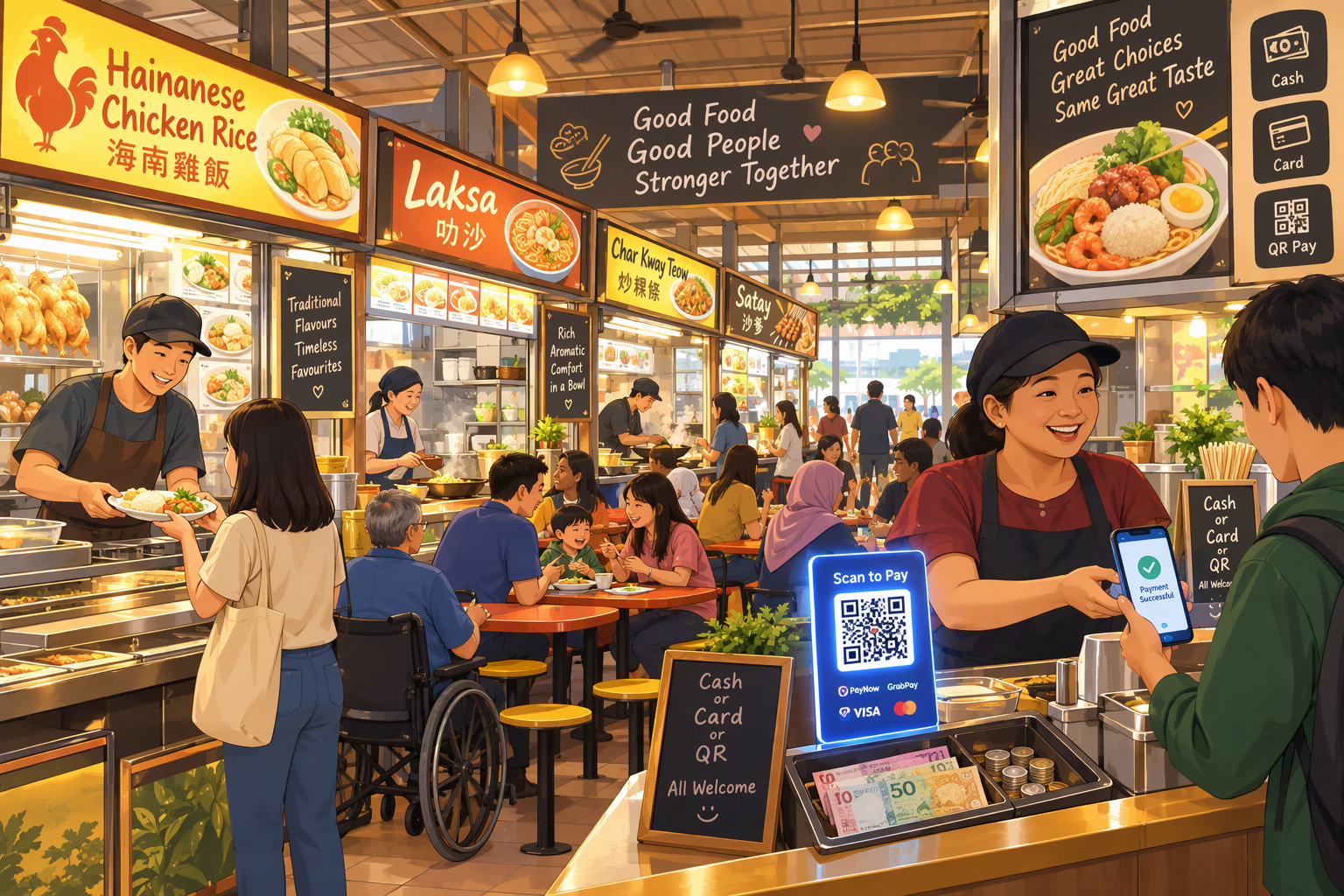
    At a hawker centre, a meal can be paid for with a familiar mix of coins, notes or a quick scan of a QR code. For stallholders considering digital payments, the cost of processing those payments matters too. A government subsidy designed to help with that cost has now been extended until the end of 2025.

    The extension applies to the Hawkers Go Digital programme, which supports QR-code payments through the Singapore Quick Response Code platform. For each stall, it waives the 0.5 per cent transaction fee on the first $20,000 of digital transactions each month. The extra time is intended to encourage hawkers to keep using e-payments and to help them prepare for paying the transaction fee themselves when the subsidy ends.

    The initiative was introduced in 2018 by Enterprise Singapore and the Infocomm Media Development Authority. Its stated aim is to help about 18,000 stallholders in government-run food centres adopt digital payments. These include centres run by the National Environment Agency and the Housing Board. By October 2024, more than 11,500 hawkers had adopted cashless payments, according to the article.

    The agencies said the extension followed feedback from hawkers. They also pointed to rising operating costs, making the transition to paying transaction fees an important adjustment for food-and-beverage stallholders. The subsidy offers more time to continue adopting e-payments while preparing for a different payment structure later on.

    The figures reported for August show that QR payments were being used more than a year earlier. Their monthly value reached $60 million in August 2024, compared with $45 million in August 2023. The number of transactions also increased, from 5.4 million to 7.6 million over the same period. The agencies said both the monthly value and volume of e-payments were higher than a year earlier.

    Those numbers point to growing use of the programme’s QR-code payments, but they do not mean every stall has gone cashless. The article describes a continuing shift, not the end of cash payments. Nor does it say what share of customers paid digitally or explain why individual hawkers chose to adopt—or not adopt—e-payments.

    For hawkers, the extension provides more time to get comfortable with digital transactions before the subsidy ends. For customers, it is another sign that payment choices at food centres are changing, even as the transition remains underway.

    Source: Subsidy for hawkers to adopt digital payments extended to end-2025, The Straits Times

  • Cash or QR? Why Singapore’s Hawkers Make Different Choices

    Cash or QR? Why Singapore’s Hawkers Make Different Choices

    At a hawker centre, paying for lunch might take a quick scan of a QR code—or a few coins passed across the counter. As more stalls adopt digital payments, some hawkers still prefer cash. Their reasons show that the move to e-payments is not the same for everyone.

    At West Coast Food Centre, noodle-stall owner Angie Sim displays a “Cash Only” sign. The 65-year-old, who has worked there with her stall partner for more than 20 years, told The Straits Times that cash is easier and more convenient for her. Many of her customers, she said, are older, less familiar with technology and used to carrying cash.

    Other stallholders described practical difficulties with digital payments. Learning how to use a platform can be challenging, and poor eyesight may make a screen harder to navigate. Hawkers may also need to check whether a payment has gone through—something that can be stressful when customers are waiting.

    At ABC Brickworks Market & Food Centre, a drinks-stall owner in his 70s said he found it difficult to remember how to use digital platforms and verify payments during busy periods. If a customer did not have cash, he sometimes gave them the drink and let them return to pay. At Albert Centre Market and Food Centre, drinks-stall owner Mr Tan, who is in his 60s, described payment verification as troublesome.

    But other hawkers find that digital payments make work easier. Madeline Chen, who runs a braised-pork stall at Chinatown Complex Market & Food Centre, said e-payments reduce the hassle of handling cash, especially when she is busy. Some of her regular customers had even photographed her SGQR code so they could pay before collecting their food.

    The article reported that more than 11,500 hawkers had adopted SGQR, a standardised QR code introduced in 2018 to make it easier to accept payments from multiple mobile e-wallets. It also described the Hawkers Go Digital programme, launched in 2020. At the time of the article’s publication in November 2024, the programme waived a 0.5 per cent transaction fee on each stall’s first S$20,000 in monthly e-payment transactions. An announcement in October 2024 extended that waiver to the end of 2025 and set a goal of bringing about 18,000 stallholders in government-run food centres onto digital payments.

    These examples from eight hawker centres capture a transition with different experiences on the ground. For some stallholders, scanning and paying can save the effort of handling cash. For others, cash feels simpler for them and their customers. Digitalisation may be changing how people pay for hawker food, but the article’s accounts show why the shift is not one-size-fits-all.

    Source: Why cash is still king for some hawkers in Singapore despite digitalisation push, The Straits Times