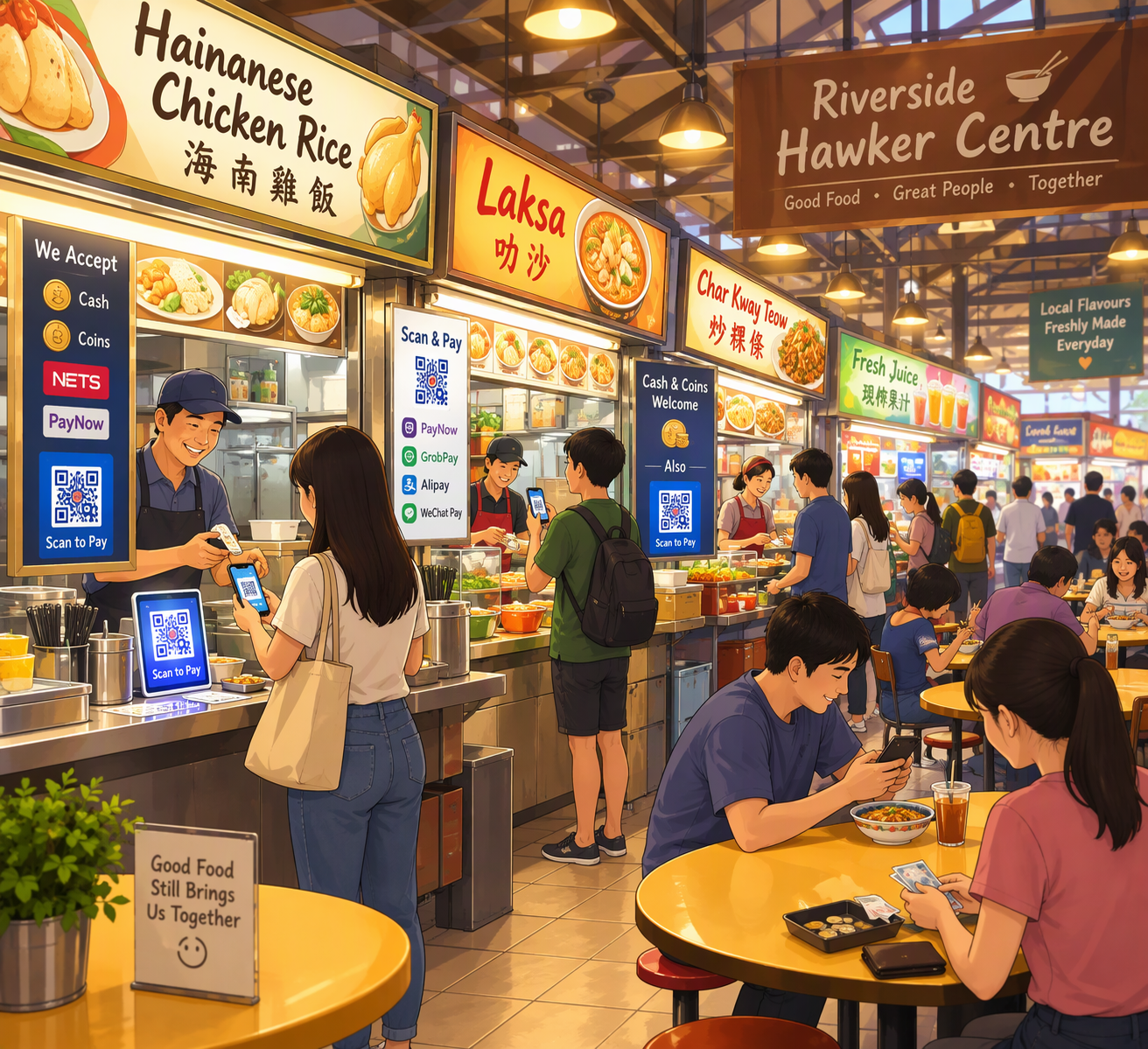
A familiar hawker-centre meal could be paid for with coins, notes—or a scan of a QR code. In October 2024, Singapore’s Hawkers Go Digital programme was helping more stallholders add that digital option, while a subsidy gave them time to get used to the costs involved.
More than 11,500 hawkers had adopted cashless payments through the programme, according to The Straits Times. Introduced in 2018 by Enterprise Singapore and the Infocomm Media Development Authority (IMDA), it encouraged stallholders in government-run food centres to accept QR-code payments through the Singapore Quick Response Code, or SGQR, platform. Its original aim was to reach about 18,000 stallholders.
The support was not only about introducing a new way to pay. Digital transactions can come with fees, so the Government extended a subsidy for participating stallholders until the end of 2025. It covered the 0.5 per cent transaction fee on up to the first S$20,000 of digital transactions per stall each month.
The extension followed feedback from hawkers. It was intended to help food-and-beverage stallholders continue adopting e-payments and gradually adjust to transaction fees without the subsidy, at a time when operating costs were rising. In other words, the programme paired the convenience of digital payments with a transition period for businesses learning to manage their costs.
The figures in the article show that use was growing. In August 2024, the monthly value of transactions reached S$60 million, compared with S$45 million in August 2023. The number of transactions also increased, from 5.4 million to 7.6 million over those same months.
Those totals offer a snapshot of a changing payment habit: more transactions were being made, and their combined value was higher. But they do not mean that hawker centres had become entirely cashless. The article describes a gradual shift supported by incentives, not the disappearance of cash.
That distinction matters. A digital payment option can sit alongside familiar ways of paying, giving customers and stallholders another choice. The subsidy extension was designed to help participating hawkers keep adapting while they became more accustomed to the fees associated with e-payments.
The article reported the extension as running until December 31, 2025. It does not establish what happened to the subsidy after that date, or how many stalls accept digital payments today. For the period it describes, however, the message is clear: Singapore’s move towards digital payments at hawker stalls was growing step by step, with support intended to help businesses make the transition.
Source: Subsidy for hawkers to adopt digital payments extended to end-2025, The Straits Times
Leave a Reply