Author: jskills-class

  • Nibiru vs. Planet Nine: Separating Doomsday Fiction from Science

    Nibiru vs. Planet Nine: Separating Doomsday Fiction from Science

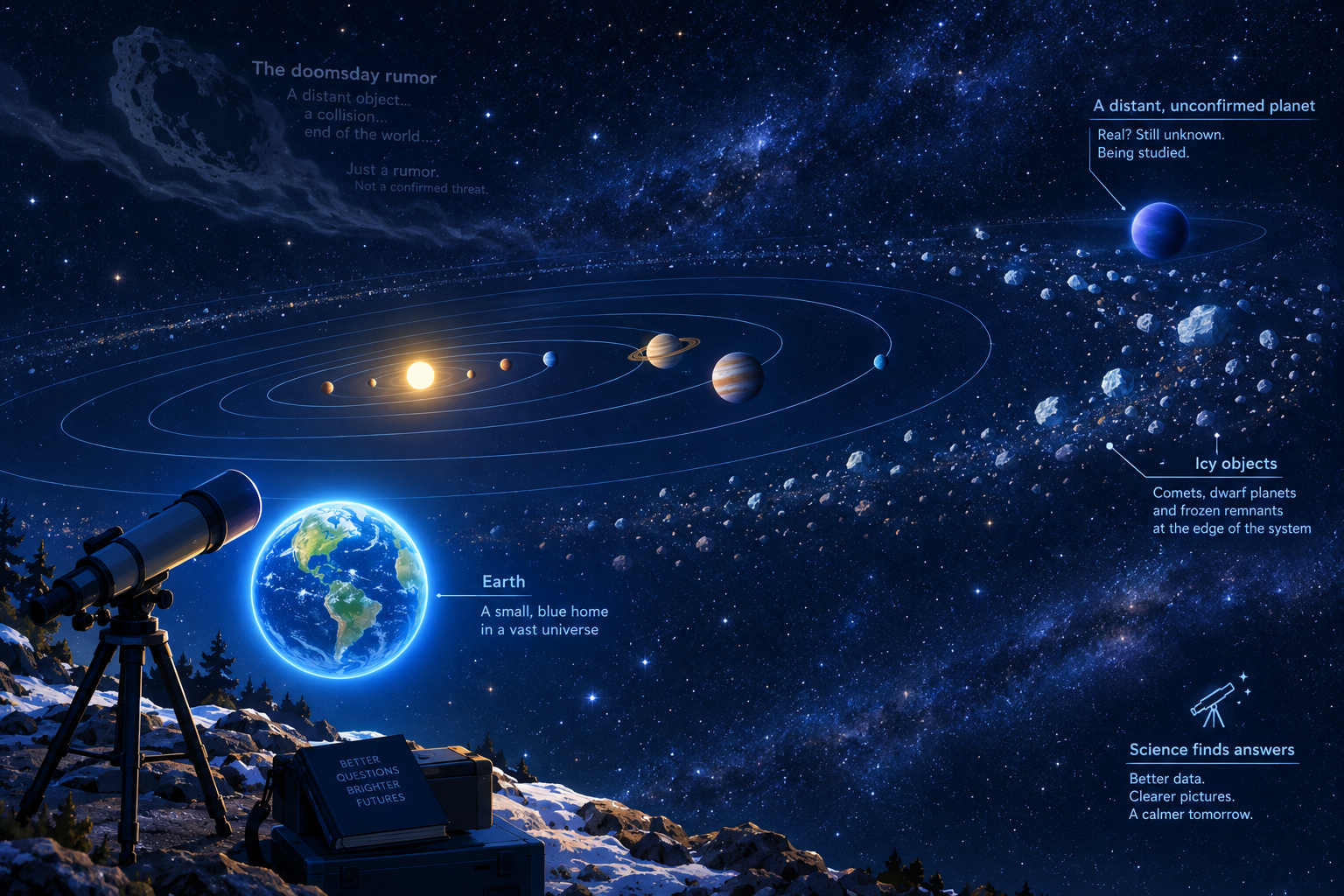
    For years, the name Nibiru has been tied to dramatic predictions of a planet hurtling toward Earth. The story drew attention around forecasts of catastrophe in 2003 and 2012—but, as Space.com’s article explains, those claims have no scientific evidence behind them. An infrared survey sometimes invoked to support the story did not reveal planets; follow-up work found that the sources were mostly distant galaxies.

    That doomsday narrative is not the same as the scientific hypothesis known as Planet Nine. Some astronomers have proposed that an undiscovered planet far beyond Neptune might help explain the unusual or apparently clustered orbits of certain small objects in that region. In the article, the proposed planet is described as potentially about ten times Earth’s mass, but it had not been directly observed.

    The terminology can add to the confusion. “Planet X” has been used over time for different proposed planets in the outer solar system, and is sometimes used loosely for Planet Nine. But a hypothesis is not a discovery—and it does not validate claims about Nibiru or a planet on a collision course with Earth.

    The distinction is simple but important: Nibiru’s Earth-impact story is unsupported, while Planet Nine remains an unconfirmed scientific proposal.

  • Nano Banana 2.1: Google’s Push for Better, More Consistent AI Images

    Nano Banana 2.1: Google’s Push for Better, More Consistent AI Images

    Google’s latest Nano Banana update is aimed at a familiar challenge in AI image creation: producing visuals that look polished while keeping their details consistent. Called Nano Banana 2.1, the model is presented as a more efficient counterpart to Nano Banana Pro, with improvements to visual design, mask-based editing, and the ability to preserve subjects across images.

    The update’s headline features include image generation at 1K, 2K, and 4K resolutions, fewer tiling artifacts in very wide or panoramic pictures, and improved text rendering and infographic layouts. Google also says users can combine as many as 14 reference images, with the model able to preserve up to four characters and ten objects in those workflows.

    Nano Banana 2.1 can also use Google Web and Image Search for grounding, while configurable “Thinking” levels offer another way to shape how it works. Google lists the model’s rollout across the Gemini app, Search’s AI Mode, Google AI Studio, Flow, Stitch, Google Ads, and Gemini Enterprise Platform.

    Those capabilities make for an ambitious feature set—but the article presents the improvements as Google’s claims. It does not include independent benchmark results, explain pricing or account requirements for each service, or establish how reliably the model performs in everyday use. For now, Nano Banana 2.1’s promise is clearer than its independently verified track record.

  • Choosing a Singapore Polytechnic: Look Beyond the Rankings

    Choosing a Singapore Polytechnic: Look Beyond the Rankings

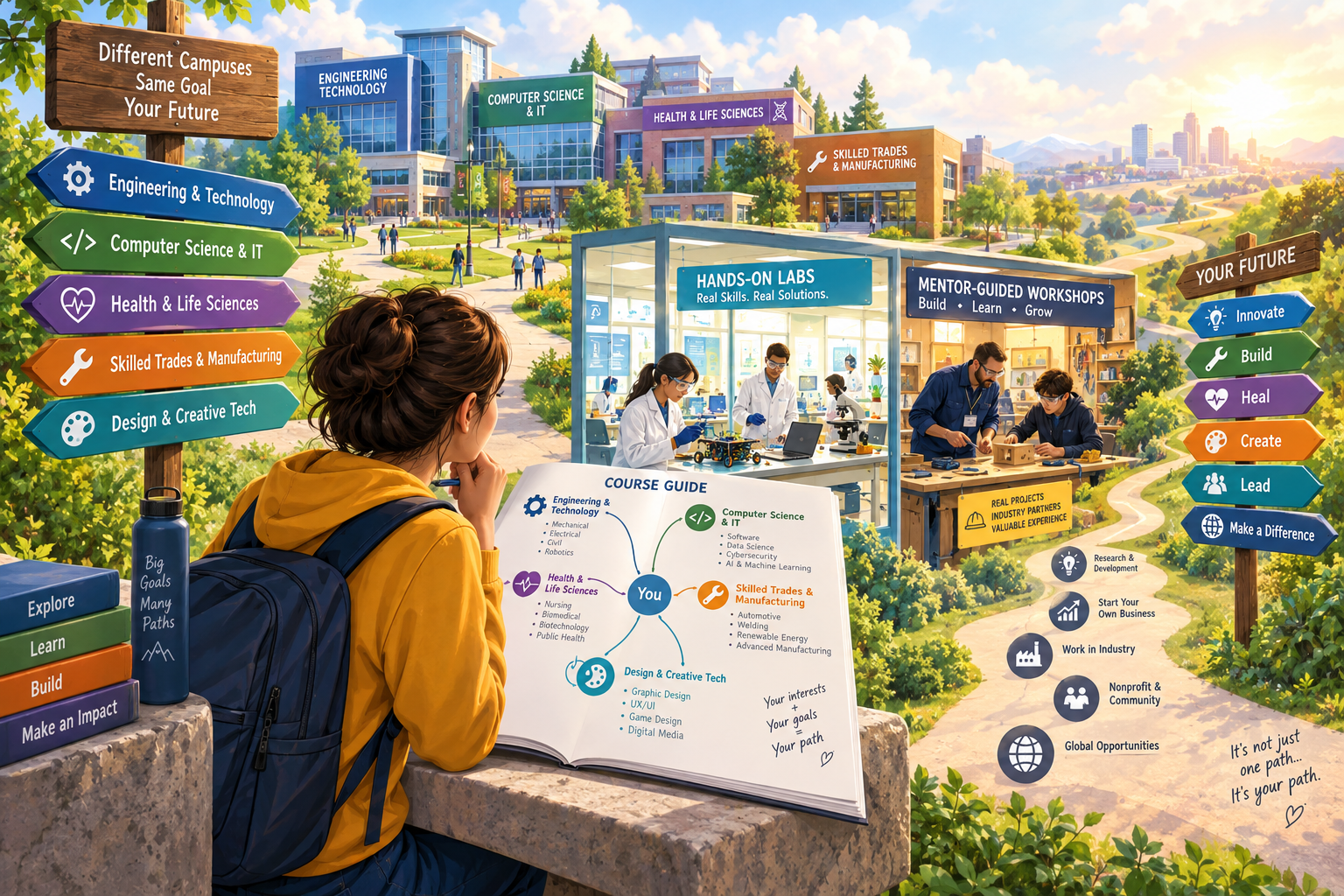
    When students and families ask which Singapore polytechnic is the best, there’s no official league table that settles the question. The more useful answer is to compare the course—not just the institution—and consider how well it fits a student’s interests and goals.

    Singapore’s five polytechnics are Nanyang Polytechnic, Ngee Ann Polytechnic, Republic Polytechnic, Singapore Polytechnic and Temasek Polytechnic. To weigh options, the article points to graduate employment survey data, course cut-off points and links with industry. But each measure needs context.

    For example, the salary figures discussed cover 2023–2024 and are grouped by course cluster, not by polytechnic. They therefore cannot show which institution produces the strongest graduate outcomes. Across the figures, the overall median salary rose from S$2,800 in 2023 to S$2,900 in 2024. Built Environment recorded the largest percentage increase among the listed clusters, while Health Sciences had a high median salary that did not increase over the period.

    The article also uses 2025 course cut-off points to illustrate demand. Biomedical Science at Singapore Polytechnic and Ngee Ann Polytechnic, and Applied AI & Analytics at Nanyang Polytechnic and Singapore Polytechnic, are among the courses cited with single-digit cut-off points. Those figures may offer clues about a course’s appeal, but they do not prove that its teaching is better or that its graduates will be more successful.

    A closer course-level comparison can be more revealing. Look into internship opportunities, industry-sponsored facilities, applied projects and competitions, faculty experience, and what graduates go on to do. These details help show what a student may actually experience and where a course could lead.

    The takeaway is simple: there is no single best polytechnic for everyone. Rather than chasing an overall ranking, compare the specific courses and opportunities that matter to the student.

  • Small Steps, Steady Progress: A Sustainable Approach to Weight Loss

    Small Steps, Steady Progress: A Sustainable Approach to Weight Loss

    Weight loss doesn’t have to begin with a dramatic overhaul. The CDC’s guidance emphasizes habits that can be sustained over time: healthy eating, regular physical activity, enough sleep, and stress management.

    A gradual pace matters. The article says losing about 1–2 pounds (0.5–1 kg) per week is more likely to be maintained than losing weight faster. Instead of chasing quick results, start by noticing your routines. For a few days, record what you eat and drink, how active you are, how much you sleep, and how you’re feeling about stress. That snapshot can help reveal practical changes to try.

    Keep early goals small and specific. A 15-minute walk three days a week or choosing water instead of sugary drinks gives you a clear action to work toward. A handful of realistic goals can be easier to build into everyday life than a sweeping plan.

    Support can also help. The CDC suggests turning to friends, a weight-loss program, or a health professional, then checking in regularly on progress and adjusting goals as needed.

    Weight management is influenced by more than daily choices: medicines, medical conditions, stress, genes, hormones, environment, and age can all play a role. The CDC’s advice is general, so it does not determine which approach is right for any particular person. The central idea is to begin with manageable habits, review what’s working, and make changes steadily.

  • The Slow-Built Layers Behind a Rich Bolognese

    The Slow-Built Layers Behind a Rich Bolognese

    A satisfying Bolognese isn’t made by tossing everything into a pot at once. In Ivy Manning’s Eater recipe, the flavor comes from building the sauce in stages—and giving it time to simmer.

    The process begins with diced pancetta cooked in olive oil until its fat renders and the pieces start to brown. Onion, carrot, and celery follow, softened until the onion turns translucent. Then comes ground beef with 20 percent fat, broken up as it cooks. Milk simmers into the meat until nearly evaporated; tomato paste is stirred in and allowed to brown slightly. Dry white wine goes next, reducing as browned bits are scraped from the bottom of the pot.

    Only then do the crushed tomatoes and a Parmigiano-Reggiano rind join the sauce. A large, heavy-bottomed pot gives the milk, wine, and tomatoes room to reduce, while finely chopped vegetables help create a smooth texture. The sauce simmers partially covered over low heat for at least 1½ hours. Letting it go for as long as three hours can deepen the flavor. If it begins to look dry, add a little beef broth or water; remove the rind and season with salt and pepper before serving.

    The recipe makes about eight cups, or roughly six servings. Crushed tomatoes offer convenience, though whole canned tomatoes can be chopped or broken up by hand. Manning’s flavor-building approach relies on the sequence of cooking, the long simmer, fatty beef, pancetta, and the cheese rind, which adds umami.

    For a meat-free adaptation, the article suggests leaving out the pancetta and beef and adding finely chopped mushrooms with the vegetables. Reconstituted dried porcini, lentils, or a spoonful of Vegemite are optional additions. Whether made with beef or adapted without it, the recipe’s central idea is patience: layer the ingredients, let each stage do its work, and give the sauce time to come together.

  • Snorlax Has a New Place to Nap: Pokémon Center’s Pet Collection

    Snorlax Has a New Place to Nap: Pokémon Center’s Pet Collection

    Pokémon Center is bringing a little Pokémon flair to pets’ everyday routines with Pokémon Playful Partners, its first-ever pet-accessories range. The collection launched on June 11, 2026, and features beds, toys, collars, harnesses, blankets and feeding accessories.

    Snorlax is among the standout designs: a themed pet bed gives real-life companions a cozy place to curl up. The collection also includes a Jigglypuff pet cave, a Magikarp cat toy and Pokémon-designed feeding products.

    The range features original illustrations by Pokémon designer James Turner. When the article was published on August 20, 2026, the collection was available through Pokémon Center UK, although availability may change.

    So while Snorlax hasn’t become anyone’s actual pet, Pokémon fans can give their own pets accessories inspired by the beloved Pokémon world.

  • Sixteen Years in the Making: The RTS Link Nears Its Next Milestone

    Sixteen Years in the Making: The RTS Link Nears Its Next Milestone

    The Johor Bahru–Singapore RTS Link has crossed a long path from proposal to near-completion. First announced in May 2010, the cross-border rail project was initially meant to begin operating in 2018. Its planned opening moved more than once as the project’s design and timeline changed.

    The line will connect Woodlands North in Singapore with Bukit Chagar in Johor Bahru. About 4km long, it is designed as a standalone light-rail system, with a depot planned at Wadi Hana in Johor Bahru. A 25-metre-high bridge will link Singapore’s underground station to Johor’s above-ground station.

    For passengers, the journey is expected to take about five minutes. Trains are planned to run from 6am to midnight, with waits as short as 3.6 minutes. The system is designed to carry up to 10,000 passengers per hour in each direction.

    A key part of the plan is to place customs, immigration and quarantine facilities at both stations. Passengers are expected to complete the necessary checks before boarding, without another immigration clearance after getting off. Singapore legislation passed in 2026 also addressed arrangements including criminal jurisdiction for certain incidents on the train and between two bridge piers.

    The project’s schedule has shifted alongside its development. Passenger services had been planned for the end of 2024, but Malaysia’s review led to a suspension from 2019 until the project formally resumed in July 2020. The target then moved to the end of 2026. Construction milestones followed: about 65 per cent of structural work was complete by January 2024; the first train was unveiled in June 2025 and arrived at Woodlands North for a demonstration in February 2026. The station was completed on September 4, 2026.

    On October 2, 2026, RTS Operations said passenger service was expected to begin in February 2027, after system tests and trial runs due to finish by the end of 2026. But the date was still conditional on independent safety certification and final regulatory approvals. After sixteen years of planning and construction, the line was approaching its next milestone—but its final opening date, fares and eventual ridership were not yet established.

  • Power That Lasts Beyond the Reach of a Plug

    Power That Lasts Beyond the Reach of a Plug

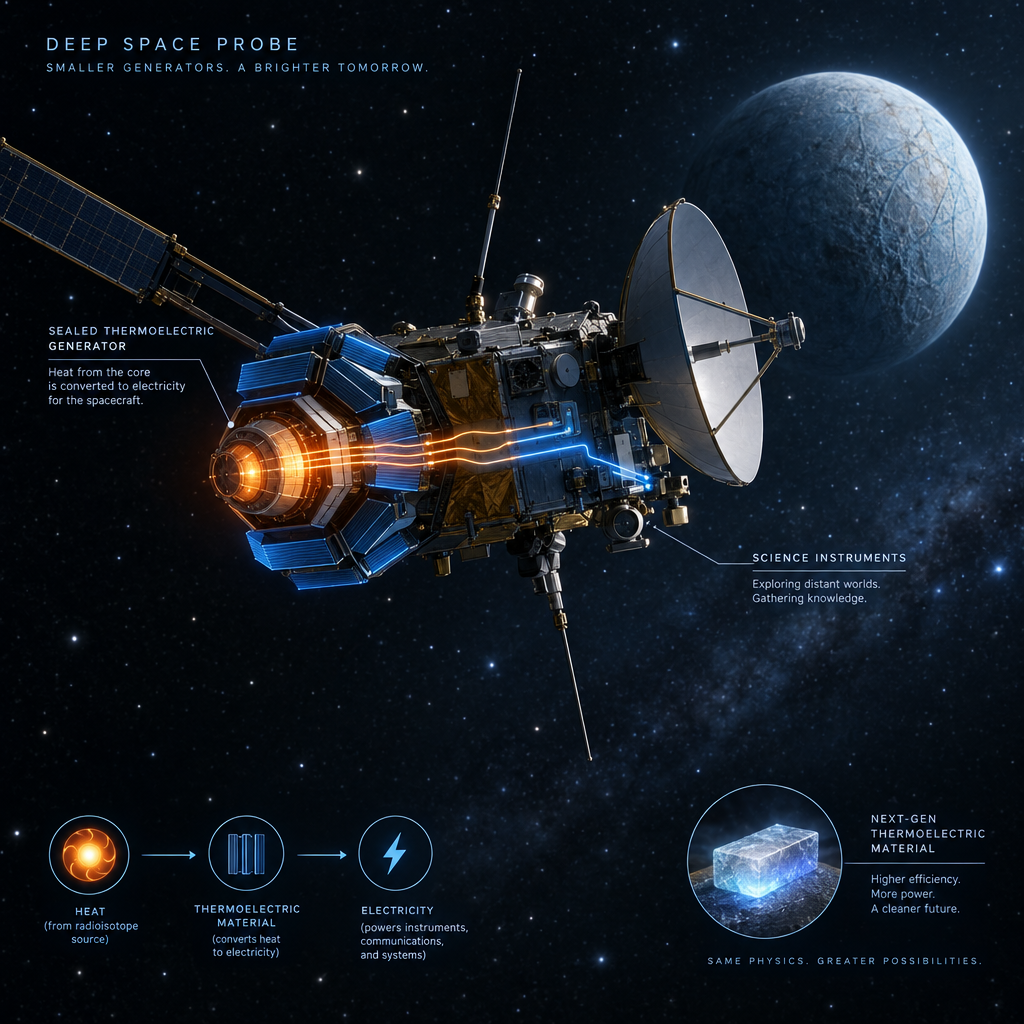
    When a spacecraft ventures far from the Sun—or equipment must operate somewhere difficult to reach and maintain—ordinary power sources can become impractical. Radioisotope thermoelectric generators, or RTGs, offer a different approach: they convert heat released by radioactive decay into electricity through the Seebeck effect.

    A November 2024 review by Muhammad Bilal Naseem, Junho Lee, and Su-Il In surveys how these generators work and why they matter. RTGs have a long-standing role in the power needs of interplanetary and interstellar missions, and their ability to serve hard-to-reach locations makes them relevant wherever recharging or replacing a power source is challenging.

    The review examines RTG operating principles and architecture while taking stock of obstacles to further development. It also looks toward possible advances, including improvements in thermoelectric materials and the use of alternative radioisotopes.

    That future remains open-ended. The review explores potential directions, but does not establish which applications will prove operationally or commercially viable. Its central message is that RTGs remain a compelling technology for demanding environments—and that materials and isotope choices may shape what comes next.

  • When the Road Demands Your Full Attention

    When the Road Demands Your Full Attention

    For Arsyad, a familiar drive could become unsettling if hallucinations began pulling his attention away from the road. Someone close to him might notice and worry—not because a diagnosis alone determines whether he can drive, but because what he experiences could affect the task in front of him.

    Austroads’ guidance on psychiatric conditions and driving explains that changes in perception, behaviour and thinking can matter behind the wheel. Hallucinations may distract a driver or occupy their attention; delusions may influence decisions. Concentration, processing speed and the ability to manage distractions are also part of driving safely.

    But the guidance cautions against treating every person—or every moment—the same. The effects of psychiatric conditions can vary from one individual to another and over time. Evidence connecting psychiatric illness to crash risk is limited, although some studies suggest increased risk for certain conditions. That is why the guidance recommends an individualized assessment rather than assuming driving ability from a diagnosis alone.

    Medication is another consideration. Some psychiatric medicines may affect alertness, perception, coordination or other skills relevant to driving, and their effects should be considered individually.

    Arsyad is fictional, and this scenario does not explain why he might hallucinate or imply a diagnosis. It simply illustrates the guidance’s central point: concerns about driving should focus on how a person’s experiences and any medication affect their abilities—not on a label alone. The article is general guidance, not Singapore-specific legal advice.

  • Broken-Heart Syndrome: Serious Risks, and What the Numbers Really Mean

    Broken-Heart Syndrome: Serious Risks, and What the Numbers Really Mean

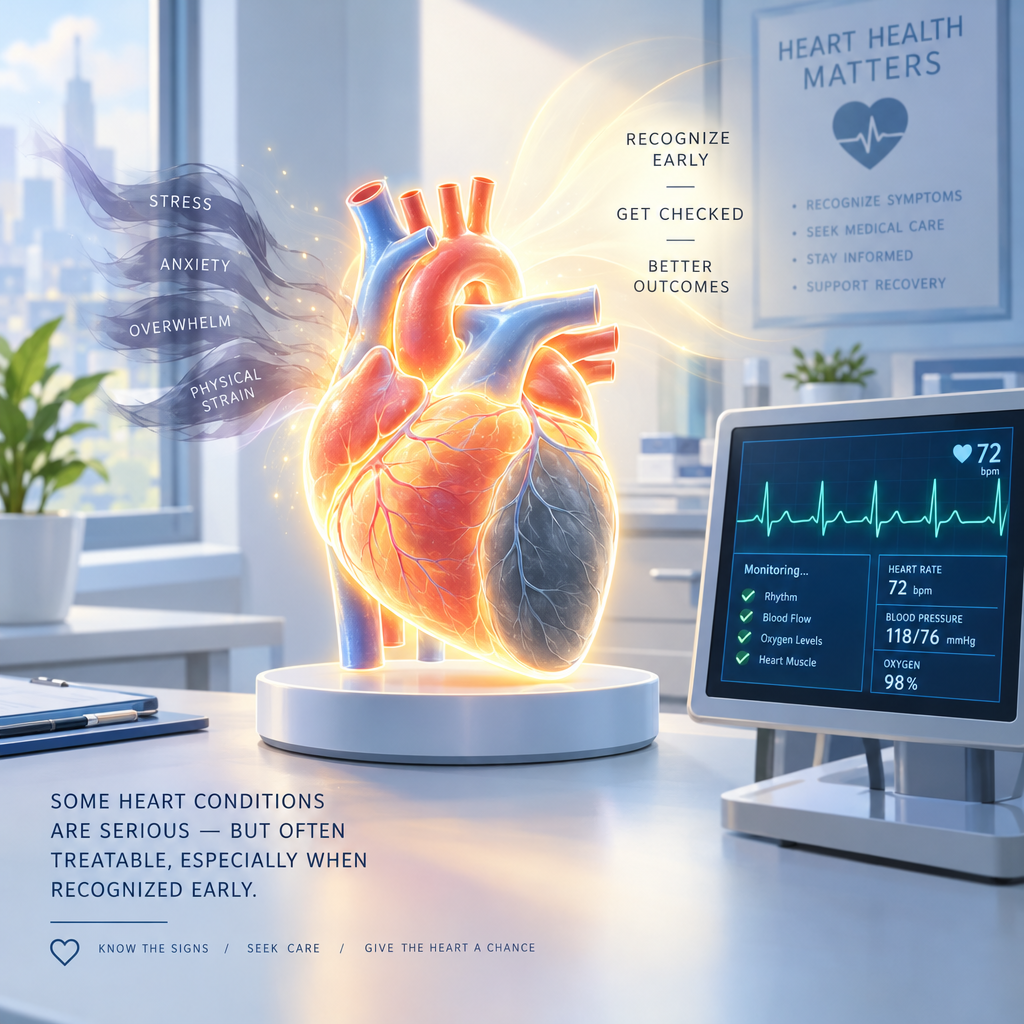
    “Broken-heart syndrome” may sound like a figure of speech, but Takotsubo cardiomyopathy is a real condition: part of the heart temporarily weakens, sometimes after intense emotional or physical stress. Its symptoms and test results can resemble a heart attack, making prompt recognition important.

    A U.S. analysis of hospital records examined 199,890 adults diagnosed with the condition from 2016 to 2020. Among these hospitalized patients, 6.5% died in the hospital, and that rate did not significantly improve during the study period. Women made up 83% of cases, yet the reported in-hospital death rate was higher among men: 11.2%, compared with 5.5% among women.

    The analysis also reported substantial complications. Congestive heart failure occurred in 35.9% of cases, atrial fibrillation in 20.7%, cardiogenic shock in 6.6%, stroke in 5.3% and cardiac arrest in 3.4%.

    Researchers say the condition may be related to a surge of stress hormones and call for prompt diagnosis and monitoring, as well as more research into treatment and the difference in outcomes between men and women.

    These figures need careful interpretation. They describe hospitalized people diagnosed with Takotsubo cardiomyopathy—not the risk faced by someone experiencing grief, a breakup or another stressful event. The analysis relied on hospital coding, did not include outpatient cases and may have been affected by coding errors, repeat hospitalizations and other conditions that contributed to deaths. The findings point to a serious hospital condition, but they do not show that heartbreak commonly causes death.