Author: jskills-class

  • Why the Sky Is Blue—and Why It Changes at Sunrise

    Why the Sky Is Blue—and Why It Changes at Sunrise

    On a clear day, the sky’s blue color comes from sunlight interacting with Earth’s atmosphere. Sunlight contains all the colors we can see, and each color has a different wavelength. As sunlight passes through the air, tiny molecules scatter shorter wavelengths—especially blue and violet—more than longer ones. This effect is called Rayleigh scattering.

    So why does the sky look blue rather than violet? Human eyes are more sensitive to blue, and the Sun emits more blue than violet light. The result is the familiar color overhead. Near the horizon, the sky often looks paler because the scattered blue light travels through more air and is scattered away from our view.

    At sunrise and sunset, sunlight takes an even longer path through the atmosphere. Much of its blue and violet light is scattered out of view, leaving more reds, oranges, and pinks to reach our eyes.

    The same principle helps explain two other sky effects: at higher elevations, the sky can appear a darker blue, while space looks black because there are so few molecules there to scatter sunlight.

  • From Sunlight to Sugar: The Two Stages of Photosynthesis

    From Sunlight to Sugar: The Two Stages of Photosynthesis

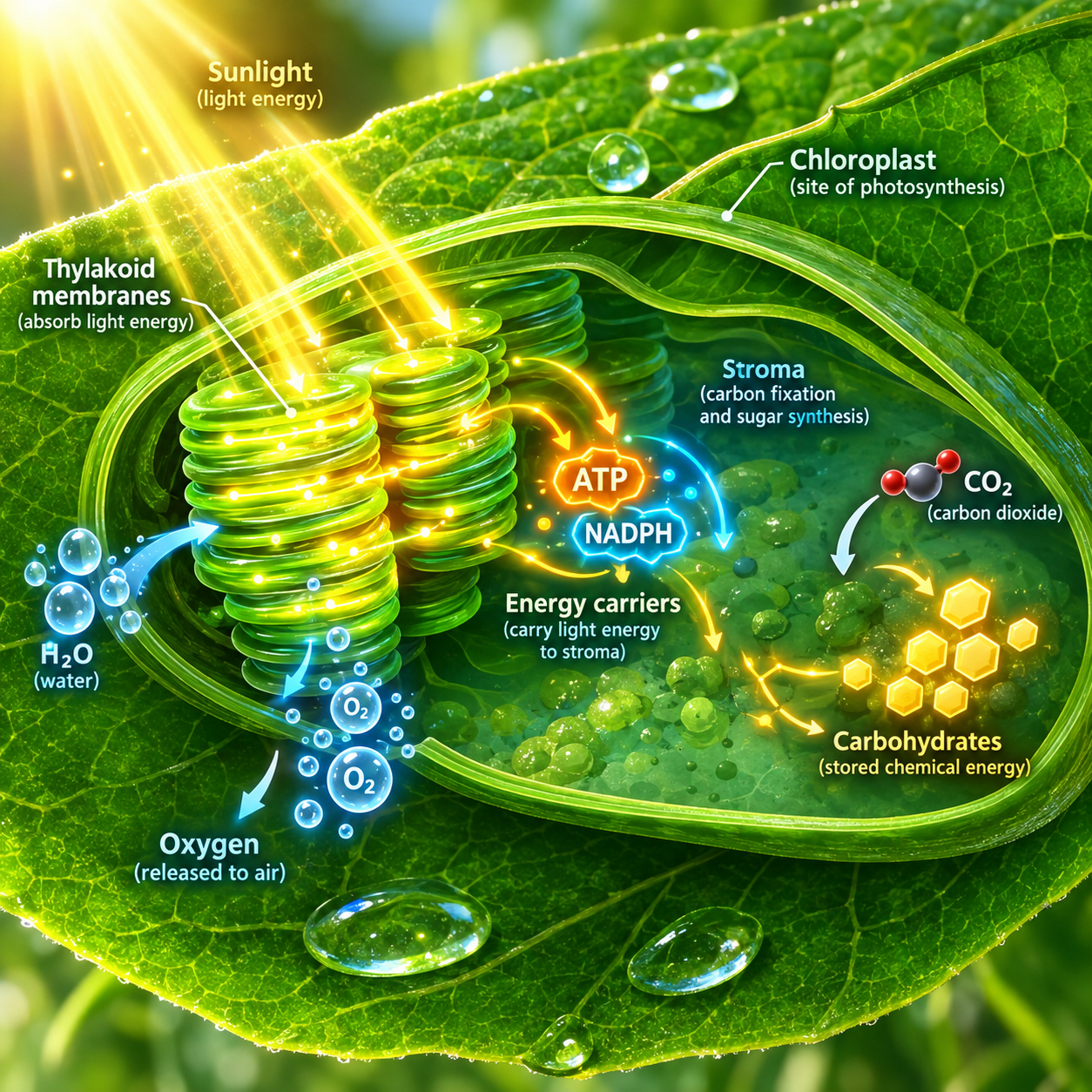
    A leaf does more than catch the light. Inside its chloroplasts, photosynthesis transforms that light energy into chemical energy stored in carbohydrates.

    The process unfolds in two connected sets of reactions. First, the light-dependent reactions take place in the chloroplast’s thylakoid membranes. Chlorophyll absorbs light, helping split water molecules. Oxygen is produced, while energy is captured in ATP and NADPH.

    Next, in the chloroplast’s stroma, the light-independent reactions use ATP and NADPH to build carbohydrates from carbon dioxide. These reactions do not directly require light, but they rely on the energy-carrying molecules made in the first stage.

    Taken together, the overall process uses carbon dioxide and water, with light energy, to produce carbohydrates and oxygen. Photosynthesis does not create energy; it changes its form—from light into chemical energy that can be stored in carbohydrates.

  • You Can’t Fix Him: The Choice That Separates Haymitch and Snow

    You Can’t Fix Him: The Choice That Separates Haymitch and Snow

    It’s tempting to look at a character shaped by pain and imagine that enough love could put him right. But in *The Hunger Games*, hardship does not lead everyone down the same path—and it does not excuse what they choose to do with it.

    Coriolanus Snow and Haymitch Abernathy are both formed by violence and instability. Snow’s past includes war, hunger, humiliation, and uncertainty. The essay argues that his fear of powerlessness hardens into a need for control. His relationship with Lucy Gray makes that impulse especially clear: rather than meeting her with mutual care, he treats love as something to possess.

    Haymitch’s pain takes a different shape. Traumatized and bitter, he turns toward self-destruction and often pushes others away. Yet he remains capable of caring for Katniss and Peeta. His suffering helps explain his damage, but it does not erase the connection he is still able to offer.

    That is the essay’s sharpest contrast: Haymitch turns his pain inward, while Snow uses his to justify dominating other people. Their stories are not a contest over who endured more. They are about the moral choices each makes in response to suffering—and why compassion cannot simply “fix” someone who chooses control over care.

  • The Freedom of Being a Beginner: Why It’s Never Too Late to Learn

    The Freedom of Being a Beginner: Why It’s Never Too Late to Learn

    Starting something new in midlife can feel less like an adventure and more like stepping into the spotlight before you know your lines. The awkwardness of being a novice—not age alone—can be enough to keep people from trying. Tom Vanderbilt’s guide makes the case for moving past that discomfort and discovering what learning can add to life.

    The rewards reach beyond mastering an activity. A new pursuit can bring pleasure, expand how you see yourself, and open up possibilities you hadn’t considered. Learning also exercises the brain’s ability to adapt. And it doesn’t have to lead to a job, a side business, or a career advantage to be worthwhile.

    The first step is to make the goal manageable. A distant, ambitious target can be discouraging, so break it into smaller steps you can observe and celebrate. Give interest time to grow, too: struggling at the beginning doesn’t necessarily mean you’ve chosen the wrong thing. Sometimes enjoyment follows sustained effort rather than arriving before it.

    Mistakes belong in the process. Vanderbilt points to infants learning to walk as a reminder that errors and repeated attempts are part of developing a skill. For adults, the challenge may be allowing those imperfect attempts to happen without treating them as a public verdict on our ability. Think of early practice as experimentation, not a job performance review.

    It also helps to stay open to correction and to recognize the limits of what you know. Learning alongside other people—in a class or community—can offer structure and motivation, while giving you a chance to learn from others’ questions and mistakes as well as your own.

    There’s no promise that everyone will learn at the same pace or reach the same level of proficiency. But you don’t need to know how far you’ll go before you begin. You only need room to be a novice: to try, stumble, adjust, and find out what the experience makes possible.

  • Honda Civic vs Toyota Corolla: Space and Spark or Savings and Simplicity?

    Honda Civic vs Toyota Corolla: Space and Spark or Savings and Simplicity?

    Choosing between the Honda Civic and Toyota Corolla comes down to what matters most: a roomier, more engaging hatchback, or a lower-priced, easygoing hybrid with a standout warranty offer.

    In Motorpoint’s comparison of UK-market models, the Civic makes a strong case on practicality. It is longer than the Corolla—4,560 mm versus 4,370 mm—and has a 410-litre boot. The Corolla’s boot ranges from 313 to 361 litres, depending on engine. The review also describes the Civic’s rear legroom as generous, while finding the Corolla’s back seat cramped for adults.

    The difference continues on the road. The Civic’s 2.0-litre hybrid produces 181 hp and reaches 62 mph in eight seconds. Motorpoint describes it as responsive and engaging, with a firm but comfortable ride, and says it can achieve up to 56 mpg. The Corolla is presented as the more relaxed choice: careful driving may return more than 60 mpg, but its engine can sound noisy and strained when accelerating, and it is less entertaining to drive.

    Inside, both cars keep physical buttons and dials and support wireless phone mirroring. Motorpoint gives the Civic the edge for cabin feel, citing sturdier-feeling controls and better materials. Neither infotainment system is considered best in class.

    Price may pull buyers in the other direction. The article puts approximate new-car prices at £30,000–£35,000 for the Corolla and nearly £34,000–£40,000 for the Civic. It notes that the Civic’s entry trim is better equipped than the Corolla’s. The Corolla counters with a service-activated warranty of up to 10 years, while the Civic is described as having an average warranty.

    The takeaway: the Civic looks like the stronger fit for drivers who value passenger and cargo space, a more premium-feeling cabin and greater driving enjoyment. The Corolla may appeal more to those seeking a lower purchase price, straightforward motoring and its service-activated warranty.

    These prices and comparisons apply to the UK-market versions discussed in the article; they should not be assumed to apply in Singapore or elsewhere. The comparison also does not establish which car will be more reliable over the long term.

  • Nicotine: A Brief Boost with a Very Long Fine Print

    Nicotine: A Brief Boost with a Very Long Fine Print

    Nicotine may offer a short-lived bump in alertness, focus, mood, or appetite suppression. A temporary perk, apparently, is supposed to distract from the addiction risk and the fact that it isn’t a lasting health benefit. And if smoking seems to calm stress, cravings and withdrawal can help keep that little cycle going. Nicotine patches, gum and lozenges are the exception with a purpose: they’re designed to help people quit smoking—not to make nicotine a wellness strategy.

  • AI Is Changing Accountancy—Not Erasing It

    AI Is Changing Accountancy—Not Erasing It

    Will artificial intelligence eliminate the accounting profession, or reshape it? In Singapore, the more immediate shift is in the work itself: AI is taking on repetitive, data-heavy tasks, while accountants’ roles increasingly centre on interpreting results, applying judgment and taking responsibility.

    AI tools can analyse large populations of transactions and flag unusual items for auditors to review. They can automate reconciliations, match records across systems and help draft disclosures from structured data. These capabilities may reduce routine processing, particularly in junior roles, but they also make digital literacy, data interpretation and analytical thinking more important.

    That change does not remove the need for professional accountability. AI can process information, but accountants remain responsible for reviewing it, exercising professional judgment and standing behind the work. This is especially important in assurance, where generative AI is being used cautiously for tasks such as summarising documents, extracting data, supporting research and drafting. Sources, evidence and consistency with professional standards still need to be checked, since AI outputs can be inaccurate.

    The figures cited in the article offer a snapshot of Singapore’s evolving sector. ISCA student membership grew by 50% in 2025, while fewer than 1% of ISCA members sought unemployment support that year. ACRA’s 2025 survey found that 85% of accounting entities had adopted at least one technology solution, up from 70% in 2023. The article also cites a 2025 trust survey in which 85% of senior business leaders in Singapore said they trusted Chartered Accountants to do the right thing.

    These numbers do not settle the question of how AI will affect every accounting job. The article presents the perspective of ISCA’s CEO, and it does not provide detailed methodology for the reported figures. But its central message is clear: as technology changes the tasks accountants perform, human judgment, careful review and accountability remain essential.

  • Building Johor’s Digital Workforce, One Skill at a Time

    Building Johor’s Digital Workforce, One Skill at a Time

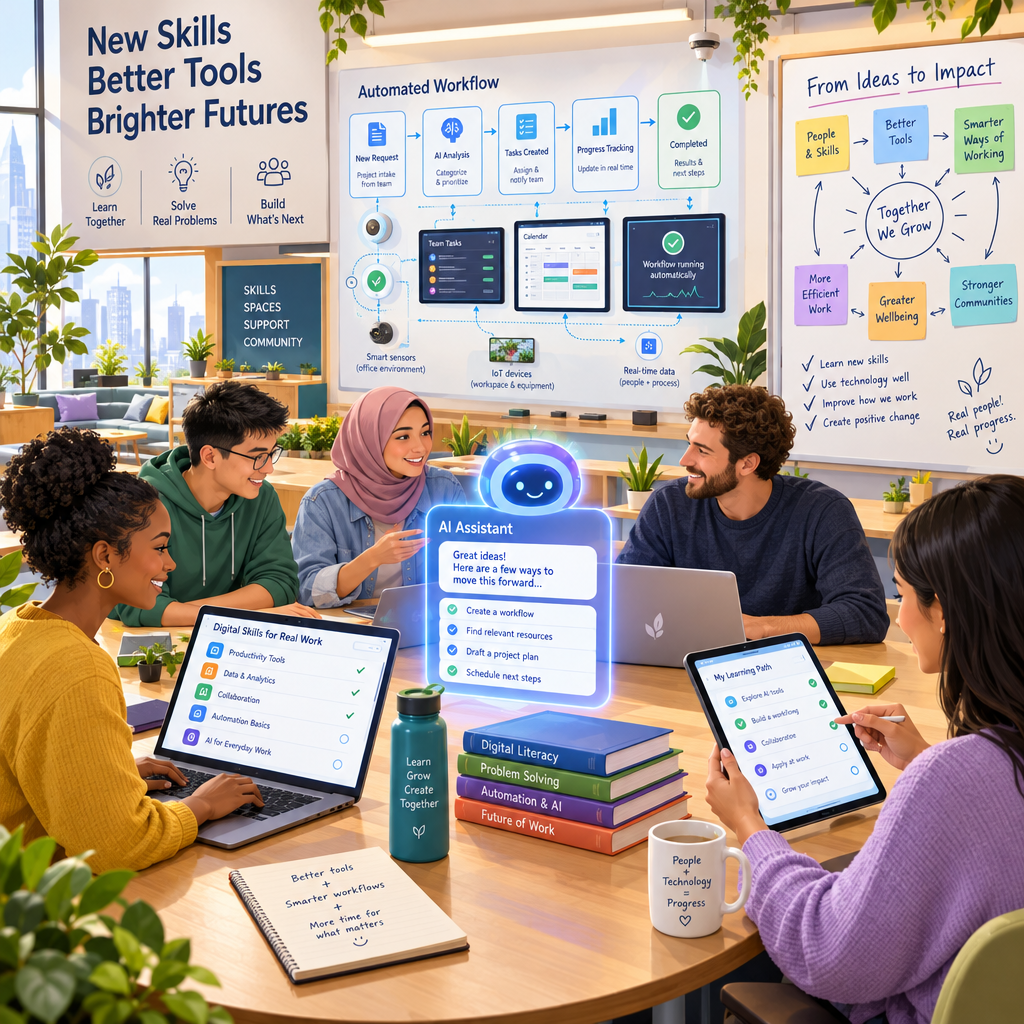
    A nine-day programme bringing together 50 participants is putting digital skills and operational excellence at the center of workforce development in Johor.

    The Digital Mastery & Lean Excellence Programme is delivered by Johor Skills Development Centre (JSkills) and the Johor Talent Development Council (JTDC), in collaboration with Singapore’s Republic Polytechnic. The initiative is funded by the Johor State Government.

    Its curriculum spans four areas: professional development, Agentic AI, workflow automation, and Lean transformation and the Internet of Things (IoT). Together, these themes connect personal and professional growth with emerging digital tools and approaches to improving work processes.

    The programme is framed as part of the effort to support the Johor–Singapore Special Economic Zone by developing a skilled workforce ready for future industry needs. Its central message is clear: preparing for that future means building capabilities across people, technology, and the way work gets done.

  • A Bigger Bite Out of the Budget: McDonald’s Japan Raises Prices

    A Bigger Bite Out of the Budget: McDonald’s Japan Raises Prices

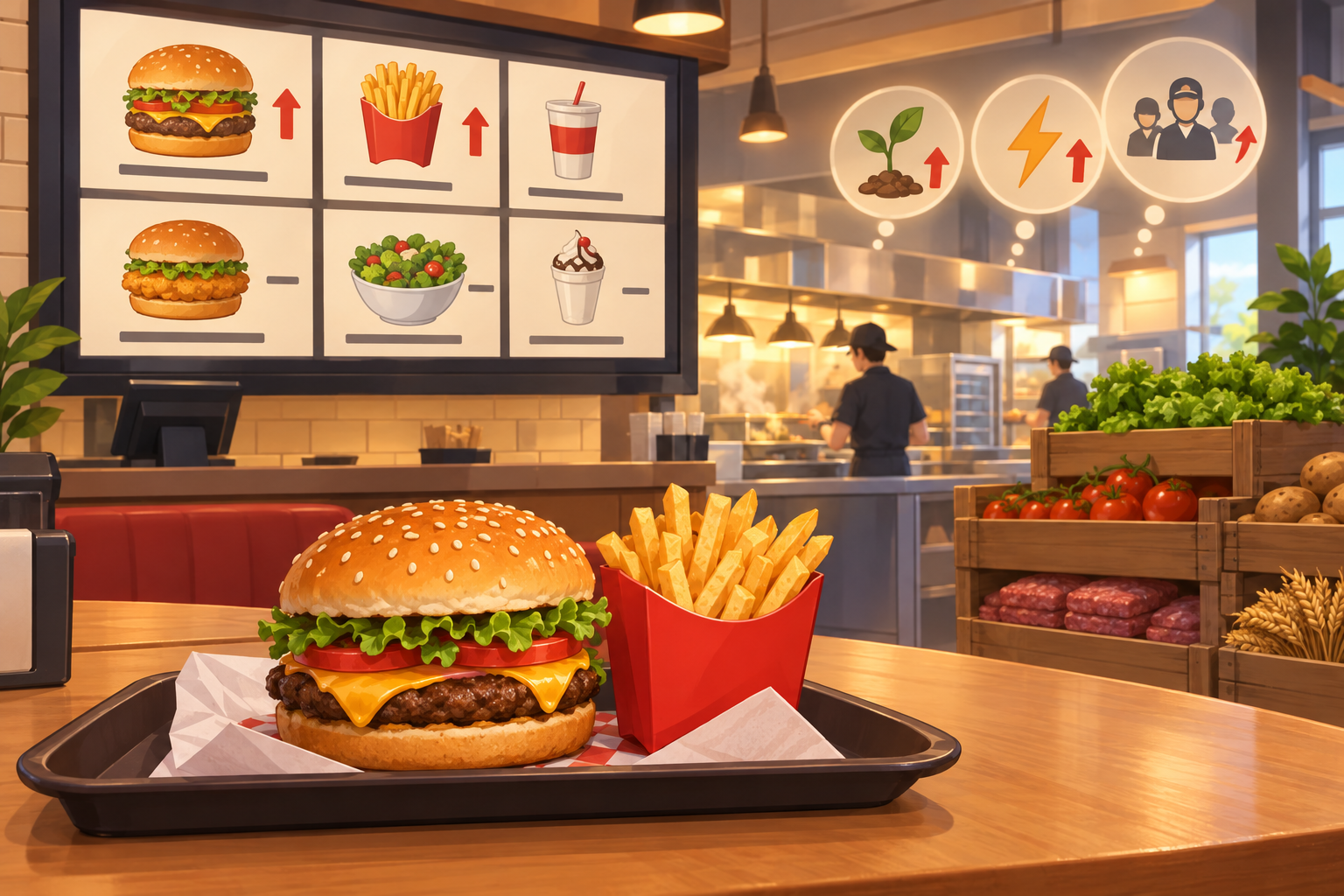
    McDonald’s Japan is raising prices on about 60% of its menu, with the changes taking effect February 25, 2026. The increases range from ¥10 to ¥50, as the company points to higher ingredient, energy and labor costs.

    Some familiar favorites will cost more. The tax-inclusive price of a Big Mac is set to move from ¥480 to ¥500, while each size of French fries and the cheeseburger will rise by ¥20. Other items, including the hamburger and Teriyaki McBurger, are to keep their existing prices.

    The adjustment won’t be identical everywhere: prices may vary at airports and urban locations, as well as for delivery orders. The report does not break down how much each rising cost contributed to the changes or assess what they may mean for customers, sales or company profits.

  • Body Odour: Common, Manageable, and Worth Talking About

    Body Odour: Common, Manageable, and Worth Talking About

    Body odour is common, and in many cases a few practical habits can help keep it under control. The NHS recommends washing and thoroughly drying areas such as the armpits, groin and feet, using deodorant or antiperspirant, and changing and washing clothes regularly.

    Odour can become more noticeable for a range of reasons, including exercise, hot weather, hormonal changes, some health conditions and certain medicines. That means a change in body odour is not, by itself, proof of poor hygiene.

    If self-care does not help, the odour changes noticeably, or it begins to affect your self-esteem, the NHS advises seeking medical advice. Body odour can feel awkward to discuss, but it is common—and asking for help is a reasonable next step.