Author: jskills-class

  • JSkills Joins ICDL’s Accredited Test Centre Network in Malaysia

    JSkills Joins ICDL’s Accredited Test Centre Network in Malaysia

    Johor Skills Development Centre (JSkills) has joined ICDL’s network as an Accredited Test Centre in Malaysia, bringing internationally recognised digital-skills certifications into the centre’s workforce-development ambitions.

    Established by Johor Corporation, JSkills is a technical and vocational education and training institution focused on developing skilled, industry-ready talent. Its programmes span areas including advanced manufacturing, automation and Industry 4.0, digital technology and AI, electrical and electronics, safety and industrial management, and smart-industry solutions.

    The centre works with employers, government agencies, technology providers and academic institutions. The announcement positions its work as part of efforts to support workforce needs associated with Johor’s growth and the Johor–Singapore Special Economic Zone.

    JSkills plans to incorporate ICDL certifications into its training ecosystem, with the stated goal of strengthening trainees’ digital competencies and employability. It also plans awareness campaigns for students and local communities.

    The announcement does not identify which ICDL certification modules JSkills will offer or say when testing or training will begin. Nor does it provide independent evidence of employment outcomes from the partnership. For now, the development marks a new step in JSkills’ plans to connect digital-skills certification with its broader training offer.
  • Shin-chan’s First 3D-CG Movie Keeps the Franchise’s Cheeky Spirit

    Shin-chan’s First 3D-CG Movie Keeps the Franchise’s Cheeky Spirit

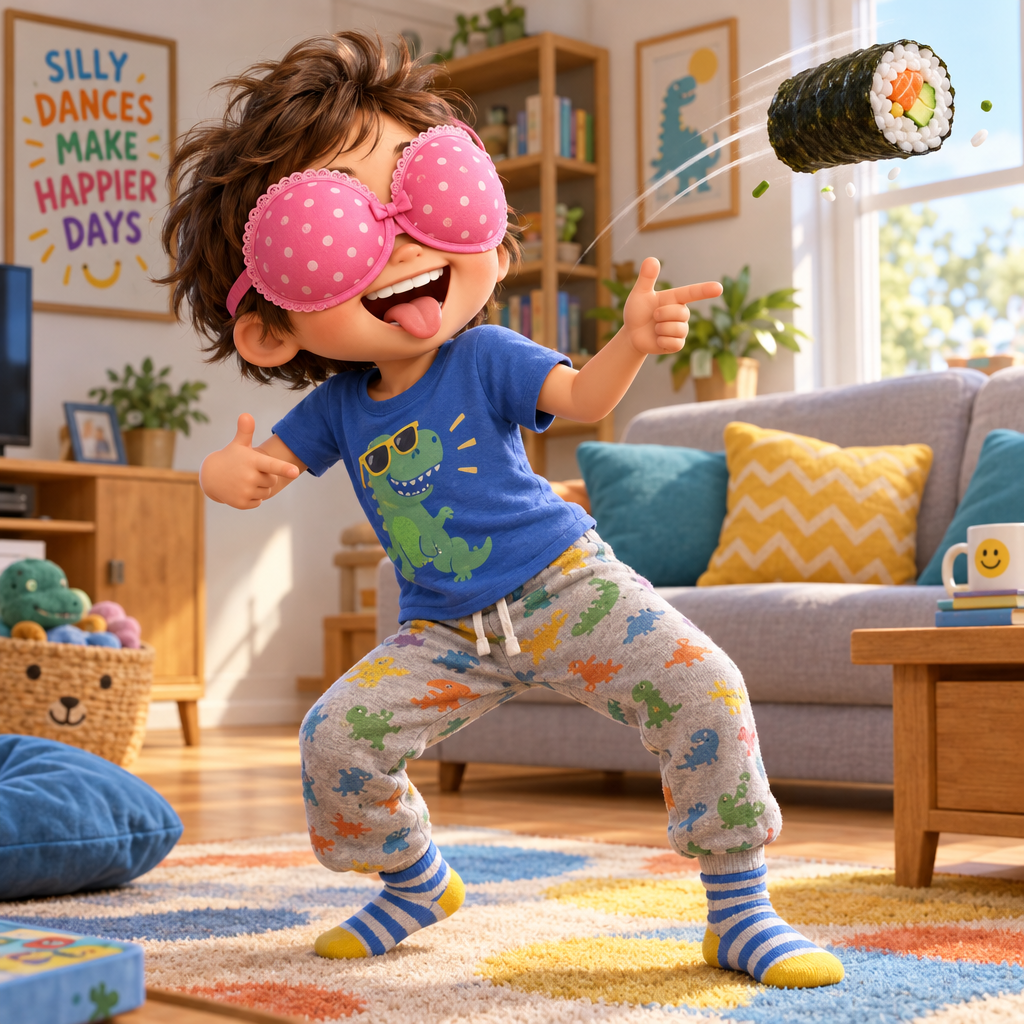
    A bra over the eyes, a shaking butt—and a new dimension for Shin-chan. The trailer for *New Dimension! Crayon Shin-chan the Movie: Super-Powered Climactic Battle—Soaring Hand-Rolled Sushi* offers a brief gag that feels right at home in the franchise’s irreverent comedy.

    The film marked the *Crayon Shin-chan* franchise’s first 3D-CG anime movie and its 31st theatrical release at the time. Shirogumi Inc. handled the animation, with Hitoshi Ōne directing and writing the screenplay.

    The Japanese theatrical release was set for August 4, 2023. The trailer’s quick glimpse of Shin-chan’s antics gives the new visual format a distinctly familiar introduction.

  • Doraemon’s Journey: How a Blue Robot Cat Became a Cultural Bridge in Vietnam

    Doraemon’s Journey: How a Blue Robot Cat Became a Cultural Bridge in Vietnam

    When Doraemon arrived in Vietnam in 1992, it came through comic books translated from Thai. The television series followed in 2000. Over time, the character became popular with Vietnamese children across generations—and, according to Thanh Tuan Le’s study, came to represent more than entertainment.

    The article examines Doraemon as an example of Japan’s cultural “soft power”: the ability of popular culture to shape connections and perceptions. It considers how the character was introduced and localized in Vietnamese cultural life, the people-to-people exchanges associated with its popularity, and the stakeholders involved in spreading it.

    Based on documentary research and the Doraemon case, Le concludes that the character helped promote Japanese culture, support cultural diplomacy, and foster people-to-people connections. The study also links Doraemon’s presence to a positive image of Japan among Vietnamese audiences.

    The case offers a possible lesson for Vietnam, too. The author suggests that distinctive characters and cultural symbols can help a country develop its own cultural influence. Doraemon’s journey shows how a familiar fictional figure can become a point of connection between audiences in two countries—though this focused case study does not provide a comprehensive history of the character or detailed evidence behind each conclusion.

  • 85 Years of Tom and Jerry: The Chase That Never Gets Old

    85 Years of Tom and Jerry: The Chase That Never Gets Old

    For 85 years, a cat and a mouse have turned a simple chase into a source of laughter, comfort and childhood memories. Marking the anniversary of *Tom and Jerry*, a retrospective feature looks back at the cartoon’s 1940 debut and the appeal that has carried its familiar rivalry across generations and language backgrounds.

    Created by William Hanna and Joseph Barbera, the series began with the short *Puss Gets the Boot*. Its enduring formula is easy to recognize: Tom pursues Jerry, the chase escalates, and slapstick takes over. With little reliance on dialogue, the comedy can travel through expressions, movement and timing.

    That rhythm is part of what viewers remember. In recollections shared by the article’s interviewees, the cartoons are funny and comforting, closely tied to childhood and time spent with family. An illustrator and an animation-studio executive also point to the expressive detail of the older films and the frame-by-frame work behind them, contrasting that process with later digital production. The animation has changed over time, but Tom and Jerry’s essential rivalry remains recognizable.

    The anniversary feature also makes room for a more cautious view. A child psychology consultant highlights physical aggression, deception and manipulation in the cartoons, and suggests that parents talk with children about what they watch. It is a reminder that a beloved comedy can prompt conversation as well as laughter.

    The feature’s portraits and recollections don’t amount to a comprehensive history or a measured study of popularity. But they do capture why the chase still resonates for many viewers: its visual humor is familiar, its characters are instantly recognizable, and its memories often belong to more than one generation.

  • Small Words, More Considerate Moments

    Small Words, More Considerate Moments

    Everyday conversations can feel like a string of transactions: place an order, make a request, move on. In “7 Polite Phrases That Are Still Worth Saying,” TIME’s Angela Haupt revisits familiar expressions that etiquette experts say can make those moments more considerate.

    One simple example is “hello.” The article recommends greeting someone before asking for something—saying hello to a barista before ordering, for instance. The same courtesy applies to coworkers and building receptionists. A greeting acknowledges the person you’re speaking to instead of treating the exchange as purely transactional.

    The other expressions highlighted include “please,” “thank you,” “may I,” “my pleasure,” “excuse me” or “pardon me,” and friendly forms of address such as “friend” or “neighbor.” They may be familiar, but the article’s point is that these small phrases still have a place in everyday etiquette.

    The piece offers expert perspectives and practical examples, rather than research measuring the effects of greetings. Its reminder is more straightforward: before getting to the request, take a moment to recognize the person on the other side of the conversation.

  • Cendol’s Biggest Threat May Be the Mixing Spoon

    Cendol’s Biggest Threat May Be the Mixing Spoon

    Cendol—rice-flour jelly with palm sugar and coconut milk—looks like a simple treat. But a study observing 90 small vendors in Bogor found nine potential critical food-safety points across 14 preparation steps for lower-scale cendol vendors. Ice, water, coconut milk, syrup, and the washing, crushing, and storage of ice all made the list. So did the final mixing step, where hands or utensils could introduce cross-contamination. The paper also flagged possible microbial hazards from unsafe water or ice, and chemical risks such as unauthorized dyes or excessive artificial sweeteners in homemade syrup. A crucial, less-clicky detail: researchers identified potential hazards; they did not test the cendol for contamination. This isn’t proof that the observed drinks—or cendol everywhere—were unsafe. It is a reminder that even a humble mixing step can deserve more attention than its glamorous job title suggests.

  • 916 or 999 Gold? What Singapore Buyers Should Check Before They Buy

    916 or 999 Gold? What Singapore Buyers Should Check Before They Buy

    Choosing between 916 and 999 gold starts with understanding what the numbers mean. They describe fineness: the share of gold in 1,000 parts of a material. 916 gold contains 91.6% gold and is commonly associated with 22-karat jewellery; 999 gold contains 99.9% gold and is commonly sold as 24-karat gold. Some fine gold bars are marked 999.9, meaning 99.99% gold—so it pays to check the precise specification of the item rather than assume similar labels mean the same thing.

    But a purity mark alone won’t tell you whether a piece suits your needs. For jewellery you plan to wear often, look closely at fit, thickness, construction and comfort. Check the links and clasp, notice any projecting details, and ask whether the piece is hollow or solid if that isn’t clear. For occasional wear or a gift, ease of use, style and the recipient’s size preferences may matter more.

    When comparing pieces, put the exact details side by side: purity, stated weight, dimensions and full price. A heavier piece isn’t automatically the better choice for its wearer, and a price difference may reflect weight, design or construction.

    Before ordering, confirm the gold marking and the item’s exact size or weight. Review the measurements and fastening details, read the delivery and exchange terms, and keep the order confirmation and product information. The guide offers no universal winner between 916 and 999—and no fixed price gap or guaranteed resale outcome. The better choice depends on the particular piece and what you want from it.

  • Nayeon’s ‘NA-sty’ Era: A Confident New Side, With a Twist

    Nayeon’s ‘NA-sty’ Era: A Confident New Side, With a Twist

    After about two years and five months away from solo releases, TWICE’s Nayeon is back with *NA-sty*, a three-track single led by “Baby Angel.” The title turns “nasty” into something distinctly hers, weaving in the first syllable of Nayeon’s name to signal a style all her own.

    That style, she says, holds more than one mood. Nayeon wanted the release to reveal different sides of her as an artist: confident and self-assured, but also playful and mischievous. The lead track’s contemporary R&B-pop sound sets the stage for that contrast. It includes a rap segment and, despite its sweet-sounding title, pairs its performance with powerful visuals that may surprise listeners.

    The single also makes room for a more personal touch. Nayeon participated in writing and composing “SHiVER,” a winter-themed song she hopes listeners will come to associate with the season. Alongside it, the release features the B-side “BOY.”

    As the solo comeback approaches, Nayeon has had encouragement from close by: her TWICE members sent congratulatory messages and a food truck. With three tracks exploring different shades of her personality, *NA-sty* introduces a solo era that is unmistakably Nayeon’s—bold, playful, and ready to keep listeners guessing.

  • Medusa’s Changing Face: From Monster to Beauty

    Medusa’s Changing Face: From Monster to Beauty

    Medusa is often remembered as the Gorgon whose gaze could turn anyone who met it to stone. But in art, her image has never stood still.

    In *Dangerous Beauty: Medusa in Classical Art*, Met curator Kiki Karoglou traces how artists reshaped Medusa and other hybrid figures from Greek myth. Beginning in the fifth century BCE, depictions increasingly presented Medusa as human and feminine—not only as a terrifying monster. The bulletin also features one of the earliest portrayals in Greek art of Medusa as a beautiful young woman.

    Across 48 pages, the story unfolds through objects ranging from Greek armor and drinking cups to funerary works, Neoclassical cameos, and 20th-century fashion. Together, they show how Medusa’s image traveled across materials and eras, taking on new forms and uses.

    Her influence reached well beyond visual art, inspiring artists and writers as well as psychoanalysts, feminist critics, political theorists, and designers. Rather than offering one definitive meaning for the myth, the publication follows the changing ways people have represented and interpreted Medusa—a figure whose beauty and danger have remained intertwined.