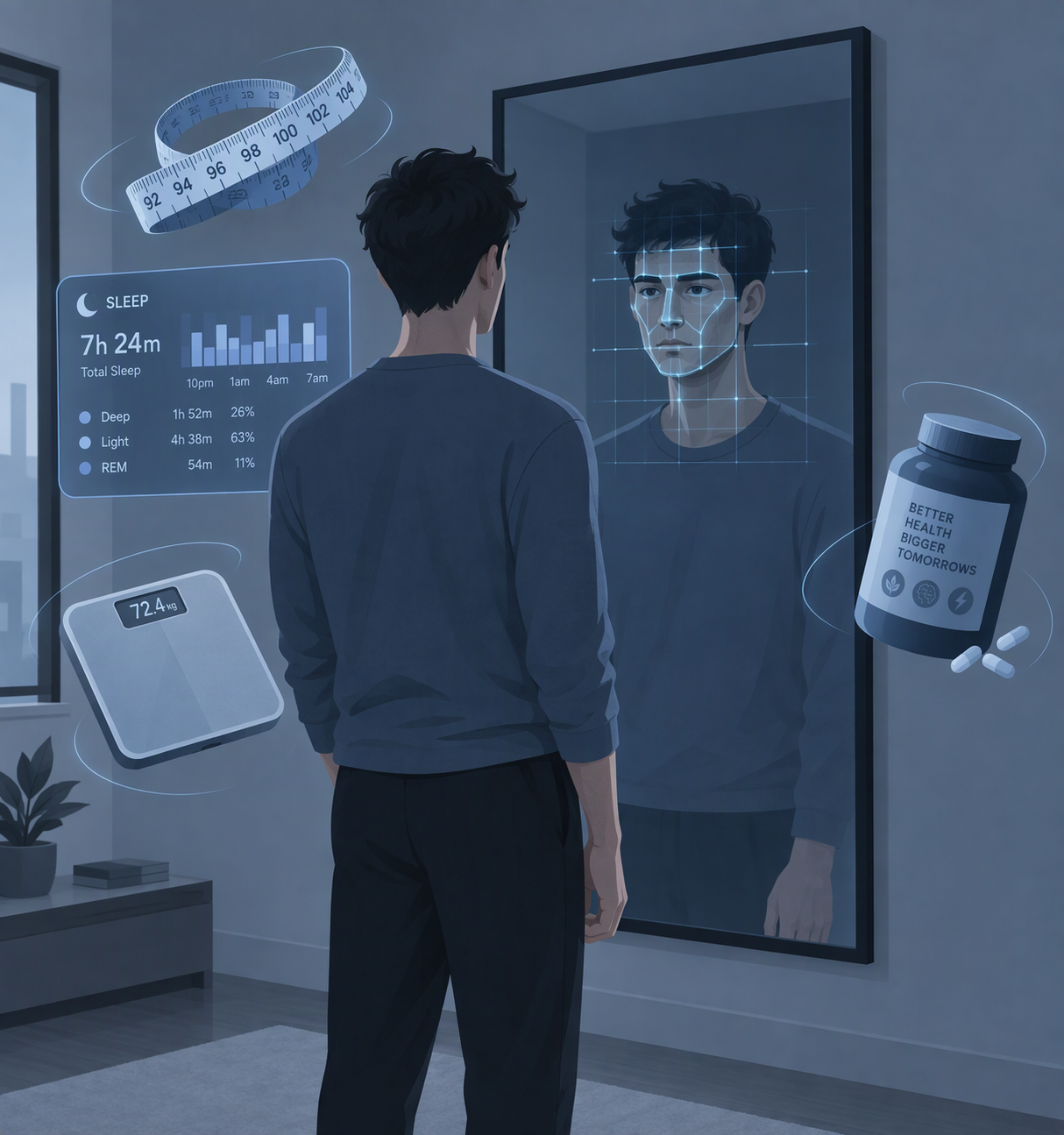
What if improving your appearance stopped being a haircut or a workout and became a project measured down to your jaw angles, body fat and sleep? ABC News’s report on “looksmaxxing” explores an online movement that encourages young men to maximise their physical attractiveness—and shows how a promise of self-improvement can become an intense focus on perceived flaws.
The movement spans a wide range of practices. “Softmaxxing” refers to familiar efforts such as grooming, dieting and exercise. “Hardmaxxing” describes more extreme approaches, including cosmetic procedures, experimental drugs and attempts to alter facial or body features. One practice named in the article is “bonesmashing”: striking facial bones in an attempt to change their appearance.
The report brings the trend into focus through Cyrus, a 20-year-old who closely monitors his body. He estimates his body fat at about 10 per cent and is trying to reach 100 kilograms. His routine includes counting calories, tracking sleep and measuring blood pressure and fasting blood glucose. He also tans to make his muscles look more defined, dyes his hair and eyebrows, and takes medications and supplements. The article does not identify what he takes.
Cyrus has said an echocardiogram found “very slight changes” to his heart. That detail is concerning, but the article does not establish that his looksmaxxing practices caused the finding. It is a distinction worth keeping in mind: a report of a health result is not, by itself, proof of what caused it.
Looksmaxxing communities also have their own vocabulary and systems for judging faces. Features such as jaw angles, eye shapes and proportions are assessed, while people may be ranked according to “sexual market value.” The article describes a scale known as PSL, running from “subhuman” through “normies” and “chadlites” to “Gigachad.” Other terms include “mewing,” tongue exercises purported to develop the jaw; “mogging,” physically outclassing someone; and a “failo,” a perceived flaw thought to lower someone’s attractiveness.
That language can make appearance seem like a competition with fixed scores—and can turn ordinary features into problems to solve. Yet the article does not confirm that practices such as mewing or bonesmashing produce the changes their proponents claim. Instead, it presents a movement with a broad range of approaches, from everyday grooming to extreme efforts, alongside concerns including self-harm, misogyny and persistent insecurity.
Looksmaxxing raises a question larger than any ranking: when does taking care of yourself become a relentless attempt to meet an impossible standard? The report’s account of Cyrus shows how closely that pursuit can involve measuring and trying to optimise the body. It also leaves an important uncertainty clear: neither a perceived flaw nor a reported health change tells the whole story on its own.
Source: Looksmaxxing: The business of telling young men they are not attractive enough, ABC News
Leave a Reply