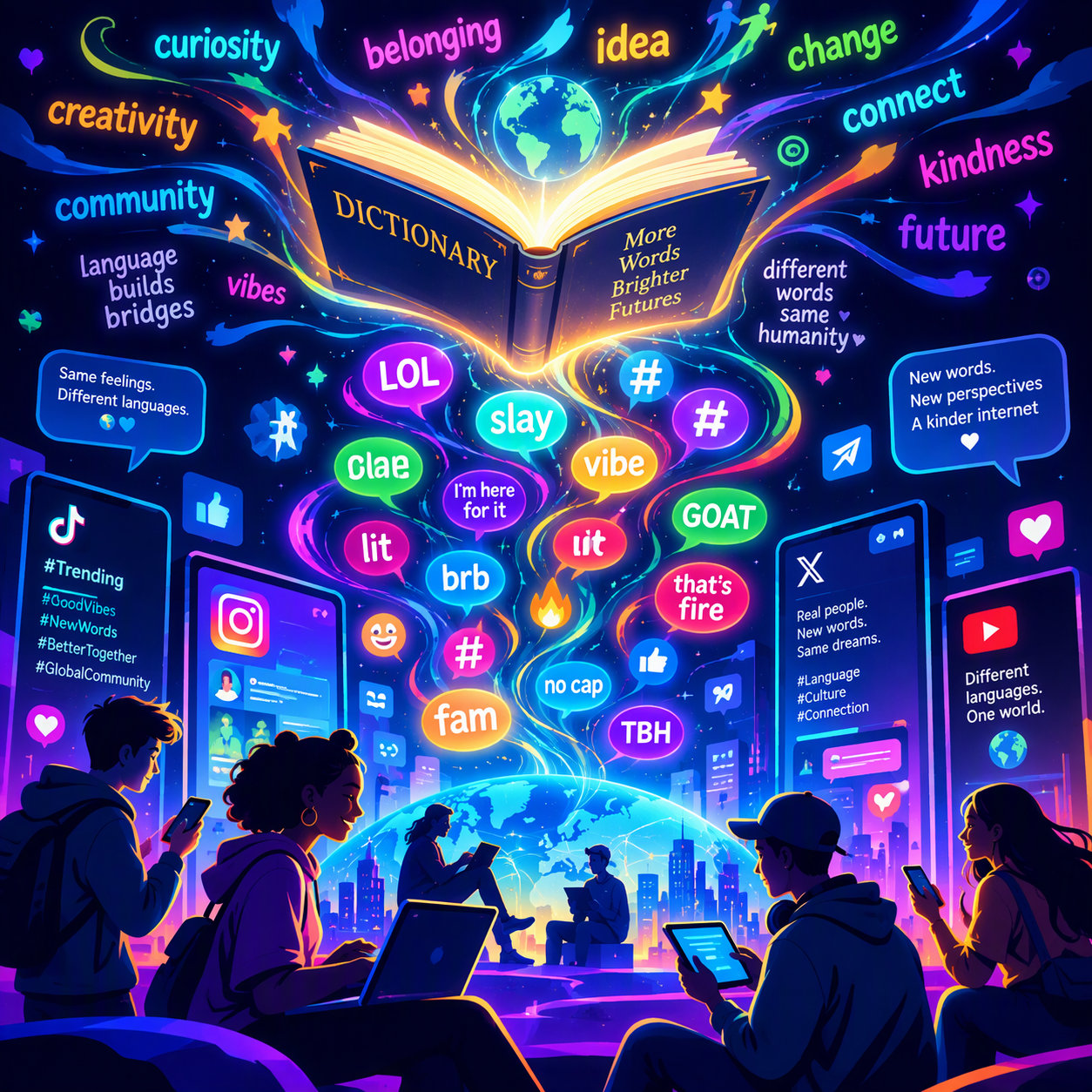
A word can begin as nonsense, travel across social media and end up in a dictionary. In 2025, “skibidi” was among more than 6,000 new words added to the Cambridge Dictionary—a sign of how online culture can leave its mark on the language people use.
The term is described as gibberish coined by the creator of an animated YouTube series, then popularised through social media. Its meaning depends on the moment: “skibidi” can suggest something is cool, suggest it is bad, or simply be a joke with no particular meaning. The dictionary gives its pronunciation as “SKIH-bih-dee.”
That slipperiness is part of what makes the word interesting. Many dictionary entries offer a neat definition, but “skibidi” asks readers to pay attention to context. Who is saying it? What is happening in the conversation? The same word can do different jobs, or no precise job at all. Its meaning is not fixed in a single phrase.
Cambridge Dictionary lexical program manager Colin McIntosh says internet culture is influencing English. University of Edinburgh sociolinguist Christian Ilbury also points to social media platforms such as TikTok, where many young people communicate. He notes that greater visibility can help words reach communities that may not have used them before.
But a word becoming visible online does not automatically make it a lasting part of English. Cambridge Dictionary tracks word use through the Cambridge English Corpus, a database containing more than 2 billion words of written and spoken English. McIntosh says the dictionary adds words it considers likely to have “staying power.” The article does not say whether “skibidi” will remain in use over time; its addition shows that the word has become notable enough to be recorded, not that its future is settled.
The story offers a small window into how language moves. A playful term can circulate in online spaces, gather different meanings and come to the attention of people who study language. Dictionaries, in turn, observe how words are used before deciding which ones may deserve a place in their pages.
So the next time a new expression appears in a video or a chat, it may be worth asking: Is it a passing joke, a useful new way to communicate, or both? “Skibidi” shows that even a word described as gibberish can prompt a serious question about how English keeps changing.
Source: Cambridge Dictionary adds ‘skibidi’ and ‘tradwife’ among 6,000 new words, The Associated Press
Leave a Reply