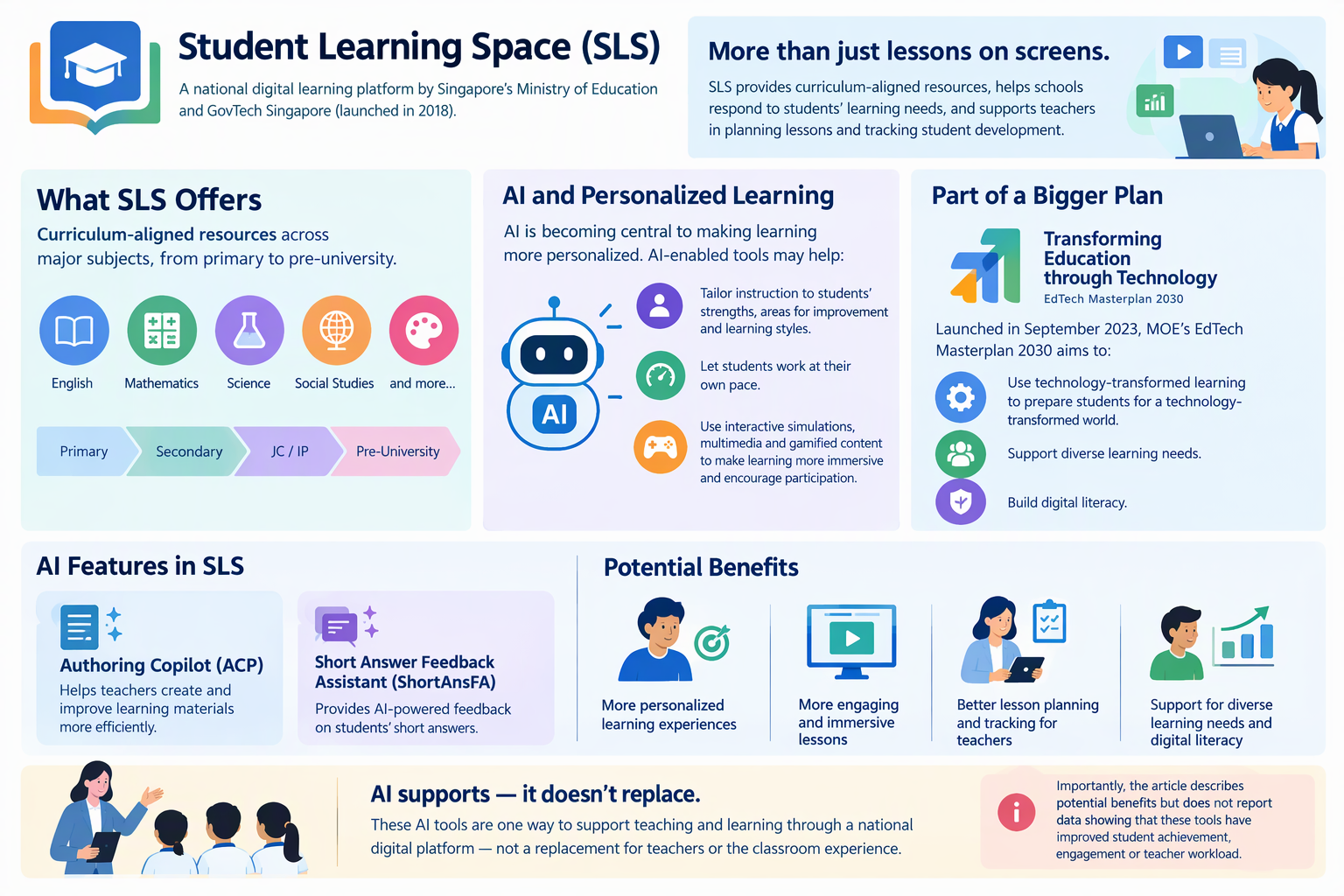
What might a digital learning platform do beyond putting lessons on a screen? In Singapore, the Student Learning Space (SLS) is being developed as a place where technology can help support both students and teachers—and artificial intelligence is becoming part of that effort.
SLS was launched in 2018 by the Ministry of Education (MOE) and GovTech Singapore. It is available to teachers and students in the national school system, with curriculum-aligned resources across major subjects, from primary to pre-university levels. The platform has also been updated over time in response to user feedback and changing educational needs.
The move to home-based learning during the pandemic made online learning platforms more important. The article explains that schools needed tools that could better respond to students’ learning needs, while also helping teachers plan lessons and track student development. SLS is one part of that wider shift towards technology-supported learning.
AI could make learning more responsive to individual students. Rather than giving everyone exactly the same path, AI-enabled tools may help tailor instruction to students’ strengths, areas for improvement and learning styles. Students could then work at their own pace. The article also points to interactive simulations, multimedia and gamified content as ways technology could make learning more immersive and encourage participation.
Two AI-enabled SLS features named in the article are Authoring Copilot (ACP) and Short Answer Feedback Assistant (ShortAnsFA). The article text available here does not explain in detail how either feature works, so their names offer a glimpse of the tools being introduced, rather than a full account of what they can do.
These developments sit within MOE’s “Transforming Education through Technology” EdTech Masterplan 2030, launched in September 2023. Its aims include using technology-transformed learning to prepare students for a technology-transformed world, supporting diverse learning needs and building digital literacy. In this context, AI is presented as one way to support teaching and learning through a national digital platform—not as a replacement for teachers or the classroom experience.
There is an important distinction between what AI might make possible and what has been shown to happen. The article describes potential benefits, but does not report data demonstrating that these tools have improved student achievement, engagement or teacher workload. It also does not give figures for how many students or teachers use each feature, detailed performance results, or an assessment of risks such as errors, privacy concerns or over-reliance on AI.
For now, SLS shows how Singapore is bringing AI into its education technology plans while continuing to adapt a platform used across the school system. The bigger question is how these tools will work in practice—and how schools can ensure that technology supports learning in ways that meet students’ varied needs.
Source: AI in Education: Transforming Singapore’s education system with student learning space, Government Technology Agency of Singapore (GovTech Singapore)
Leave a Reply