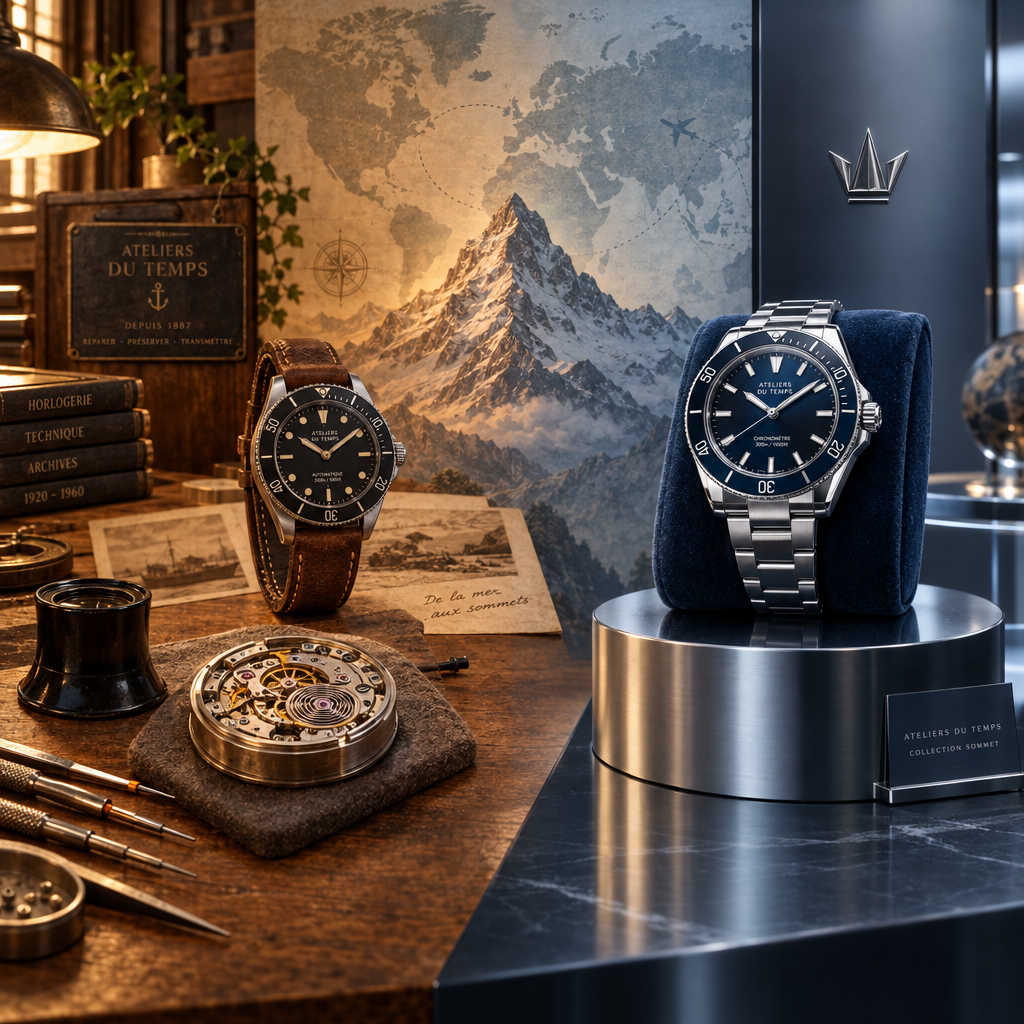
Collectors — and many first‑time luxury watch buyers — often treat Longines and Rolex as two stops on the same journey: Longines as an accessible, heritage‑rich entry point to Swiss watchmaking, and Rolex as the aspirational summit where prestige, finishing and resale live. That framing is the throughline of Bob’s Watches’ comparison: these brands aren’t direct equals, but they are natural companions in a buyer’s progression. The sensible question is therefore not “which brand is better?” but “which one matches your goals?”
A shared past, different places today
Both Longines (founded 1832 in Saint‑Imier) and Rolex (founded 1905 by Hans Wilsdorf) claim deep 20th‑century ties to aviation, diving and sports timing. Mid‑century, their market positions were closer; today, the gap is defined by product strategy and brand control. Longines leans into long heritage and value, while Rolex emphasizes proprietary materials, in‑house manufacture and cultural status.
Build, movements and materials — a quick contrast
– Longines: Modern Longines uses “exclusive” Longines calibers (many built on ETA platforms), widespread use of silicon balance springs, common 72‑hour power reserves and COSC certification on select models (the Spirit line is an example). Materials and finishing are strong for the price — good value, not boutique innovation.
– Rolex: Every modern Rolex movement is produced fully in‑house and held to Rolex’s Superlative Chronometer standard (tighter than COSC). Rolex develops proprietary materials (noted example: their stainless steel alloy often cited in collector discussions), in‑house technologies such as Cerachrom ceramic bezels, and a global service network and five‑year warranty — features usually used to justify the brand’s premium.
Three head‑to‑head showdowns
Bob’s Watches uses three model matchups to illustrate how the brands compare in practice. Each matchup names a practical “winner” depending on what you value.
1) Dive watch: Rolex Submariner vs Longines HydroConquest
– Submariner (example given): 41mm case, 300m water resistance, Rolex Cal. 3235 (~70‑hour reserve as cited), retail example ~$10,250 with secondary market often above $14,000.
– HydroConquest (new generation noted): available in 39mm/42mm, 300m water resistance, Longines Cal. L888.5, 72‑hour reserve, silicon balance spring, retail roughly $2,200–$2,400.
Verdict: HydroConquest is the clear “value per dollar” winner — you get a capable 300m dive watch with contemporary movement tech for a fraction of the price. The Submariner wins on prestige, finishing and long‑term resale/collectibility.
2) Sport/explorer style: Rolex Explorer vs Longines Conquest
– Explorer (example context): positioned as a high‑finishing, in‑house instrument with a retail figure cited near the upper‑end of mainstream luxury offerings.
– Conquest: an accessible, versatile sports watch often comfortably under $2,000.
Verdict: Conquest wins for everyday versatility on a budget; Explorer takes the crown for finishing and potential long‑term investment.
3) Travel/GMT: Rolex GMT‑Master II vs Longines Spirit Zulu Time
– GMT‑Master II: framed as the gold standard travel watch — highly collectible with strong secondary prices.
– Spirit Zulu Time: a full‑featured flyer’s GMT with COSC‑certified movement, 72‑hour reserve, bidirectional ceramic bezel and a jump‑hour GMT function; retail starting around $3,450 on bracelet.
Verdict: Spirit Zulu Time is a compelling functional alternative at about one‑third the Rolex price; GMT‑Master II remains the prestige and collectibility winner.
Value retention and collectibility
The article stresses Rolex’s unusual ability to hold or increase value on the secondary market, especially for steel sports models — a product of brand control, constrained availability and cultural desirability. Longines, while respected and occasionally collectible (particularly vintage pieces), generally does not follow the same trajectory for modern steel sports watches. In short: Longines gives more immediate “watch for the money”; Rolex offers better odds for long‑term resale strength.
A short decision box: What to prioritize
– If you want immediate value, variety and wearing enjoyment without a high entry price: Longines. You’ll get heritage, modern movement features (silicon springs, long reserves) and excellent value per dollar.
– If you prioritize prestige, top‑tier finishing, in‑house manufacture and the best chance of strong resale/collectibility: Rolex.
Both brands offer five‑year warranties (as noted in the article), so after‑sale support is strong across the board.
What the comparison does not settle
Bob’s Watches makes useful, model‑level comparisons and gives price examples, but it does not supply exhaustive or real‑time pricing across markets, audited production numbers, independent timing tests comparing movements head‑to‑head, or detailed life‑cycle service‑cost figures. The article’s price figures are presented as illustrative examples rather than definitive, up‑to‑the‑minute quotes.
Final thought
Longines and Rolex answer different questions. If your aim is the most watch for your money, Longines is a logical and satisfying choice; if your aim is the emblematic luxury sport watch and the social and market advantages that come with it, Rolex is the destination. Use the three head‑to‑head matchups above as decision anchors and double‑check current retail and secondary prices before making any time‑sensitive purchase — the Bob’s Watches article itself does not list a publication date, so verify the latest model specifications and market values before you buy.
Leave a Reply