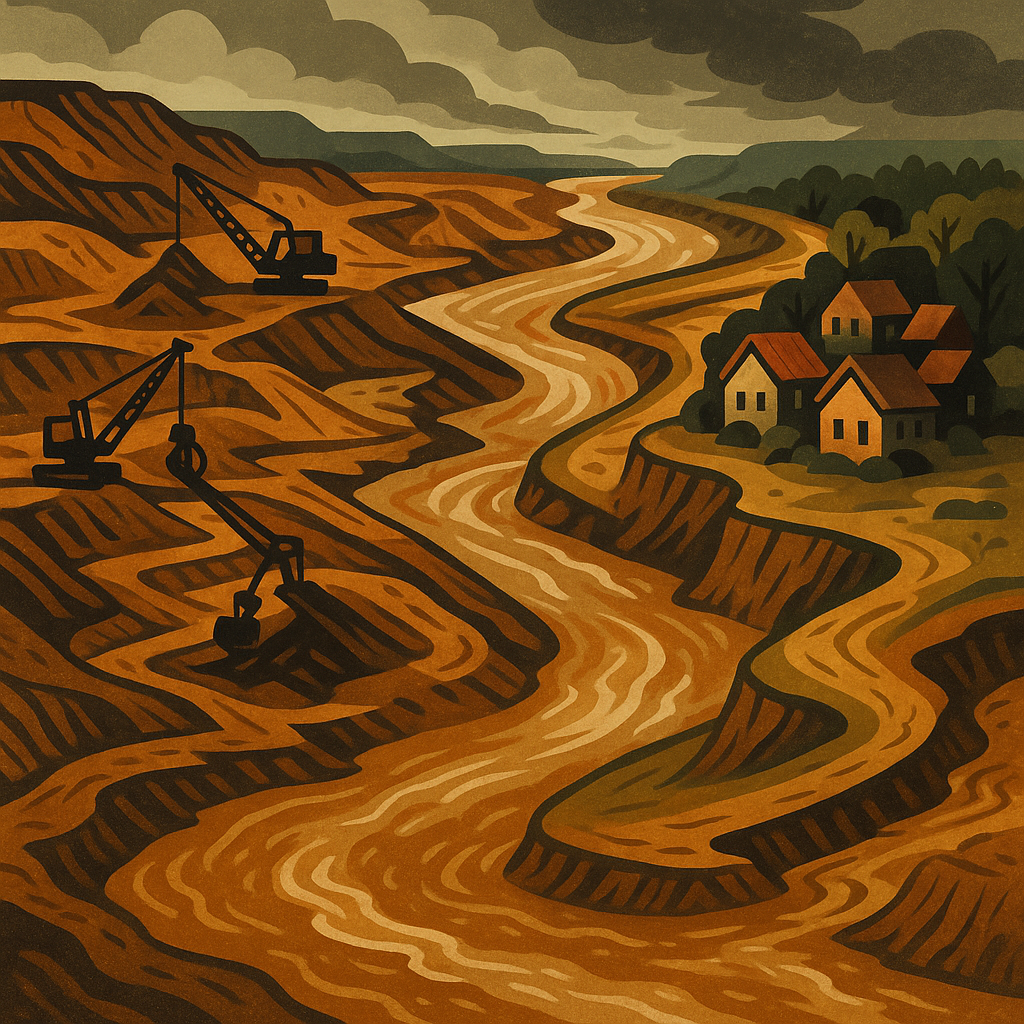
Mining activities in Nepal, particularly riverbed mining, are increasingly linked to elevated flood risks, posing significant challenges to communities and ecosystems. The extraction of construction materials from rivers like the Narayani has notably altered river courses and sediment transport dynamics. In the Nawalparasi region, the diversion of the Narayani River’s natural path due to these mining activities has put over a dozen villages at heightened risk of flooding and isolation, threatening their safety and livelihoods.
Research further reveals that large-scale sand mining in the upper Nakkhu River exacerbates susceptibility to landslides and disrupts sediment flow. These changes reshape river channels and increase the chances of flood inundation in vital areas such as the Kathmandu Valley, compounding existing vulnerabilities in urban and rural settings.
Moreover, anthropogenic interventions, including aggregate mining, lead to significant changes in riverbed and bank topographies. While embankments constructed to control floods might increase channel capacity and initially reduce flood risk, they can also cause sediment deprivation. This deprivation intensifies bed shear stress, leading to scour effects that damage infrastructure and paradoxically increase flood impacts downstream.
The complex interaction of these factors shows how mining, while crucial for construction and development, comes with environmental trade-offs that elevate flood hazards. Understanding these dynamics is essential for devising sustainable river management strategies that balance economic needs with community safety and ecological health.
In conclusion, the mining activities in Nepal have a direct and troubling association with rising flood risks, driven by altered river courses, disrupted sediment dynamics, and transformed channel morphology. Addressing these challenges requires integrated efforts to manage mining practices alongside comprehensive flood risk reduction measures.
Leave a Reply