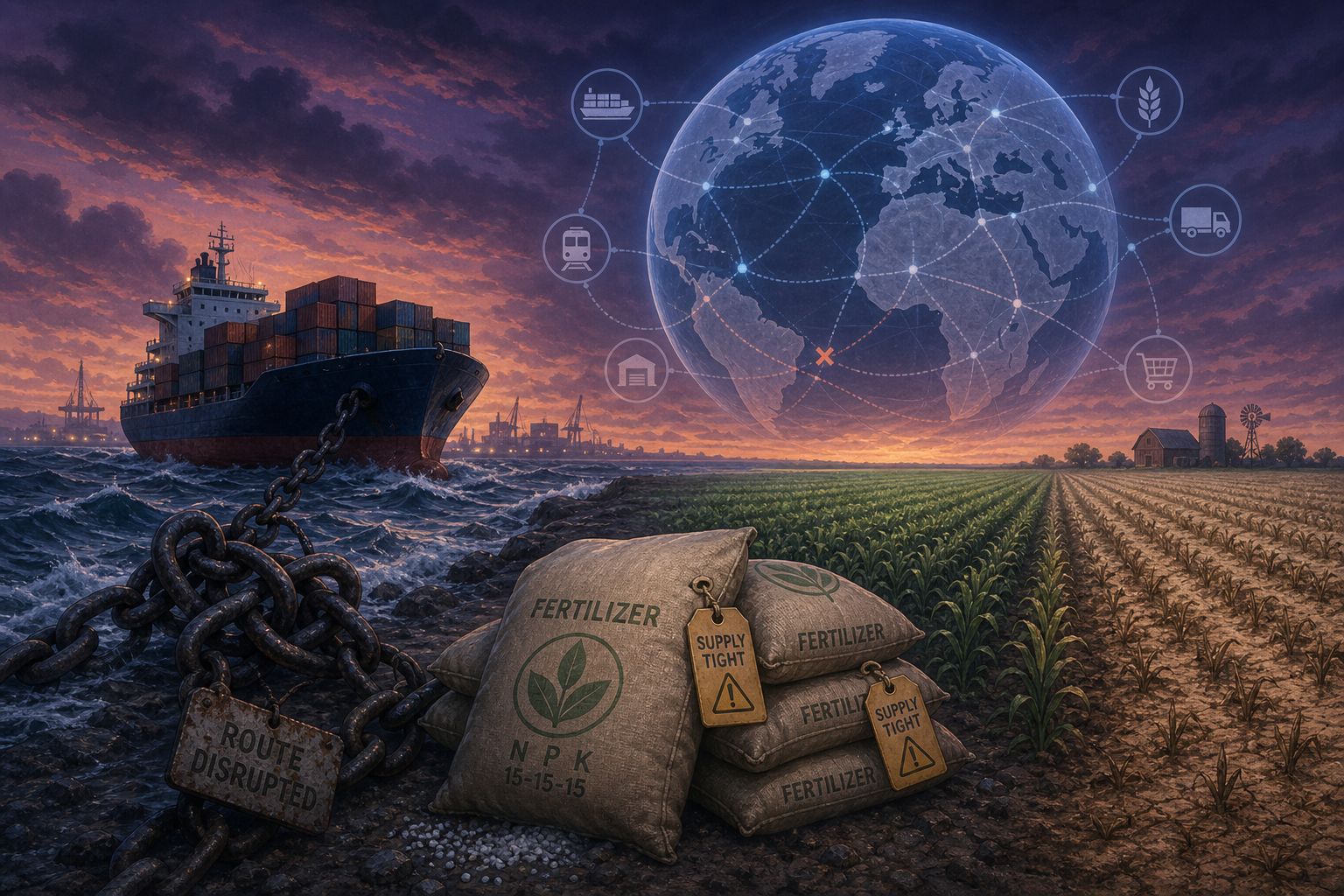
The war involving Iran is being felt far beyond the battlefield—right into the global fertilizer markets that underpin modern food production. An analysis from the International Food Policy Research Institute (IFPRI) traces how conflict-driven disruptions can reverberate through supply chains, raising risks for farmers, consumers, and food-importing countries.
At the heart of the issue is fertilizer: a set of inputs that many farming systems rely on to sustain yields. When conflict destabilizes trade routes, production, or the broader logistics needed to move key commodities, fertilizer markets can tighten quickly. The IFPRI article emphasizes that these disruptions don’t stay contained within one region. Instead, they ripple outward, affecting prices and availability across international markets.
Those market tremors matter because fertilizer is not an optional add-on for many producers—it’s a core part of the cost structure of planting seasons and yield expectations. As the article notes, any falloff in agricultural production tied to the current conflict would compound pressures already running through global supply chains.
The stakes are especially high for countries that depend heavily on imported inputs and food supplies. When fertilizer becomes more expensive or harder to secure, farmers may apply less than they planned or delay purchases, which can translate into lower output. In turn, that can tighten food markets and raise the risk of higher prices for consumers.
The IFPRI piece ultimately frames the conflict as a reminder of how interconnected food security has become: shocks to a critical input like fertilizer can travel fast, turning geopolitical instability into agricultural uncertainty—and potentially, into reduced food production when the world can least afford it.
Leave a Reply