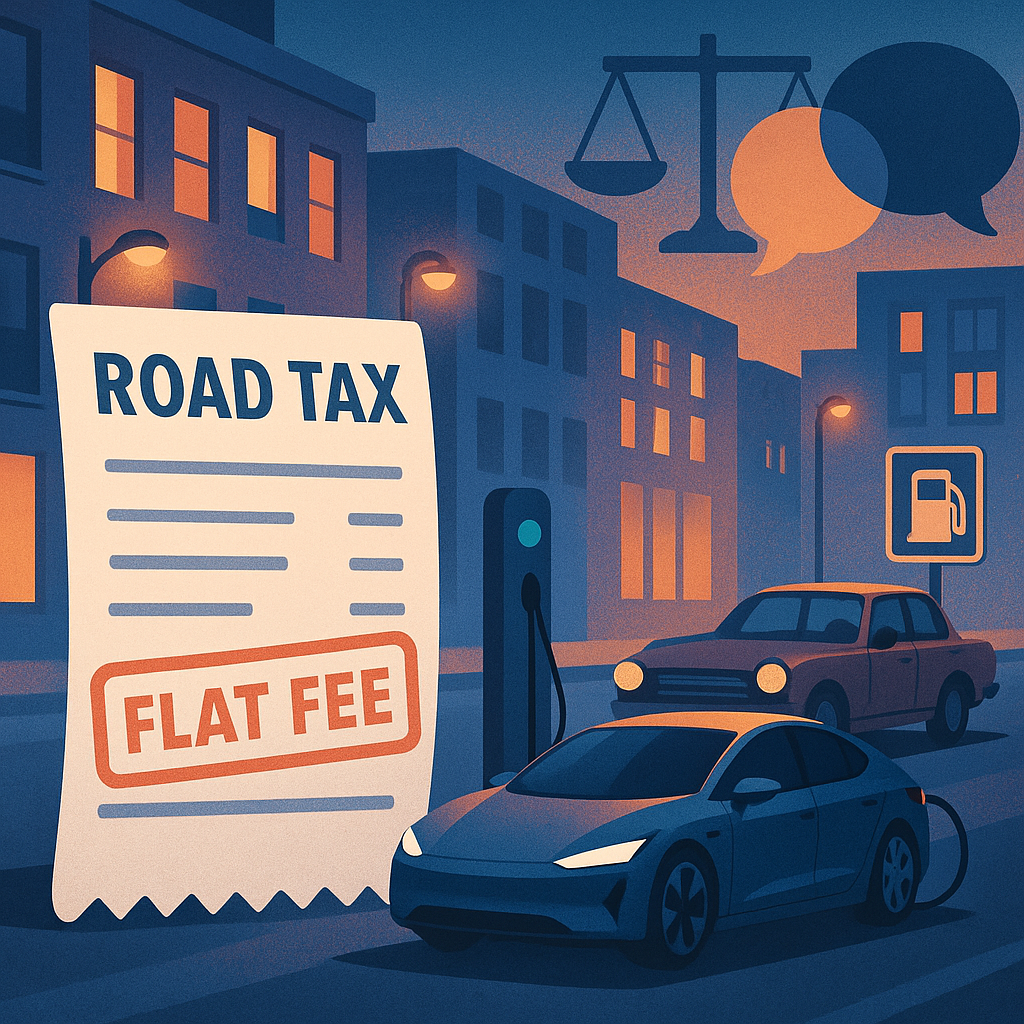
The EV-versus-petrol conversation in Singapore rarely stays focused on just charging versus pumping fuel. It almost always circles back to a single line item that owners feel most acutely every year: road tax.
A recent discussion comparing EV and ICE (internal combustion engine) car costs highlights how Singapore’s road tax treatment for fully electric cars includes an additional fixed charge. As noted in the discussion, full EVs are charged an Additional Flat Component of S$700 on top of annual road tax—positioned as a way to partially cover the fuel excise duties that petrol car owners pay when they buy fuel.
That one policy detail shapes how people perceive the “true” cost of switching. On paper, EVs are often associated with savings—especially when drivers think about fewer moving parts and the difference between electricity and petrol. But the presence of a flat S$700 component can make EV road tax feel surprisingly heavy, particularly for buyers who expected road tax to be a clear advantage.
What’s interesting about this cost debate is that it’s less about arguing whether EVs should contribute to road usage—and more about how the contribution is structured and communicated. A flat component is easy to understand and apply, but it can also feel blunt: it’s the same add-on regardless of how much an EV driver actually drives or charges.
Ultimately, the EV vs ICE cost comparison in Singapore isn’t only about sticker prices or daily running costs. It’s also about how the tax system is evolving to reflect a future where more drivers no longer pay fuel excise at the pump—but still use the same roads.
Leave a Reply