Three cyclists died in separate motor-vehicle crashes in Singapore between November 11 and 13, 2026. The incidents—involving a cyclist and a tipper truck at Amber Road and Amber Gardens, national triathlete Russell Lee and a tipper truck in Changi, and a 75-year-old man on a power-assisted bicycle and a car in Hougang—are a stark reminder of the risks people face when sharing the road. The article does not establish what caused the crashes or whether any particular measure could have prevented them.
In its report, Singapore University of Technology and Design highlights a broader point from Dr Samuel Chng, head of SUTD’s Urban Psychology Lab at the Lee Kuan Yew Centre for Innovative Cities: safer roads require more than rules and dedicated cycling paths. Education matters too. Motorists, for example, need practical guidance on how to overtake cyclists safely. Enforcement, road design and considerate behaviour all play a part—and making room for one another should become an ordinary habit.
Singapore’s cycling network is expanding. On November 14, the Land Transport Authority opened 16 kilometres of cycling paths in Woodlands and Sembawang. The new routes connect residents to four nearby MRT stations and bring the area’s network to 42 kilometres. Across the country, the network now stretches for 800 kilometres, up from about 600 kilometres in 2024. The target is 1,300 kilometres by 2030, with more than nine in 10 HDB residents expected to be just a few minutes from a cycling path.
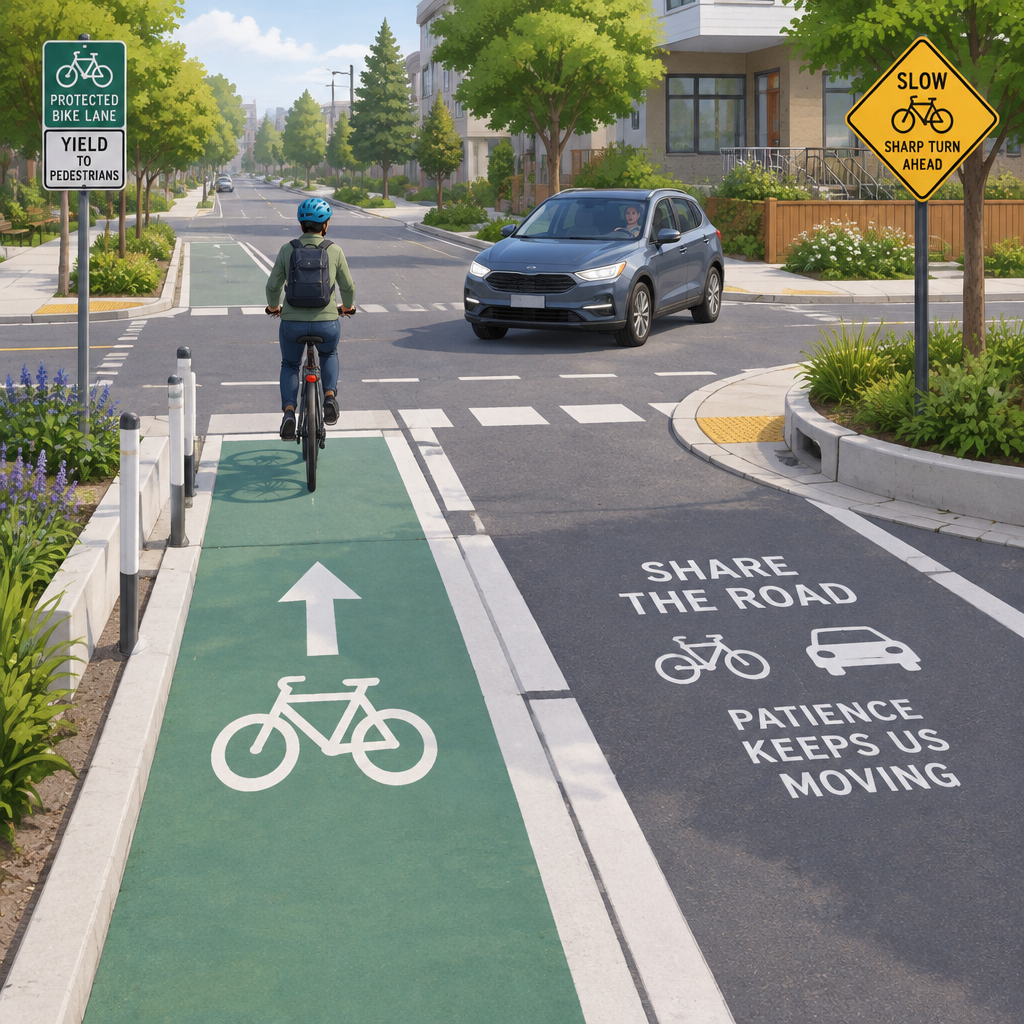
But a connected network will take time, particularly in older neighbourhoods where space is limited. In the meantime, Chng points to places where conflicts can arise: junctions, bends and points where paths meet roads. Near misses and routes cyclists avoid can help identify locations that need closer attention.
Design can make these points safer. Keeping sightlines clear, tightening corners to encourage turning motorists to slow down, and separating cyclists from turning vehicles at busy junctions are among the measures Chng describes. No single change is presented as a complete solution. The larger challenge is to combine better infrastructure with effective education, enforcement and everyday consideration—so that sharing the road means giving others the time and space they need.
Leave a Reply