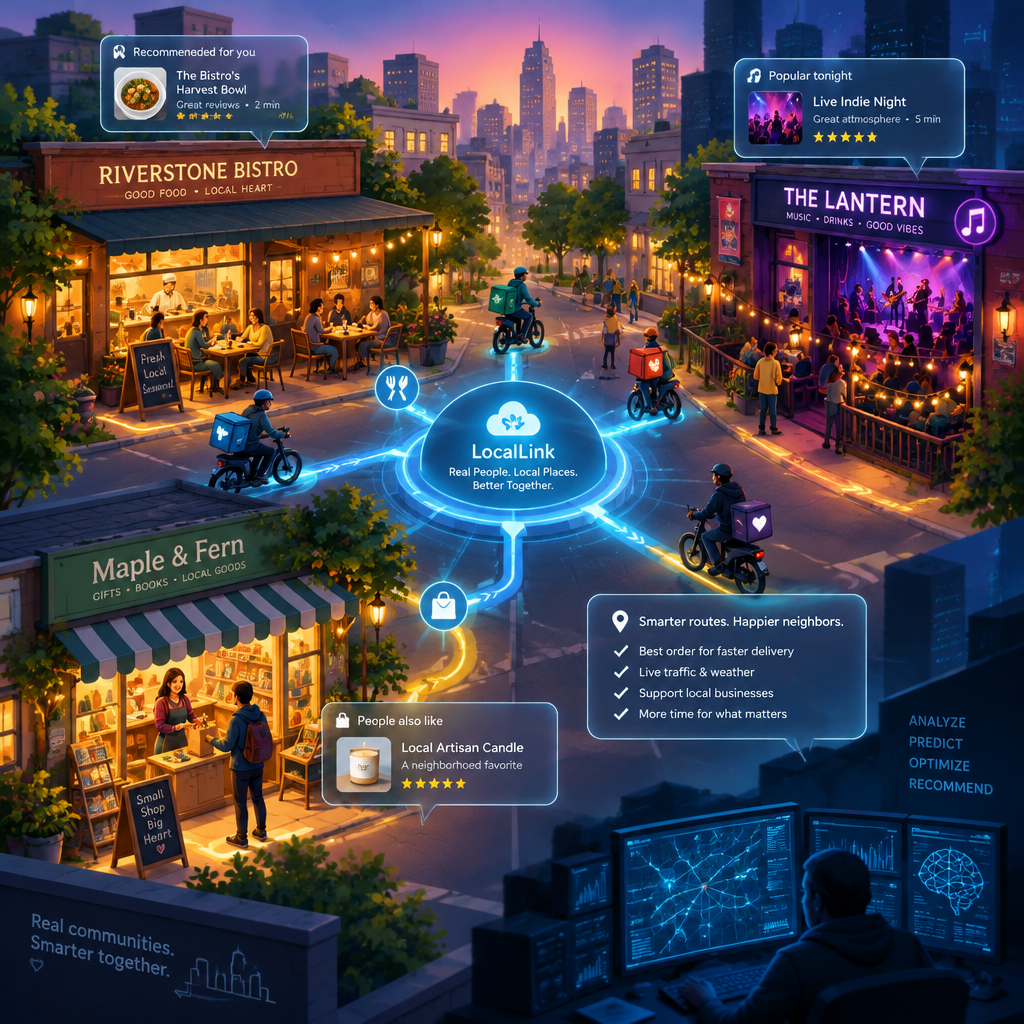
Meituan’s journey from group-buying site to “super app” rests on a simple but ambitious idea: bring many everyday services together around one shared customer base. Food delivery, travel, entertainment and retail become parts of a connected digital ecosystem, linking online discovery and purchases with offline merchants and services.
Algorithms help coordinate that sprawling model. The case study describes their use in delivery routing, merchant visibility, platform-wide coordination and personalized recommendations. In the account presented, these systems help services operate in real time—an important part of managing a platform that the publisher says spans more than 2,800 Chinese cities and counties and involves more than 500,000 riders. The page does not say when those figures were measured.
But coordination and efficiency are only part of the story. The case raises questions about riders’ working conditions, whether merchants are treated fairly, how much power a platform should hold, and whether data-driven systems may produce inequities. It also points to transparency as a concern: when algorithms shape routes, visibility and recommendations, the interests of customers, merchants, riders and regulators may not always align.
That tension defines Meituan’s central challenge as the case presents it. The company must pursue efficiency and profitability while considering fairness and transparency across the ecosystem it connects. The article frames these as issues for analysis rather than demonstrating specific causal effects. It also notes that the case draws mainly on secondary and publicly available information and is intended for educational discussion.
Meituan’s super-app model shows how algorithms can help unify a wide range of services. It also leaves a question at the heart of the platform economy: how can real-time coordination serve the business without losing sight of the people and merchants whose work makes the system run?
Leave a Reply