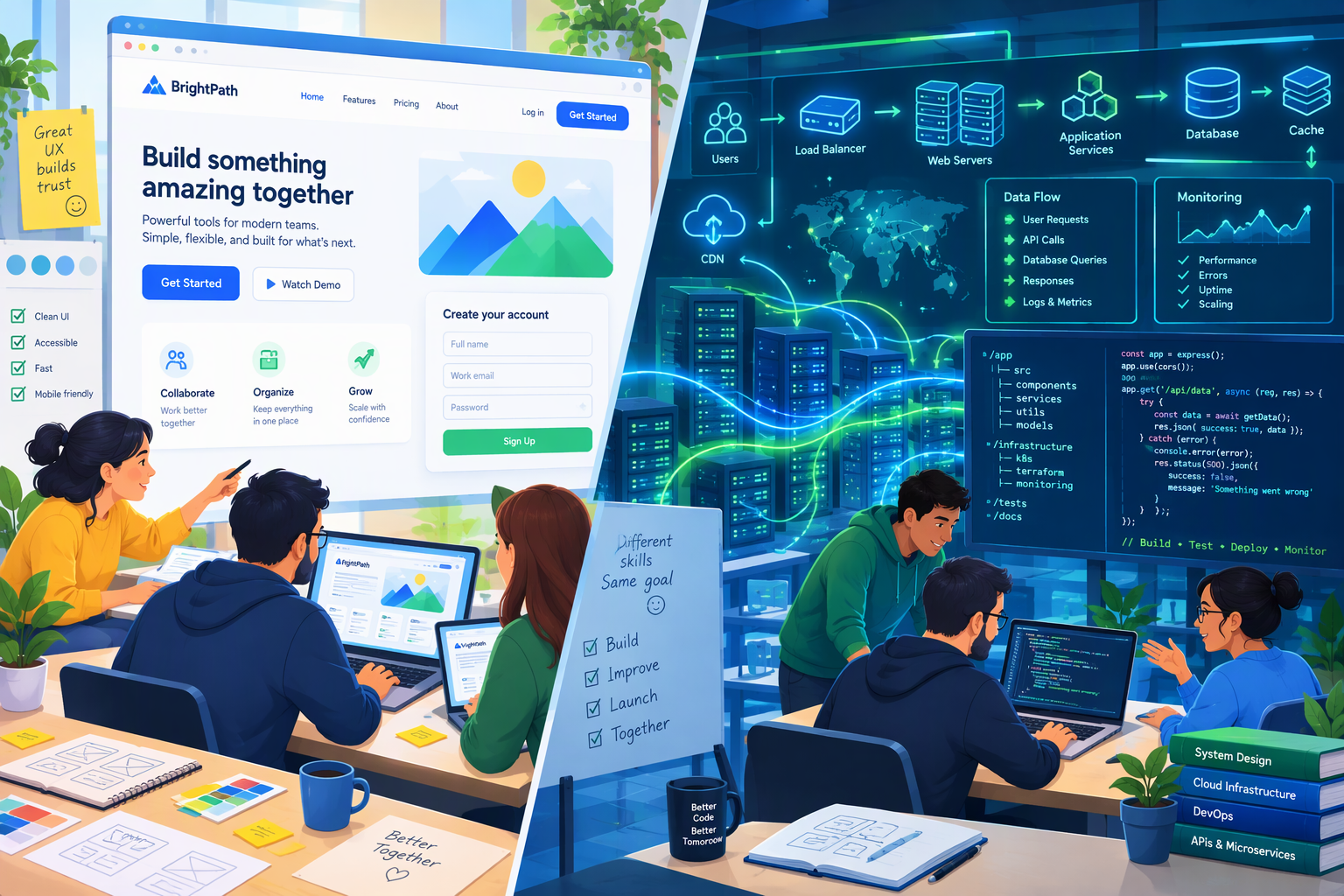
A website may look simple on the screen, but behind every button or sign-in box is another layer of work. Full-stack developers help build both: the front end that people see and use, and the back end that powers what happens behind the scenes.
A MyCareersFuture article describes full-stack development as a “new collar” technology role, where practical skills can matter more than having a specialised degree. Aarti Budhrani, director of Technology Practice at Michael Page Singapore, links growing demand for developers who can handle both sides of development to the rise of agile working, startups and rapid prototyping. She also points out that tools and frameworks change quickly, making continued learning part of the job.
The article gives a glimpse of what one employer might look for by reproducing duties from a MyCareersFuture job advertisement. The role involves building web applications with JavaScript, React, Node.js and TypeScript, as well as creating RESTful APIs—the connections that let different software services communicate. It also includes deploying applications on cloud platforms such as AWS or Azure, using CI/CD pipelines to help move changes through development and deployment.
There is more to the work than writing code. The example role calls for secure development practices, testing, code reviews and documentation. It also involves working with designers and product managers, and collaborating with an AI team on machine-learning features. These responsibilities show how a developer’s work can connect technical problem-solving with teamwork and careful planning.
The skill list is broad. On the front end, it includes HTML, CSS, JavaScript and React; on the back end, Node.js, Python and Java. Databases such as SQL and MongoDB are also mentioned, alongside version control and CI/CD deployment pipelines. The article says hands-on cloud expertise may be prioritised over a traditional computer science degree, and identifies AWS, Azure and GCP certifications as possible ways to build skills. That is not a guarantee that every employer has the same requirements—or that a degree is never needed.
For people considering a mid-career switch, the article suggests coding bootcamps, contributing to open-source projects and building full-stack applications. A completed project can help show practical problem-solving, not just familiarity with technology terms.
The article also lists salary figures of up to $6,500 for entry-level developers, $7,500–$9,000 for mid-level developers and $10,000 or more for senior developers. It does not specify the currency or pay period, or explain how the figures were compiled, so they need that context before being compared. The article describes demand as strong at startups and government-linked companies, but does not provide vacancy counts or market-wide data. Its clearest message is about the role itself: full-stack development brings together many skills, and people can demonstrate those skills through hands-on work.
Source: Full-Stack Developer: New Tech Roles & Opportunities, MyCareersFuture
Leave a Reply