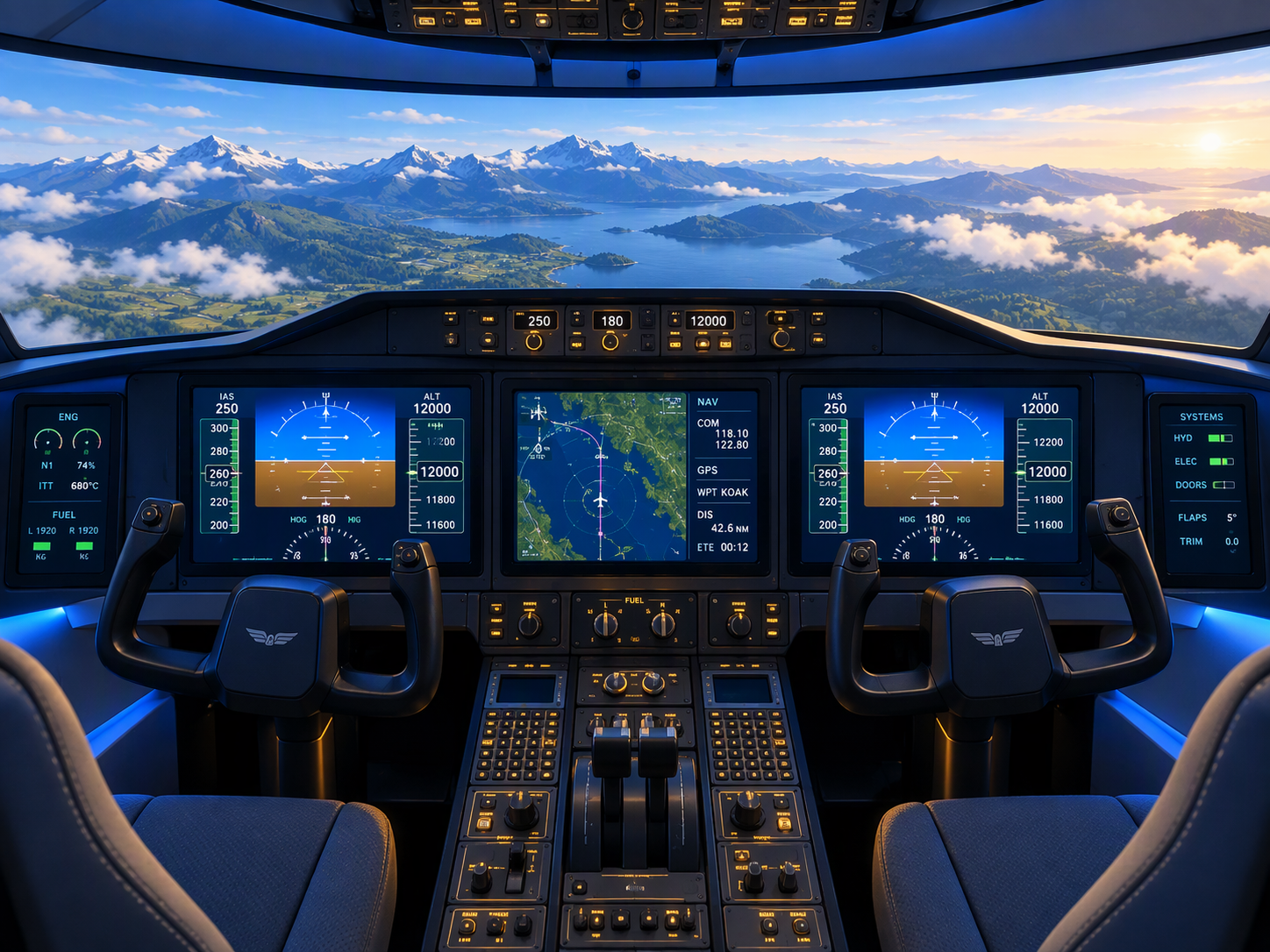
An aircraft in a simulator is not flying through the sky, but the system is designed to recreate important parts of flight. The Federal Aviation Administration (FAA) describes flight simulation systems as tools that represent both aircraft flight and the operational environment around it. Their role reaches beyond pilot training: they also support aircraft design and development, and help assess how aircraft perform and handle.
That ability to recreate flight matters because some assessments can take place without the risks associated with live flight testing. A simulator gives people a way to examine aircraft performance, characteristics and handling qualities in a simulated setting. It is one part of aviation’s wider effort to understand how aircraft behave and how they operate in different conditions—not a claim that every aspect of real flight can be reproduced.
Simulation also has a place in pilot training. It can represent aircraft and operational conditions within a training environment, allowing pilots to learn with a simulated aircraft rather than relying only on a live flight for that representation. The FAA’s overview describes this broad purpose, rather than listing particular lessons, procedures or scenarios. It also does not say that simulator training replaces training in an aircraft or removes the need for it.
Behind the experience is a collection of technologies working together. Systems may model or represent aerodynamics, propulsion, flight dynamics and controls, and avionics. They also bring in visual and motion systems, navigation, ground and atmospheric conditions, and air traffic control. Each element contributes to recreating aircraft behaviour or the operational setting in which a flight takes place.
Getting that representation right is important. FAA technical experts evaluate and oversee simulators, helping ensure they accurately represent aircraft behaviour and are used appropriately under federal regulations and guidance. Their work informs FAA policy and guidance on simulator qualification and use, with the stated aim of supporting aviation safety.
So a flight simulator is not simply a machine that imitates an aircraft. It is a combination of models and systems used for training, development and assessment, with oversight intended to support accurate and appropriate use. By recreating aspects of flight on the ground, simulation gives aviation professionals another way to study aircraft and the conditions in which they operate—while keeping its role distinct from live flight.
Source: Technical Discipline: Flight Simulation Systems, Federal Aviation Administration
Leave a Reply