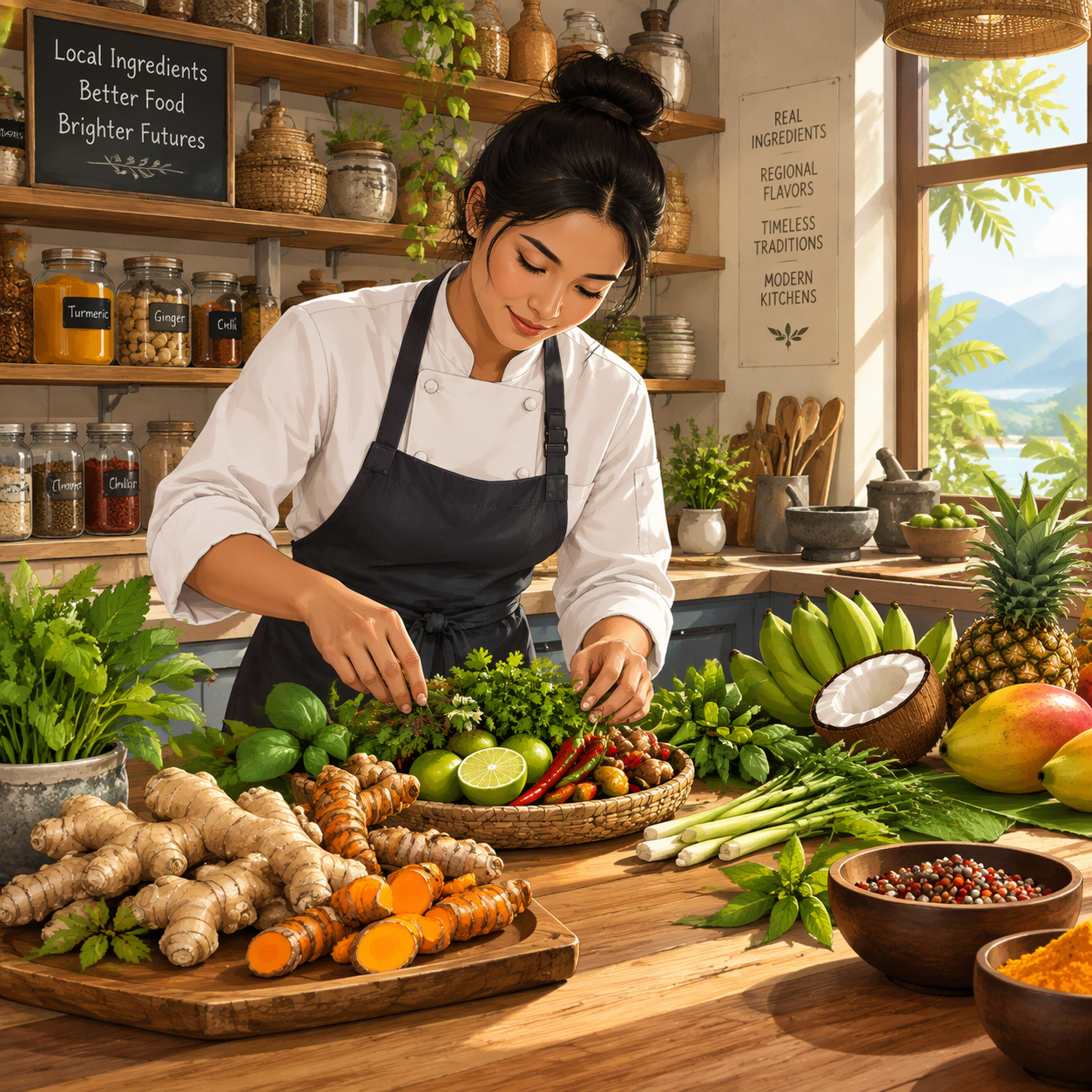
A food trend can arrive with a burst of attention, then make room for something quieter. In Singapore, 2025 brought plenty of dishes and ideas into the spotlight. But chefs looking ahead to 2026 expect another kind of change: more local and regional ingredients finding their way into the kitchen.
The Straits Times article looks back at several food phenomena that caught attention in Singapore during 2025. Matcha, Chinese food brands and chilli-crab-inspired offerings were among them. Banana pudding spread through local cafes amid a TikTok trend, while artisanal pizzerias helped make pizza more visible.
These examples set the scene; they are not predictions for 2026. The article’s main look ahead is less about naming the next viral dish and more about how chefs may shape their menus. The chefs interviewed expect contemporary cooking to draw increasingly on ingredients and flavours rooted in the region, as Singapore’s food scene matures.
Francois Mermilliod, executive chef of private members’ club 67 Pall Mall, connects this interest to several developments. Diners are more environmentally aware, chefs have a role in sharing culinary culture, and regional producers are improving the quality of their ingredients. Together, these factors help explain why a chef might look closer to home when deciding what to serve.
Sujatha Asokan, chef de cuisine at Quenino, offers an example of what that approach can look like. Her cooking uses ginger flower, jungle garlic and turmeric, and pays tribute to local dishes such as chicken rice and assam laksa. The connection between ingredients and familiar dishes gives regional flavours a place in contemporary cooking, rather than treating them as a passing novelty.
That shift may be less conspicuous than a social-media food craze. A viral trend can draw attention quickly; changes in sourcing ingredients and planning menus may happen more quietly. The article’s point is that both kinds of change help shape food trends: what people notice online, and the decisions chefs make behind the scenes.
Value is another consideration. The piece notes that chefs are increasingly focused on offering diners better value amid rising costs and consumer apathy. That concern sits alongside the interest in regional ingredients, adding another practical consideration to the way menus are planned.
These are chefs’ expectations, shared in January 2026, not a report on what ultimately became popular across the year. Still, the outlook suggests that the next chapter of Singapore’s food scene may be shaped not only by what captures attention, but also by where ingredients come from and the culinary stories they carry.
Source: 2026 food trends: Chefs foresee the rise of regional ingredients, sustainable cooking, The Straits Times
Leave a Reply