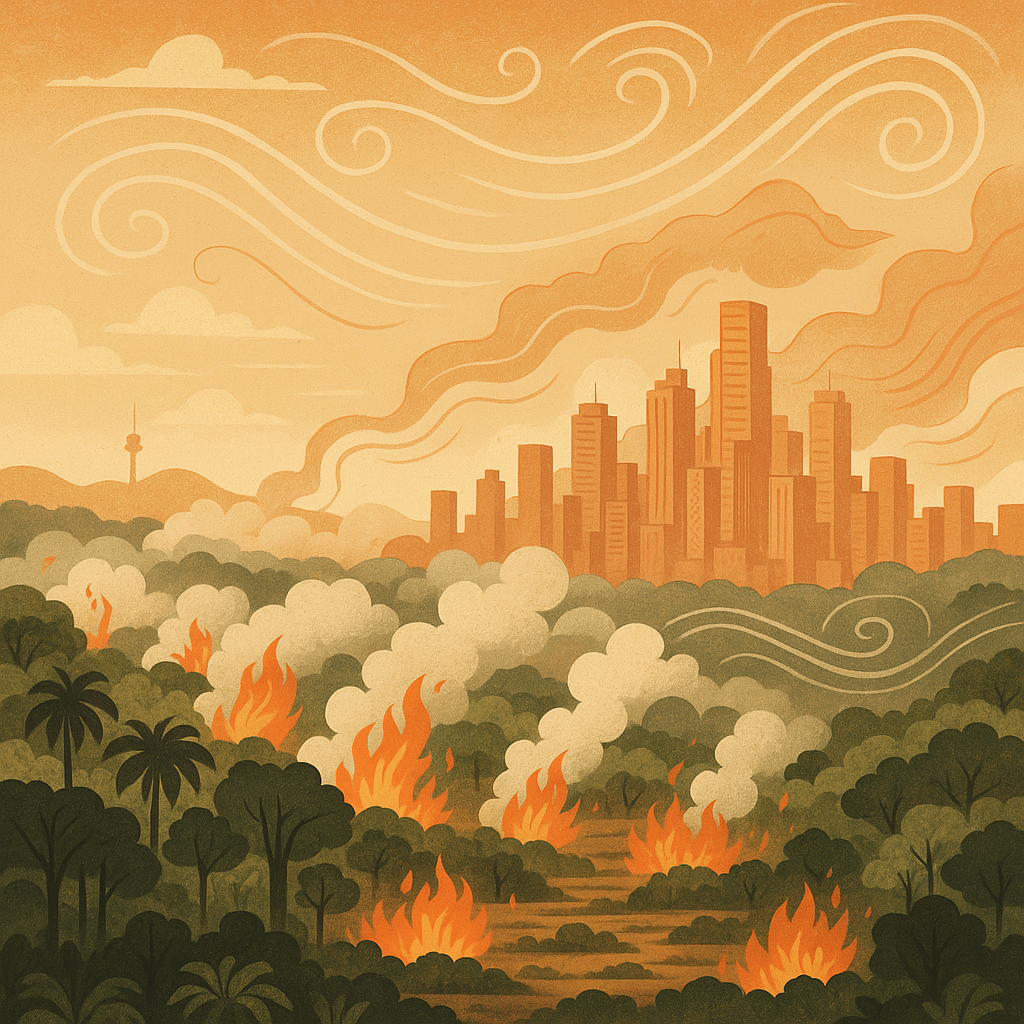
The persistent haze that often blankets Southeast Asia, notably affecting Singapore, is a multi-faceted problem rooted in several interconnected factors.
At the heart of the issue are the extensive forest and peatland fires in Indonesia, particularly in regions like Sumatra and Kalimantan. These fires, frequently set during the dry season for land clearing, can intensify under El Niño conditions which bring prolonged dry spells. The smoke from these fires travels across borders, drifting and settling over neighboring countries including Singapore.
Meteorological dynamics further influence the haze’s reach. Winds during the Southwest Monsoon season carry smoke clouds towards Singapore, while dry weather and scant rainfall create ideal conditions for fires to ignite and spread rapidly. This regional weather interplay makes it challenging to predict and mitigate haze episodes.
Once the haze reaches Singapore, local urban factors come into play. The city’s dense architecture, with towering buildings, can trap polluted air by slowing down air circulation. Combined with the urban heat island effect, which raises temperatures locally, this results in hotspots of worsened air quality within the cityscape.
Compounding the problem are enforcement and land management issues. Despite Indonesia having laws to prevent fires, ineffective enforcement and illegal land-clearing methods persist, allowing the haze problem to continue unabated.
In essence, the haze crisis is sustained by a complex blend of cross-border pollution, climatic conditions, urban environmental effects, and regulatory challenges. Resolving it demands a concerted regional approach, strengthening law enforcement, and promoting sustainable land management to safeguard the air quality and health of millions across Southeast Asia.
Leave a Reply