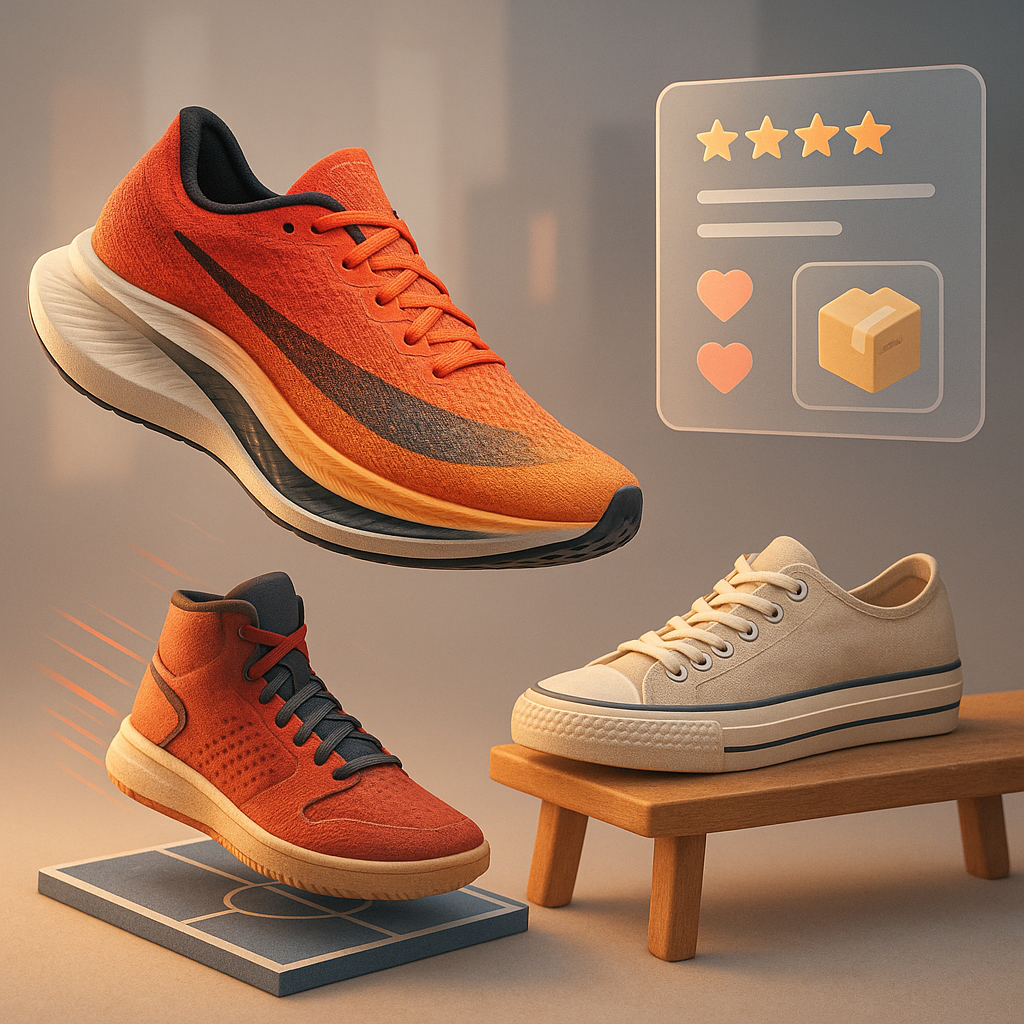
For years Nike, Adidas and Asics defined what performance sneakers looked like. But a recent CNA Lifestyle piece highlights a clear shift: a group of Chinese brands — led by Li‑Ning and Anta — have improved design, materials and technology enough to become genuine alternatives, especially for buyers in Singapore.
Li‑Ning is the best‑known name on the list. Founded in 1990 by Olympic gymnast Li Ning, the brand has made waves with both basketball and running lines — from the Way of Wade collaboration with Dwyane Wade to the Feidian running series. The article cites the Feidian 5 Challenger as an example praised for being responsive, lightweight, comfortable and durable, and shows a Shopee listing price of S$194.02 as a Singapore price reference.
Anta is presented as the largest domestic Chinese sportswear company and — by revenue — third globally after Nike and Adidas. The brand has pursued high‑profile athlete partnerships (the article mentions Klay Thompson and Kyrie Irving) to grow international recognition; the Anta X Kyrie Irving Kai 1 Sacred Bond men’s basketball shoe is shown at S$219 in the article.
The piece also profiles six other Chinese labels worth watching: Xtep (noted for the 160X line and popular with marathoners for responsiveness and support; availability cited at Decathlon, with the Xtep 160X3.0 women’s shoe shown at S$149), Qiaodan (Feiying Plaid series recommended for long distances), 361° (running lines such as Flame, Furious and Fierce offering cushioning and stability, plus NBA partnerships), Peak (established since 1989, modern designs and athlete tie‑ups), BMAI (focus on running mechanics; the Jingtan Fly series uses an advanced carbon‑fibre plate and is shown at CNY609 / S$109.35 in the article) and Feiyue (known for classic canvas sneakers and very low price points, with training shoes for gym use).
A key takeaway in the article is that these brands are changing perception through real user reviews — runners and wearers online report strong performance and durability — and by making products accessible in Singapore via local e‑commerce and retailers such as Shopee, Decathlon, Key Power Sports and Taobao listings cited in the piece.
Important limits to bear in mind: the article does not run independent lab or controlled tests comparing Chinese brands directly with Nike or Adidas; it does not present long‑term failure rates, warranty statistics, or broad consumer‑survey market shares. Instead, it relies on selected model examples, user reviews and industry context to make the case that Chinese brands are now competitive in many categories and price points.
If you’re curious to try one: start by identifying the model and category you want (road running, marathon, basketball, casual canvas), check local listings and sizing notes (the article provides Singapore price examples for several models), and remember that performance still varies by model. The CNA Lifestyle piece’s message is not that Chinese brands are universally “better,” but that they are now credible, often more affordable options that deserve a test run.
Leave a Reply