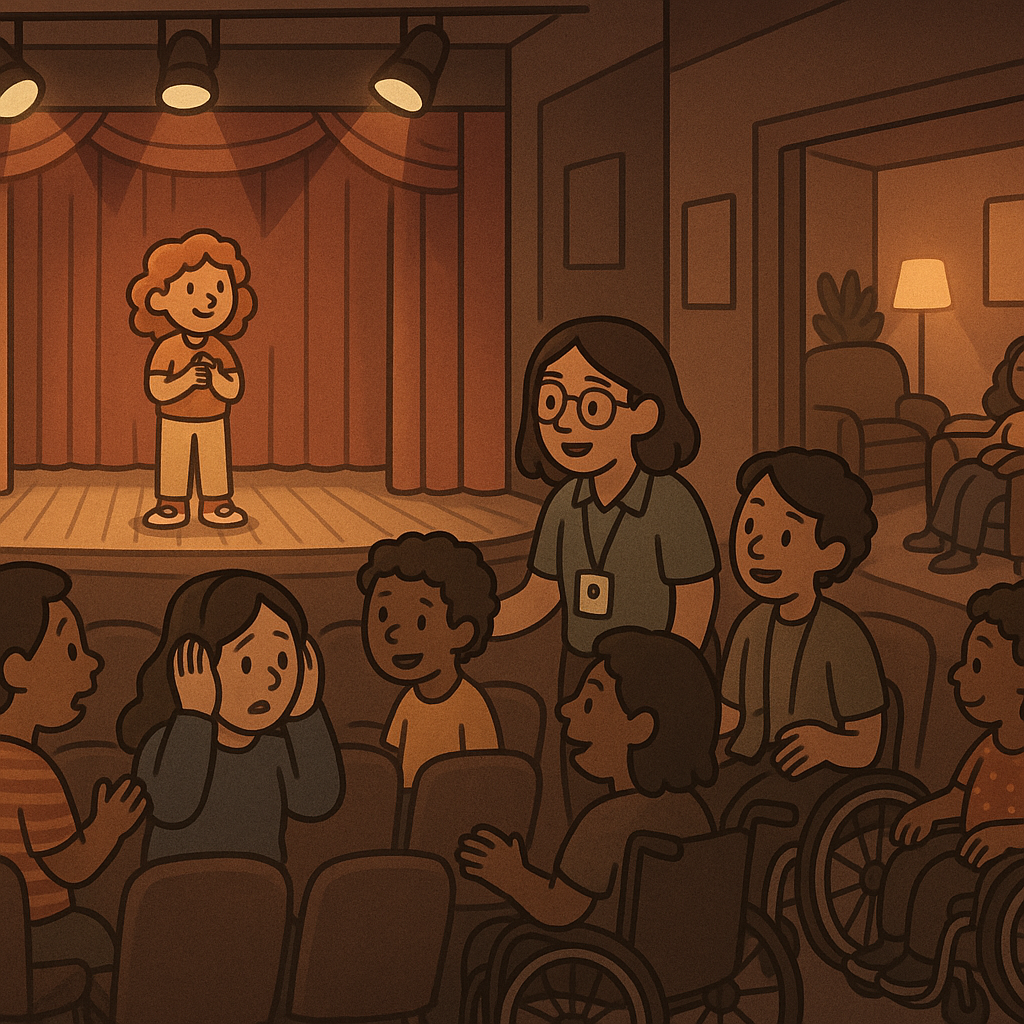
Sensory-friendly performances are revolutionizing the way live theater welcomes audiences with sensory sensitivities, including those on the autism spectrum. These specially designed theatrical events prioritize comfort and inclusivity by adapting various elements of the performance environment.
Key adjustments include dimmed house lights to reduce harsh lighting effects and lowered sound levels with minimized startling noises or strobe lights, ensuring the sensory experience is manageable for all attendees. The atmosphere is further relaxed by encouraging audience members to move freely, make noise, or leave their seats as needed, which breaks away from traditional theater norms.
Theater venues also provide quiet spaces for individuals who might feel overwhelmed, offering a safe retreat during the show. Additionally, staff and performers receive training to accommodate diverse needs, creating a welcoming, non-judgmental environment that celebrates inclusivity.
These changes have significant benefits for neurodiverse audiences. Sensory-friendly performances open the door for individuals with sensory sensitivities to enjoy live theater, an experience that might otherwise be inaccessible due to overwhelming stimuli. They also enable families to attend together comfortably, fostering shared memories without the usual stresses.
Moreover, by offering sensory-friendly options, theaters demonstrate a strong commitment to community engagement, promoting a culture of acceptance and belonging within the arts. Ultimately, these performances play a crucial role in making cultural experiences accessible and enjoyable for everyone, ensuring no one misses out on the magic of live theater.
Leave a Reply