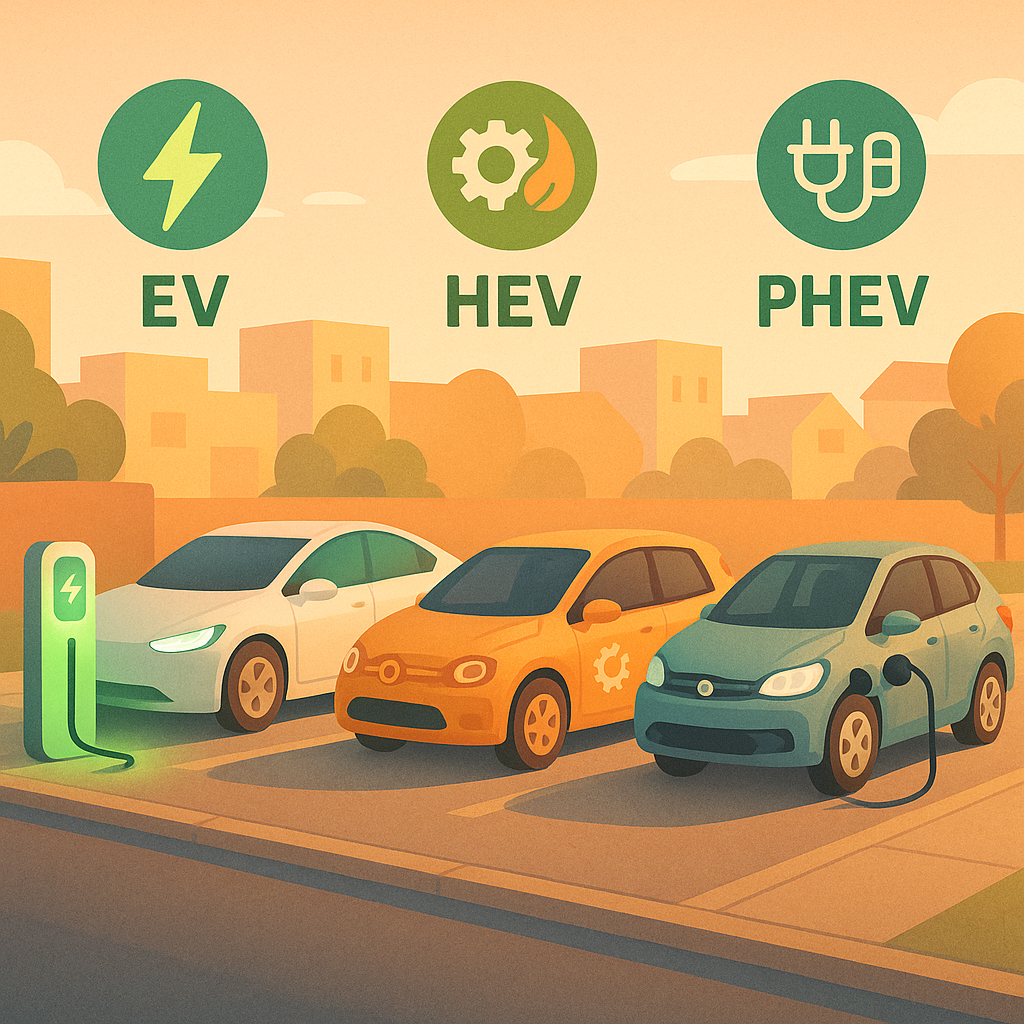
Choosing between an electric vehicle (EV), a conventional hybrid (HEV), or a plug‑in hybrid (PHEV) is less about labels and more about how and where you drive. A clear, practical comparison published by Car and Driver (David Gluckman, updated March 29, 2024) lays out the core differences, strengths, and tradeoffs so buyers can match a powertrain to real‑world needs. Here’s a readable take on what the article explains and the questions you should ask before you buy.
How each powertrain works
– EVs (battery‑electric vehicles) run solely on stored electricity. They use one or more electric motors and must be recharged from the grid or public chargers. There’s no internal‑combustion engine.
– HEVs (conventional hybrids) pair a gasoline engine with electric motor(s) and a relatively small battery that is recharged by the engine and regenerative braking. The car switches or blends power automatically — you don’t plug it in.
– PHEVs (plug‑in hybrids) bridge the two: they have a larger battery and an external charge port so they can run on electric‑only power for a limited distance before the gasoline engine takes over.
Environmental and energy considerations
EVs produce no tailpipe smog‑forming emissions at the point of use; however, their overall greenhouse‑gas footprint depends on how the electricity they use is generated. As electricity grids decarbonize, EVs generally become cleaner over time. The article also points out that battery production has environmental and mining impacts, though those impacts are evolving as battery technology and supply chains improve. HEVs have a smaller battery manufacturing footprint but continue to burn gasoline in everyday operation; PHEVs sit between HEVs and BEVs in lifecycle impact, depending heavily on how often owners actually charge and use electric range.
Performance, packaging, and tradeoffs
A pure EV often feels refined: instant torque, quiet operation, smooth delivery, and brisk acceleration are common. EVs also have fewer moving parts than a conventional internal‑combustion powertrain, which simplifies routine mechanical maintenance. That said, batteries add weight — larger batteries for longer range can increase curb weight, potentially affecting road wear and making some repairs (especially high‑voltage battery service) more costly. Hybrids are mechanically more complex because they combine engines, motors, and control systems, but they eliminate range‑anxiety by keeping gasoline refueling available. PHEVs let you drive short trips electrically while keeping the convenience of a gas engine for long journeys.
Ownership, warranties, and used‑car cautions
Manufacturers commonly offer EV battery warranties that reduce buyer risk — the article notes many warranties cover roughly eight years or 100,000 miles (some makers offer longer). That helps new‑car buyers, but the piece warns used‑EV shoppers to check battery health and remaining warranty coverage because replacing or repairing a high‑voltage pack can be expensive.
Who each option is best for
– EVs: a strong fit if you have reliable access to charging (home or work), drive routes where charging is convenient, and value quiet refinement and lower local emissions.
– HEVs: a sensible choice for drivers without easy charging access (for example, many apartment dwellers) who want improved fuel economy without having to plug in.
– PHEVs: a transitional option for drivers who want electric driving for daily commutes but still need gasoline range for longer or unpredictable trips — their environmental benefit depends on regular charging and frequent use of electric range.
Costs and infrastructure (qualitative)
The article emphasizes qualitative tradeoffs rather than exact dollar calculations: EVs often carry higher upfront prices for longer range and may have higher battery‑repair costs, but reduced moving‑part complexity and potentially lower routine maintenance. HEVs and PHEVs tend to be cheaper to buy initially and avoid dependence on charging, but continue consuming fuel. Whether an EV makes sense will hinge on charging access and the carbon intensity of the electricity you’ll use.
What the article doesn’t provide
This is a high‑level buyer’s guide: it does not include model‑by‑model comparisons, specific ranges, charging times, local incentives, numeric total‑cost‑of‑ownership calculations, or region‑specific infrastructure statistics. It also doesn’t offer long‑term empirical reliability data from large owner surveys or detailed lifecycle LCA numbers — all things writers or buyers should verify with up‑to‑date, region‑specific sources if they need precise figures.
Bottom line
Match the powertrain to your daily patterns: if home or workplace charging is easy and you prioritize low local emissions and refinement, an EV can be the right choice. If charging is difficult or you value convenience above all, a conventional hybrid remains a compelling option. For many, a PHEV is the middle ground — useful only if you actually plug it in. For specific model comparisons, incentives, and local infrastructure, consult recent, region‑specific data in addition to this high‑level guidance.
Source: David Gluckman, “Electric vs. Hybrid Cars: Pros and Cons of Each,” Car and Driver (updated March 29, 2024).
Leave a Reply