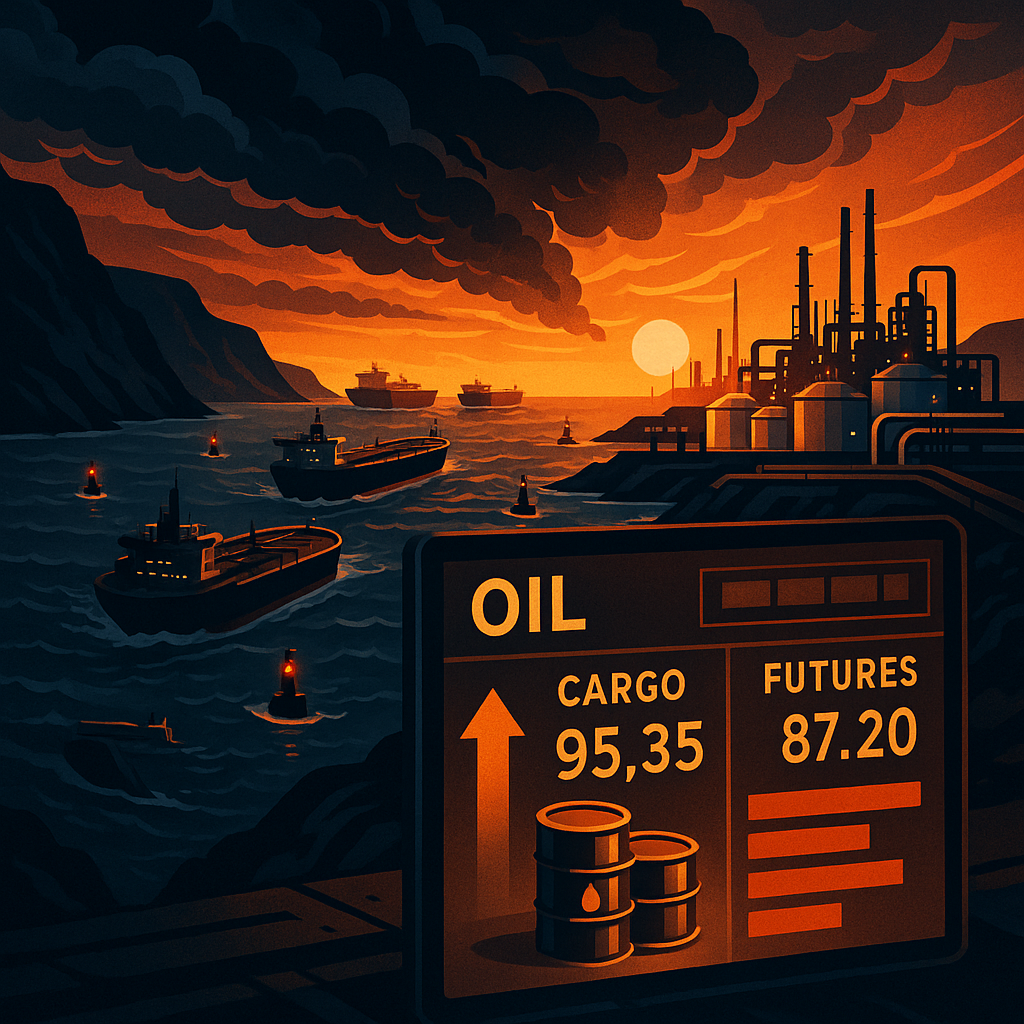
A worsening Hormuz crisis has pushed the oil market into a new kind of alarm: a scramble not just over prices on a screen, but over barrels that can actually be loaded and refined now.
According to the article, conflict involving the United States, Israel and Iran has effectively closed the Strait of Hormuz, severely disrupting Middle Eastern supplies. At least 12 million barrels per day—about 12% of global supply—has been shut in, creating an immediate shortage for refiners in Europe and Asia.
That urgency is showing up most sharply in the physical market. North Sea Forties crude climbed to US$146.09 a barrel, an all-time high in LSEG data, while S&P Global Energy Platts assessed dated Brent at US$144.42 on April 7, above its previous 2008 record of US$144.22.
The contrast with futures prices is central to the story. Brent futures had reached US$119.50 a barrel the previous month, their highest level since 2022, but still below the roughly US$147.50 record seen in 2008. Physical crude, by comparison, commands a premium because it represents cargoes available for prompt delivery—oil refiners can obtain immediately rather than at a later date.
The surge therefore signals more than speculative anxiety. It reflects panic over access to refinery-ready crude as buyers compete for the limited cargoes outside the disrupted route.
The pressure is spreading to fuels as well. European jet fuel was quoted near US$226.40 a barrel, close to its mid-March record, while diesel reached about US$203.59. The crisis has not put every oil benchmark at an all-time high, but it has driven certain physical grades and dated Brent into record territory—and highlighted how quickly supply disruption can turn a futures-market rally into a real-world race for barrels.
Leave a Reply