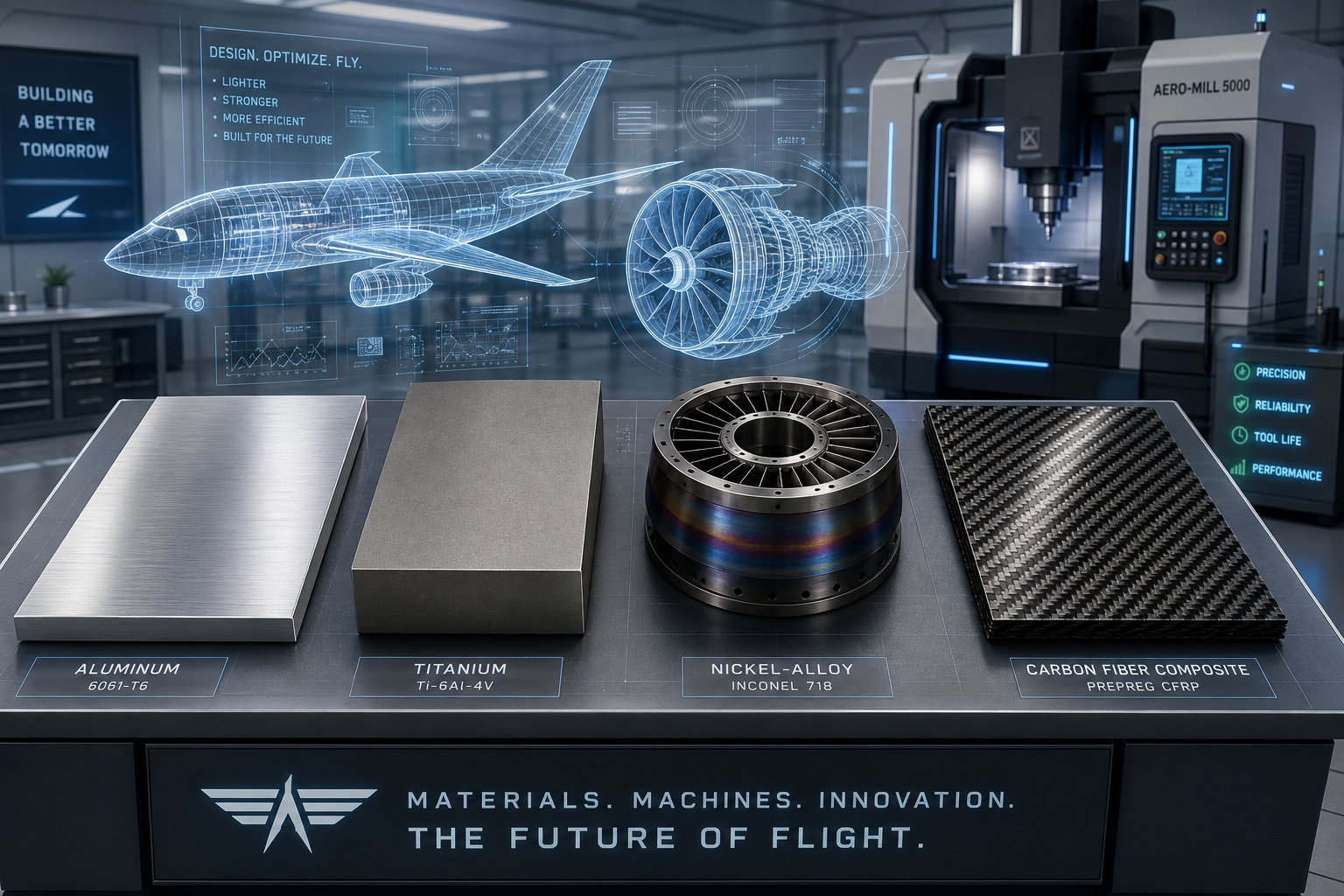
Aerospace manufacturing is experiencing a material revolution, according to an article from MSC Industrial Supply. Four key materials—aluminum, titanium, nickel-based alloys, and composites—are playing a pivotal role in this evolution. Each material brings unique benefits to the table, helping manufacturers improve tool life, boost efficiency, and meet the rigorous demands of the aerospace supply chain.
Aluminum remains a backbone due to its excellent strength-to-weight ratio and machinability, making it ideal for aircraft structures. Titanium is increasingly favored for its superior corrosion resistance and strength, though it is more challenging to machine. Nickel-based alloys offer heat resistance, critical for engine components, but similarly require specialized machining approaches. Finally, composites are gaining traction for their light weight and flexibility, enabling innovative shapes and lighter craft.
Together, these materials are enabling manufacturers to hit new efficiency goals, optimize production processes, and support the ever-growing needs of the aerospace industry. As aerospace jobs evolve, understanding and leveraging these four materials is essential for staying competitive and meeting the future demands of flight.
Leave a Reply