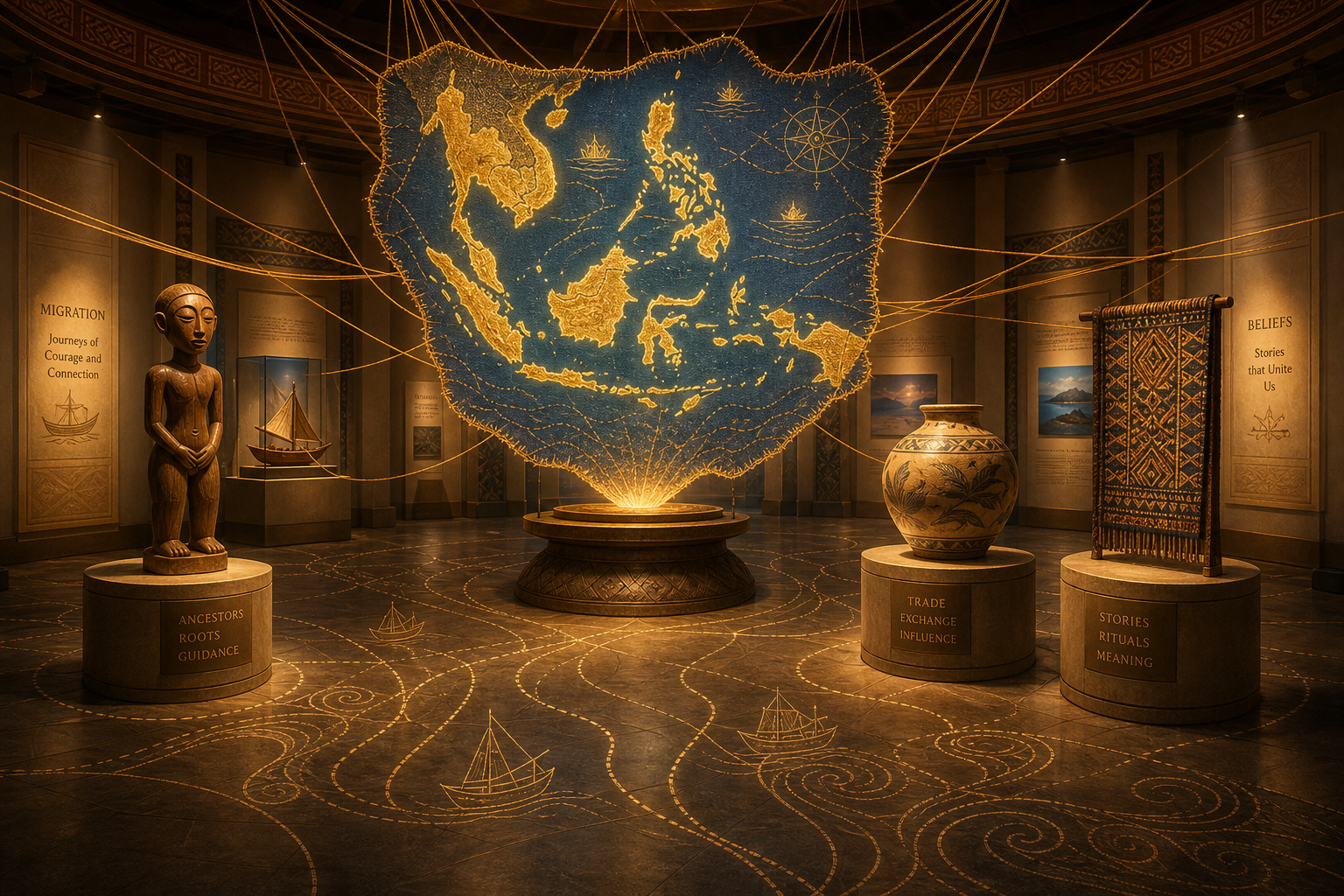
A new UNESCO feature spotlights an ambitious regional collaboration: ten museums in South-East Asia working together under the banner of “Shared Heritage.” The article’s premise is simple but powerful—this is a region whose history has never fit neatly inside modern borders.
Rather than treating each nation’s story as separate, the collaboration emphasizes the forces that have long linked communities across seas and frontiers. UNESCO points to the threads that repeatedly connect the region: trade routes, migration, shared belief systems, cultural exchange, and the natural ties that shape life across an archipelago-rich geography.
In that framing, museums become more than places to store objects; they become active partners in telling a fuller regional story—one that acknowledges movement, contact, and mutual influence as central themes. “Shared Heritage” positions the museum network as a way to celebrate those intertwined histories and to invite audiences to see South-East Asia as a web of connections rather than a set of isolated narratives.
The collaboration, as described by UNESCO’s Culture Unit at the UNESCO Regional Office in Bangkok, is ultimately an invitation: to look at heritage through relationships—between peoples, places, and traditions—and to recognize that what is shared across borders can be as historically significant as what is distinct within them.
Leave a Reply