Blog

  • War With Iran, Fertilizer Shockwaves, and the Quiet Threat to Global Food Production

    War With Iran, Fertilizer Shockwaves, and the Quiet Threat to Global Food Production

    The war involving Iran is being felt far beyond the battlefield—right into the global fertilizer markets that underpin modern food production. An analysis from the International Food Policy Research Institute (IFPRI) traces how conflict-driven disruptions can reverberate through supply chains, raising risks for farmers, consumers, and food-importing countries.

    At the heart of the issue is fertilizer: a set of inputs that many farming systems rely on to sustain yields. When conflict destabilizes trade routes, production, or the broader logistics needed to move key commodities, fertilizer markets can tighten quickly. The IFPRI article emphasizes that these disruptions don’t stay contained within one region. Instead, they ripple outward, affecting prices and availability across international markets.

    Those market tremors matter because fertilizer is not an optional add-on for many producers—it’s a core part of the cost structure of planting seasons and yield expectations. As the article notes, any falloff in agricultural production tied to the current conflict would compound pressures already running through global supply chains.

    The stakes are especially high for countries that depend heavily on imported inputs and food supplies. When fertilizer becomes more expensive or harder to secure, farmers may apply less than they planned or delay purchases, which can translate into lower output. In turn, that can tighten food markets and raise the risk of higher prices for consumers.

    The IFPRI piece ultimately frames the conflict as a reminder of how interconnected food security has become: shocks to a critical input like fertilizer can travel fast, turning geopolitical instability into agricultural uncertainty—and potentially, into reduced food production when the world can least afford it.


  • What Google Local Guides Really Get: Impact, Points, and the Elusive “Perks”

    What Google Local Guides Really Get: Impact, Points, and the Elusive “Perks”

    Google’s Local Guides program is easy to describe—share reviews, photos, and helpful information on Google Maps—but harder to pin down when the conversation turns to benefits.

    One Reddit thread in r/LocalGuides captures that uncertainty directly. A poster says they’ve been looking for “any kind of benefits or rewards from Google” for being a Local Guide, but can’t find “any real” perks. The question resonated: the post drew votes and a long comment section, signaling that many contributors are trying to understand what, if anything, they should expect in return.

    On the official Google Maps Local Guides page, the emphasis is clear and mission-driven rather than reward-driven. The program is framed as a way to “make an impact on your community.” The pitch is that “people like you make it easier to discover local places,” and that by contributing reviews, photos, and place information, you help others navigate the world around them.

    Put side by side, the Reddit post and Google’s own description highlight the core tension: contributors may join expecting tangible rewards, while Google positions Local Guides primarily as a community contribution—sharing your world on Maps so other people can benefit.

    If you’re considering becoming a Local Guide (or wondering why you’re doing it), the article’s takeaway is straightforward: the clearest “benefit” presented is the impact your contributions have on helping others discover and decide, more than any guaranteed material reward.

  • I Can’t Write the Blog Post Yet—Please Paste One Article’s Full Text

    I Can’t Write the Blog Post Yet—Please Paste One Article’s Full Text

    I only have your web search results (titles/snippets/links), not the content of a single news article. To follow your rules—“use only the information from the provided article” and avoid making anything up—I need you to provide the full text of one article (or paste the relevant sections).

    Please do one of the following:
    – Paste the article’s text here (preferred), or
    – Tell me which one result to use and paste its content.

    Once you share the article content, I’ll write an engaging blog post based strictly on it and return it as JSON with a title and content.

  • I Can’t Write the Blog Post Yet—Please Share the Article Text

    I Can’t Write the Blog Post Yet—Please Share the Article Text

    You’ve provided web search results (titles, snippets, and links), but not the content of a single article.

    To write the blog post using *only* one source (as required), please paste the full text of the specific article you want me to use—or paste substantial excerpts (e.g., the main body) from one of the links above—and tell me which one it is.

    Once you share that, I’ll produce a JSON response with a title and an engaging blog-style summary based strictly on that article.

  • Therme Singapore: A S$1 Billion Waterfront Bet on Wellbeing

    Therme Singapore: A S$1 Billion Waterfront Bet on Wellbeing

    Singapore is set to get a new kind of marquee attraction—one built less around thrill rides and more around the idea that a city can be designed for rest.

    According to the article, the Singapore Tourism Board (STB) has awarded a tender to Therme Group Singapore to develop and operate a dedicated wellness attraction along Marina South Coast. The project is slated for the Marina South Coastal site, on a 4-hectare waterfront plot next to Marina Barrage, and is expected to open by 2030.

    At the heart of the concept is a large-scale “wellbeing destination” that combines classic thermal-bathing traditions with a modern, experience-led mix of facilities. The article highlights features such as thermal pools and saunas, as well as water slides—signalling an attraction designed to appeal to both those seeking relaxation and visitors coming for a more social, all-ages day out.

    Price tags and timelines suggest just how ambitious the plan is. The development is described as a S$1 billion project, positioning it as a major piece of new tourism and lifestyle infrastructure for the Marina South area. Therme Group also expects its debut Asia property to draw around 2 million visitors.

    Design and delivery details in the article point to an emphasis on destination-scale placemaking. Therme Singapore is being designed by DP Architects together with Therme Arc, with Marina South Coast framed not simply as a site for a single building, but as a waterfront setting to be transformed into an urban oasis.

    What’s notable is the way the project is presented: not just as another attraction to add to a checklist, but as a purpose-built space for wellbeing—something positioned as increasingly central to how people live, travel, and spend their leisure time. If it arrives as described, the Marina South Coast could become a new anchor for experiences that blend recovery, recreation, and the simple luxury of slowing down—right in the middle of the city.

  • Thai Tourists Take on Malaysian Durian: A First Bite at SS2

    Thai Tourists Take on Malaysian Durian: A First Bite at SS2

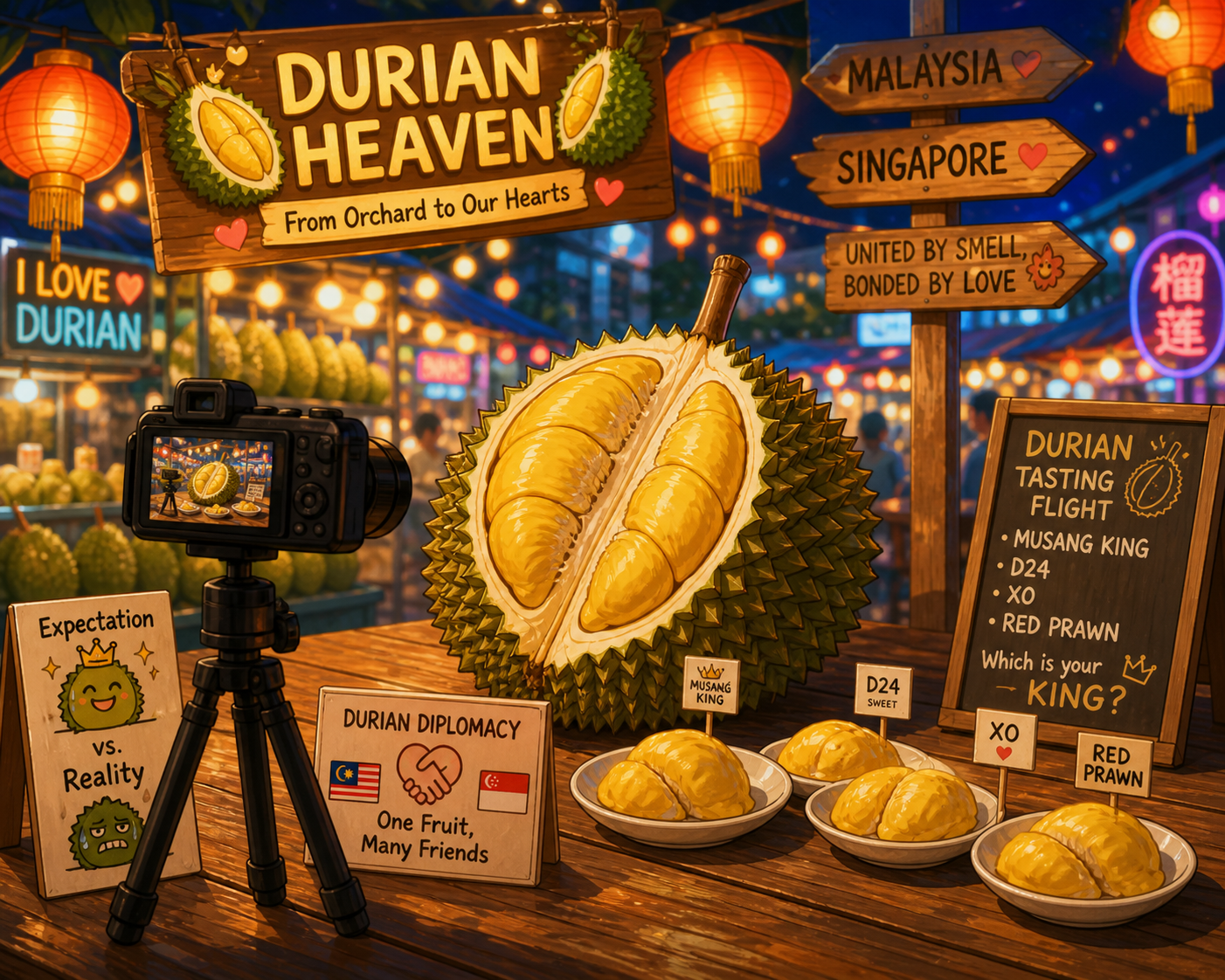
    A familiar debate in Southeast Asia gets a fresh on-the-ground test in a travel-and-food video: when Thai durian lovers come to Malaysia, is the durian really “better” on the other side of the border?

    In the video “Thai Tourists First Time Trying Malaysian Durian 🇲🇾 Is it really better here?”, creators Flora and Note set out to answer that question in the most direct way possible—by tasting. They frame the trip with context: they’ve eaten “a lot of durian in Thailand,” but this is their first experience trying Malaysian durian as Thai tourists. That perspective matters, because the comparison isn’t theoretical. It’s built around expectations, pride, and the kind of strong opinions that only a fruit as divisive as durian can inspire.

    To investigate, they head to what they call a “famous durian heaven” in SS2, Petaling Jaya. Their featured stop is SS2 3333 Durian King, turning the tasting into a mini field report from one of Malaysia’s well-known durian hubs. From there, the video’s narrative moves through classic first-time-tasting beats: the initial encounter, the first bite, the candid reactions, and the inevitable question that hangs over every durian discussion—would you do it again?

    The tasting isn’t presented as a single moment but as a sequence of checkpoints, including a segment explicitly focused on “first time trying Malaysian durian” and later, the direct comparison point: “Is Musang King really the best?” The inclusion of Musang King is key, because it’s one of the most iconic names associated with Malaysian durian. By centering part of the experience around that reputation, the video leans into the exact controversy it’s trying to address.

    What makes this kind of food travel story compelling isn’t just the fruit—it’s the cultural mirror it holds up. Two Thai travelers arrive with a palate shaped by Thai durian, then test that palate against Malaysia’s most celebrated styles in a setting designed for durian devotees. The result is a piece of durian “diplomacy” that stays grounded in a simple, relatable premise: if you want to know what the hype is about, go to where the hype lives, sit down, and taste it.

    In the end, the video doesn’t just document durian—it documents the moment when expectation meets reality, in a place where the stakes are deliciously high and every bite feels like it carries a tiny national argument inside it.

  • Share Links Aren’t an Article: Please Paste the Full Text (or Choose One Result)

    Share Links Aren’t an Article: Please Paste the Full Text (or Choose One Result)

    I can’t write the blog post yet because you provided search results (titles/snippets/links), not the content of a single news article.

    Please do one of the following:
    1) Tell me which one result to use (paste its full article text here, or paste the key sections you want summarized), or
    2) Paste the full text of the specific article you want me to base the post on.

    Once you provide the article content, I’ll write an engaging blog post using only that information and return it as JSON with “title” and “content”.

  • K-Dramas as Soft Power: How Emotional Storytelling Builds Global Sympathy for South Korea

    K-Dramas as Soft Power: How Emotional Storytelling Builds Global Sympathy for South Korea

    K-dramas have long since outgrown the stereotype of “sappy television.” According to an article from the Georgetown Journal of International Affairs, their global rise is tied to something more durable than trend cycles: the way these series make Korean culture feel familiar—and, in the process, influential—to audiences around the world.

    The piece argues that K-dramas generate a kind of international connection rooted in emotion. Through what it describes as an “affective interlude,” these shows invite viewers into the inner lives of characters and linger on feeling—grief, tenderness, longing, joy—in a way that encourages empathy. That emotional pacing doesn’t just entertain; it helps create sympathy, a sense of closeness, and a willingness to see South Korea through a more human, relatable lens.

    That’s where the soft power comes in. Rather than delivering messages like a formal campaign, K-dramas shape perception quietly, scene by scene. By rendering cultural cues, social dynamics, and everyday life legible to global audiences, they help normalize and deepen interest in South Korea—turning storytelling into a subtle form of cultural diplomacy.

    In other words, the article suggests the global K-drama phenomenon isn’t only about exportable plots or binge-worthy production. It’s about emotional craft: the ability of serialized storytelling to build identification across borders, and to translate that identification into influence.

  • Shared Heritage: A New Museum Collaboration Highlights South-East Asia’s Interconnected Past

    Shared Heritage: A New Museum Collaboration Highlights South-East Asia’s Interconnected Past

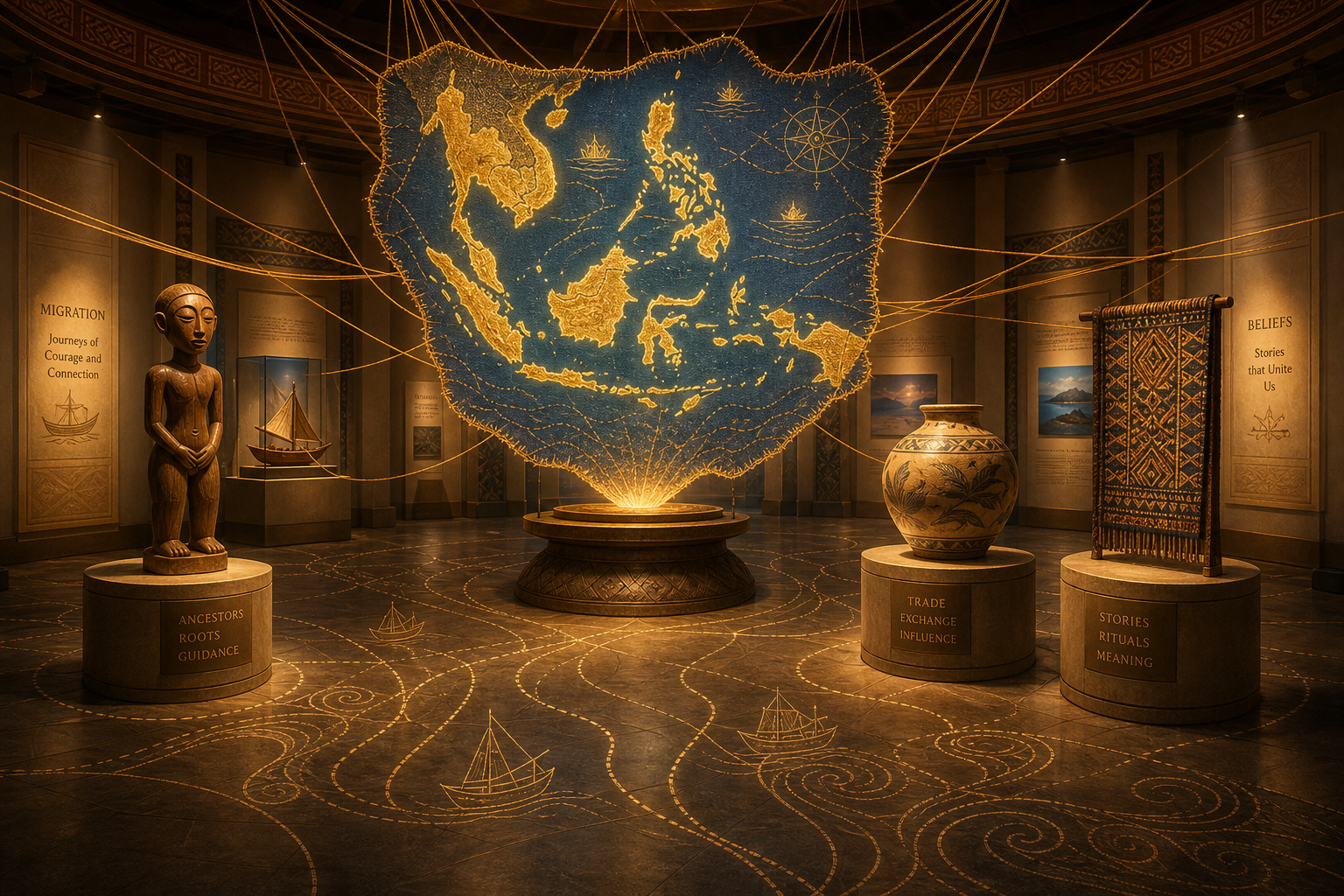
    A new UNESCO feature spotlights an ambitious regional collaboration: ten museums in South-East Asia working together under the banner of “Shared Heritage.” The article’s premise is simple but powerful—this is a region whose history has never fit neatly inside modern borders.

    Rather than treating each nation’s story as separate, the collaboration emphasizes the forces that have long linked communities across seas and frontiers. UNESCO points to the threads that repeatedly connect the region: trade routes, migration, shared belief systems, cultural exchange, and the natural ties that shape life across an archipelago-rich geography.

    In that framing, museums become more than places to store objects; they become active partners in telling a fuller regional story—one that acknowledges movement, contact, and mutual influence as central themes. “Shared Heritage” positions the museum network as a way to celebrate those intertwined histories and to invite audiences to see South-East Asia as a web of connections rather than a set of isolated narratives.

    The collaboration, as described by UNESCO’s Culture Unit at the UNESCO Regional Office in Bangkok, is ultimately an invitation: to look at heritage through relationships—between peoples, places, and traditions—and to recognize that what is shared across borders can be as historically significant as what is distinct within them.

  • Sizing Up the 2026 World Cup Front-Runners as Kick-Off Nears

    Sizing Up the 2026 World Cup Front-Runners as Kick-Off Nears

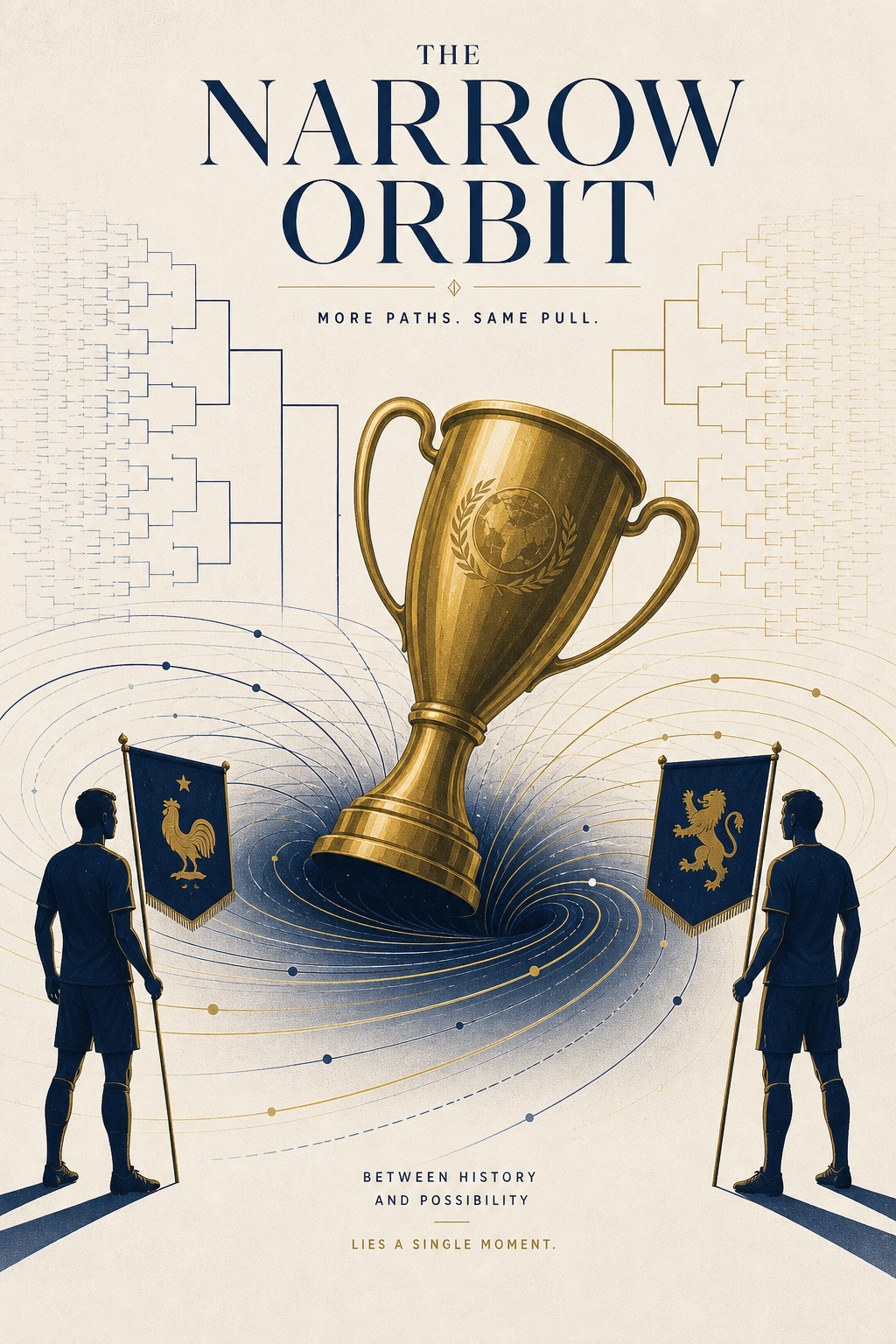
    With the 2026 World Cup in North America now less than three weeks away, an AFP Sport preview (published via Yahoo Sports) takes stock of the teams most widely viewed as the tournament’s leading contenders—at a finals unlike any before it.

    This will be the first World Cup staged with 48 teams, a format shift that changes the rhythm of the competition and widens the field. Yet even with that expansion, familiar powers sit at the heart of the conversation, with the article framing its assessment around the established heavyweights and their recent tournament pedigrees.

    At the top of the list is France (world ranking: 1), presented as the benchmark by virtue of both history and recent performance. “Les Bleus” have lifted the trophy twice, and the piece underlines just how consistently they have reached the sharp end of the competition: they have also lost two World Cup finals on penalties across the last seven editions. That combination of winning know-how and repeat deep runs is exactly why France enter as a reference point for everyone else.

    England (world ranking: 4) are portrayed through the lens of near-misses and lingering questions about turning promise into silverware. Under Gareth Southgate, the article notes “agonising defeats” in the finals of the last two European Championships, plus a World Cup semi-final exit in 2018 and a quarter-final exit in 2022. The implication is clear: England’s status as a favourite is no longer hypothetical—what remains is proving they can finish the job when the tournament reaches its decisive moments.

    As the countdown tightens, the article’s overall message is that the expanded 48-team stage may bring fresh storylines, but the gravitational pull of the traditional contenders remains strong. In the weeks ahead, the favourites will carry the weight of expectations—and, as always at a World Cup, the margin between “contender” and “disappointment” will be brutally thin.